
Stone Quarry Crushing Plant Producer Procurement


1. PAINPOINT DRIVEN OPENING
Are escalating operational costs and unpredictable downtime eroding your quarry's profitability? Managing a stone quarry crushing plant presents distinct challenges that directly impact your bottom line. Common pain points include:
Excessive Downtime for Maintenance: Frequent liner changes, bearing failures, and unexpected breakdowns halt production. Industry data indicates unplanned downtime can cost over $10,000 per hour in lost output and labor.
Inconsistent Product Gradation: Fluctuations in feed material or crusher performance lead to offspec aggregate, resulting in product rejection, recrushing costs, and dissatisfied customers.
High Energy Consumption: Inefficient crushing chambers and drives consume excessive power, making energy one of the largest variable costs in your processing circuit.
Rapid Wear Part Degradation: Abrasive stone varieties cause accelerated wear on liners, hammers, and jaws, leading to high consumable costs and frequent production pauses.
Limited Flexibility & Scalability: Inflexible plants struggle to adapt to changing market demands for different aggregate sizes or increased throughput.
Is your current solution equipped to minimize these operational risks? The right primary crushing station is not just a purchase; it's a strategic investment in plantwide stability and efficiency.
2. PRODUCT OVERVIEW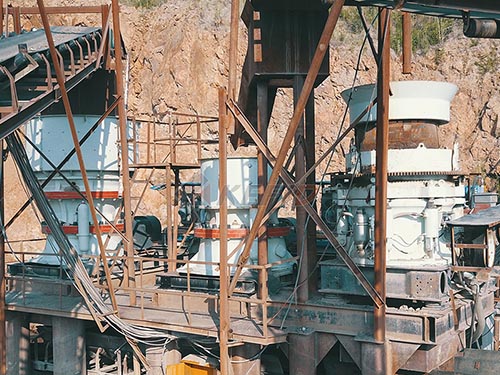
The cornerstone of any efficient operation is a robust primary jaw crusher station. Engineered for the initial reduction of blasted quarry rock (typically from 600900mm down to 150250mm), this equipment forms the critical first stage in your size reduction circuit.
Operational Workflow:
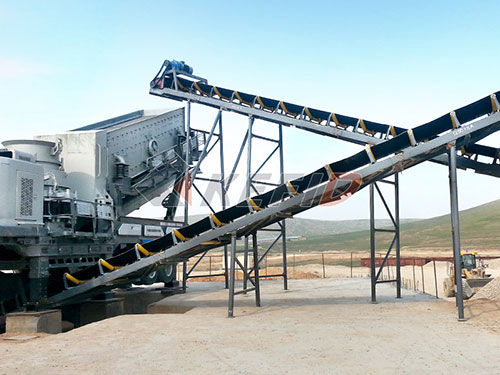
1. Feed Intake: Dump trucks or wheel loaders deposit shot rock into a heavyduty vibrating grizzly feeder (VGF).
2. PreScreening & ByPass: The VGF removes natural fines and sub150mm material, directing it to a bypass conveyor to reduce unnecessary crusher load and wear.
3. Primary Crushing: Oversize material is conveyed into the jaw crusher, where a fixed jaw and a moving jaw exert immense compressive force to break the stone.
4. Discharge & Conveyance: Crushed material is discharged onto a main product conveyor for transport to secondary crushing or stockpiling.
Application Scope & Limitations:
Scope: Ideal for hard rock quarries (granite, basalt, trap rock) and abrasive applications. Suited for stationary primary crushing stations.
Limitations: Not designed for final product shaping or ultrafine crushing. Requires competent feed material; sticky or highclay content feed can cause chamber packing without proper prescreening.
3. CORE FEATURES
Deep Crushing Chamber & Aggressive Nip Angle | Technical Basis: Optimized kinematics design | Operational Benefit: Enables higher throughput capacity and effective breaking of larger feed blocks | ROI Impact: Increases processed tons per hour (TPH), improving asset utilization
HeavyDuty Fabricated Steel Frame | Technical Basis: Finite Element Analysis (FEA)optimized construction | Operational Benefit: Provides exceptional durability against shock loads from uncrushable material | ROI Impact: Reduces risk of catastrophic frame failure, extending operational life beyond 20 years
Hydraulic Adjustment & Clearing System | Technical Basis: Integrated hydraulic cylinders for toggle tension and chamber clearing | Operational Benefit: Allows quick CSS adjustment for product size changes and automatic release of tramp iron | ROI Impact: Cuts adjustment time by 70% versus manual systems, minimizing downtime
Bolted Bearing Cartridge Design | Technical Basis: Modular, preassembled bearing housings | Operational Benefit: Enables faster replacement of pitman bearings without machining onsite | ROI Impact: Reduces critical bearing service time from days to hours, significantly boosting availability
QuarryGrade Spherical Roller Bearings | Technical Basis: Oversized bearings with L10 life calculations exceeding 50,000 hours | Operational Benefit: Handles high radial and axial loads with superior reliability | ROI Impact: Lowers total cost of ownership by extending service intervals and preventing unplanned stoppages
Replaceable Liners with Multiple Profiles | Technical Basis: High manganese steel alloys with optional chrome or ceramic additives | Operational Benefit: Offers profile choices (e.g., corrugated, quasi) to match rock abrasiveness and desired output shape | ROI Impact: Optimizes liner lifetocost ratio; field data shows up to 30% longer life in abrasive granite
Integrated Motor Base & Drive Guards | Technical Basis Unified baseplate design with safetycompliant guarding| Operational Benefit Simplifies installation alignment and ensures operator safety during routine inspections| ROI Impact Reduces installation labor costs by approximately 15% and mitigates safety incident risk
4. COMPETITIVE ADVANTAGES
| Performance Metric | Industry Standard | Our Jaw Crusher Solution | Advantage (% improvement) |
|||||
| Mechanical Availability | 9092% | 9496% | +4% uptime |
| Liner Life (Abrasive Granite)| 120,000 150,000 tons | 180,000 200,000 tons | +30% lifespan |
| Energy Consumption | Baseline | Optimized chamber geometry & drives |8% kWh per ton |
| Bearing Replacement Time | 2436 hours | 812 hours |67% service duration |
| Throughput Capacity | Baseline TPH Higher stroke & speed capability +15% TPH in comparable duty |
5. TECHNICAL SPECIFICATIONS
Model Range Capacity: 300 1,800 MT/H (varies by feed material density)
Feed Opening Range: 900mm x 600mm up to 1,500mm x 1,200mm
Power Requirements: Main crusher motor from 75 kW up to 300 kW (400V/50Hz or customizable). Complete station includes feeder & conveyor drives.
Material Specifications: Main frame – S355J2 steel; Liners – Mn18Cr2 / Mn22Cr2; Shaft – forged42CrMo4 steel.
Physical Dimensions (Station): Typical footprint ranges from ~15m L x ~6m W x ~7m H.
Environmental Operating Range: Designed for ambient temperatures from 20°C to +45°C. Dust sealing standard; optional heating packages available.
6. APPLICATION SCENARIOS
Granite Quarry Expansion Project
Challenge A granite quarry needed to increase primary circuit throughput by25%to feed anew secondary cone crusher line without expanding their blasting schedule
Solution Installation ofa highcapacity jaw crusher station with an aggressive nip angle anda deeper chamber tomaximize tonnage from existing feed size
Results Achieveda28%increasein primary throughput(measured intons per blast pile) andreduced the average product size P80by15%, improving secondary cone crusher efficiency
Transitioningto More Abrasive Feed Material
Challenge A limestone quarry facing depletion needed tousea new pitwith significantly more chertand quartz inclusions leading tounacceptable wear rates ontheir existing primary crusher
Solution Retrofitteda new jaw crusher featuring bolted bearing cartridges foreasier maintenanceand installed optional hybrid ceramic/manganese liners inthe most critical wear zones
Results Extended liner change intervals from6weeks backto the original8week cycle despite more abrasive feed reducing annual liner costby22%and maintaining availability
7.COMMERCIAL CONSIDERATIONS
Equipment pricing is tiered based on size capacity:
Tier1(300600TPH): Foundational modelsfor smallto midsize quarries
Tier2(6001200TPH): Highperformance modelswith advanced hydraulicsand telemetry standard
Tier3(12001800TPH): Heavyduty stationsfor largescale mining operations including integrated automation interfaces
Optional Features:
Advanced wear monitoring systems Remote vibration sensing packages Automated grease lubrication systems Walkin modules forenclosed maintenance
Service Packages:
Level1– Parts& Support(standard warranty)
Level2– Scheduled Inspections& Condition Monitoring(includes annual health check)
Level3– Full Maintenance Agreement(covers planned parts laborand24/7 emergency support)
Financing Options Available through partner institutions including operating lease capital leaseor projectbased financing typically structured over37years
8.FAQ
Q Can this jaw crusher station integrate with our existing PLC control system?
A Yes most models feature standardized communication protocols(Modbus Profibus) allowing integration into existing plant SCADA systems formonitoring key parameters like power drawand CSS
Q What isthe expected impact onour overall plant energy consumption?
A Field data shows that due toefficient drive designand optimized kinematics our solution typically reduces energy useper tonof crushed material by510% depending onthe rock hardness This directly lowers operating costs
Q Are wear parts readily available globally?
A We maintain regional inventory hubs onthree continents ensuring critical wear parts like linersare available within48hours formost locations minimizing potential downtime
Q What arethe commercial terms formajor spare parts?
A We offer guaranteed pricing contracts forwear part kits which lock inprices fora defined period(usually1224months) providing predictable budgetingforyour maintenance planning
Q How long doesinstallation typically takeand what site preparation isrequired?
A Fora complete station installation requires approximately1014days with our supervised erection team Site preparation requires level compacted ground anda concrete foundation accordingtosupplied engineering drawings delivered prior tomobilization