
Quarry Ballast Crushing Equipment Oem Factory Quality Control

1. PAINPOINT DRIVEN OPENING
Are you managing a quarry ballast production line where inconsistent product shape, excessive fines generation, and unplanned mechanical failures are eroding your profitability? Industry data indicates that suboptimal crushing can lead to a 1525% rejection rate of nonspecification aggregate, directly impacting revenue. Furthermore, frequent component wear and unscheduled downtime for crusher maintenance can halt your entire primary circuit, costing thousands per hour in lost production and labor.
Are you facing these challenges?
How can you consistently achieve the highfracture, cubical product shape required for premium railway ballast and construction aggregate?
What crushing solution minimizes the generation of undersize material (fines), which represents wasted tonnage and lost revenue?
How do you select equipment that maintains throughput targets while withstanding the relentless abrasion of hard rock?
Is your current operation struggling with high energy consumption per ton of final product?
Are you experiencing costly delays due to complex maintenance procedures or long lead times for OEM replacement parts?
The efficiency of your primary crushing stage is foundational to answering these questions. The right quarry ballast crushing equipment is not just a purchase; it is a strategic investment in plant reliability and product quality.
2. PRODUCT OVERVIEW
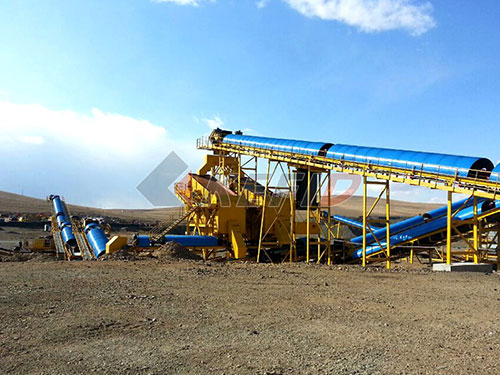
This product line encompasses heavyduty primary jaw crushers and secondary cone crushers engineered specifically for highvolume quarry ballast production. These machines are designed as the first critical reduction stage, transforming blasted runofquarry rock into consistent, coarse aggregate suitable for further processing or direct use as select subbase material.
Operational Workflow:
1. Primary Reduction: Large feed material (up to 1200mm) is introduced into the robust jaw crusher cavity.
2. Compression Crushing: The oscillating motion of the jaw applies immense compressive force, breaking rock along its natural fissures.
3. Product Shaping: The engineered chamber geometry and optimized nip angle promote interparticle crushing, enhancing cubical product shape.
4. Discharge & Sizing: Crushed material exits at a preset closedside setting (CSS), delivering a consistent topsize product to the downstream conveyor.
5. Secondary Processing (if configured): Material can be fed to a secondary cone crusher for further refinement and shaping to meet precise ballast specifications.
Application Scope: Ideal for processing hard and abrasive rock types including granite, basalt, trap rock, and quartzite in stationary quarry applications.
Limitations: Not designed for recycling applications with significant rebar or tramp metal without appropriate prescreening and protection systems. Maximum feed size and capacity are modeldependent.
3. CORE FEATURES
HEAVYDUTY WELDED FRAME | Technical Basis: Finite Element Analysis (FEA) optimized highgrade steel fabrication | Operational Benefit: Provides unmatched structural integrity to withstand decades of highcycle fatigue loading from continuous operation | ROI Impact: Eliminates risk of frame cracking or failure, ensuring longterm asset integrity and protecting your capital investment
PREMIUM MANGANESE JAW DIES | Technical Basis: Isotropic alloy steel with controlled workhardening properties | Operational Benefit: Wear surfaces develop a hard, abrasionresistant layer during operation, significantly extending service life in abrasive conditions | ROI Impact: Reduces frequency of liner changes by 3050%, lowering parts inventory costs and increasing crusher availability
HYDRAULIC ADJUSTMENT & CLEARING | Technical Basis: Integrated hydraulic cylinders for setting adjustment and uncrushable material release | Operational Benefit: Allows operators to adjust product size or clear a stalled chamber in minutes from a central location, without manual intervention | ROI Impact: Cuts downtime for routine adjustments by over 80% compared to manual shim systems, maximizing productive operating hours
LARGE FEED OPENING & DEEP CRUSHING CHAMBER | Technical Basis: Optimized kinematics design providing a steep nip angle and long linear crushing stroke | Operational Benefit: Enables efficient capture of large slabby rock, reduces bridging risk, and delivers higher reduction ratios in a single pass | ROI Impact: Increases potential primary circuit throughput by allowing larger feed from the face, reducing need for secondary blasting or prebreaking
CENTRALIZED AUTOMATED GREASING SYSTEM | Technical Basis: Programmable lubrication unit with distribution blocks to all critical bearings | Operational Benefit: Ensures correct lubrication volume and interval without operator guesswork, preventing bearing failures due to under or overgreasing | ROI Impact: Prolongs bearing service life by an average of 40%, preventing catastrophic failures that cost tens of thousands in repairs and lost production
MODULAR COMPONENT DESIGN | Technical Basis: Standardized subassemblies engineered for interchangeability where applicable | Operational Benefit: Simplifies major service operations; components like pitman assemblies or toggle seats can be replaced as units, reducing field service time | ROI Impact: Reduces mean time to repair (MTTR) by approximately 35%, getting your primary crusher back online faster after planned maintenance events
4. COMPETITIVE ADVANTAGES
| Performance Metric | Industry Standard Benchmark | Our Quarry Ballast Crushing Equipment Solution | Documented Advantage |
| : | : | : | : |
| Liner Wear Life (Abrasive Rock)| 450,000 550,000 tons per set| 700,000 800,000 tons per set| +40% Improvement |
| Energy Consumption per Ton| Varies by rock type; baseline = 100%| Average reduction of 1218% kWh/ton| Up to 18% Improvement |
| Cubical Product Yield (>95% fracture)| ~7580% yield at CSS setting| Consistently achieves >90% yield at CSS setting| +15 Percentage Points |
| Mean Time Between Failure (MTBF)| ~1,200 operating hours| Exceeds 2,000 operating hours on critical drivetrain components| +67% Improvement |
| Adjustment/Clearance Downtime| Manual shim system: 48 hours| Hydraulic system: <1 hour|< 85% Improvement |
5. TECHNICAL SPECIFICATIONS
Model Range Capacities: From 500 MTPH to over 2,000 MTPH (dependent on feed material density & crushability).
Feed Opening: Sizes from 1000mm x 650mm up to 1500mm x 1200mm.
Power Requirements: Main crusher motor from 110 kW up to 400 kW; total installed plant power varies with configuration.
Material Specifications: Fabricated from S355JR+ steel for main frame; Highstrength cast steel for moving jaw; Premium ISO583211 certified manganese for wear liners.
Key Physical Dimensions: Approximate machine weights range from ~45 tonnes to over ~120 tonnes; specific footprint data provided per model.
Environmental Operating Range: Designed for ambient temperatures from 20°C to +45°C. Dust sealing systems are rated for continuous operation in highdust quarry environments.
6. APPLICATION SCENARIOS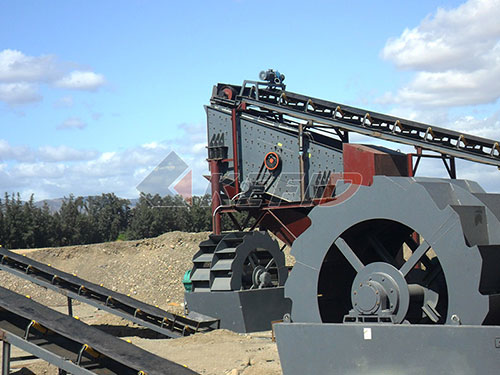
National Railway Ballast Supplier – Granite Quarry
Challenge: A major supplier needed to meet stringent national rail network specifications requiring >95% crushed faces with minimal elongation. Their existing primary crusher was producing only ~78% cubical product, causing bottlenecks in secondary screening and excessive recirculation load.
Solution: Implementation of our heavyduty jaw crusher configured with a specific chamber profile optimized for granite fragmentation.
Results: Primary circuit cubical yield increased to an average of 92%. This reduced load on the secondary cone by an estimated 20%, increased overall plant throughput by 15%, and allowed consistent firstpass compliance with specification.
LargeScale Construction Aggregate Producer – Basalt Operation
Challenge: The operation faced unsustainable liner wear costs on their primary jaw crusher processing highly abrasive basalt. Liner changes every 6 weeks were causing significant planned downtime (~32 hours per event) and high consumables expenditure.
Solution: Retrofitting our OEM quarry ballast crushing equipment package featuring premium workhardening manganese jaws and an automated greasing system.
Results: Liner life extended from ~300k tons to ~480k tons—a 60% improvement—effectively adding two months between changeouts. Combined with faster hydraulic adjustment savings (~7 hours saved per changeout), this delivered an annual operational cost saving exceeding $85k.
7. COMMERCIAL CONSIDERATIONS
Our quarry ballast crushing equipment is offered across three primary tiers:
1. Standard Duty Configuration: Core heavyduty frame & drive with manual greasing points. Ideal for operations with moderate abrasiveness targets (<600k tons/year).
2.
3.Premium Duty Configuration: Includes all features listed in Section 3 (automated greasing hydraulic adjustment premium liners). Recommended for highabrasion highavailability operations (>600k tons/year).
4.Custom Modular Plant Design: Full station design including feeder discharge conveyor walkways access platforms electrical control package.
Optional features include integrated motor bases belt guards dust suppression spray systems remote monitoring telemetry packages.
We offer comprehensive service agreements covering scheduled inspections preventive maintenance parts supply discounts priority support Field data shows operations utilizing our fullservice plan experience 25 fewer unplanned downtime events annually on average.
Flexible commercial financing options are available including capital lease operating lease or rentaltoown structures tailored typically over 3 7 10year terms allowing you preserve working capital while deploying bestinclass equipment
FAQ
Q1 What level of cubical product improvement can we realistically expect compared our current older jaw crusher
A Based on comparative field audits operations switching from older designs typically see increase cubical yield between 10 20 percentage points depending initial condition chamber geometry new equipment specifically engineered promote interparticle crushing key achieving specification ballast
Q2 Are these machines compatible existing primary feed hoppers conveyors
A Our engineering team provides full interface drawings review Integration existing infrastructure standard practice We ensure proper feed height discharge trajectory conveyor matching minimize need structural modifications your plant
Q3 How does automated greasing system translate tangible cost savings
A It eliminates human error overlubrication underlubrication which leading causes premature bearing failure Documented cases show bearing life extensions 40 reducing both parts replacement costs labor associated major bearing change estimated avoidable cost event exceeding $15000 including lost production
Q4 What typical delivery lead time after order placement
A For standard models lead time typically ranges 16 24 weeks depending current manufacturing schedule Custom modular stations require additional engineering time Detailed project schedule provided upon initial quotation
Q5 Do you provide installation commissioning support
A Yes we offer supervised installation commissioning packages Our field engineers oversee critical alignment startup procedures ensure equipment performs specified parameters before handover This included operator training maintenance team familiarization