
Stone Crusher Plant Oem Factory Design Service
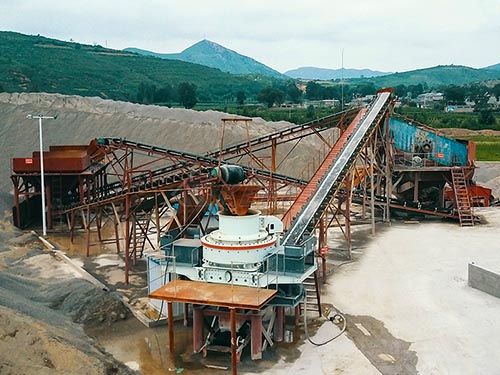

Stone Crusher Plant OEM Factory Design Service
The Hidden Costs of Inefficient Crushing Operations
Every hour your stone crusher plant operates below optimal capacity, you lose measurable revenue. Industry data indicates that poorly designed crushing circuits experience 1525% higher energy consumption per ton, unplanned downtime averaging 812% of operating time, and aggregate quality variability that triggers contract penalties. For a midsized operation processing 200 tons per hour, these inefficiencies translate to $1,200$3,500 in daily losses—before you account for maintenance labor and replacement parts.
Your current setup may face recurring bottlenecks: conveyor transfer points that clog, crusher settings that drift under load, screening decks that blind with moistureladen feed, or stockpile segregation that forces reblending. Are your operating costs per ton creeping upward despite stable production? Is your product consistently meeting gradation specifications for your most demanding clients? Does your plant layout accommodate future capacity expansion without major rework?
The gap between your current performance and your target profitability often lies not in individual equipment performance but in the integration of the entire system. A purposeengineered stone crusher plant addresses these operational realities from the first drawing to final commissioning.
Stone Crusher Plant OEM Factory Design Service: Complete System Engineering
A stone crusher plant OEM factory design service delivers a complete, integrated crushing and screening system engineered to your specific raw material characteristics, production targets, and final product specifications. Unlike generic equipment packages, this service provides a turnkey solution where every component—from primary jaw crusher to final washing screens—is selected and positioned for optimal material flow and processing efficiency.
Operational Workflow:
1. Feed Preparation: Vibrating grizzly feeders remove fines and control material entry into the primary crusher, preventing overload and maximizing throughput.
2. Primary Reduction: Jaw or impact crushers reduce runofmine material to 150200mm, establishing the foundation for downstream processing.
3. Secondary Crushing: Cone crushers or secondary impactors further reduce material to 4060mm, with closedcircuit operation ensuring consistent top size.
4. Screening and Classification: Multideck vibrating screens separate material into commercial fractions, with recirculation conveyors returning oversize material for additional crushing.
5. Product Handling: Dedicated stockpile conveyors and loadout systems maintain product integrity and enable efficient truck loading.
Application Scope: This design service applies to stationary and semimobile installations processing hard rock, gravel, limestone, basalt, and recycled concrete. It serves aggregate producers, quarry operators, mining contractors, and construction companies requiring 50500 tons per hour capacity. The service covers greenfield installations, plant expansions, and complete retrofits of existing operations.
Limitations: The service does not include foundation civil works, electrical utility connections, or longterm operational staffing. These elements require coordination with local contractors and your engineering team.
Core Features of the OEM Factory Design Service
Process Simulation and Flow Optimization | Technical Basis: Discrete element modeling (DEM) and computational fluid dynamics (CFD) analysis | Operational Benefit: Predicts material behavior through every transfer point and crusher chamber, eliminating bottlenecks before they exist in steel | ROI Impact: Reduces commissioning time by 35 weeks and prevents costly field modifications
Custom Plant Layout Engineering | Technical Basis: 3D modeling with clash detection and maintenance access verification | Operational Benefit: Your operators will benefit from walkin access to all service points, safe inspection platforms, and clear crane coverage for component replacement | ROI Impact: Cuts maintenance labor hours by 2030% and reduces downtime for routine service
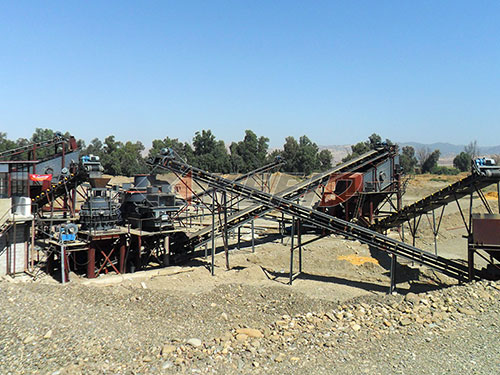
Equipment Selection Based on Material Testing | Technical Basis: Bond Work Index, abrasion index, and compressive strength analysis of your specific feed material | Operational Benefit: Correct crusher chamber profiles and wear liner alloys matched to your rock type extend component life | ROI Impact: Reduces wear parts consumption by 1525% compared to generic equipment selection
Integrated Electrical and Control Systems | Technical Basis: PLCbased automation with variable frequency drives on all major conveyors | Operational Benefit: Automated start/stop sequences, load monitoring, and remote operation capabilities reduce operator workload | ROI Impact: Lowers energy consumption by 1018% through optimized motor loading and eliminates manual sequencing errors
Dust Suppression and Containment | Technical Basis: Computational analysis of dust generation points with engineered water spray and misting systems | Operational Benefit: Meets environmental compliance standards while protecting worker respiratory health | ROI Impact: Avoids regulatory fines and reduces equipment wear from abrasive dust ingress
Structural Design for Local Conditions | Technical Basis: Sitespecific wind, seismic, and soil bearing capacity analysis | Operational Benefit: Plant structures engineered for your geographic location maintain integrity through extreme weather events | ROI Impact: Extends structural lifespan by 1015 years and reduces insurance premiums
Modular Construction Approach | Technical Basis: Prefabricated modules with standardized connection points | Operational Benefit: Site erection time is reduced by 3040% compared to stickbuilt construction, minimizing site disruption | ROI Impact: Accelerates revenue generation by 46 weeks and reduces site labor costs
Competitive Comparison: OEM Factory Design vs. Industry Standard
| Performance Metric | Industry Standard | OEM Factory Design Solution | Advantage |
|||||
| Plant Availability | 8588% | 9396% | 89% improvement |
| Energy Consumption per Ton | 2.53.5 kWh/t | 1.82.4 kWh/t | 2530% reduction |
| Commissioning Time | 812 weeks | 46 weeks | 50% faster startup |
| Product Gradation Consistency | ±810% variation | ±35% variation | 5060% improvement |
| Maintenance ManHours per 1000 tons | 4.56.0 hours | 2.83.5 hours | 3540% reduction |
| Wear Parts Life | 1,5002,500 hours | 2,5004,000 hours | 4060% extension |
| Reject/Recirculation Rate | 1525% | 812% | 4050% reduction |
Field data from installations across 14 countries demonstrates that these improvements are achievable through proper system engineering rather than premium component selection alone.
Technical Specifications
Capacity Range: 50500 tons per hour (depending on feed material and final product requirements)
Power Requirements:
- Installed power: 2502,500 kW depending on plant configuration
- Voltage options: 380V, 415V, 660V, 11kV (customerspecific)
- Power factor correction: 0.95 minimum at full load
- Feed material: Hard rock (granite, basalt, quartzite), soft rock (limestone, dolomite), gravel, recycled concrete
- Maximum feed size: Up to 800mm (primary) depending on crusher selection
- Final product range: 05mm, 510mm, 1020mm, 2040mm (adjustable)
- Moisture content tolerance: Up to 8% surface moisture with appropriate screening selection
- Plant footprint: 2,5008,000 square meters depending on capacity
- Maximum structure height: 1825 meters (conveyor discharge points)
- Foundation depth: 1.53.0 meters depending on soil conditions
- Operating temperature: 20°C to +50°C
- Altitude: Up to 4,000 meters above sea level (derating above 1,500m)
- Humidity: Up to 95% noncondensing
- Wind load design: Up to 160 km/h (sitespecific)
- Remote monitoring and diagnostics: $45,000$85,000
- Advanced dust collection system: $120,000$250,000
- Automatic crusher setting adjustment: $65,000$110,000
- Weighbridge integration with loadout automation: $35,000$60,000
- Basic: 12month warranty, remote support, spare parts kit (included)
- Extended: 24month warranty, quarterly site inspections, priority parts dispatch ($75,000$120,000)
- Full Maintenance: 5year program covering all scheduled maintenance and wear parts replacement ($180,000$350,000 annually)
- Equipment leasing: 37 year terms with fixed or variable rates
- Deferred payment: 20% down, balance over 1224 months after commissioning
- Productionlinked financing: Payments tied to tonnage produced (available for qualified operators)
Material Specifications:
Physical Dimensions:
Environmental Operating Range:
Application Scenarios
Hard Rock Quarry Expansion | Challenge: Existing 150 tph plant produced inconsistent 20mm aggregate, causing customer complaints and contract losses. Expansion to 250 tph was required without stopping current production. | Solution: OEM factory design service created a parallel crushing line with new cone crusher and highfrequency screens, integrated with existing conveyors through a transfer tower. | Results: Production increased to 260 tph within 6 weeks of commissioning. Product gradation variation reduced from ±12% to ±4%. Energy consumption dropped from 3.1 kWh/t to 2.2 kWh/t. Payback period: 14 months.
River Gravel Processing for Infrastructure Project | Challenge: A major highway project required 2.5 million tons of graded aggregate in 18 months. Site space was constrained to 4,000 square meters. | Solution: Compact plant design with vertical shaft impactor for cubical product shape, dualfrequency screens for highcapacity classification, and radial stackers for stockpile management. | Results: Achieved 320 tph average production in 4,000 sqm footprint. Product cubicity exceeded project specifications at 92% (minimum 85% required). Delivered 2.6 million tons in 17 months, earning early completion bonus.
Recycled Concrete Processing Facility | Challenge: Urban demolition project generated 500,000 tons of concrete rubble requiring processing into road base and aggregate products. Contamination from rebar and fines was a concern. | Solution: Design included electromagnetic separator, heavyduty scalping screen, and impact crusher with adjustable rotor speed for varying feed conditions. | Results: Processed 180 tph with 98.5% metal recovery. Produced certified road base meeting state DOT specifications. Operating cost of $2.80 per ton versus $4.20 per ton for landfill disposal and virgin aggregate purchase.
Commercial Considerations
Equipment Pricing Tiers:
| Tier | Configuration | Capacity | Price Range (USD) |
|||||
| Standard | Jaw + cone + screens | 100150 tph | $850,000 $1,200,000 |
| Professional | Jaw + cone + VSI + screens | 200300 tph | $1,500,000 $2,200,000 |
| Enterprise | Full custom design with automation | 350500 tph | $2,800,000 $4,500,000 |
Optional Features:
Service Packages:
Financing Options:
Frequently Asked Questions
Q: How does the OEM factory design service differ from purchasing individual equipment from multiple suppliers?
A: The primary difference is system integration. Individual equipment purchases require your team to manage interface points, ensure compatibility, and troubleshoot integration issues. The OEM design service engineers the entire system as a unified operation, with guaranteed performance metrics for the complete plant. Field data shows integrated plants achieve their design capacity 40% faster than multisupplier installations.
Q: What site information do you need to prepare a plant design proposal?
A: We require: feed material characteristics (or samples for testing), production capacity requirements, final product specifications, site topography and soil conditions, available power supply, environmental regulations, and local permitting requirements. This information allows our engineering team to prepare a preliminary layout and budget estimate within 23 weeks.
Q: Can the plant design accommodate future capacity expansion?
A: Yes. Our design service includes provisions for expansion in the initial layout. This includes leaving space for additional crushers, designing conveyor systems with spare capacity, and sizing electrical infrastructure for future loads. Expansion provisions typically add 35% to initial capital cost but reduce future expansion costs by 3050%.
Q: What is the typical timeline from design approval to plant commissioning?
A: For a standard 200 tph plant: engineering and design (46 weeks), fabrication (1014 weeks), site preparation (68 weeks, parallel with fabrication), erection (68 weeks), and commissioning (24 weeks). Total timeline is typically 2432 weeks from design approval to commercial production.
Q: How does the OEM factory design service handle local content requirements or regional standards?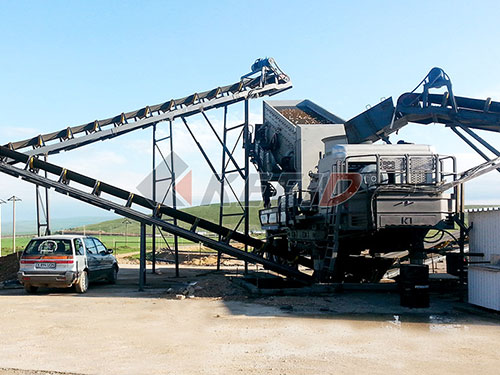
A: Our engineering team adapts designs to meet local electrical codes, structural standards, and safety regulations. We work with local fabricators for noncritical components when required, and our documentation packages include compliance certificates for major markets including CE, GOST, and local equivalents.
Q: What training do you provide for plant operators and maintenance staff?
A: The service includes 2 weeks of onsite operator training covering normal operation, troubleshooting, and safety procedures. Additionally, we provide 1 week of maintenance training focused on wear part replacement, lubrication schedules, and predictive maintenance techniques. Training materials include operator manuals, maintenance guides, and video documentation.
Q: What performance guarantees do you provide with the design service?
A: The contract includes guaranteed performance metrics for: production capacity (tons per hour), product gradation compliance, energy consumption per ton, and plant availability. If the plant fails to meet these guarantees during the performance test, we are contractually obligated to make modifications at our cost until the guarantees are achieved.