
Professional Iron Ore Crushing Plant Brochure
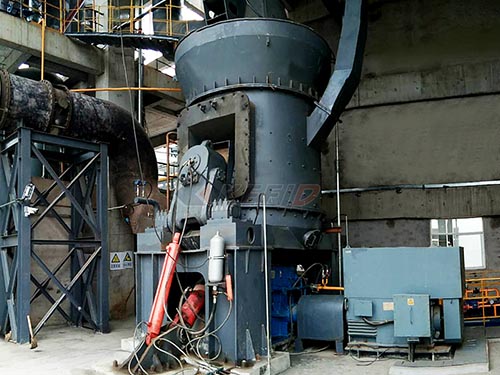

Professional Iron Ore Crushing Plant Solutions
The Crushing Reality of Iron Ore Processing
Every hour your plant operates below capacity, you lose measurable revenue. Yet iron ore crushing presents persistent operational challenges that erode profitability:
- Downtime from equipment failure: Unplanned stoppages in primary crushing circuits cost operations between $10,000 and $50,000 per hour in lost production, depending on plant throughput.
- Inconsistent product sizing: Oversized material entering downstream grinding circuits reduces mill throughput by 8–15%, forcing you to either accept lower recovery or invest in additional energy consumption.
- Escalating wear component costs: Abrasive iron ore with Bond Work Index values between 12–18 kWh/t accelerates wear on liners, mantles, and screens, consuming 15–25% of your total maintenance budget.
- Feed variability management: ROM ore hardness fluctuations of ±30% create unpredictable crushing performance, complicating downstream process stability.
- Energy inefficiency: Conventional crushing circuits consume 1.5–3.0 kWh per ton of ore processed, with poorly matched equipment wasting up to 20% of that energy as heat and excessive fines generation.
- Coldweather package: Enclosed structures, heating systems, and specialized lubricants for subzero operations (+$350,000–$600,000)
- Advanced automation package: AIbased feed optimization and remote monitoring capabilities (+$250,000–$450,000)
- Extended warranty program: Coverage through 24,000 operating hours (+5–8% of equipment value)
- Training simulator: Operator training system for safe and efficient plant operation (+$85,000)
- Preventive Maintenance Agreement: Scheduled inspections, wear part replacement planning, and performance benchmarking ($180,000–$350,000 annually)
- Performance Guarantee Contract: Availability and throughput guarantees with financial penalties/rewards ($450,000–$800,000 annually)
- Operator Training Program: Onsite and classroom training for up to 12 operators ($45,000–$75,000)
- Equipment Leasing: 36–60 month terms with fixed or variable rates, preserving working capital
- Deferred Payment Structure: 20% down payment with balance tied to commissioning milestones
- PerformanceBased Financing: Payments structured around achieved throughput targets, aligning equipment costs with production outcomes
Can your current crushing circuit handle increasing ore hardness while maintaining throughput targets? Are you prepared for the next campaign's feed grade variability? The right iron ore crushing plant configuration directly addresses these operational and financial pressures.
Product Overview: Integrated Iron Ore Crushing Plant
This comprehensive crushing plant is engineered specifically for iron ore applications ranging from runofmine (ROM) feed to final product sizing for beneficiation circuits. The system integrates primary jaw crushing, secondary cone crushing, and tertiary highpressure grinding rolls (HPGR) or vertical shaft impact (VSI) stages, configured to match your specific ore characteristics and downstream requirements.
Operational Workflow
1. Primary Crushing: ROM ore (up to 1,200 mm feed size) enters the heavyduty jaw crusher, reducing material to 150–200 mm at throughput rates of 500–2,000 t/h.
2. Screening and Classification: Vibrating screens classify material, diverting oversize fractions back to the secondary crusher while passing undersize to the next stage.
3. Secondary Crushing: Cone crushers reduce material to 40–75 mm, with closedside settings adjustable to optimize product gradation for downstream processing.
4. Tertiary Crushing/HPGR: Final reduction to 6–12 mm product, generating microcracks in the ore matrix that enhance downstream grinding efficiency.
5. Product Handling: Conveyor systems with metal detection and magnetic separation protect downstream equipment while stockpiling finished product.
Application Scope
This plant configuration suits hematite, magnetite, and blended iron ore deposits with compressive strengths up to 350 MPa. It is appropriate for greenfield installations, brownfield expansions, and circuit modernization projects. The system is not recommended for ores with excessive clay content (>15%) without prescreening modifications, nor for applications requiring dry grinding to ultrafine sizes below 3 mm.
Core Features
HeavyDuty Primary Jaw Crusher | Technical Basis: Large eccentric throw and deep crushing chamber geometry | Operational Benefit: Handles feed sizes up to 1,200 mm with reduced bridging and blockages | ROI Impact: Eliminates 6–8 hours of monthly downtime caused by oversize feed jams
Hydraulic Cone Crusher with Automatic Setting Regulation | Technical Basis: Hydroset system continuously monitors and adjusts closedside setting based on crusher load | Operational Benefit: Maintains consistent product size despite feed hardness fluctuations | ROI Impact: Reduces product variability by 40%, improving downstream flotation or magnetic separation efficiency
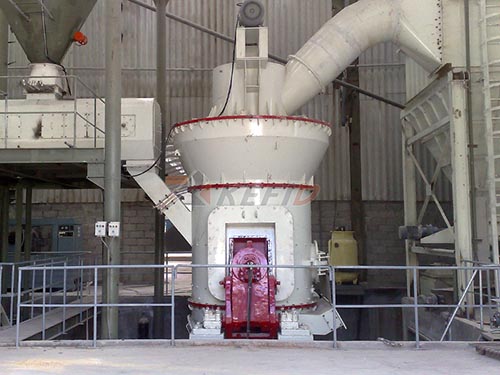
HighPressure Grinding Rolls (HPGR) Option | Technical Basis: Interparticle comminution at 4–6 N/mm² pressure creates microcracks in ore particles | Operational Benefit: Produces finer product with lower specific energy consumption than conventional tertiary crushing | ROI Impact: Reduces downstream ball mill energy consumption by 15–25%, saving $0.30–$0.50 per ton processed
Modular SkidMounted Design | Technical Basis: Preengineered structural steel frames with standardized interfaces | Operational Benefit: Reduces site installation time by 30–40% compared to conventional concrete foundations | ROI Impact: Accelerates project payback by 2–4 months through earlier production start
Advanced PLC Control System | Technical Basis: Integrated sensors monitoring crusher power draw, bearing temperature, and vibration levels | Operational Benefit: Provides realtime operational data and predictive maintenance alerts | ROI Impact: Extends equipment service life by 15% through early fault detection and planned maintenance
Dust Suppression System | Technical Basis: Engineered water spray nozzles positioned at transfer points and crusher inlets | Operational Benefit: Controls airborne particulate to meet environmental compliance standards | ROI Impact: Avoids potential regulatory fines of $25,000–$100,000 per incident while improving worker safety
WearResistant Liners | Technical Basis: Highchrome alloy and manganese steel components with optimized wear profiles | Operational Benefit: Extends liner service life by 20–30% in abrasive iron ore applications | ROI Impact: Reduces annual wear parts expenditure by $150,000–$400,000 for a 1,000 t/h plant
Competitive Advantages
| Performance Metric | Industry Standard | Iron Ore Crushing Plant Solution | Advantage |
|||||
| Throughput (t/h) | 750–900 | 1,000–1,200 | 15–33% higher |
| Product Size Consistency (P80 variation) | ±15% | ±8% | 47% improvement |
| Specific Energy Consumption (kWh/t) | 2.2–2.8 | 1.8–2.2 | 18–22% reduction |
| Availability (%) | 85–90 | 93–96 | 3–6 points higher |
| Wear Part Life (hours) | 4,000–6,000 | 6,000–8,000 | 25–33% longer |
| Installation Time (weeks) | 16–20 | 10–14 | 30–38% faster |
| Fines Generation (0.15 mm) | 12–18% | 8–12% | 25–33% reduction |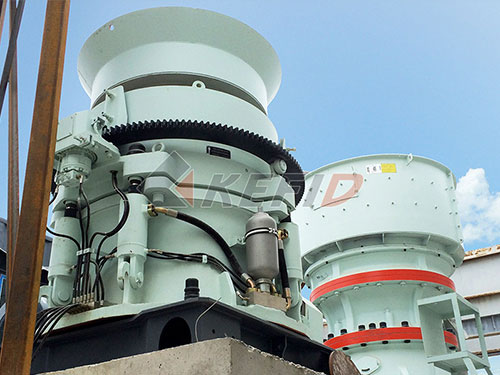
Technical Specifications
| Parameter | Specification |
|||
| Feed Size (Max) | 1,200 mm (primary), 250 mm (secondary), 75 mm (tertiary) |
| Product Size (P80) | 150–200 mm (primary), 40–75 mm (secondary), 6–12 mm (tertiary) |
| Throughput Capacity | 500–2,000 t/h (configurable) |
| Installed Power | 800–3,500 kW depending on configuration |
| Crusher Types | Jaw (primary), Cone (secondary), HPGR or VSI (tertiary) |
| Screen Decks | 2–3 deck vibrating screens, 3.0–4.2 m width |
| Conveyor Belt Width | 1,200–1,800 mm |
| Structure Material | Structural steel (S355JR) with abrasionresistant liners (AR500) |
| Operating Temperature Range | 20°C to +50°C (with coldweather packages available) |
| Dust Emission | <50 mg/Nm³ at emission points |
| Noise Level | <85 dB(A) at 1 meter from equipment |
| Dimensions (L×W×H) | 45 m × 25 m × 18 m (typical 1,000 t/h configuration) |
| Weight (Equipment Only) | 350–800 tonnes depending on configuration |
Application Scenarios
Hematite Processing Facility – Western Australia | Challenge: The operation faced declining throughput due to increasingly competent ore (Bond Work Index rising from 14 to 17 kWh/t), causing frequent crusher stalls and 12% availability loss | Solution: Installation of the complete crushing plant with HPGR tertiary stage, configured with automatic setting regulation to adapt to hardness variations | Results: Throughput increased from 850 to 1,100 t/h (29% improvement), availability reached 95%, and downstream ball mill energy consumption decreased by 22%, delivering a payback period of 14 months
Magnetite Concentrator Expansion – Brazil | Challenge: The existing circuit produced excessive fines (22% passing 0.15 mm), reducing filtration efficiency and increasing pelletizing costs | Solution: Reconfigured tertiary stage with VSI crusher and optimized screen apertures to control product gradation | Results: Fines generation reduced to 11%, filtration throughput increased by 18%, and total plant energy consumption dropped by 0.4 kWh/t, saving $1.2 million annually
Greenfield Iron Ore Project – South Africa | Challenge: The project required rapid commissioning to meet offtake agreements, with site installation constrained by limited construction workforce | Solution: Deployed the modular skidmounted plant design, preassembled and tested at the fabrication facility | Results: Installation completed in 11 weeks versus the planned 18 weeks, production commenced 2 months ahead of schedule, and the project achieved first revenue 45 days earlier than projected
Commercial Considerations
Equipment Pricing Tiers
| Configuration | Throughput Range | Indicative Price Range |
||||
| Standard Plant (Jaw + Cone) | 500–800 t/h | $4.5M – $7.5M |
| Enhanced Plant (Jaw + Cone + VSI) | 800–1,200 t/h | $7.5M – $12M |
| Premium Plant (Jaw + Cone + HPGR) | 1,200–2,000 t/h | $12M – $18M |
Optional Features
Service Packages
Financing Options
FAQ
Q: Can this crushing plant handle ores with varying moisture content?
A: The plant operates effectively with ore moisture up to 8% in the primary and secondary stages. For higher moisture content, additional screening capacity and specialized chute designs are recommended. Field data from operations processing 6–7% moisture ores shows no significant throughput degradation.
Q: What is the typical lead time from order to commissioning?
A: Standard lead time is 8–10 months for engineering and fabrication, with site installation requiring 10–14 weeks. The modular design reduces onsite construction time by 30–40% compared to conventional plants. Expedited delivery options are available for standard configurations.
Q: How does this plant compare to mobile or semimobile crushing solutions?
A: This stationary plant offers higher throughput capacity (up to 2,000 t/h versus 500–800 t/h for mobile units), superior product size control, and lower operating costs per ton. Mobile solutions remain appropriate for shortterm projects or operations with frequent relocation requirements.
Q: What are the specific power requirements for the complete plant?
A: A typical 1,000 t/h configuration requires 2,500–3,200 kVA of installed electrical capacity at 415V or 11kV supply. Specific energy consumption ranges from 1.8–2.2 kWh/t depending on ore hardness and product size requirements.
Q: Can the plant be integrated with existing downstream processing equipment?
A: Yes, the plant's control system supports integration with existing PLC architectures via standard protocols (Modbus, Profibus, Ethernet/IP). The product discharge points are designed with standard conveyor interfaces that can be adapted to match your existing circuit layout.
Q: What training is provided for plant operators and maintenance personnel?
A: The standard package includes 5 days of onsite operator training and 3 days of maintenance training. The optional training simulator provides handson experience with normal operations, fault scenarios, and emergency procedures without risking production.
Q: What is the expected service life of the plant equipment?
A: With proper maintenance, the structural components and major equipment have a design life of 20–25 years. Wear components (liners, mantles, screens) require periodic replacement based on operating hours, with typical intervals of 6,000–8,000 hours for crusher wear parts in iron ore applications.