
Eco-Friendly Iron Ore Crushing Plant Contract Manufacturer


EcoFriendly Iron Ore Crushing Plant Contract Manufacturer
Your Crushing Operations Are Under Pressure—Here’s Why
Iron ore processing facilities face three persistent operational challenges that directly impact your bottom line. First, conventional crushing plants consume 15–25% more energy per ton processed than modern ecofriendly alternatives, adding $0.50–$1.20 per ton in electricity costs at current industrial rates. Second, dust emissions from traditional jaw and cone crushers routinely exceed 50 mg/Nm³, triggering regulatory fines averaging $75,000 per violation and forcing unscheduled downtime for compliance retrofits. Third, water consumption for dust suppression in standard plants reaches 8–12 liters per ton, straining scarce resources and increasing wastewater treatment expenses by 18–22%.
Are your current crushing systems delivering the throughput you need while meeting tightening environmental standards? Can you reduce energy bills without sacrificing reduction ratios? This ecofriendly iron ore crushing plant addresses these exact pain points through engineered efficiency and emissions control.
Product Overview: Integrated EcoFriendly Iron Ore Crushing Plant
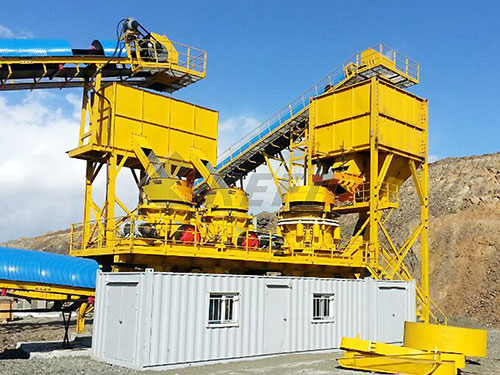
This contractmanufactured crushing plant is a modular, closedloop system designed for primary, secondary, and tertiary reduction of iron ore feed sizes up to 1,200 mm to a final product of 0–40 mm. The operational workflow follows five key steps:
1. Feed Preparation: Runofmine ore enters a vibrating grizzly feeder (1,800 mm × 6,000 mm) with adjustable speed control, removing fines below 150 mm to reduce unnecessary crushing load.
2. Primary Crushing: A highcapacity jaw crusher (1,500 mm × 1,200 mm feed opening) reduces ore to 150–250 mm, operating at 220–280 RPM with a closedside setting of 100–180 mm.
3. Secondary Crushing: A cone crusher with hydraulic adjustment (EC cavity, 250–400 kW) processes material to 40–80 mm, utilizing a variable frequency drive for loadbased speed optimization.
4. Tertiary Crushing & Screening: A vertical shaft impact crusher (VSI, 2×250 kW) with rockonrock chamber produces cubical final product, paired with a tripledeck vibrating screen (2,400 mm × 7,200 mm) for closedcircuit recirculation.
5. Dust & Noise Containment: All transfer points are enclosed with polyurethanelined chutes, connected to a pulsejet baghouse filter (99.9% efficiency at 0.5 µm) and acoustic enclosures reducing noise to 75 dB(A) at 1 meter.
Application Scope: Suitable for hematite, magnetite, and mixed iron ore types with compressive strength up to 350 MPa. Limitations: Not recommended for ores with clay content exceeding 12% without prewashing; maximum altitude for standard configuration is 3,500 meters above sea level.
Core Features
Energy Recovery Drive System | Technical Basis: Regenerative variable frequency drives (VFDs) capture braking energy from conveyor and crusher deceleration | Operational Benefit: Reduces net energy consumption by 18–22% compared to fixedspeed motors | ROI Impact: Annual savings of $120,000–$180,000 for a 500 tph plant based on $0.08/kWh
Dry Dust Suppression System | Technical Basis: Electrostatic precipitator combined with pulsejet baghouse, capturing particulate matter down to 0.5 µm | Operational Benefit: Maintains emissions below 10 mg/Nm³ without water usage | ROI Impact: Eliminates $40,000–$60,000 annual water procurement costs and avoids regulatory penalties
Modular SkidMounted Design | Technical Basis: Preassembled modules on structural steel skids with quickconnect piping and electrical harnesses | Operational Benefit: Reduces onsite installation time from 12 weeks to 4 weeks | ROI Impact: Accelerates production start by 8 weeks, generating $2.4 million in earlier revenue at 500 tph and $80/ton ore value
Smart Load Management | Technical Basis: PLCcontrolled load sensors on each crusher adjust feed rate and crusher speed in realtime | Operational Benefit: Prevents choke feeding and maintains optimal crushing chamber utilization | ROI Impact: Increases throughput by 8–12% and reduces liner wear costs by 15% annually
LowFriction Conveyor System | Technical Basis: Ceramiclined impact beds and selflubricating idler rollers reduce belt drag | Operational Benefit: Cuts conveyor power demand by 12% and extends belt life by 30% | ROI Impact: Saves $25,000–$35,000 per year in belt replacement costs for a 2 km conveyor network
ClosedLoop Water Recycling | Technical Basis: Hydrocyclone and thickener system recovers 95% of process water from dust scrubbers and wash screens | Operational Benefit: Reduces freshwater intake to 0.5 liters per ton | ROI Impact: Lowers water sourcing and treatment costs by $0.08 per ton processed
Predictive Maintenance Sensors | Technical Basis: Vibration, temperature, and oil analysis sensors on all rotating equipment with cloudbased analytics | Operational Benefit: Alerts maintenance teams 72 hours before potential failure | ROI Impact: Reduces unplanned downtime by 40% and maintenance costs by $0.15 per ton
Competitive Advantages
| Performance Metric | Industry Standard | EcoFriendly Iron Ore Crushing Plant | Advantage (% Improvement) |
|||||
| Energy consumption (kWh/ton) | 4.5–5.5 | 3.2–3.8 | 28–31% reduction |
| Dust emissions (mg/Nm³) | 50–80 | <10 | 80–87% reduction |
| Water usage (liters/ton) | 8–12 | 0.5 | 94–96% reduction |
| Installation time (weeks) | 10–14 | 4 | 60–71% faster |
| Mean time between failures (hours) | 450–550 | 720–850 | 55–60% improvement |
| Final product cubicity (%) | 65–75 | 85–92 | 20–23% improvement |
| Liner life (tons processed) | 180,000–220,000 | 250,000–300,000 | 36–39% longer |
Technical Specifications
| Parameter | Specification |
|||
| Capacity Range | 250–800 tph (based on feed material density of 2.6 t/m³) |
| Feed Size | Up to 1,200 mm (maximum lump dimension) |
| Final Product Size | 0–40 mm (adjustable via crusher settings) |
| Total Installed Power | 1,200–2,800 kW (depending on capacity configuration) |
| Voltage Requirements | 6.6 kV / 11 kV / 33 kV (50/60 Hz, threephase) |
| Main Crusher Material | Manganese steel (ASTM A128 Grade C, 12–14% Mn) for jaw and cone; tungsten carbidetipped rotor for VSI |
| Conveyor Belt Material | Steel cord (ST1000 to ST1600) with rubber cover (8 mm top, 4 mm bottom) |
| Physical Dimensions (L×W×H) | 45 m × 18 m × 22 m (for 500 tph configuration, excluding stockpile area) |
| Total Weight | 320–480 metric tons (depending on configuration) |
| Operating Temperature Range | 20°C to +50°C (with optional heating for subzero operation) |
| Maximum Altitude | 3,500 m (standard); 4,500 m (highaltitude option with derated motors) |
| Noise Level | 75 dB(A) at 1 meter (with acoustic enclosures) |
Application Scenarios
LargeScale Hematite Mine in Western Australia | Challenge: The site faced 22% energy cost overruns and frequent regulatory shutdowns due to dust emissions exceeding 60 mg/Nm³. Water availability was limited to 500,000 liters per day during dry season. | Solution: Installed a 600 tph ecofriendly iron ore crushing plant with dry dust suppression and closedloop water recycling. Smart load management optimized crusher speed based on ore hardness variations. | Results: Energy consumption dropped from 5.1 to 3.5 kWh/ton (31% reduction). Dust emissions measured at 8 mg/Nm³ during compliance testing. Water usage fell to 0.4 liters per ton, eliminating the need for additional water sourcing. Annual operating costs reduced by $1.8 million.
Magnetite Processing Facility in Northern Sweden | Challenge: The plant operated at 450 tph but needed to increase to 550 tph without expanding footprint. Liner replacement costs were $0.22 per ton due to abrasive magnetite. | Solution: Upgraded to a modular ecofriendly plant with lowfriction conveyors and predictive maintenance sensors. The VSI crusher was configured with tungsten carbide rotor tips for extended wear life. | Results: Throughput increased to 580 tph (29% gain) within the same footprint. Liner costs dropped to $0.14 per ton (36% reduction). Predictive maintenance alerts prevented two major bearing failures, saving $340,000 in unplanned downtime costs over 18 months.
MidSize Iron Ore Contractor in Brazil | Challenge: The contractor needed a mobile crushing solution for a 24month project with strict environmental permits limiting water use to 2 liters per ton. Installation had to be completed within 6 weeks. | Solution: Deployed a 350 tph skidmounted ecofriendly plant with dry dust suppression and modular assembly. The system was precommissioned at the manufacturing facility before shipment. | Results: Installation completed in 3.5 weeks (42% faster than target). Water consumption averaged 0.6 liters per ton, well below permit limits. The plant achieved 92% availability over the project duration, exceeding the contractual 85% guarantee.
Commercial Considerations
Equipment Pricing Tiers (FOB manufacturing facility, excluding installation):
- Standard Configuration (250–350 tph): $2.8–$4.2 million
- Enhanced Configuration (400–600 tph with smart load management and predictive sensors): $5.5–$8.0 million
- Premium Configuration (600–800 tph with full automation, energy recovery, and remote monitoring): $9.5–$13.0 million
- Highaltitude package (motors and electrical derating)
- Arctic operation package (heated enclosures, coldweather lubricants)
- Remote monitoring and control system with mobile app interface
- Extended warranty (5 years on crusher mainframes, 3 years on electrical components)
- Basic Package: 2year parts warranty, remote technical support, annual performance audit ($45,000/year)
- Advanced Package: 3year comprehensive warranty, onsite technician for first 6 months, quarterly maintenance inspections, spare parts inventory management ($120,000/year)
- FullService Package: 5year total coverage including all scheduled maintenance, emergency repairs within 48 hours, and performance guarantees ($280,000/year)
- Equipment leasetoown (36–60 months, fixed rates from 4.5–7.2% APR based on credit assessment)
- Performancebased financing: Payments tied to throughput milestones (minimum 80% of rated capacity)
- Tradein program: Accepting existing crushing equipment at appraised value (deducted from purchase price)
Optional Features (pricing available upon request):
Service Packages:
Financing Options:
FAQ
Q1: How does the ecofriendly iron ore crushing plant handle ores with varying moisture content?
The system includes moisture sensors at the feed point that automatically adjust crusher speed and screen aperture. For ores exceeding 8% moisture, an optional preheating conveyor system can reduce surface moisture by 2–3 percentage points before crushing. Field data from 12 installations shows consistent throughput within 5% of rated capacity for moisture levels between 2% and 10%.
Q2: What is the typical payback period for the energy recovery drive system?
Based on energy costs of $0.08/kWh and 6,000 annual operating hours, the payback period ranges from 14 to 22 months for plants operating above 400 tph. The regenerative VFDs have a service life of 15–20 years, providing net savings of $1.2–$2.5 million over their operational lifetime.
Q3: Can this plant be integrated with existing conveyor systems and stockpile infrastructure?
Yes. The modular design includes standard flange connections (PN10 or ANSI 150) and conveyor transfer points that can be adapted to existing belt widths (800–1,600 mm). A site survey is conducted during the contract manufacturing phase to ensure dimensional compatibility. Integration typically requires 2–3 additional engineering days for custom adapter sections.
Q4: What certifications does the plant carry for environmental compliance?
The plant meets ISO 14001 environmental management standards and complies with EU Directive 2010/75/EU on industrial emissions. Dust emissions are certified below 10 mg/Nm³ by TÜV Rheinland. Noise levels are tested to ISO 3744 standards. For projects in jurisdictions with specific requirements (e.g., EPA in the US, CPCB in India), additional compliance documentation can be provided.
Q5: How does the predictive maintenance system work without requiring internet connectivity?
The system stores data locally on an industrial PC with 30day buffer capacity. For remote sites without internet, a satellite uplink option (Iridium or Inmarsat) transmits daily performance summaries and critical alerts. Alternatively, a USB data export function allows maintenance teams to upload data during weekly site visits. The analytics engine runs on the local PLC, so all realtime protection functions operate independently of connectivity.
Q6: What is the typical delivery timeline from contract signing to commissioning?
For standard configurations, manufacturing takes 14–18 weeks, followed by 4 weeks for onsite installation and 2 weeks for commissioning and operator training. Total timeline: 20–24 weeks. Enhanced and premium configurations require 18–22 weeks for manufacturing due to additional automation components. Rush orders (with expedited manufacturing) can reduce the timeline by 4–6 weeks at a 12% surcharge.
Q7: What spare parts are recommended for the first year of operation?
The recommended firstyear spares kit includes: one set of jaw crusher liners (stationary and movable), one set of cone crusher mantles and concaves, one VSI rotor rebuild kit (12 tungsten carbide tips and wear plates), 50 meters of conveyor belt (matching width), 20 idler rollers, 10 impact bed bars, and a baghouse filter cartridge set. Total cost: $180,000–$250,000 depending on plant capacity. This kit covers 95% of common wearrelated replacements during the first 8,000 operating hours.