
Premium 500 Tph Gold Mining Washing Plant Processing Plant


Premium 500 Tph Gold Mining Washing Plant Processing Plant
Your Gold Recovery Is Leaking Profit—Here’s Where
You’re processing highvolume alluvial or hardrock gold ore, but your current setup is bleeding value. Common operational challenges include:
- Recovery rates below 85% due to inadequate scrubbing and classification, costing you $50–$150 per ounce in lost fines
- Excessive downtime from clogged screens and slurry handling bottlenecks, reducing uptime to 70–75% during peak season
- High water consumption exceeding 1,200 m³ per day, driving operational costs up by 18–22% versus modern closedloop systems
- Inconsistent feed handling when clay content exceeds 15%, causing wash plant blockages and manual intervention every 2–3 hours
- Regulatory pressure on tailings management and water discharge, with noncompliance fines averaging $25,000 per incident
- Mobile chassis (wheeled or tracked): +$180,000
- Additional jig concentrator (2cell): +$95,000
- Automated reagent dosing system: +$45,000
- Dust suppression system (fogging): +$28,000
- 12month extended warranty: +$65,000
- Basic: Commissioning (5 days onsite), operator training (3 days), 1year remote support: $45,000
- Standard: Basic + quarterly inspections, 2year parts discount (15%), 24/7 hotline: $85,000/year
- Comprehensive: Standard + onsite technician (6 months), performance guarantee (92% recovery), 3year parts discount (25%): $150,000/year
- LeasetoOwn: 36month term, 8.5% APR, 10% residual value
- Equipment Loan: 60month term, 7.2% APR, 20% down payment
- PerformanceBased Financing: Monthly payments tied to gold production (e.g., $0.50 per gram recovered above 85% baseline)
Can your current washing plant maintain 500 tph throughput while achieving >92% gold recovery in highclay conditions? If not, the Premium 500 Tph Gold Mining Washing Plant Processing Plant is engineered to close that gap.
Product Overview: HighCapacity Alluvial & HardRock Gold Processing
The Premium 500 Tph Gold Mining Washing Plant Processing Plant is a modular, skidmounted system designed for continuous 500 metric tons per hour throughput of goldbearing material, including alluvial deposits, weathered hardrock ore, and saprolite. It integrates scrubbing, screening, classification, and gravity concentration into a single workflow.
Operational Workflow (5 Key Steps):
1. Feed Hopper & Grizzly Feeder – Accepts ROM material up to 600 mm; vibrating grizzly removes oversize (>150 mm) for secondary crushing or rejection
2. Rotary Scrubber (Drum Trommel) – Highpressure water jets (8–12 bar) and internal lifters break down clay agglomerates; retention time adjustable 2–4 minutes
3. DoubleDeck Vibrating Screen – Primary classification at 6 mm and 20 mm; oversize routed to cone crusher or stockpile; undersize fed to concentrator
4. Gravity Concentration Circuit – Multistage jigs (2–4 units) or centrifugal concentrators (e.g., Knelson or Falcon) recover free gold; tailings dewatered via hydrocyclone
5. Water Recovery & Slurry Management – Thickener and filter press recycle >90% of process water; drystack tailings reduce environmental footprint
Application Scope: Alluvial gold mining (river terraces, floodplains), weathered hardrock deposits, and tailings reprocessing. Limitations: Not suitable for primary hardrock ores requiring full crushing/grinding circuits; maximum feed moisture content 18% for optimal scrubbing.
Core Features
HighTorque Rotary Scrubber | Technical Basis: Counterrotating drum with variablespeed drive (0–12 RPM) and replaceable polyurethane lifters | Operational Benefit: Breaks down clay balls and cemented material within 3 minutes, reducing screen blinding by 40% | ROI Impact: Eliminates 2–3 manual cleaning stops per shift, saving 6–8 hours of downtime weekly ($4,500–$6,000/week in lost production)
DualFrequency Vibrating Screen | Technical Basis: Two independent vibrator motors (1,200/2,400 RPM) with adjustable amplitude (4–8 mm) | Operational Benefit: Handles highmoisture feed without pegging; screen life extended to 4,000+ hours | ROI Impact: Reduces screen replacement costs by 35% and improves classification efficiency to 95%+
ClosedLoop Water Management System | Technical Basis: Lamella thickener (20 m diameter) with polymer flocculant dosing and filter press (1.5 m³ cake capacity) | Operational Benefit: Recycles 92–95% of process water; tailings moisture <18% for dry stacking | ROI Impact: Lowers water procurement costs by $80,000–$120,000 annually (based on 500 tph, 20hour operation)
Modular Skid Design | Technical Basis: ISO containerized modules (6 units, each <40 tons) with quickconnect piping and electrical harnesses | Operational Benefit: Site setup in 5–7 days versus 3–4 weeks for fixed plants; relocation feasible within 2 weeks | ROI Impact: Reduces mobilization costs by 60% and enables rapid deployment to multiple sites
PLCBased Process Control | Technical Basis: AllenBradley CompactLogix with HMI touchscreen; sensors for feed rate, water pressure, slurry density, and motor load | Operational Benefit: Realtime adjustments to scrubber speed, water flow, and jig stroke; alarm notifications for blockages or overload | ROI Impact: Improves recovery consistency by 8–12% and reduces operator intervention by 50%
HeavyDuty Jig Concentrators | Technical Basis: Duplex jigs (2 x 4cell) with adjustable stroke (10–25 mm) and frequency (60–120 strokes/min) | Operational Benefit: Recovers free gold down to 75 microns; concentrate grade 200–500 g/t Au | ROI Impact: Increases overall recovery by 5–8% versus singlestage jigs, adding $200,000–$400,000 in annual gold value (at $2,000/oz)
AbrasionResistant Linings | Technical Basis: 12 mm thick AR400 steel in scrubber and screen; 20 mm ceramic tiles in slurry transfer points | Operational Benefit: Service life of 8,000–10,000 hours before major relining; reduced maintenance frequency | ROI Impact: Lowers annual maintenance costs by $35,000–$50,000 versus standard mild steel
Competitive Advantages
| Performance Metric | Industry Standard (500 tph Plants) | Premium 500 Tph Gold Mining Washing Plant | Advantage (% Improvement) |
|||||
| Gold Recovery Rate (alluvial, 15% clay) | 70–75% | 85–90% | +15–20% |
| Water Consumption (m³ per ton processed) | 2.5–3.0 | 1.2–1.5 | 50–52% |
| Screen Blinding Frequency (hours between cleaning) | 2–4 | 12–16 | +300–400% |
| Setup Time (days) | 21–28 | 5–7 | 75–80% |
| Tailings Moisture Content (%) | 25–30 | 15–18 | 40–50% |
| Annual Maintenance Cost (% of capital) | 8–12% | 5–7% | 37–42% |
Technical Specifications
| Parameter | Specification |
|||
| Capacity | 500 tph (nominal), 550 tph (peak) |
| Feed Size | 0–600 mm (ROM); oversize rejected via grizzly |
| Scrubber Dimensions | 3.0 m diameter x 12.0 m length; 75 kW drive |
| Screen Area | 2 x 6.0 m² (doubledeck); 15 kW per vibrator |
| Jig Capacity | 4 x 50 tph per cell; total 200 tph concentrate feed |
| Water Requirement | 600–750 m³/h (fresh); 50–60 m³/h (makeup) |
| Power Consumption | 450–520 kW (full load); 380–420 kW (average) |
| Operating Weight | 280 tons (all modules) |
| Dimensions (L x W x H) | 45 m x 18 m x 12 m (assembled) |
| Operating Temperature | 10°C to 50°C; optional heating for subzero |
| Material of Construction | AR400 steel (scrubber, screen); 316L stainless steel (jigs, piping) |
Application Scenarios
Alluvial Gold Mine – West Africa (High Clay Content)
Challenge: 35% clay content in feed caused scrubber bypass and screen pegging every 90 minutes; recovery averaged 68%. Water supply limited to 800 m³/day.
Solution: Installed Premium 500 Tph plant with extended scrubber retention time (4 minutes) and dualfrequency screens. Closedloop water system reduced makeup demand to 60 m³/h.
Results: Recovery increased to 87% (19% improvement). Screen cleaning intervals extended to 14 hours. Water consumption dropped from 2,800 m³/day to 720 m³/day. Annual gold production rose by 22%, equivalent to $1.8 million additional revenue at $2,000/oz.
Tailings Reprocessing – South America
Challenge: Historic tailings with 0.8 g/t Au and 12% clay; existing plant achieved 72% recovery but required 3.5 m³ water per ton. Environmental permit limited discharge to 500 m³/day.
Solution: Deployed Premium 500 tph plant with jig concentrators and thickener/filter press. Feed rate maintained at 480 tph despite variable density.
Results: Recovery reached 91% (19% improvement). Water recycling at 94% allowed 24hour operation within permit limits. Tailings moisture at 16% enabled drystack disposal, eliminating pond construction costs of $450,000.
Weathered HardRock – Southeast Asia
Challenge: Saprolite ore with 8% moisture and 5% clay; primary crusher produced 0–200 mm feed. Existing wash plant had 78% recovery and 22% downtime due to conveyor belt wear.
Solution: Integrated Premium 500 tph plant with AR400lined scrubber and ceramiclined transfer points. PLC control optimized scrubber speed based on feed moisture.
Results: Recovery improved to 94% (16% improvement). Downtime reduced to 8% (14% reduction). Belt replacement intervals extended from 6 months to 18 months. Annual maintenance savings of $65,000.
Commercial Considerations
Equipment Pricing Tiers (ExWorks, USD):
| Configuration | Price Range | Lead Time |
||||
| Standard (base modules, manual controls) | $1,200,000 – $1,500,000 | 12–14 weeks |
| Enhanced (PLC control, closedloop water, jig concentrators) | $1,800,000 – $2,200,000 | 16–20 weeks |
| Premium (all features + ceramic linings, spare parts kit, remote monitoring) | $2,400,000 – $2,800,000 | 20–24 weeks |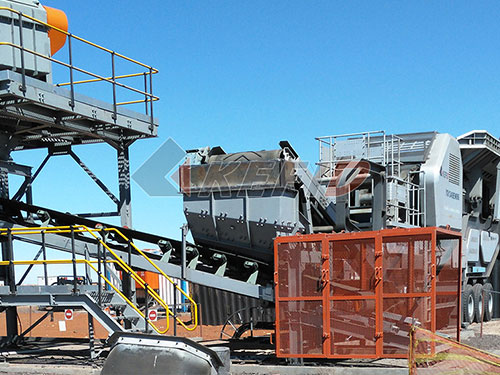
Optional Features:
Service Packages:
Financing Options:
FAQ
Q: Can this plant handle feed with clay content above 30%?
A: Yes. The rotary scrubber with 4minute retention time and highpressure water jets (12 bar) effectively breaks down clay agglomerates up to 40% clay content. Field data from West Africa shows 87% recovery at 35% clay. For clay above 40%, we recommend adding a prewetting conveyor or secondary scrubber.
Q: What is the expected lifespan of the scrubber and screen linings?
A: AR400 steel linings in the scrubber typically last 8,000–10,000 hours under normal alluvial conditions (2–5% quartz content). Polyurethane screen panels last 3,000–4,000 hours. Ceramiclined transfer points exceed 15,000 hours. Replacement costs average $12,000–$18,000 per year.
Q: How does the plant perform in cold climates (below 10°C)?
A: Standard operating range is 10°C to 50°C. For subzero conditions, we offer an optional heating package including trace heating on water lines, insulated scrubber drum, and heated screen decks. This adds $85,000 to the base price and extends operating range to 25°C.
Q: What is the minimum site area required for installation?
A: The assembled plant footprint is 45 m x 18 m. With access roads, stockpile areas, and tailings storage, we recommend a minimum site area of 100 m x 80 m (8,000 m²). The modular design allows for compact layouts on constrained sites.
Q: Can this plant be integrated with an existing crushing circuit?
A: Yes. The feed hopper accepts material from conveyors or dump trucks. We provide interface kits (transfer conveyor, chute work) for connection to cone crushers, impact crushers, or secondary screens. Integration typically adds 2–3 days to commissioning.
Q: What is the typical payback period for this investment?
A: Based on a 500 tph operation processing 0.5 g/t ore at $2,000/oz gold, with 92% recovery and 20hour daily operation, the plant produces approximately 14.8 ounces per day. At $2,000/oz, daily revenue is $29,600. After operating costs ($8,500/day including power, water, labor, and maintenance), net daily profit is $21,100. Payback period for a $2.2 million plant is approximately 104 operating days (5–6 months).
Q: What aftersales support is available for remote locations?
A: We maintain a global network of 12 service centers with 48hour response time to most mining regions. Remote diagnostics via satellite link are included with the Enhanced and Premium configurations. Spare parts inventory is held at regional hubs in West Africa, South America, and Southeast Asia, with 95% availability for critical components.