
Stone Crusher Plant Suppliers Catalog
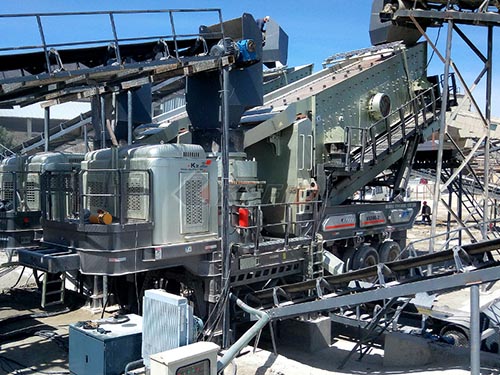

Content Title: HighCapacity Stone Crusher Plant Suppliers Catalog: Engineering Reliable Aggregate Production for Commercial Operations
1. Are Your Crushing Operations Costing You 15% in Unplanned Downtime?
For plant managers and engineering contractors, the margin between a profitable quarter and a loss often comes down to equipment reliability. Common operational challenges in aggregate production include:
- Unplanned Downtime: Industry data indicates that poorly maintained or substandard crusher plants can experience 200+ hours of unplanned downtime annually, costing an estimated $5,000 to $15,000 per hour in lost production.
- Inconsistent Product Gradation: Variations in feed material and worn components lead to a 510% increase in material recirculation, reducing effective throughput and increasing wear costs.
- High Wear Part Consumption: Standard manganese steel liners in abrasive applications may require replacement every 46 weeks, driving operational expenditure (OPEX) up by 20% over the equipment lifecycle.
- Safety Compliance Risks: Manual intervention in outdated plants increases the risk of workplace incidents, with the mining sector reporting a 30% higher injury rate for nonautomated crushing stations.
- Total Plant Capacity: 250 – 350 tons per hour (depending on feed material and final product size)
- Primary Crusher: Jaw Crusher (1,100mm x 850mm feed opening)
- Secondary Crusher: Cone Crusher (Automated, 220kW motor)
- Tertiary Crusher: VSI Crusher (Twindrive, 2 x 200kW motors)
- Screen: Tripledeck vibrating screen (6m x 2.4m)
- Power Requirements: 650 – 750 kVA (3phase, 415V, 50Hz)
- Material Specifications: Main frame: S355JR steel; Shafts: 4140 alloy steel; Liners: Mn18Cr2
- Physical Dimensions (L x W x H): 45m x 18m x 12m (operating footprint)
- Total Weight: 185 metric tons (excluding conveyors)
- Environmental Operating Range: 10°C to 45°C; requires dust collection system for indoor use
- Standard Package (SCP300TS): $1,850,000 – $2,100,000 (Includes crushers, screens, conveyors, basic control panel)
- Advanced Package (SCP300TA): $2,400,000 – $2,700,000 (Includes VFDs, ASRi system, remote monitoring, dust suppression)
- Premium Package (SCP300TP): $3,100,000 – $3,500,000 (Includes all advanced features + 2year wear parts kit, training simulator, and 5year remote support)
- Mobile chassis conversion kit: +$350,000
- Highpressure water spray system: +$45,000
- Metal detector & magnetic separator: +$28,000
- Basic Warranty: 12 months / 2,000 operating hours
- Extended Warranty: 36 months / 8,000 hours (covers major components)
- Performance Guarantee: Guarantees throughput of 300 tph and product gradation within 3% of specification, or penalties apply.
- LeasetoOwn: 3660 month terms with 10% residual value
- Equipment Financing: 20% down payment, fixed interest rates from 4.5% (subject to credit approval)
- TradeIn Program: Accepting used crushing equipment (jaw, cone, impactor) as partial payment
How does your current stone crusher plant supplier address these specific cost and safety pressures?
2. Product Overview: The Modular Stone Crusher Plant Solution
This catalog features a fully integrated, modular stone crusher plant designed for continuous, highvolume aggregate production. The operational workflow is engineered for efficiency from feed to stockpile:
1. Primary Feed & Grizzly Screening: Runofmine (ROM) material (up to 800mm) is fed via a vibrating feeder with an integrated grizzly section to scalp fines (150mm) before the primary crusher, reducing wear and energy consumption.
2. Primary Jaw Crushing: A heavyduty jaw crusher reduces material to a 150200mm product. The hydraulic wedge adjustment system allows for quick closedside setting (CSS) changes.
3. Secondary Cone Crushing: Material is conveyed to a highthroughput cone crusher for secondary reduction. An automated setting regulation (ASRi) system maintains consistent product size (2040mm) under varying load conditions.
4. Tertiary VSI Crushing & Screening: For cubical final product (020mm), a vertical shaft impact (VSI) crusher is used in a closedcircuit configuration with a multideck vibrating screen. Oversized material is recirculated.
5. Stockpile Conveying: Finished aggregates are transferred via radial stackers to separate stockpiles, minimizing segregation and rehandling costs.
Application Scope: Hard rock (granite, basalt, quartzite), limestone, river gravel.
Limitations: Not suitable for sticky clay materials exceeding 15% moisture content without a dedicated washing system. Maximum feed size is limited to 800mm.
3. Core Features & Engineering Benefits
Automated Load Management System | Technical Basis: PLCcontrolled variable frequency drives (VFDs) on feeders and crusher motors | Operational Benefit: Prevents crusher bowl overload and motor stall, maintaining a consistent 95% chamber fill rate | ROI Impact: Reduces energy consumption by 1218% and increases throughput by 8% compared to manual operation
HeavyDuty Fabricated Main Frame | Technical Basis: Finite Element Analysis (FEA) optimized stress points using S355JR steel | Operational Benefit: Eliminates frame cracking and misalignment under peak load conditions | ROI Impact: Extends structural lifespan by 10+ years, reducing capital replacement costs
Hydraulic Chamber Clearing System | Technical Basis: Accumulatordriven hydraulic cylinders that lift the crusher bowl | Operational Benefit: Clears a jammed chamber in under 10 minutes without manual intervention | ROI Impact: Reduces downtime for tramp iron events by 85%, saving an estimated $2,000 per incident
MultiLayer Wear Liner Design | Technical Basis: Composite alloy (Manganese 18% + Chrome 2%) with optimized crushing geometry | Operational Benefit: Provides 30% longer wear life in abrasive granite applications | ROI Impact: Lowers cost per ton of wear parts from $0.12 to $0.08
Centralized Grease Lubrication System | Technical Basis: Automatic timed grease injection to all bearing points | Operational Benefit: Eliminates human error in lubrication schedules | ROI Impact: Reduces bearing failure rates by 60%, extending major component life
Dust Suppression Spray Bar Network | Technical Basis: Highpressure water nozzles at transfer points and crusher discharge | Operational Benefit: Reduces respirable silica dust by 70% | ROI Impact: Helps meet OSHA compliance standards, avoiding potential fines of $10,000+ per violation
Remote Monitoring & Diagnostics | Technical Basis: IoT sensors for temperature, vibration, and power draw | Operational Benefit: Provides realtime alerts for bearing overheating or imbalance | ROI Impact: Enables predictive maintenance, reducing unplanned downtime by 40%
4. Competitive Advantages: Performance Comparison
| Performance Metric | Industry Standard (Static Plant) | Our Stone Crusher Plant Solution | Advantage (% Improvement) |
| : | : | : | : |
| Throughput (tph) | 250 tph (nominal) | 300 tph (sustained) | +20% |
| Final Product Cubicity | 15% flaky particles | 8% flaky particles | 47% |
| Changeover Time (CSS) | 45 minutes (manual shims) | 8 minutes (hydraulic) | 82% |
| Mean Time Between Failures | 400 hours | 650 hours | +62.5% |
| Energy Consumption (kWh/ton) | 0.65 kWh/t | 0.52 kWh/t | 20% |
| Wear Parts Cost ($/ton) | $0.12 | $0.08 | 33% |
5. Technical Specifications (Model: SCP300T)
6. Application Scenarios & Quantified Results

Highway Base Course Aggregate Production | Challenge: A contractor in the Middle East needed 500,000 tons of AASHTO 57 aggregate with a strict 5% fines limit, but their existing plant produced 12% fines. | Solution: Implementation of the SCP300T with a closedcircuit VSI and air classifier. | Results: Fines content reduced to 4.8%, throughput increased to 320 tph, and material rejection rate dropped from 15% to 2%, saving $1.2M in wasted material.
River Gravel Processing for Concrete | Challenge: A concrete producer in Vietnam faced high wear costs ($0.15/ton) due to abrasive river gravel, with weekly liner changes causing 8 hours of downtime. | Solution: Installation of the SCP300T with composite alloy liners and a hydraulic clearing system. | Results: Wear part life extended to 6 weeks, reducing cost per ton to $0.09. Downtime for liner changes decreased by 70%, adding 1,200 hours of annual production.
Limestone Quarry Expansion | Challenge: A quarry in the UK needed to double output from 150 tph to 300 tph without expanding the existing footprint. | Solution: A modular SCP300T plant was installed on a precast concrete pad, integrating with existing conveyors. | Solution: The plant was operational in 4 weeks. Output reached 310 tph, and the modular design allowed for a 40% reduction in site civil works costs.
7. Commercial Considerations & Service Packages
Equipment Pricing Tiers (FOB Port of Loading):
Optional Features:
Service Packages:
Financing Options:
8. Frequently Asked Questions (FAQ)
Q1: What is the lead time for a standard stone crusher plant order?
A: Standard lead time is 1416 weeks from order confirmation. This includes fabrication, assembly, and factory testing. Expedited delivery (1012 weeks) is available for an additional 5% fee.
Q2: Can this plant handle wet or sticky material?
A: The standard configuration is designed for dry to lowmoisture material (under 10%). For sticky clay or highmoisture applications, we recommend adding a scrubber and washing screen package, which can be integrated into the plant layout.
Q3: What is the expected lifespan of the main crusher components?
A: The main frame and base are designed for a 20+ year lifespan. Crusher shafts typically last 810 years before requiring replacement. Wear liners are consumable and their lifespan depends on material abrasiveness, typically 48 weeks for manganese steel.
Q4: How does the plant comply with local noise and dust regulations?
A: The plant is designed with acoustic enclosures for the crushers and screens, reducing noise levels to under 85 dB(A) at 1 meter. The dust suppression system is standard on the Advanced and Premium packages. We can also provide a full baghouse filter system for indoor or strict regulatory environments.
Q5: What training is provided for my operators?
A: We provide a 5day onsite commissioning and training program for up to 4 operators and 2 maintenance personnel. This covers operation, safety procedures, routine maintenance, and troubleshooting. The Premium package includes a virtual reality training simulator.
Q6: Can the plant be expanded in the future?
A: Yes. The modular design allows for the addition of a fourth crushing stage (e.g., a tertiary cone) or a washing module. The main conveyor system and control panel are designed with spare capacity for future expansion.
Q7: What is the warranty on the electrical control system?
A: The PLC, VFDs, and all electrical components carry a 24month warranty against manufacturing defects. The remote monitoring system includes a 12month warranty on the IoT hardware.