
Usine De Concasseur De Pierre Personnalisée R&D
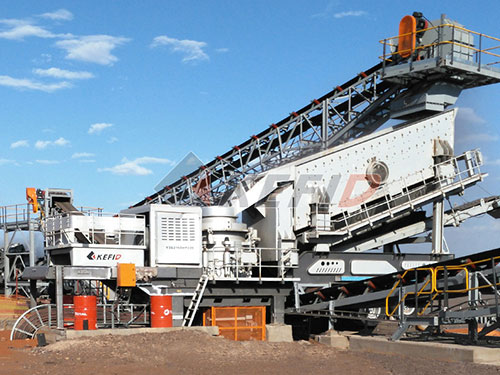

Usine De Concasseur De Pierre Personnalisée R&D: Engineering Processing Solutions for Demanding Aggregate Operations
1. Le défi opérationnel: When Standard Crushing Equipment Falls Short
Every aggregate producer eventually faces the same wall. Your deposit changes—harder rock, teneur en argile plus élevée, more slabby fractures—and suddenly your throughput drops 1822% while wear parts consumption climbs 30% ou plus. The cost is measurable: à 450 tonnes par heure, un 15% efficiency loss translates to roughly 1,200 tons of lost production per 16hour shift, or approximately $14,000 in unrealized revenue daily at current aggregate prices.
Au-delà du débit, plant managers contend with three persistent issues. D'abord, feed variability: your material characteristics shift seasonally, yet your crushing circuit remains fixed. Deuxième, conformité aux spécifications: increasingly stringent Superpave and concrete aggregate requirements demand tighter gradation control than offtheshelf equipment can deliver. Troisième, maintenance windows: every hour spent on unplanned liner changes or conveyor jams is an hour your competitors are shipping material.
The question is not whether you need a stone crusher plant—it is whether your current configuration is engineered for your specific deposit, your product mix, and your operational constraints. A customengineered solution addresses these variables directly, rather than forcing your operation to adapt to generic equipment limitations.
2. Présentation du produit: PurposeBuilt Crushing and Screening Systems
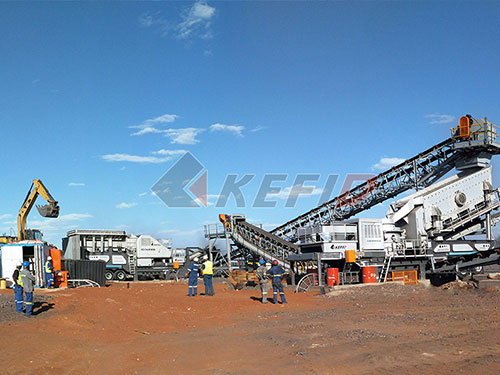
A custom stone crusher plant is a complete, integrated processing system designed around your specific feed material, target products, and site conditions. Contrairement aux installations modulaires standards, the equipment configuration, géométrie de la chambre, ponts d'écran, and conveyor routing are engineered from your actual operational data—not from a catalog template.
Flux de travail opérationnel
1. Feed Analysis and Material Testing: Your deposit is sampled and subjected to abrasion testing (LA Abrasion), compressive strength analysis, and moisture content evaluation to determine optimal crusher selection and settings.
2. Réduction primaire: Jaw or impact crushers reduce ROM feed to 150200mm, with chamber profiles matched to your feed gradation and hardness.
3. Concassage secondaire et tertiaire: Concasseurs à cône ou impacteurs à arbre vertical (TOUT LE MONDE) are configured with specific eccentric throw, accident vasculaire cérébral, and speed settings to produce your target cubicity and gradation.
4. Dépistage et classification: Multideck inclined or horizontal screens with custom mesh configurations separate products to your exact specifications.
5. Material Handling and Stockpiling: Conveyor transfer points, chute geometry, and stockpile arrangements are designed to minimize segregation and degradation.
Champ d'application
This approach serves stationary and semimobile installations processing 100 à 2,000+ tonnes par heure. It is appropriate for hard rock quarries, sand and gravel operations, recycled concrete processing, and industrial mineral applications. The primary limitation is lead time—custom engineering typically requires 816 weeks for design and fabrication versus 46 weeks for standard plants—and a higher initial capital investment of 1020% over comparable standard configurations.
3. Fonctionnalités principales
Custom Chamber Geometry | Base technique: Crushing cavity profiles calculated from your feed size distribution and compressive strength data using discrete element modeling (DEM) | Avantage opérationnel: Your operators will see consistent throughput with fewer bridging events and less oversize recirculation | Impact sur le retour sur investissement: 812% reduction in recirculating load reduces energy consumption by 57 kWh par tonne traitée
Entraînement à fréquence variable (VFD) Systèmes de convoyeurs | Base technique: Motor power matched to actual material density and belt loading calculations for your specific aggregate | Avantage opérationnel: Eliminates belt slippage and reduces spillage at transfer points, cutting cleanup labor by 34 heures par quart de travail | Impact sur le retour sur investissement: Des économies annuelles de $25,00040,000 in labor and reduced belt replacement costs
Modular Screen Deck Configurations | Base technique: Screen media selection based on your moisture content and fines generation characteristics | Avantage opérationnel: Quickchange deck panels allow product spec changes in under 2 heures contre 68 hours on standard systems | Impact sur le retour sur investissement: 46 additional production hours per product changeover, évalué à $2,8004,200 par événement
Automated Lubrication and Monitoring | Base technique: Conditionmonitoring sensors on bearings, boîtes de vitesses, and crusher mainshafts with programmable service intervals | Avantage opérationnel: Your maintenance team receives early warning of component wear, réduisant les temps d'arrêt imprévus de 3540% | Impact sur le retour sur investissement: Extended component life of 1520% and reduced maintenance labor costs of $18,00030,000 annuellement
Intégration de la suppression de la poussière | Base technique: Water spray systems engineered to your specific dust generation points and local environmental regulations | Avantage opérationnel: Compliance with air quality permits without sacrificing visibility or adding operator burden | Impact sur le retour sur investissement: Évite les amendes potentielles de $10,00050,000 par violation et réduit les plaintes de la communauté
Structural Design for Site Conditions | Base technique: Foundation and support structures engineered for your specific soil bearing capacity, wind loads, and seismic zone | Avantage opérationnel: Reduced civil works costs and faster installation on challenging terrain | Impact sur le retour sur investissement: 1015% reduction in site preparation costs, typiquement $50,000150,000
Remote Diagnostics and Telemetry | Base technique: PLCbased control systems with cellular or satellite connectivity for realtime operational data | Avantage opérationnel: Your management team monitors production metrics and equipment health from any location | Impact sur le retour sur investissement: 58% amélioration de l’efficacité globale de l’équipement (OEE) through datadriven decision making
4. Avantages compétitifs
| Mesure de performances | Norme de l'industrie | Solution personnalisée | Avantage |
|||||
| Cohérence du débit (hourly variance) | ±1215% | ±57% | 5060% amélioration |
| Wear parts life (acier au manganèse) | 4,5006,000 heures | 6,5008,500 heures | 3040% plus long |
| Consommation d'énergie par tonne | 0.81.2 kWh/tonne | 0.60.9 kWh/tonne | 2025% réduction |
| Product changeover time | 68 heures | 23 heures | 6065% plus rapide |
| Temps d'arrêt imprévus | 812% du temps de fonctionnement | 46% du temps de fonctionnement | 4050% réduction |
| Génération d'amendes (moins 75 micron) | 1218% | 812% | 2535% réduction |
| Temps d'installation (greenfield) | 1216 semaines | 812 semaines | 2530% plus rapide |
Field data from installations across North America and Australia demonstrates that these improvements are achievable when the plant design is based on actual material testing rather than assumed parameters.
5. Spécifications techniques
Évaluations de capacité et de performance
- Plage de débit: 1002,000 tonnes par heure (depending on feed material and product specifications)
- Rapport de réduction: Jusqu'à 6:1 in primary stage; 4:1 in secondary; 3:1 in tertiary
- Product Gradation Tolerance: ±3% on individual sieve fractions for specified products
- Indice de desquamation: Ci-dessous 15% for cubical products (VSI final reduction stage)
- Puissance installée: 2503,500 kW depending on plant capacity
- Options de tension: 380V, 415V, 480V, 690V, 3.3kV, 6.6kV, 11kV
- Power Factor Correction: 0.95 or better with capacitor banks
- Generator Compatibility: Designed for grid or standalone diesel/gas generation
- Matériau d'alimentation: Roche dure (granit, basalte, quartzite) jusqu'à 350 Résistance à la compression MPa; abrasive materials up to 40% teneur en quartz
- Taille de l'alimentation: Up to 1,000mm for primary applications
- Teneur en humidité: Jusqu'à 8% for screening efficiency without blinding
- Matériaux de construction: Acier de construction S355, Hardox 450 porter des doublures, 1214% manganese steel crusher liners
- Empreinte végétale: 2,5008,000 mètres carrés (selon configuration)
- Maximum Component Height: 1822 meters for feed hoppers and screen towers
- Dimensions de transport: Modular components designed for standard flatbed or lowboy trailers
- Température de fonctionnement: 30°C à +50°C
- Altitude: Jusqu'à 4,000 mètres au-dessus du niveau de la mer (déclassement au-dessus de 1 500 m)
- Humidité: Jusqu'à 95% sans condensation
- Wind Load: Designed to 160 km/h gust speeds
- Paquet d'automatisation: $150,000400,000 (comprend le contrôle PLC, surveillance à distance, and data analytics)
- Système de collecte de poussière: $200,000600,000 (baghouse or cartridge filtration)
- Washing System: $500,0001.5 million (for sand and gravel operations requiring clean products)
- Garantie prolongée: 35% du coût de l'équipement (covers wear parts beyond standard warranty)
- Forfait de base: 2 visites sur site par an, diagnostic à distance, 24assistance téléphonique par heure
- Forfait Premium: Visites de chantier trimestrielles, onsite training for operators and maintenance staff, inventory management for critical wear parts, guaranteed response time of 24 hours for emergency parts
- Clé en main complète: Includes civil works coordination, surveillance des installations, mise en service, et la formation des opérateurs pour 2 weeks poststartup
- Prêts d'équipement: 57 termes de l'année avec 1020% acompte
- Location-propre: 35 year leases with purchase option at end of term
- Financement basé sur la performance: Paiements liés à des jalons de débit (available for projects above $10 million)
- Government Incentives: Many jurisdictions offer tax credits or grants for recycling equipment or energyefficient processing systems
Exigences d'alimentation
Spécifications matérielles
Dimensions physiques
Plage de fonctionnement environnementale
6. Scénarios d'application
Agrandissement de la carrière de roche dure | Défi: A granite quarry in the southeastern United States faced declining throughput as they moved into harder, more abrasive rock. Production fell from 450 à 380 tph, and crusher liner life dropped to 3,200 heures. | Solution: A custom plant with redesigned secondary cone crusher chambers (mediumcoarse profile), increased eccentric throw, and a VSI for final shaping was engineered based on 40 core samples analyzed for compressive strength and abrasion. | Résultats: Débit restauré à 470 tph (24% amélioration), durée de vie du revêtement prolongée à 5,800 heures (81% augmenter), and flakiness index reduced from 18% à 11%, allowing the quarry to supply premium asphalt aggregate at a $2.50/ton premium.
Installation de traitement du béton recyclé | Défi: A demolition contractor in Germany processed 800,000 tons annually of mixed concrete and masonry rubble. Steel contamination caused frequent crusher damage, and product quality failed to meet RCD (granulat de béton recyclé) specifications for structural concrete. | Solution: A custom plant incorporating a magnetic separator with higher gauss rating, an airknife system for light fraction removal, and a jaw crusher with hydraulic relief to pass uncrushable steel. Screening was redesigned with punch plate top decks to handle high impact loads. | Résultats: Steelrelated downtime reduced from 14 heures par mois pour 2 heures (86% réduction). Product certification achieved for C30/37 concrete applications, enabling sales at €18/ton versus €9/ton for fill material. Période de récupération: 14 mois.
River Gravel Processing in Remote Location | Défi: A contractor in northern Canada needed to process 2.5 million tons of glacial gravel over a 3year project with only 5 months of operating season. Site access limited component weights to 35 tonnes, and temperatures reached 40°C. | Solution: A custom semimobile plant designed in 12 modules transportables, with all hydraulic systems using synthetic lowtemperature fluid, heated screen decks, and a control room with redundant heating. The plant was designed for 1,200 tph capacity to maximize the short operating season. | Résultats: La plante a réalisé 1,150 débit moyen en tph (96% of design), traité 2.7 million tons in 28 mois (8% above target), and winterization systems prevented coldweather startup failures. Projet terminé 6 des semaines avant la date prévue.
7. Considérations commerciales
Niveaux de tarification des équipements
| Configuration | Plage de capacité | Gamme de prix (USD) | Délai de mise en œuvre |
|||||
| Basic Custom Plant | 100300 tph | $1.53.5 million | 1014 semaines |
| Standard Custom Plant | 300800 tph | $3.58.5 million | 1218 semaines |
| Usine personnalisée de grande capacité | 8002,000 tph | $8.525 million | 1624 semaines |
Fonctionnalités et modules complémentaires optionnels
Forfaits de services
Options de financement
8. FAQ
Q: How does the custom design process work, and what information do you need from us?
UN: The process begins with a site assessment and material sampling. Nous avons besoin 50100 kg of representative feed material for laboratory testing, your target product specifications, planned production rates, et contraintes du site (espace, disponibilité de l'énergie, permis environnementaux). From this data, our engineering team develops a process flow diagram and equipment layout within 34 semaines. Detailed engineering follows, with design reviews at 30%, 60%, et 90% completion stages.
Q: Can you retrofit a custom solution to our existing plant, or is this only for new installations?
UN: Environ 40% of our custom projects are retrofits. We can redesign individual crushing stages, replace screening systems, or reconfigure conveyor layouts within your existing footprint. The key constraint is structural capacity—your current support structures may need reinforcement to handle different equipment weights or dynamic loads. We conduct a structural audit as part of the feasibility study.
Q: What is the typical timeline from initial consultation to full production?
UN: For a standard custom plant, attendre 1624 weeks from contract signing to commissioning. Cela comprend 68 semaines pour l'ingénierie détaillée, 812 semaines pour la fabrication, et 24 semaines pour l'installation et la mise en service du site. Fasttrack options are available for projects with schedule constraints, compressing the timeline to 1216 weeks with additional engineering resources.
Q: How does your equipment handle abrasive or claycontaminated feed materials?
UN: Our design process includes specific testing for abrasiveness (using the Bond abrasion index) and clay content. Pour matériaux abrasifs, we specify highergrade wear liners (18% manganese versus standard 1214%), reduced crusher speeds, and increased maintenance access for faster liner changes. For clay contamination, we incorporate grizzly feeders with wider spacing, scrubber drums where necessary, and screen media with selfcleaning characteristics.
Q: À quel type de support après-vente et de disponibilité des pièces de rechange pouvons-nous nous attendre?
UN: Nous maintenons un 95% fill rate for critical spare parts from our regional warehouses. Pièces d'usure standards (doublures, écrans, ceintures) expédier dans 48 heures. For customengineered components, we guarantee availability within 2 semaines. Our service team provides 24/7 assistance téléphonique, and emergency site visits are typically dispatched within 72 heures dans le monde.
Q: How does the total cost of ownership compare between custom and standard plants?
UN: While the initial capital cost is 1020% plus haut, total cost of ownership over a 10year period is typically 815% inférieur. This comes from reduced energy consumption (57% économies), coûts d'entretien réduits (1012% économies), and higher uptime (35% plus d'heures de fonctionnement). We provide a detailed TCO analysis as part of the proposal, customized to your specific operating parameters.
Q: Can your custom plant be relocated to a different site in the future?
UN: Oui, if designed with relocation in mind. Semimobile configurations with modular components can be disassembled and moved with standard heavyhaul equipment. We recommend specifying this requirement during the design phase, as it affects foundation design, connection types, and module sizes. La réinstallation coûte généralement 1525% of the original plant value and takes 48 semaines.