
Cement Plant Equipment Quotation

Cement Plant Equipment Quotation: Complete Procurement Guide
1. The Real Cost of Inefficient Cement Plant Equipment Sourcing
Every day your cement plant operates with outdated or mismatched equipment, you're losing measurable revenue. Industry data shows that unplanned downtime in cement production costs an average of $15,000–$30,000 per hour in lost output, en fonction de la capacité de l'usine. Pour un 3,000 DPT (tonnes par jour) clinker line, a single 12hour mechanical failure can erase $360,000 from your quarterly margin.
Beyond breakdowns, consider these operational realities:
- Inefficacité énergétique: Older equipment consumes 15–25% more power per tonne of cement produced, directly inflating your energy bill—typically 30–40% of total production costs.
- Qualité des produits incohérente: Variations in grinding efficiency and material handling lead to rejected batches, pénalités clients, et retravailler les coûts qui s'accumulent avec le temps.
- Compliance pressure: Stricter emissions and safety regulations are forcing plants to retrofit or replace equipment that no longer meets environmental standards.
- Spare parts lead times: Nonstandard equipment from defunct or overseas manufacturers can take 8–16 weeks for critical components, extending every maintenance window.
- Programmes de garantie prolongée (jusqu'à 5 années) — 3–5% of equipment value
- Remote monitoring and predictive maintenance systems — $150,000–400,000
- Turnkey installation and civil works — 15–20% of equipment cost
- Contrôle de processus avancé (APC) integration — $200,000–500,000
- Basique: 12mois de garantie, assistance téléphonique, standard documentation
- Amélioré: 24mois de garantie, annual inspection visits, expédition prioritaire de pièces de rechange
- Complet: 5year availability guarantee, onsite service engineer, audits de performance trimestriels
- Lettre de crédit (L/C): Standard for international transactions; 30% acompte, 70% contre les documents d'expédition
- Paiement différé: 10–15% down, balance over 24–36 months with interest at LIBOR + 2–3%
- Export Credit Agency (CEA) Financement: Available in many jurisdictions; covers up to 85% of contract value with repayment terms of 8–12 years
- Location d'équipement: Operating lease structures for specific equipment items; preserves working capital
Are you confident your current equipment quotation process accounts for total lifecycle costs, not just the purchase price? Do you have a clear specification framework to compare bids from different suppliers on an applestoapples basis? This guide provides the technical and commercial framework you need to make procurement decisions that protect your production targets and your capital budget.
2. Présentation du produit: Complete Cement Plant Equipment Quotation System
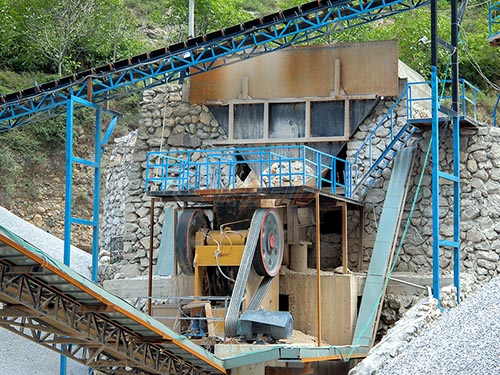
A cement plant equipment quotation is not a single machine—it is a structured procurement document that specifies, prices, and schedules the delivery of all mechanical and process equipment required for a cement production line. This includes raw material crushing, broyage de farine crue, préchauffage, clinker burning, broyage de ciment, et systèmes de manutention.
Flux de travail opérationnel (5 Étapes clés)
1. Process Design Basis: Define plant capacity (par ex., 5,000 Clinker TPD), raw material characteristics (humidité, abrasivité, dureté), et spécifications du produit final (La finesse de Blaine, strength class).
2. Sélection d'équipement: Match each process stage with appropriate machinery—jaw crushers for primary crushing, vertical roller mills for raw meal, rotary kilns with preheater towers, and ball mills or VRMs for finish grinding.
3. Développement de spécifications techniques: Prepare detailed datasheets covering capacity ratings, besoins en énergie, material of construction, and performance guarantees for each equipment item.
4. Supplier RFQ Issuance: Distribute the specification package to 3–5 qualified vendors with a structured quotation format to ensure comparable submissions.
5. Commercial and Technical Evaluation: Score bids on price, calendrier de livraison, garanties de performance, aftersales support, and total cost of ownership over a 15–20 year equipment life.
Portée et limites de l'application
Portée: Convient aux plantes greenfield, agrandissements d'usine, capacity upgrades, and equipment replacement projects across all cement manufacturing stages.
Limites: Quotations are sitespecific—equipment sizing and selection depend on raw material properties, altitude, température ambiante, and fuel type. A quotation valid for a 4,000 TPD plant in a temperate climate cannot be directly transferred to a 6,000 TPD plant in a tropical highaltitude location without reengineering.
3. Core Features of a HighQuality Cement Plant Equipment Quotation
Garanties de performances | Base technique: Contractually binding output and consumption targets | Avantage opérationnel: Your plant achieves design capacity with predictable energy and wear part costs | Impact sur le retour sur investissement: Eliminates performance shortfall risk; un 5% capacity shortfall on a 5,000 TPD line costs $1.8M annually in lost revenue
Lifecycle Cost Breakdown | Base technique: Itemized pricing for initial capital, installation, mise en service, and 10year spare parts | Avantage opérationnel: Your finance team can accurately budget total ownership costs without hidden surprises | Impact sur le retour sur investissement: Identifies 8–12% savings by comparing maintenanceintensive components across suppliers
Modular Design Compatibility | Base technique: Equipment engineered for phased installation and future capacity expansion | Avantage opérationnel: Your plant can scale production without complete line replacement | Impact sur le retour sur investissement: Reduces future expansion capital by 20–30% compared to greenfield additions
Energy Efficiency Specifications | Base technique: Consommation d'énergie spécifique (kWh/t) guaranteed per equipment item | Avantage opérationnel: Lower operating costs per tonne of cement produced | Impact sur le retour sur investissement: UN 3 kWh/t reduction on a 1,000,000 tpy plant saves $45,000 annually at $0.15/kWh
Documents de conformité | Base technique: Full CE marking, OIN 14001 manufacturing certification, and local regulatory compliance | Avantage opérationnel: Évite les retards douaniers, permitting issues, and safety audit failures | Impact sur le retour sur investissement: Prevents 6–12 month project delays valued at $2–5M in lost production
Pack d'assistance à la mise en service | Base technique: Onsite supervision for installation, cold commissioning, and hot commissioning phases | Avantage opérationnel: Your engineering team gains handson training while the supplier ensures correct setup | Impact sur le retour sur investissement: Reduces commissioning time by 30–40%, bringing revenue generation forward
Spare Parts Availability Commitment | Base technique: Garanti 24/7 availability of critical wear parts with defined lead times | Avantage opérationnel: Your maintenance team can plan overhauls with confidence | Impact sur le retour sur investissement: Cuts emergency repair downtime by 50%, économie $180,000 per avoided 12hour stoppage
4. Avantages compétitifs: Comparaison des performances
| Mesure de performances | Norme de l'industrie | Quotation Solution | Avantage (% Amélioration) |
|||||
| Consommation d'énergie spécifique (Broyage du ciment) | 32–38 kWh/t | 28–33 kWh/t | 10–15% lower energy cost |
| Disponibilité de l'équipement | 85–90% | 92–95% | 5–8% more operating hours |
| Délai de livraison des pièces de rechange | 8–16 semaines | 2–6 semaines | 50–75% faster maintenance response |
| Durée de mise en service | 8–12 semaines | 5–8 semaines | 30–40% faster startup |
| Coût total de possession (15année) | Référence | 12–18% de moins | 12–18% lifecycle savings |
| Performance Guarantee Penalty | 1–2% of contract value | 3–5% of contract value | 2–3x stronger supplier accountability |
5. Spécifications techniques
| Paramètre | Gamme de spécifications |
|||
| Capacité de l'usine | 1,000 – 10,000 Clinker TPD |
| Puissance d'entraînement principale (Moulin à ciment) | 1,500 – 8,000 kW |
| Consommation d'énergie spécifique | 28–33 kWh/t (terminer le meulage) |
| Matériau de construction | Acier moulé, alliages à haute teneur en chrome, doublures résistantes à l'usure (12–18% Mn steel) |
| Raw Material Moisture Tolerance | Jusqu'à 20% for raw mill drying capability |
| Finesse du produit | 3,000 – 5,000 cm²/g Blaine |
| Plage de température de fonctionnement | 10°C à +50°C ambiant |
| Altitude Range | Niveau de la mer à 4,000 m (derating applied above 1,500 m) |
| Alimentation électrique | 380V–11kV, 50/60 Hz, 3phase |
| Niveau de bruit | ≤85 dB(UN) à 1 mètre (avec enceintes) |
| Emission Compliance | PM ≤ 30 mg/Nm³, NOx ≤ 200 mg/Nm³ (with SNCR) |
6. Scénarios d'application
Champ vert 5,000 Usine TPD en Asie du Sud-Est | Défi: Tight 18month construction schedule with limited local technical expertise | Solution: Fullscope equipment quotation with modular delivery, onsite commissioning team, and operator training program | Résultats: Plant achieved commercial operation in 17.5 mois; firstyear availability of 93.2%; specific power consumption 4.2% below guaranteed values
Capacity Expansion from 2,500 à 4,000 TPD in the Middle East | Défi: Existing plant footprint limited; new equipment must integrate with legacy control systems | Solution: Quotation included retrofittable drives, compatible PLC interfaces, and staged delivery aligned with planned shutdown windows | Résultats: Expansion completed with only 11 days of additional downtime; production capacity increased by 58%; energy cost per tonne reduced by 9%
Equipment Replacement for Aging Grinding Circuit in Eastern Europe | Défi: 35yearold ball mills with 22% energy waste and frequent bearing failures | Solution: Highefficiency vertical roller mill quotation with 10year wear parts contract and performance guarantee | Résultats: La consommation d'énergie spécifique a chuté de 38 à 29 kWh/t; économies d'énergie annuelles de $620,000; coûts de maintenance réduits de 40%
7. Considérations commerciales
Niveaux de tarification (Indicatif, Basé sur 5,000 TPD Complete Line)
| Étage | Portée | Gamme de prix (USD) |
||||
| Basique | Core process equipment only, standard warranties | $45–60 million |
| Standard | Full process line + supervision de la mise en service + 2year spares | $60–75 million |
| Prime | Full EPC package + garanties de performance + 5year service agreement + formation des opérateurs | $75–95 million |
Fonctionnalités facultatives
Forfaits de services
Options de financement
8. FAQ
T1: How do I verify that a quotation's performance guarantees are realistic?
Request reference plant lists with contact details for similar capacity installations. Ask for historical performance data from at least three operating plants. Independent thirdparty performance testing during commissioning should be specified in the contract.
T2: What is the typical lead time from quotation acceptance to equipment delivery?
For a complete cement line, expect 10–14 months for manufacturing, 4–8 weeks for shipping, and 4–8 weeks for installation and commissioning. Critical longlead items (coquilles de four, large gearboxes) may require 16–20 months.
T3: Can quotations be adjusted for different fuel types (charbon, coke de pétrole, natural gas, carburants alternatifs)?
Oui. The quotation should specify burner design, kiln dimensions, and preheater configuration based on your primary and secondary fuel mix. Alternative fuel substitution rates of 30–80% are achievable with appropriate equipment modifications.
T4: What are the payment terms typically offered by equipment manufacturers?
Standard terms are 15–30% advance payment, 30–40% against manufacturing milestones, 20–30% against shipping documents, and 5–10% retained until successful commissioning. Negotiate milestonebased payments to protect your cash flow.
Q5: How does the quotation address local content requirements or import duties?
Reputable suppliers will provide a countryoforigin breakdown for each equipment item. This allows you to calculate applicable duties and assess local content options. Some manufacturers have licensed production facilities in key markets that can reduce import costs by 10–20%.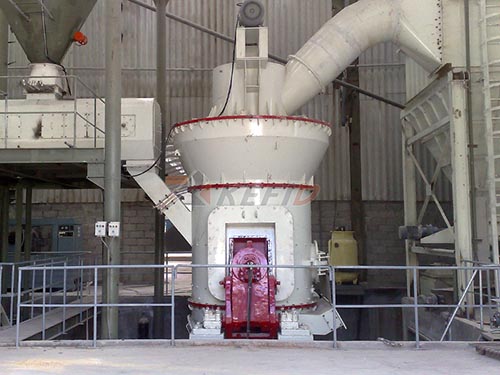
Q6: What training is included for plant operators and maintenance staff?
Standard quotations include 2–4 weeks of classroom and handson training for 10–20 personnel. Premium packages add onsite training during commissioning and refresher courses at 6 et 12 months after startup.
Q7: How do I compare quotations from different suppliers when specifications vary?
Require all suppliers to quote against your exact specification format. For any deviations, request a formal deviation list with cost and performance implications. Use a weighted scoring matrix covering technical compliance (40%), prix (30%), calendrier de livraison (15%), et support après-vente (15%).
Q8: What happens if the equipment fails to meet guaranteed performance during commissioning?
Your contract should include a performance test protocol with defined acceptance criteria. If guarantees are not met, the supplier must either rectify the issue at their cost or pay liquidated damages, typically 1–5% of the equipment value. Ensure this clause is included before signing.