
Brick Making Machines Assembly Plant Brochure
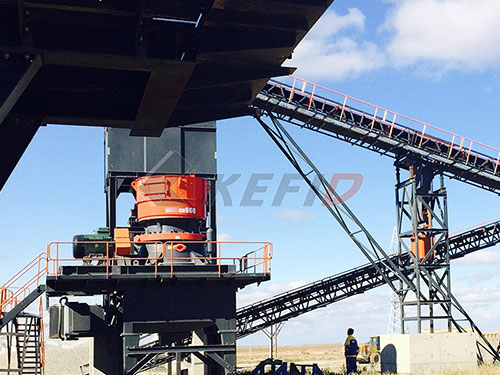

HighCapacity Brick Making Machines Assembly Plant: Engineered for Continuous Production
Le défi opérationnel: When Your Brick Production Line Becomes the Bottleneck
For commercial brick manufacturers and construction material suppliers, the assembly plant is the heart of your operation. Encore, many production facilities face a recurring set of challenges that directly impact your bottom line:
- Temps d'arrêt imprévus: Industry data indicates that poorly integrated brick making machines assembly plants experience up to 15% temps d'arrêt imprévu chaque année. À un rythme de production de 10,000 briques par heure, this translates to over 13 million unproduced bricks per year—a significant revenue loss.
- Qualité des produits incohérente: Variations in compression pressure and material mixing lead to a 58% rejection rate in standard plants. This waste consumes raw material, énergie, and labor costs without generating saleable output.
- High Energy Consumption per Unit: Legacy assembly lines often consume 2030% more energy per brick than modern configurations, directly inflating your operational expenditure in an energyintensive market.
- Labor Dependency and Skill Shortages: Manual intervention in material feeding and quality control creates variability and exposes you to workforce availability risks.
- Contraintes d'évolutivité: When a project requires a 40% increase in output, can your current assembly plant accommodate the demand without a complete overhaul?
- Forfait standard (BMP12000): Includes the main press, mixer, convoyeurs, and PLC control. This is the baseline configuration for most manufacturers.
- Forfait avancé (BMP12000A): Adds the dust suppression system, lubrification centralisée, and remote diagnostics module for enhanced compliance and maintenance efficiency.
- Solution clé en main (BMP12000T): Includes the Advanced Package plus installation, mise en service, formation des opérateurs, and a 12month onsite service warranty.
- Robotic Palletizing System: Automates the final stacking of bricks onto pallets, further reducing manual labor.
- Curing Chamber Control Package: Adds sensors and control valves to automate humidity and temperature management in the curing area.
- Garantie prolongée: Available for 24 ou 36 mois, covering parts and labor.
- Plan de maintenance préventive: Scheduled quarterly inspections and maintenance by factorytrained technicians.
- Performance Audit Service: An annual review of plant efficiency, including energy consumption and rejection rate analysis, with recommendations for optimization.
- Programme de formation des opérateurs: A 2week onsite training course covering operation, entretien, et les procédures de sécurité.
- Achat direct: Standard terms with a 30% deposit and 70% payment upon delivery.
- Location-propre: Disponible pour les acheteurs qualifiés, with terms ranging from 24 à 60 mois.
- Financement basé sur la performance: A structured plan where a portion of the payment is tied to achieving agreedupon production and efficiency targets.
The question is not whether you need a new assembly plant, but whether your current system is engineered to deliver the efficiency, cohérence, and ROI that modern construction projects demand.
Présentation du produit: The Integrated Brick Making Machines Assembly Plant
This assembly plant is a fully integrated, continuousflow production system designed for highvolume manufacturing of clay, cendres volantes, and concrete bricks. It coordinates material preparation, formation, guérir, and stacking into a single automated workflow.
Flux de travail opérationnel (5 Étapes clés)

1. Raw Material Intake and Proportioning: Automated feeders and weighbridges ensure precise ratios of clay, sable, ciment, or fly ash are loaded into the mixer.
2. Homogeneous Mixing: Twinshaft mixers with controlled water injection produce a consistent, workable mix, eliminating dry spots or clumps that cause structural weaknesses.
3. HighPressure Forming: The mix is fed into a hydraulic or mechanical press that compacts the material into brick molds under controlled pressure (typiquement 150250 bar), ensuring uniform density and sharp edges.
4. Automated Demolding and Conveyance: Robotic demolding systems transfer green bricks onto curing racks without deformation, maintaining production speed.
5. Curing and Stacking: The plant manages the curing environment (temperature and humidity) and automatically stacks finished bricks for packaging or transport.
Portée et limites de l'application
Portée: Suitable for mediumtolarge scale brick manufacturers producing 5,000 à 30,000 briques par heure. Effective for solid, creux, and interlocking brick geometries.
Limites: This system is designed for fixedsite operations; it is not a mobile or portable unit. It requires a stable foundation and a dedicated power supply of 380V480V. The plant is optimized for consistent raw material quality; highly abrasive or oversized aggregates may require precrushing.
Fonctionnalités principales
HighPressure Hydraulic Forming System
Base technique: Utilizes a variabledisplacement pump to deliver up to 250 bar of pressure, ensuring uniform compaction across the entire mold surface.
Avantage opérationnel: Produces bricks with consistent density and dimensional accuracy (±0,5 mm), reducing the need for postproduction sizing.
Impact sur le retour sur investissement: Lowers rejection rates from the industry average of 5% sous 1.5%, saving significant raw material and energy costs.
PLCControlled Automation with Remote Diagnostics
Base technique: A Programmable Logic Controller (API) manages all sequential operations, from material feed to stacker movement, with sensors providing realtime feedback.
Avantage opérationnel: Your operators can monitor the entire production line from a single interface, reducing manual intervention and human error.
Impact sur le retour sur investissement: Réduit les coûts de main-d'œuvre jusqu'à 30% and enables predictive maintenance, réduisant les temps d'arrêt imprévus d'environ 40%.
EnergyEfficient ServoDriven Conveyance
Base technique: Servo motors with regenerative braking are used for all conveyor and transfer systems, recovering energy during deceleration.
Avantage opérationnel: Lower power consumption compared to traditional induction motors, especially during partial load operations.
Impact sur le retour sur investissement: Les données de terrain montrent un 1520% reduction in kWh per 1,000 bricks produced, directly lowering your energy bill.
Système de moule QuickChange
Base technique: A hydraulic clamping mechanism allows for toolless mold changes, with alignment pins ensuring precise positioning.
Avantage opérationnel: Switch between solid, creux, or paver block production in under 30 minutes, allowing you to respond to market demand without long changeover times.
Impact sur le retour sur investissement: Augmente l'utilisation de l'usine en permettant aux plus petites, more profitable production runs of specialized brick types.
Système de lubrification centralisé
Base technique: An automated grease distribution network delivers measured lubricant to all moving parts (roulements, bagues, slides) at set intervals.
Avantage opérationnel: Eliminates the risk of missed lubrication points, extending the lifespan of mechanical components.
Impact sur le retour sur investissement: Reduces maintenance costs and extends equipment service life by an estimated 20%, lowering your total cost of ownership.
Dust Suppression and Filtration Unit
Base technique: Integrated water spray nozzles and a baghouse filter capture airborne particulates at transfer points and the mixing stage.
Avantage opérationnel: Creates a safer working environment and helps you comply with local environmental regulations regarding particulate emissions.
Impact sur le retour sur investissement: Avoids potential fines and reduces healthrelated absenteeism among your workforce.
Entraînement à fréquence variable (VFD) on Main Press Motor
Base technique: A VFD controls the motor speed and torque, allowing the press cycle to be optimized for different material compositions.
Avantage opérationnel: Provides flexibility to adjust pressing force and cycle time without mechanical adjustments, ensuring optimal compaction for various raw materials.
Impact sur le retour sur investissement: Optimizes energy use and reduces mechanical stress on the press frame, réduire les coûts de maintenance à long terme.
Avantages compétitifs
The following table compares the performance of a standard assembly line against the {{mot-clé}} solution.
| Mesure de performances | Norme de l'industrie | {{mot-clé}} Solution | Avantage (% amélioration) |
| : | : | : | : |
| Production Rate (briques/heure) | 8,000 | 12,000 | 50% rendement plus élevé |
| Taux de rejet (%) | 5.0% | 1.2% | 76% moins de rejets |
| Consommation d'énergie (kWh/1000 briques) | 28 kWh | 22 kWh | 21% consommation d'énergie réduite |
| Temps de changement (heures) | 4.0 heures | 0.5 heures | 87.5% changements plus rapides |
| Temps d'arrêt imprévus (heures/mois) | 20 heures | 8 heures | 60% moins de temps d'arrêt |
| Exigence de main d'œuvre (operators/shift) | 6 | 3 | 50% lower labor cost |
Spécifications techniques
| Spécification | Valeur |
| : | : |
| Modèle | BMP12000 (Configuration standard) |
| Capacité nominale | 12,000 briques/heure (standard 240x115x53mm) |
| Forming Pressure | 150 250 bar (réglable) |
| Puissance installée | 380 kW (charge totale connectée) |
| Main Press Motor | 132 kW, 380V/480V, 3phase, 50/60Hz |
| Compressed Air Requirement | 0.6 0.8 MPa, 1.5 m3/min |
| Consommation d'eau | 2.5 m³/heure (for mixing and dust suppression) |
| Machine Dimensions (L x l x H) | 45m x 12m x 6m (assembly line footprint) |
| Poids total de la plante | Environ. 85 tonnes |
| Système de contrôle | Siemens S71500 PLC with 15" HMI Touchscreen |
| Plage de température de fonctionnement | 5°C à 45°C (for optimal hydraulic performance) |
| Raw Material Feed Size | Max 10mm (agrégat), Max 5mm (clay/fly ash) |
Scénarios d'application
LargeScale Housing Development Project
Défi: A construction contractor needed 2 million highquality facing bricks within 6 months for a residential complex, but their existing plant could only produce 6,000 bricks/hour with a 7% taux de rejet, risking project delays and cost overruns.
Solution: The contractor upgraded to the {{mot-clé}} assembly plant, utilizing the highpressure forming system and automated stacking to ensure consistent quality and rapid output.
Résultats: The plant achieved a production rate of 11,500 briques/heure. Le projet a été achevé 3 des semaines avant la date prévue, and the rejection rate dropped to 1.5%, économiser une estimation $180,000 dans les déchets matériels.
Projet d'infrastructure municipale (Paving Stones)
Défi: A municipal authority required 500,000 interlocking paving blocks with high compressive strength for a city center renovation. The existing supplier struggled with inconsistent density, leading to chipping and cracking.
Solution: Le {{mot-clé}} plant was configured with the quickchange mold system to produce interlocking blocks. The PLCcontrolled pressing cycle ensured uniform compaction, meeting the required compressive strength of 45 MPa.
Résultats: The plant delivered the order in 5 semaines. The dimensional accuracy of the blocks reduced installation time by 15%, and the client reported zero product failures during the warranty period.
Fly Ash Brick Manufacturer Seeking Cost Reduction
Défi: A manufacturer using fly ash and sand was facing high energy costs and a 6% rejection rate due to inconsistent mixing, which was eroding their profit margins.
Solution: The manufacturer integrated the {{mot-clé}} assembly plant with its energyefficient servo drives and twinshaft mixer.
Résultats: Energy consumption per 1,000 bricks fell by 18%. The improved mixing homogeneity reduced the rejection rate to 1.8%. The annual savings on energy and raw materials totaled $95,000, providing a payback period of under 3 années.
Considérations commerciales
Niveaux de tarification des équipements
Fonctionnalités facultatives
Forfaits de services
Options de financement
FAQ
T1: What is the typical installation time for the {{mot-clé}} assembly plant?
UN: The physical installation takes approximately 46 semaines, depending on site preparation and foundation work. This is followed by a 12 week commissioning and testing phase to ensure all systems are calibrated for your specific raw materials.
T2: Can this plant handle different raw materials, such as clay, cendres volantes, et du béton?
UN: Oui. The PLC control system allows you to adjust pressing pressure, temps de cycle, and mixing ratios. Cependant, changing material types requires a brief calibration process. The quickchange mold system facilitates this, but you should allow for a short production rampup to optimize settings for a new material.
T3: What are the power requirements for this equipment?
UN: The total connected load is 380 kW. You will need a 3phase power supply of 380V or 480V (50/60Hz). We recommend having a dedicated transformer and a stable power supply to prevent voltage fluctuations that could affect the PLC and servo drives.
T4: Comment le {{mot-clé}} solution reduce the rejection rate compared to older models?
UN: The reduction is achieved through two primary mechanisms. D'abord, the highpressure hydraulic system ensures uniform density across every brick. Deuxième, the PLCcontrolled mixing process provides a consistent material composition. Field data from installations shows a reduction from a typical 5% rejection rate to under 1.5%.
Q5: What is the expected lifespan of the main press and other core components?
UN: Avec un bon entretien, including the use of the centralized lubrication system, the main press frame is designed for a 20+ ans de durée de vie. Pièces d'usure, such as the mold liners and press heads, are considered consumables and typically last 12 years depending on the abrasiveness of your raw materials.
Q6: What kind of aftersales support and spare parts availability can we expect?
UN: We maintain a global network of service centers and stock critical spare parts for immediate dispatch. Our remote diagnostics module allows our engineers to connect to your PLC system to troubleshoot issues in realtime, often resolving problems without a site visit.
Q7: Can the plant be expanded in the future to increase production capacity?
UN: Oui, the modular design of the assembly line allows for future expansion. You can add a second press unit or increase the length of the curing conveyor to boost output by up to 30% without replacing the entire system. This is a key consideration for your longterm growth planning.