
Slag Crusher Plant Importer Supply Chain
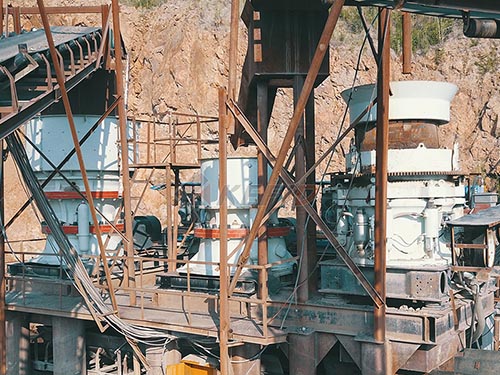

Slag Crusher Plant Importer Supply Chain: Securing Reliable Equipment Sourcing for Steel Mill and Foundry Operations
The Hidden Costs of an Unreliable Slag Processing Supply Chain
Pour chaque 100,000 tons of steel produced, your facility generates approximately 15,000 tons of slag. Managing this byproduct is not merely a disposal issue—it is a financial and operational challenge that directly impacts your bottom line. Plant managers and procurement directors face a recurring set of problems:
- Extended lead times of 6–9 months for imported crushing equipment, causing project delays that cost an estimated $2,500–$8,000 per day in idle labor and missed production targets.
- Inconsistent equipment quality from unverified overseas manufacturers, resulting in premature wear of hammers and liners within 400–600 operating hours instead of the expected 2,000+ heures.
- Logistical complications y compris la congestion portuaire, customs clearance delays, and damage during transit, which add 15–20% to the total landed cost.
- Lack of aftersales technical support from distant suppliers, leaving your maintenance team without critical installation guidance or spare parts availability when downtime occurs.
- Mismatched specifications where imported equipment is designed for different slag compositions, leading to throughput rates 30–40% below your required capacity.
- Tension: 380V/50 Hz (customizable to 460V/60Hz for North American markets)
- Connected load: 250–450 kW depending on configuration
- Méthode de démarrage: Soft starter or VFD for reduced inrush current
- Crusher body: ASTM A36 structural steel with 20 mm épaisseur minimale
- Plaques à mâchoires: Acier au manganèse (Mn13Cr2) or highchromium alloy
- Matériau de l'arbre: 42Acier allié CrMo, traité thermiquement à 28-32 HRC
- Roulements: Spherical roller bearings with C3 clearance for thermal expansion
- Empreinte végétale: 35m × 25m × 12m (L×L×H) pour un complet 150 Système TPH
- Poids total: 85–140 tons depending on configuration
- Conteneurisation: 3–5 × 40ft opentop containers for sea freight
- Température ambiante: 10°C à +50°C
- Altitude: Jusqu'à 2,000 mètres sans déclassement
- Humidité: 95% sans condensation
- Exposition à la poussière: Coffrets électriques classés IP54
- Châssis mobile avec nivellement hydraulique: +$45,000–65 000 $
- Remote monitoring and telematics package: +$12,000–18 000$
- Extension de garantie à 36 mois: +8–12% of equipment value
- Kit de pièces de rechange (1year consumables): +$25,000–$40,000
- Programme de formation des opérateurs (2 semaines sur place): +$8,500
- Forfait de base (Compris): Supervision de la mise en service (7 jours), operator manual, 12mois de garantie sur les défauts
- Forfait standard (+$28,000): Extended commissioning (14 jours), preventive maintenance schedule, quarterly remote performance reviews
- Comprehensive Package (+$65,000): Full onsite maintenance for 24 mois, disponibilité garantie de 92%, priority spare parts dispatch within 48 heures
- Lettre de crédit (L/C) à vue: Standard for international transactions
- 30% avance + 70% against Bill of Lading: Common for firsttime importers
- Location d'équipement: 36–60 month terms with 10–15% residual value
- Buyer's credit through export credit agencies: Available for orders above $500,000 with sovereign guarantees
Are you currently absorbing these costs through production delays and emergency repairs? The solution lies not just in the equipment itself, but in a structured, transparent supply chain for your slag crusher plant importer needs.
Présentation du produit: Integrated Slag Crushing and Screening Systems for Importers
A slag crusher plant is a complete processing system designed to reduce molten slag byproduct—typically aircooled blast furnace slag or steel slag—into reusable aggregates, metal scrap, et poudre fine. For importers and endusers, the system typically comprises a primary jaw crusher, secondary cone or impact crusher, tamis vibrants, séparateurs magnétiques, and belt conveyors operating as a unified circuit.
Flux de travail opérationnel
1. Réception des aliments: Raw slag (0–800 mm) is loaded into the feed hopper, where a vibrating feeder regulates material flow to prevent choking.
2. Réduction primaire: A heavyduty jaw crusher reduces slag to 100–150 mm, extracting large metallic particles through an integrated magnetic head pulley.
3. Concassage secondaire: A cone crusher or vertical shaft impactor further reduces material to 20–40 mm, with a second magnetic separation stage recovering ferrous content.
4. Dépistage et classification: Vibrating screens separate material into graded fractions (0–5mm, 5–20mm, 20–40mm), avec recyclage des matériaux surdimensionnés.
5. Stockpiling and Discharge: Finished aggregates are conveyed to stockpiles, while recovered metal scrap is collected for resale.
Portée et limites de l'application
This equipment is suitable for processing aircooled blast furnace slag, laitier de sidérurgie, and granulated slag with a feed moisture content below 8%. It is not designed for waterquenched slag with high moisture levels exceeding 15%, nor for slag containing significant refractory brick contamination, which requires presorting. The system operates effectively in ambient temperatures from 10°C to 50°C, making it suitable for most industrial regions.
Core Features of Imported Slag Crusher Plants
Conception de rotor robuste | Base technique: Finite element analysisoptimized rotor with high inertia moment | Avantage opérationnel: Maintains stable crushing force when processing slag with metal content up to 30%, reducing vibrationrelated downtime | Impact sur le retour sur investissement: Extends rotor service life to 15,000+ heures, réduire les coûts de remplacement en 40%
Séparation magnétique intégrée | Base technique: Overband and drum magnets with 900–1,200 mT field strength | Avantage opérationnel: Recovers 95–98% of ferrous metal from slag, creating a secondary revenue stream and preventing damage to downstream crushers | Impact sur le retour sur investissement: Metal recovery generates $8–$15 per ton of processed slag, offsetting 20–30% of operating costs
Système de réglage hydraulique | Base technique: Vérins hydrauliques pour réglage côté fermé (CSS) ajustement | Avantage opérationnel: Allows operators to change output particle size in under 15 minutes sans calage manuel, adapting to varying slag feed conditions | Impact sur le retour sur investissement: Reduces changeover downtime by 2–3 hours per adjustment, saving $1,200–$2,500 per event
WearResistant Liners | Base technique: Highchromium alloy (Cr26–Cr28%) or composite ceramic liners | Avantage opérationnel: Provides 2.5–3 times longer wear life compared to standard manganese steel when processing abrasive slag | Impact sur le retour sur investissement: Reduces annual wear part expenditure by $35,000–$60,000 for a 100 Usine TPH
Système de contrôle basé sur PLC | Base technique: Programmable logic controller with remote monitoring interface | Avantage opérationnel: Provides realtime data on crusher load, température du roulement, et niveaux de vibrations, permettant la planification de maintenance prédictive | Impact sur le retour sur investissement: Reduces unplanned downtime by 25–30%, saving $18,000–$45,000 annually in lost production
Système de suppression de poussière | Base technique: Water spray nozzles with atomized mist at crusher discharge points | Avantage opérationnel: Suppresses 85–90% of airborne dust particles, meeting environmental compliance standards for workplace air quality | Impact sur le retour sur investissement: Avoids regulatory fines of $10,000–$50,000 per violation and reduces worker health compensation claims
Construction de cadre modulaire | Base technique: Bolted and pinned connections instead of welded structures | Avantage opérationnel: Facilitates rapid disassembly and reassembly during international shipping, reducing container volume by 20–25% | Impact sur le retour sur investissement: Lowers freight costs by $8,000–$15,000 per shipment and reduces onsite installation time by 5–7 days
Avantages compétitifs: Imported Slag Crusher vs. Industry Standards
| Mesure de performances | Norme de l'industrie | Imported Slag Crusher Solution | Avantage (% Amélioration) |
|||||
| Capacité de débit (TPH) | 80–120 TPH | 120–200 TPH | 25–40% higher |
| Durée de vie des pièces d'usure (heures) | 800–1 200 heures | 2,000–3 000 heures | 60–67% longer |
| Taux de récupération des métaux | 80–85% | 95–98% | 12–15% higher |
| Consommation d'énergie (kWh/tonne) | 2.5–3.5 kWh/ton | 1.8–2.2 kWh/ton | 28–37% lower |
| Temps d'arrêt pour maintenance (heures/mois) | 40–60 hours | 15–25 hours | 50–62% less |
| Temps d'installation (jours) | 30–45 jours | 18–25 days | 40–44% faster |
| Final Product Gradation Accuracy | ±10% deviation | ±5% deviation | 50% plus précis |
Technical Specifications for Imported Slag Crusher Plants
Capacity and Performance Ratings
| Model Series | Taille de l'alimentation (mm) | Débit (TPH) | Réglage de décharge (mm) | Puissance du moteur (kW) |
||||||
| SCP100 | ≤600 | 80–120 | 40–100 | 110–160 |
| SCP150 | ≤700 | 120–180 | 50–120 | 160–220 |
| SCP200 | ≤800 | 150–250 | 60–150 | 220–315 |
Exigences d'alimentation
Spécifications matérielles
Dimensions physiques

Plage de fonctionnement environnementale
Application Scenarios for Imported Slag Crusher Plants
Installation de traitement des scories d'aciérie | Défi: UN 2.5 million TPY integrated steel plant in Southeast Asia was stockpiling 350,000 tons of slag annually, incurring $2.1 million in haulage and storage costs while failing to recover valuable metallic iron | Solution: Imported a 150 TPH slag crusher plant with dual magnetic separation stages and a closedcircuit screening system, processing both current production and legacy stockpiles | Résultats: Rétabli 28,000 tons of metallic scrap valued at $4.2 million in the first year; reduced slag disposal costs by 85%; achieved full payback of equipment investment in 14 mois
Construction Aggregates Producer | Défi: A construction materials company in the Middle East needed to diversify its aggregate sources but faced 40% higher raw material costs for natural stone | Solution: Mis en œuvre un 120 TPH imported slag crusher plant to process locally available steel slag into certified road base and concrete aggregates | Résultats: Produit 280,000 tons of aggregates in year one at 35% lower cost than natural stone; obtained local road authority certification for slag aggregates; secured a 5year supply contract with a major infrastructure developer
Foundry Metal Recovery Operation | Défi: A ferrous foundry in Eastern Europe was losing 15% of its metal charge to slag, représentant $1.8 million in annual losses, with existing crushing equipment failing after 500 heures d'ouverture | Solution: Deployed a heavyduty imported slag crusher with highchromium wear parts and an overband magnet rated at 1,200 mT | Résultats: Metal recovery increased from 82% à 96%, récupérer 2,700 additional tons of scrap annually; crusher wear life extended to 2,800 heures; payback period achieved in 11 mois
Commercial Considerations for Slag Crusher Plant Importers
Niveaux de tarification des équipements
| Niveau de configuration | Plage de capacité | Gamme de prix (USD) | Acheteur cible |
|||||
| Basique (Mâchoire + Écran) | 80–100 TPH | $180,000–280 000 $ | Small foundries, pilot operations |
| Standard (Mâchoire + Cône + 2 Écrans) | 120–150 TPH | $320,000–450 000 $ | Midsize steel mills, producteurs de granulats |
| Prime (Full System with Magnetic Separation and PLC) | 150–200 TPH | $520,000–750 000$ | Large integrated steel plants, Entrepreneurs EPC |
Fonctionnalités et modules complémentaires optionnels
Forfaits de services
Options de financement
Foire aux questions
T1: What is the typical lead time for an imported slag crusher plant from order to delivery?
Standard manufacturing lead time is 90–120 days from receipt of down payment. Sea freight adds 25–45 days depending on origin port and destination. Total timeline from order to operational readiness is typically 5–7 months. Expedited production can reduce manufacturing time to 70 days at a 10–15% cost premium.
T2: How do I verify the quality of equipment before committing to an import order?
Request a preshipment inspection by an independent thirdparty agency such as SGS or Bureau Veritas. This typically costs $3,500–$6,000 and covers material certifications, weld quality, dimensional checks, and functional testing of rotating components. En plus, request video documentation of factory test runs with your specific slag sample.
T3: What are the customs duties and import taxes for slag crusher equipment?
Duties vary by destination country. Most jurisdictions classify crushing machinery under HS Code 8474.20, with typical import duties ranging from 0% (under free trade agreements) à 12%. You should also budget 5–20% for valueadded tax or GST, depending on local regulations. Engage a customs broker early to obtain a binding tariff classification.
T4: Can the slag crusher plant handle slag with high metallic content without frequent damage?
Oui, but with design considerations. For slag containing more than 25% métal, specify an overband magnet before the primary crusher, a magnetic head pulley on the feed conveyor, and a tramp iron relief system on the jaw crusher. These features add 8–12% to equipment cost but prevent catastrophic damage and reduce downtime.
Q5: What aftersales support can I expect from an overseas manufacturer?
Reputable manufacturers provide remote technical support via video consultation within 24 heures, a dedicated account manager, and a regional service partner for onsite visits. Spare parts are typically shipped within 48–72 hours from a regional warehouse. Verify the manufacturer's service network in your region before purchase.
Q6: How does the energy consumption of an imported slag crusher compare to locally manufactured alternatives?
Field data from comparable installations shows imported units with optimized crushing chambers and highefficiency motors consume 1.8–2.2 kWh per ton, versus 2.8–3.5 kWh per ton for older or less efficient designs. Pour un 150 Usine TPH en activité 6,000 heures par an, this represents annual energy savings of $85,000–$140,000 at $0.10/kWh.
Q7: What is the realistic payback period for a slag crusher plant investment?
Based on current market data, payback periods range from 12–24 months for operations with high metal recovery potential, and 24–36 months for operations focused primarily on aggregate production. The payback calculation should include metal scrap revenue, reduced disposal costs, and saleable aggregate income. Request a detailed ROI analysis from your supplier based on your specific slag composition and local market prices.
Q8: How do I manage the logistics of receiving a complete crushing plant via sea freight?
Work with a freight forwarder experienced in heavy machinery. The plant is typically shipped in 3–5 opentop containers or on flat racks. Budget for port handling, oversized cargo permits, and specialized transport to your site. Total logistics costs typically range from $15,000–$35,000 depending on distance and port infrastructure. Plan for a receiving team with a mobile crane capable of lifting 40+ tons for offloading.