
Sustainable Gyratory Crusher Competitive Price
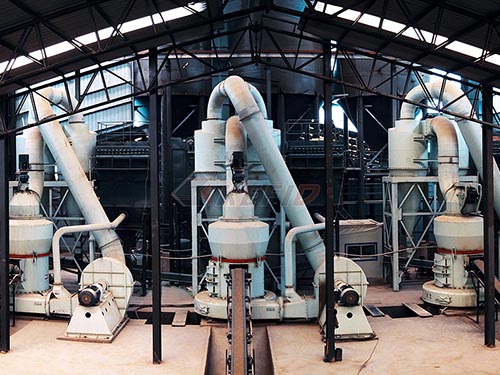

Sustainable Gyratory Crusher Competitive Price: HighCapacity Primary Crushing with Lower Total Cost of Ownership
1. The Operational Challenge: When Primary Crushing Becomes a Cost Center
For plant managers and engineering contractors, the primary crushing stage is where throughput targets are won or lost. Yet, conventional gyratory crushers often present a series of persistent challenges that erode profitability:
- Unplanned Downtime: Industry data indicates that unplanned crusher stoppages in primary circuits can cost between $8,000 and $15,000 per hour in lost production, depending on downstream capacity. A single mantle or concaves failure can idle an entire plant for 12–24 hours.
- Escalating Energy Consumption: Older gyratory models consume 0.5–1.2 kWh per ton of material processed. With industrial electricity prices fluctuating, this energy draw directly impacts your cost per ton.
- High Wear Component Expenditure: Traditional designs require frequent replacement of mantles, concaves, and spider arm liners. Annual wear part costs can reach 3–5% of the initial capital investment.
- Environmental Compliance Pressure: Stricter emissions and noise regulations require equipment that operates with lower dust generation and reduced power draw. Retrofitting older units to meet these standards is often costprohibitive.
- Safety and Maintenance Access: Confined spaces and complex lifting procedures for liner changes increase worker exposure risk and extend maintenance windows.
- Primary Crushing: Hard rock mining (copper, iron, gold), aggregate quarries, and cement plants.
- HighThroughput Operations: Suitable for plants requiring 500 to 1,500 metric tons per hour.
- Material Types: Handles abrasive and hard materials (granite, basalt, quartzite) with a compressive strength up to 400 MPa.
- Not suitable for sticky or clayrich materials that may cause bridging in the chamber.
- Requires a substantial civil foundation due to its height and weight (typically 120–450 tons).
- Not designed for portable/mobile applications; it is a fixed installation.
- Liner Optimization Service: Metallurgical analysis of your feed material to customize liner profiles ($15,000 $25,000).
- Extended Warranty: Covers main shaft and eccentric assembly for 5 years (adds 810% to equipment cost).
- Commissioning & Training: Onsite supervision for 4 weeks and operator training ($30,000 $50,000).
- Financing Options: We offer leasetoown programs with terms of 35 years and competitive interest rates (APR from 4.5% depending on creditworthiness). A 15% down payment is standard.
The core question is: How can you achieve highcapacity primary reduction (500–1,500 TPH) while simultaneously reducing energy consumption, cutting wear costs, and ensuring a faster return on investment? The answer lies in a modern, sustainable gyratory crusher design that prioritizes operational efficiency without a premium price tag.
2. Product Overview: The Sustainable Gyratory Crusher
This equipment is a heavyduty primary gyratory crusher engineered for largescale mining and aggregate operations. It is designed to handle feed sizes up to 1,500 mm and reduce them to a discharge product of 150–300 mm in a single pass.
Operational Workflow:
1. Feed Inlet: Runofmine (ROM) material is dumped into the feed opening, guided by the spider arms.
2. Crushing Chamber: The main shaft (spider) oscillates eccentrically, compressing the rock between the mantle and the concave liners.
3. Size Reduction: Material is reduced via continuous compression and fracturing as it moves downward through the chamber.
4. Discharge: Crushed material exits through the bottom opening onto a discharge conveyor or downstream hopper.
Application Scope:
Limitations:
3. Core Features: Engineering for Lower Cost Per Ton
The following features are integrated into the design to directly address the operational pain points of cost, downtime, and sustainability.
HighEfficiency Crushing Chamber | Technical Basis: Curved profile with optimized eccentric throw | Operational Benefit: Reduces material interlocking and ensures consistent product size distribution | ROI Impact: 58% increase in throughput compared to straightchamber designs, lowering cost per ton.
Hydroset Adjustment System | Technical Basis: Hydraulic cylinder support for the main shaft | Operational Benefit: Allows for realtime adjustment of the closed side setting (CSS) without stopping the crusher, ensuring consistent product quality as liners wear | ROI Impact: Eliminates 23 hours of downtime per adjustment cycle, saving up to $30,000 per event in highvolume plants.
EnergySaving Drive Package | Technical Basis: Hightorque, lowspeed motor with VFD compatibility | Operational Benefit: Reduces noload power consumption by up to 15% and allows for softstart to protect the grid | ROI Impact: Annual energy savings of 510% , translating to $20,000–$50,000 per year for a 600 kW motor running 6,000 hours.
Advanced Alloy Metallurgy | Technical Basis: Manganese steel (18% Mn) with chromium additions for liners | Operational Benefit: Increases wear life by 2030% in abrasive applications, reducing the frequency of liner changes | ROI Impact: Reduces annual wear part costs by 1520% , directly improving maintenance budget predictability.
Dust Sealing System | Technical Basis: Pressurized labyrinth seal with air filtration | Operational Benefit: Prevents dust ingress into the eccentric bearing assembly, extending bearing life and reducing contaminationrelated failures | ROI Impact: Extends bearing service life by 30% , avoiding a major overhaul cost of $50,000+ every 35 years.
Modular Spider and Top Shell | Technical Basis: Splitsection design for the upper frame | Operational Benefit: Allows for faster disassembly and access to the crushing chamber for liner replacement | ROI Impact: Reduces liner changeout time by 25% , saving 46 hours of labor and downtime per change.
Integrated Vibration Monitoring | Technical Basis: Accelerometers mounted on the main frame and motor base | Operational Benefit: Provides realtime data on bearing health and imbalance, enabling predictive maintenance scheduling | ROI Impact: Reduces unplanned breakdowns by 40% , protecting against the $10,000/hour cost of unscheduled stops.
4. Competitive Advantages: Performance Benchmarking
The following table compares the performance of this sustainable gyratory crusher against industry standard equipment.
| Performance Metric | Industry Standard (Conventional Gyratory) | Sustainable Gyratory Crusher Solution | Advantage (% Improvement) |
| : | : | : | : |
| Energy Consumption (kWh/ton) | 0.7 1.0 | 0.55 0.75 | 1520% Reduction |
| Availability (Operating Time) | 85 90% | 92 95% | 58% Higher Availability |
| Liner Wear Life (Hours) | 4,000 6,000 | 5,200 7,800 | 2030% Longer Life |
| Maintenance Downtime (Hours/Year) | 200 300 | 150 220 | 25% Less Downtime |
| CSS Adjustment Time (Minutes) | 30 45 (requires stop) | 5 10 (onthefly) | 7080% Faster Adjustment |
| Noise Level (dB(A) at 1m) | 95 100 | 85 90 | 510 dB Reduction |
5. Technical Specifications
The following specifications are for the standard model (Model SGC60110) designed for mediumtolarge operations.
| Specification | Detail |
| : | : |
| Feed Opening (Width) | 1,100 mm (43 in) |
| Max Feed Size | 900 mm (35 in) |
| Discharge Setting Range (CSS) | 125 200 mm (5 8 in) |
| Capacity (TPH) | 600 1,100 (depending on CSS and material) |
| Main Shaft Speed | 120 160 RPM |
| Motor Power | 400 500 kW (535 670 HP) |
| Eccentric Throw | 25 35 mm |
| Crusher Weight (approx.) | 180,000 kg (396,000 lbs) |
| Overall Height | 5,800 mm (19 ft) |
| Overall Width | 3,200 mm (10.5 ft) |
| Lubrication System | Forced circulation, oilcooled |
| Hydraulic System Pressure | 7 MPa (1,000 PSI) |
| Operating Temperature Range | 20°C to +45°C (4°F to +113°F) – with coldweather package available |
6. Application Scenarios: Field Performance Data
Copper Mine Expansion (Chile) | Challenge: The existing jaw crusher was bottlenecking the plant at 800 TPH, with excessive downtime due to jaw plate failures on hard porphyry rock. | Solution: Replaced the jaw crusher with the Sustainable Gyratory Crusher (SGC60110) set at a 150 mm CSS. | Results: Throughput increased to 1,050 TPH (31% increase). Energy consumption dropped from 0.85 kWh/t to 0.68 kWh/t. Liner life extended from 4,500 hours to 6,100 hours, reducing annual wear costs by $180,000.

Aggregate Quarry (Norway) | Challenge: Strict environmental regulations on noise and dust emissions limited operating hours. The existing gyratory was too loud and dusty to run at night. | Solution: Installed the sustainable model with the pressurized dust seal and acoustic dampening package. | Results: Noise levels reduced from 98 dB(A) to 88 dB(A), allowing for extended nighttime operating permits. Dust emissions were reduced by 60%, avoiding potential fines and community complaints. The plant now operates 20% more hours per week.
Iron Ore Processing (Australia) | Challenge: High maintenance costs due to frequent bearing failures caused by dust ingress in a remote, arid location. | Solution: Deployed the crusher with the advanced labyrinth seal and integrated vibration monitoring. | Results: Bearing failures were eliminated over a 24month period (previously 2 failures per year). The vibration monitoring system provided early warning of a loose liner, preventing a catastrophic failure. Maintenance costs were reduced by 35% yearoveryear.
7. Commercial Considerations: Pricing and Packages
We understand that capital expenditure (CAPEX) is a critical factor. The pricing structure for the Sustainable Gyratory Crusher is designed to offer a competitive entry point while providing options for scalability.
Equipment Pricing Tiers:
| Tier | Configuration | Estimated Price Range (USD) | Target Buyer |
| : | : | : | : |
| Standard | Base crusher, standard manganese liners, basic hydraulic system, manual control panel. | $850,000 $1,100,000 | Costsensitive operations with existing infrastructure. |
| Advanced | Includes VFD drive package, automated CSS control, advanced dust sealing, and vibration monitoring sensors. | $1,150,000 $1,400,000 | Operations focused on energy efficiency and predictive maintenance. |
| Premium | Full automation suite (PLC integration), premium wear parts (chromiummoly), coldweather package, and extended warranty. | $1,450,000 $1,700,000 | Largescale mines requiring maximum uptime and remote monitoring. |
Optional Features & Service Packages:
8. FAQ: Addressing Your Key Concerns
Q1: How does the "sustainable" aspect translate to tangible cost savings?
The sustainability features are directly tied to efficiency. The energysaving drive reduces kWh/ton consumption, which lowers your electricity bill. The advanced dust sealing reduces component wear, lowering spare parts costs. These are not just environmental benefits; they are direct lineitem savings on your P&L statement.
Q2: Can this crusher handle my specific material (e.g., high silica content)?
Yes. The standard manganese steel is suitable for most applications. For materials with extreme abrasiveness (e.g., quartzite with >20% SiO2), we recommend the Premium tier with chromiummolybdenum liners, which offer a 30% longer wear life in these conditions.
Q3: What is the lead time for delivery and installation?
Standard lead time is 1620 weeks from order confirmation. Installation typically takes 46 weeks onsite, depending on civil works readiness. Our service team can provide a detailed installation schedule during the proposal phase.
Q4: How does the competitive price compare to the total cost of ownership (TCO)?
While the initial price is competitive (often 1015% lower than equivalent models from major global brands), the TCO is where the savings are realized. Lower energy consumption and reduced maintenance downtime typically result in a payback period of 1824 months compared to older equipment.
Q5: Is the crusher compatible with my existing plant automation system?
Yes. The Advanced and Premium tiers include standard communication protocols (Modbus, Profibus, or Ethernet/IP) that allow for seamless integration with most major PLC systems (Siemens, AllenBradley, ABB).
Q6: What kind of aftersales support is available for spare parts?
We maintain a regional spare parts warehouse to ensure critical wear parts (mantles, concaves) are available within 48 hours. We also offer a consignment stock program for highvolume users to minimize inventory carrying costs.
Q7: What are the foundation requirements for this crusher?
The crusher requires a reinforced concrete foundation designed to absorb dynamic loads. We provide detailed foundation drawings and loading diagrams. A typical foundation for the SGC60110 model requires approximately 200 cubic meters of concrete. Our engineering team can review your site plans to ensure compliance.