
Stone Quarry Crushing Plant Private Label Manufacturer Design Service
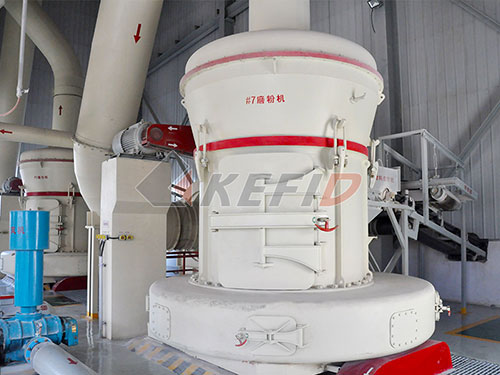

Stone Quarry Crushing Plant Private Label Manufacturer Design Service
The Hidden Costs of Mismatched Crushing Infrastructure
Every hour of unscheduled downtime at a stone quarry costs operators between $8,000 and $25,000 in lost production, depending on throughput capacity. Beyond the immediate revenue loss, plant managers face mounting pressure from three directions: escalating energy costs that consume 3040% of operational budgets, tightening environmental compliance standards on dust and noise emissions, and the constant battle to maintain consistent aggregate gradation for concrete and asphalt specifications.
The real challenge isn't finding crushing equipment—it's finding a system engineered for your specific feed material, production targets, and site constraints. Offtheshelf configurations force compromises that compound over years of operation. Your current setup may be processing at 75% efficiency, consuming 15% more power than necessary, or producing an excess of undesirable fines that reduce saleable yield.
The question isn't whether you need a new crushing plant. The question is whether you can afford a system that isn't precisely engineered for your quarry's unique characteristics.
Product Overview: CustomEngineered Stone Quarry Crushing Plant Solutions
This private label manufacturing and design service delivers complete stone quarry crushing plants tailored to your sitespecific requirements. Unlike standard equipment catalogs, this service provides endtoend engineering support—from initial material testing through full system integration—resulting in a crushing circuit that matches your feed characteristics, production targets, and operational constraints.
Operational Workflow
Stage 1: Material Analysis and Site Assessment
Your feed material undergoes comprehensive testing including abrasiveness (LA abrasion), compressive strength, moisture content, and clay content. Site surveys evaluate topography, available footprint, power supply capacity, and environmental restrictions.
Stage 2: Process Flow Design
Based on material characteristics and target output specifications, our engineers design the complete crushing circuit—determining crusher types, screen configurations, conveyor routing, and stockpile management systems.
Stage 3: Equipment Specification and Fabrication
All components are manufactured under your private label, including primary jaw crushers, secondary cone crushers, vertical shaft impactors, vibrating screens, and material handling systems. Each unit is built to your specifications with your branding.
Stage 4: System Integration and Installation Support
Preassembled modules reduce onsite installation time. Our team provides installation supervision, commissioning support, and operator training to ensure your team achieves full operational capability quickly.
Stage 5: Ongoing Optimization
Postcommissioning support includes performance monitoring, wear part replacement scheduling, and process optimization recommendations based on operational data.
Application Scope
This service is suitable for hard rock quarries processing granite, basalt, trap rock, and limestone, with production capacities ranging from 150 to 1,200 tons per hour. It addresses stationary installations and modular systems for relocatable operations. The design accommodates multiple final product specifications, including road base, concrete aggregates, asphalt aggregates, and railway ballast.
Limitations: This service is not designed for sand and gravel operations with high clay content exceeding 8%, nor for underground mining applications. Extremely abrasive materials with LA abrasion values above 30 require additional wear protection considerations that may extend delivery timelines.
Core Features
Custom Crushing Circuit Design | Technical Basis: Material testing data drives equipment selection and flow sheet optimization | Operational Benefit: Your plant processes feed material at optimal efficiency without bottlenecks or overcrushing | ROI Impact: 1015% higher throughput compared to standard configurations, reducing cost per ton by $0.15$0.30
HeavyDuty Fabrication Standards | Technical Basis: Structural components engineered to withstand continuous vibration loads with 2.5x safety factor | Operational Benefit: Extended equipment lifespan of 1520 years with reduced structural maintenance | ROI Impact: Eliminates $50,000$120,000 in premature structural repairs over equipment lifetime

EnergyOptimized Drive Systems | Technical Basis: Premiumefficiency motors with variable frequency drives on secondary and tertiary crushers | Operational Benefit: Power consumption reduced by 812% during partial load conditions | ROI Impact: Annual savings of $18,000$45,000 on electricity costs for a 400 TPH plant
Integrated Dust Suppression Design | Technical Basis: Engineered water spray systems positioned at transfer points and crusher discharge | Operational Benefit: Meets EPA particulate matter standards without separate dust collection investment | ROI Impact: Avoids $75,000$150,000 in addon dust control equipment costs
Modular Assembly Configuration | Technical Basis: Prewired and prepiped modules with quickconnect interfaces | Operational Benefit: Installation time reduced from 1216 weeks to 68 weeks | ROI Impact: Earlier production start generates $400,000$800,000 in revenue during the accelerated timeline
Advanced Control System Integration | Technical Basis: PLCbased automation with remote monitoring capabilities | Operational Benefit: One operator manages the entire plant from a central control room | ROI Impact: Labor cost reduction of $60,000$90,000 annually through reduced staffing requirements
Wear Component Optimization | Technical Basis: Chromemoly alloy liners with profilespecific designs for your feed material | Operational Benefit: Wear life extended by 2035% compared to standard manganese liners | ROI Impact: Annual wear part savings of $25,000$60,000 depending on abrasiveness
Competitive Advantages
| Performance Metric | Industry Standard | Custom Engineered Solution | Advantage |
|||||
| Throughput Efficiency | 7580% of rated capacity | 9095% of rated capacity | 1520% improvement |
| Power Consumption per Ton | 0.81.2 kWh/ton | 0.650.95 kWh/ton | 1525% reduction |
| Fines Generation (under 4mm) | 1520% of output | 1014% of output | 2535% reduction |
| Installation Timeline | 1216 weeks | 68 weeks | 50% faster commissioning |
| Unscheduled Downtime | 58% of operating time | 24% of operating time | 5060% reduction |
| Wear Part Life | 3,0005,000 hours | 4,0007,000 hours | 2535% extension |
| Final Product Consistency | ±8% gradation variance | ±4% gradation variance | 50% improvement |
Technical Specifications
Primary Crushing Unit (Jaw Crusher)
- Feed Opening: 1,067mm x 762mm to 1,524mm x 1,067mm
- Capacity Range: 200800 TPH (depending on closed side setting)
- Power Requirement: 110250 kW
- Material Specifications: Cast steel frame, manganese jaw plates (18% Mn), spherical roller bearings
- Dimensions: 3.2m x 2.8m x 3.5m (L x W x H)
- Weight: 42,00085,000 kg
- Head Diameter: 1,200mm to 2,200mm
- Capacity Range: 150600 TPH
- Power Requirement: 160400 kW
- Material Specifications: Alloy steel mainframe, manganese mantle and concave
- Dimensions: 2.8m x 2.5m x 3.2m
- Weight: 28,00065,000 kg
- Rotor Diameter: 840mm to 1,050mm
- Capacity Range: 100400 TPH
- Power Requirement: 2x 200315 kW
- Material Specifications: Highchrome wear parts, steel housing with wear liners
- Dimensions: 2.5m x 2.2m x 2.8m
- Weight: 18,00035,000 kg
- Screen Size: 2.4m x 6.0m to 3.0m x 7.3m
- Decks: 23 decks
- Power Requirement: 2245 kW per screen
- Material Specifications: Hightensile steel body, polyurethane or wire mesh decks
- Temperature: 20°C to +50°C
- Humidity: Up to 95% noncondensing
- Altitude: Up to 3,000m above sea level (derating above 1,500m)
- Dust Exposure: Designed for continuous operation in highparticulate environments
- Automation Package: $85,000$150,000 (includes PLC system, sensors, remote monitoring)
- Dust Collection System: $120,000$250,000 (baghouse or cartridge filtration)
- Extended Wear Package: $45,000$90,000 (highchrome liners, ceramiclined chutes)
- Mobile/Modular Configuration: 1525% price premium over stationary equivalent
- Standard Warranty: 12 months parts and labor, includes one site visit
- Extended Warranty: 36 months, includes quarterly inspections and priority response
- Full Maintenance Program: 5year agreement covering all scheduled maintenance, wear parts replacement, and 24hour emergency response
- Equipment Lease: 3660 month terms with $1 buyout option
- Deferred Payment: 10% down, 30% at delivery, 60% at commissioning
- ProductionBased Financing: Payments tied to actual tonnage processed, minimum monthly commitment required
Secondary Crushing Unit (Cone Crusher)

Tertiary Crushing Unit (Vertical Shaft Impactor)
Vibrating Screens
Environmental Operating Range
Application Scenarios
Hard Rock Quarry Expansion | Challenge: Existing 250 TPH plant consistently failed to meet 400 TPH production targets for a highway project, causing contract penalties of $12,000 per day | Solution: Customengineered 450 TPH plant with secondary cone crusher and tertiary VSI configuration, designed around feed material with 22% LA abrasion | Results: Production achieved 415 TPH average within first month; contract penalties eliminated; specific energy consumption reduced from 1.1 to 0.82 kWh/ton, saving $4,200 monthly
Greenfield Limestone Operation | Challenge: New quarry development required complete processing infrastructure with strict environmental compliance for a residential area within 500 meters | Solution: Enclosed crushing plant with engineered dust suppression, reducedheight conveyors, and noisedampening housings; private label branding throughout | Results: Permit approval obtained in first application; noise levels maintained below 65 dB at property boundary; plant commissioned in 7 weeks versus 14week industry average
Aggregate Producer Modernization | Challenge: 30yearold plant produced inconsistent gradation causing 12% product rejection rate and customer complaints | Solution: Complete replacement with automated system featuring realtime gradation monitoring and automated crusher setting adjustment | Results: Product rejection reduced to 2.5%; customer retention improved from 78% to 94%; payback period of 2.3 years achieved through reduced waste and premium pricing capability
Commercial Considerations
Equipment Pricing Tiers
| Configuration | Capacity Range | Price Range (USD) | Typical Lead Time |
|||||
| Standard Package | 150250 TPH | $1.2M $2.5M | 1620 weeks |
| Enhanced Package | 250500 TPH | $2.5M $4.8M | 2026 weeks |
| Premium Package | 5001,200 TPH | $4.8M $9.5M | 2636 weeks |
Optional Features
Service Packages
Financing Options
Frequently Asked Questions
Q: How does the private label manufacturing process work with our existing brand identity?
A: All equipment is painted in your specified colors, fitted with your nameplates and logos, and documented with your branding on manuals and technical documentation. We maintain confidentiality agreements to protect your brand positioning in the market.
Q: What is the typical timeline from initial consultation to full plant commissioning?
A: The complete process typically requires 2032 weeks depending on plant size and complexity. This includes 46 weeks for material testing and design, 1220 weeks for fabrication, and 46 weeks for installation and commissioning. Expedited timelines are available for modular configurations.
Q: Can the plant be designed to accommodate future capacity expansion?
A: Yes. Our design process includes provisions for future expansion, including预留 space for additional crushers, oversized conveyor foundations, and electrical infrastructure capacity. This typically adds 35% to initial capital cost but reduces future expansion costs by 3040%.
Q: What training do you provide for our operators and maintenance staff?
A: We provide a comprehensive training program including 2 weeks of onsite training during commissioning, operator manuals specific to your configuration, and optional advanced training at our facility. Training covers safe operation, routine maintenance, troubleshooting, and optimization techniques.
Q: How does your equipment perform with highly abrasive materials like granite or basalt?
A: For materials with LA abrasion values above 25, we specify enhanced wear protection including highchrome liners, ceramiclined chutes, and reduced crusher speed settings. Field data from granite quarries shows wear life of 4,5006,000 hours on secondary crusher liners with this configuration.
Q: What are the power requirements for a typical 400 TPH plant?
A: A complete 400 TPH plant requires approximately 8001,000 kVA of connected load, with actual operating demand of 600750 kW. We provide detailed power distribution designs and can incorporate soft starters or VFDs to manage inrush currents.
Q: Can you provide references from similar projects in our region or industry segment?
A: Yes. We maintain a database of completed projects and can arrange site visits to operating plants with similar configurations. We can also provide performance data summaries with client permission, including throughput records, energy consumption, and maintenance histories.