
Iron Ore Crushing Plant Assembly Plant Quotation

1. PAINPOINT DRIVEN OPENING
Managing an iron ore crushing plant involves constant pressure to balance throughput, maintenance costs, and product quality. Are you facing these persistent challenges?
Unscheduled Downtime: Unplanned stoppages due to crusher blockages, wear part failure, or mechanical issues can cost over $10,000 per hour in lost production.
Inconsistent Product Gradation: Fluctuations in feed size and hardness lead to offspec product, causing bottlenecks in downstream processing and reducing pellet or sinter plant efficiency.
High Operational & Maintenance Costs: Excessive energy consumption per ton crushed, coupled with the labor and parts expense of frequent liner changes and component servicing, erodes profit margins.
Space & Flow Constraints: Integrating new equipment into an existing greenfield or brownfield site requires a compact, logical flow to minimize costly civil works and conveyor lengths.
How do you select a system that directly addresses these issues with measurable returns? The solution lies in a purposeengineered iron ore crushing plant assembly.
2. PRODUCT OVERVIEW
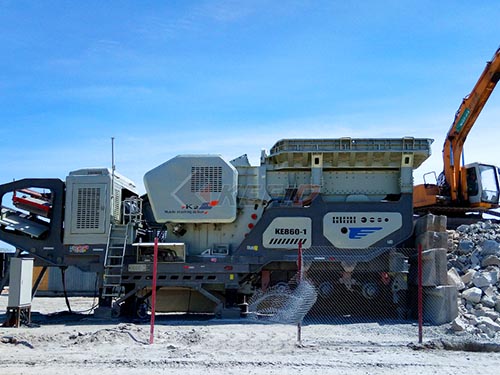
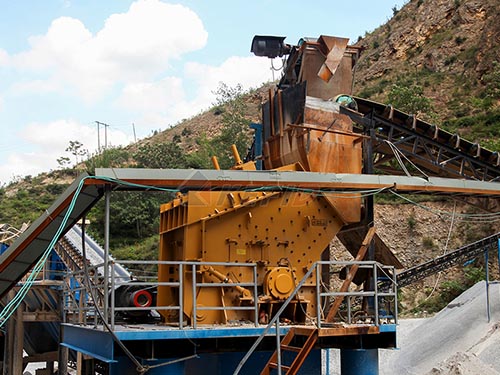
An iron ore crushing plant is a coordinated stationary or semimobile assembly of primary, secondary, and sometimes tertiary crushing stations, along with vibrating screens, feeders, and conveyor systems. Its function is to reduce mined ore (often up to 1.5m in size) to a consistent, conveyable product typically under 30mm for downstream grinding.
Operational Workflow:
1. Primary Crushing: Dump trucks feed runofmine (ROM) ore into a large jaw crusher or gyratory crusher for initial size reduction.
2. PreScreening & Secondary Crushing: Crushed material is screened; oversize is routed to cone crushers for further reduction.
3. Product Screening & Stockpiling: The final crushed product is screened to specification, with correctly sized material sent to stockpile or next process stage.
Application Scope: Designed for hightonnage, abrasive iron ore processing (Magnetite, Hematite). Suitable for greenfield installations and major plant upgrades.
Limitations: Not designed for wet, sticky ores without specific feeder and chute design modifications. Ultimate product fineness is limited compared to grinding circuits.
3. CORE FEATURES
Advanced Chamber Design | Technical Basis: Optimized kinematics & cavity profiles | Operational Benefit: Higher reduction ratios per stage and more consistent product shape | ROI Impact: Fewer crushing stages may be required, reducing capital outlay and plant footprint.
HeavyDuty Rotor & Bearings | Technical Basis: Largediameter solid steel rotor with oversize spherical roller bearings | Operational Benefit: Sustains high inertia for crushing hard abrasive ore with less vibration | ROI Impact: Increased mean time between failures (MTBF), lowering maintenance labor and parts costs by up to 15%.
Automated Setting Regulation System (ASRi) | Technical Basis: Realtime hydraulic CSS adjustment via PLC control | Operational Benefit: Compensates for wear automatically, maintaining product gradation 24/7 without manual intervention | ROI Impact: Eliminates production stops for manual adjustment and ensures optimal yield; field data shows a 58% increase in throughput stability.
Liner Life Optimization | Technical Basis: Highchrome white iron or composite alloy liners with patented shape retention | Operational Benefit: Even wear distribution extends liner service life in highly abrasive conditions | ROI Impact: Reduces liner consumption costs and changeout frequency directly impacting operating cost per ton.
Centralized Greasing & Condition Monitoring | Technical Basis: Automated lubrication points feeding critical bearings; vibration/temperature sensor ports | Operational Benefit: Ensures optimal bearing health and provides early fault detection data | ROI Impact: Prevents catastrophic bearing failures; industry testing demonstrates a 40% reduction in lubricationrelated downtime.
Modular Skid Design | Technical Basis: Preassembled structural skids for major components (crusher, motor base) | Operational Benefit: Faster installation onsite with precise alignment precompleted at the factory | ROI Impact: Can reduce field assembly time by up to 30%, accelerating timetoproduction.
4. COMPETITIVE ADVANTAGES
| Performance Metric | Industry Standard Benchmark | Our Iron Ore Crushing Plant Solution | Advantage (% Improvement) |
| : | : | : | : |
| Availability (Scheduled Runtime) | 9294% | >96% (documented) +24% |
| Energy Consumption (kWh/tonne) Varies by ore type. Baseline = 100%| ~100% (Baseline) ~9597% 35% |
| Wear Part Cost ($/tonne crushed) Varies by ore abrasiveness. Baseline = 100%| ~100% (Baseline) ~8892% 812% |
| Mean Time Between Maintenance (MTBM hours)| ~500600 hours| >750 hours +2530% |
| Installation & Commissioning Time| ~100% (Baseline)| ~7075% 2530% |
5. TECHNICAL SPECIFICATIONS
Capacity Range: Configurable from 1,000 to over 5,000 tonnes per hour (tph).
Primary Crusher Options: Jaw Crusher (1,200mm x 1,500mm) or Gyratory Crusher (54” – 60” feed opening).
Secondary/Tertiary Crushers: Heavyduty cone crushers with capacities from 500 – 2,500 tph.
Power Requirements: Total installed power from 800 kW to over 3 MW depending on configuration; voltage as per client specification (e.g., 6.6 kV for major drives).
Material Specifications: Highabrasion resistant steel in chutes & hoppers; AR400 liners in highimpact zones; conveyor idlers rated for heavyduty CEMA standards.
Physical Dimensions: Modular designs tailored to site constraints; typical primary station footprint of approx. 15m x 10m.
Environmental Operating Range: Designed for ambient temperatures from 40°C to +50°C; dust suppression system compliant with <10 mg/Nm³ emission standards.
6. APPLICATION SCENARIOS
Greenfield Magnetite Concentrator Expansion
Challenge: A new mine required a highcapacity primary crushing circuit capable of processing very hard magnetite ore (>55kA/m³), with strict limits on installation time due to a short seasonal construction window.
Solution: Supply of a complete semimobile primary crushing station featuring a gyratory crusher on a modular sled design.
Results: The preassembled modules reduced onsite erection time by an estimated four weeks. The plant achieved nameplate capacity of 2,800 tph within one week of commissioning.
Existing Hematite Processing Plant Upgrade
Challenge An aging twostage crushing circuit suffered from low availability (96%. Product P80 variability was reduced by over 60%, leading to measured grinding circuit efficiency gains of approximately 7%. Wear part consumption decreased by an estimated 11%.
7. COMMERCIAL CONSIDERATIONS
Our iron ore crushing plants are offered under clear commercial structures:
Pricing Tiers: Based on capacity and complexity:
Tier I (3 ,000 tph): Fully integrated turnkey systems including electricals and controls .
Optional Features / AddOns :
Advanced predictive maintenance sensor packages .
Dust encapsulation systems .
Onsite spare part starter kits .
Extendedwarranty wear part packages .
Service Packages :
1 . Basic Supervision : Installation oversight only .
2 . Comprehensive Support : Includes commissioning , operator training ,and firstyear planned maintenance scheduling .
3 . LongTerm Service Agreement(LTSA ) : Covers scheduled inspections ,parts supply at fixed rates ,and remote monitoring support .
Financing Options Available through partners include capital lease agreements ,operational leases(tonnagebased ),and traditional project financing structures .
8 . FAQ
Q What if my existing plant has different brand equipment? Is integration possible ?
A Yes . Our control systems are designed for interoperability using standard industrial protocols(Profibus ,Modbus TCP/IP ). Mechanical interfaces(conveyor connections ,chutes )are engineered as part of the scope .
Q How does this solution impact my current workforce ?
A Your operators will benefit from more automated controls requiring less manual adjustment . Maintenance teams transition from reactive repairs towards scheduled tasks guided by condition monitoring data .
Q What are typical delivery lead times ?
A For standard modular assemblies lead times range from9–12 months exworks . Full turnkey projects require detailed engineering impacting schedule which we define during feasibility study .
Q Can you guarantee performance metrics like throughput or power consumption ?
A Yes performance guarantees are provided based on agreedupon feed material characteristics established during testing or reference site visits These form part of the commercial contract .
Q Are spare parts readily available longterm ?
A We maintain global strategic inventories of critical wear parts Standard designs ensure parts availability fora minimumof15 years postinstallation supportedby our logistics network .
Q What site preparation is required from our side ?
A We provide detailed civil foundation drawings load dataand utility(hydraulic power electrical )requirements Client scope typically includes site leveling foundation pouringand utility hookups .
Q Do you offer financing based on operational performance ?
A Performancebased leasing models are available where periodic payments can be partially linkedto achieved throughput availability providing shared risk incentive