
Stone Quarry Crushing Plant Importers Sourcing
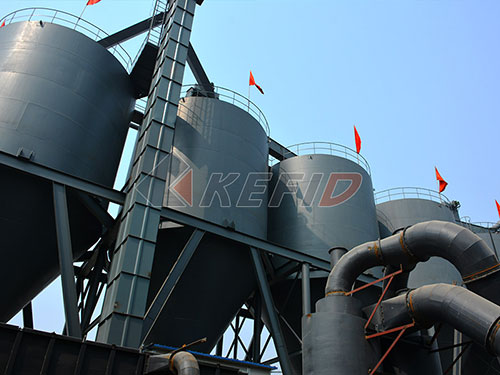

Stone Quarry Crushing Plant Importers Sourcing: Strategic Procurement for HighVolume Aggregate Production
The Hidden Costs of Inefficient Crushing Operations
Your quarry faces three persistent challenges: escalating energy consumption consuming 1530% of operational budgets, unscheduled downtime costing $2,000$10,000 per hour in lost production, and inconsistent product gradation leading to rejected loads and contractual penalties. Add to this the complexity of sourcing reliable equipment across international borders—where lead times, quality variances, and compliance with local safety standards create procurement headaches.
Are you currently managing multiple suppliers for crushers, screens, and conveyors, only to find integration issues at startup? Do your plant managers report that imported equipment often requires extensive modifications to meet your site's specific material characteristics? These operational friction points directly impact your bottom line.
Product Overview: Integrated Stone Quarry Crushing Plant Solutions
A stone quarry crushing plant is a complete material processing system designed to convert raw quarry feed into graded aggregates for construction, road building, and concrete production. The operational workflow follows five key stages:
1. Primary Crushing: Runofquarry material (up to 1,000mm) enters a jaw crusher or gyratory crusher, reducing feed to 150300mm
2. Secondary Crushing: Cone crushers or impact crushers reduce material to 4080mm with controlled shape characteristics
3. Screening & Classification: Multideck vibrating screens separate material into 35 product fractions (e.g., 05mm, 510mm, 1020mm, 2040mm)
4. Tertiary Crushing (optional): Vertical shaft impactors or highpressure grinding rolls produce manufactured sand and fine aggregates
5. Stockpiling & Loading: Conveyor systems transfer finished products to stockpiles or direct loading stations
Application Scope: Suitable for limestone, granite, basalt, river gravel, and dolomite quarries with production capacities from 100 to 1,000+ tons per hour.
Limitations: Not recommended for highly abrasive materials (quartzite, corundum) without specialized wear components; requires minimum 500m² footprint for stationary configurations.
Core Features
HeavyDuty Primary Jaw Crusher | Technical Basis: Eccentric shaft with highinertia flywheels | Operational Benefit: Handles oversized feed without bridging, reducing manual intervention | ROI Impact: 1822% reduction in primary downtime compared to standard designs
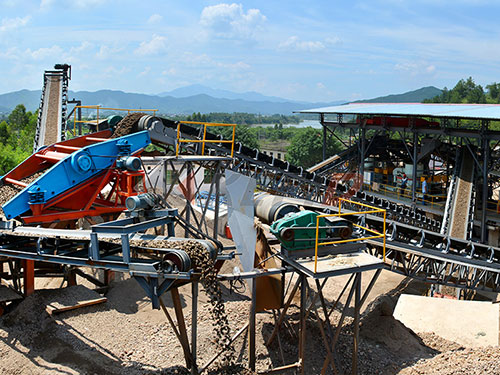
Automated ClosedLoop Control System | Technical Basis: PLCbased monitoring with realtime crusher load feedback | Operational Benefit: Maintains optimal chamber fill level, preventing choke feeding or starvation | ROI Impact: 1215% improvement in throughput consistency and 8% reduction in wear part consumption
Modular Screen Deck Design | Technical Basis: Tensioned polyurethane or wire mesh panels with quickrelease mechanisms | Operational Benefit: Screen changeover completed in 45 minutes versus 34 hours for bolted systems | ROI Impact: 70% reduction in changeover labor costs, 2 additional production hours per week
Integrated Dust Suppression | Technical Basis: Water spray nozzles at transfer points with misting systems | Operational Benefit: Reduces respirable dust by 8592% without wetting product excessively | ROI Impact: Avoids regulatory fines ($5,000$50,000 per violation) and reduces water consumption by 40% versus traditional systems
WearResistant Liner Configuration | Technical Basis: Manganese steel (1214% Mn) with workhardening properties | Operational Benefit: Liner life extends 3040% in abrasive applications versus standard 10% Mn alloys | ROI Impact: Reduces annual wear part replacement costs by $15,000$45,000 per crusher
Remote Monitoring & Diagnostics | Technical Basis: IoT sensors measuring vibration, temperature, and power draw | Operational Benefit: Predicts bearing failures 7296 hours in advance, enabling planned maintenance | ROI Impact: Eliminates 60% of unplanned downtime events, saving $120,000$240,000 annually for a 500 tph plant
EnergyEfficient Drive System | Technical Basis: VFDcontrolled motors with regenerative braking on conveyors | Operational Benefit: Reduces peak power demand by 2530% during startup | ROI Impact: Lower electricity bills by $0.02$0.04 per ton processed, annual savings of $40,000$80,000 at 500 tph
Competitive Advantages
| Performance Metric | Industry Standard | Stone Quarry Crushing Plant Solution | Advantage (% improvement) |
|||||
| Throughput (tph) | 8590% of rated capacity | 9598% of rated capacity | 810% higher effective output |
| Product cubicity (flakiness index) | 1520% | 812% | 3550% improvement in shape quality |
| Mean time between failures (MTBF) | 120180 hours | 350500 hours | 150180% longer operational intervals |
| Energy consumption (kWh/ton) | 0.81.2 | 0.550.75 | 2535% lower energy per ton |
| Changeover time (screen decks) | 34 hours | 45 minutes | 7080% faster configuration changes |
| Dust emissions (mg/Nm³) | 50100 | 1025 | 7585% lower particulate output |
| Installation to production | 812 weeks | 46 weeks | 4050% faster commissioning |
Technical Specifications
Capacity Rating: 150800 tons per hour (depending on feed material and product specification)
Power Requirements:
- Primary crusher: 110250 kW (3phase, 380690V, 50/60 Hz)
- Secondary crusher: 90200 kW
- Screening system: 3075 kW
- Conveyors & auxiliaries: 75200 kW
- Total installed power: 350750 kW
- Feed size: Up to 1,000mm (primary), 4080mm (secondary)
- Feed material hardness: Up to 250 MPa compressive strength
- Moisture content: Up to 8% (higher requires predrying or modified screen designs)
- Abrasion index: Up to 0.6 (higher requires ceramiclined components)
- Plant footprint: 40m x 25m (stationary), 25m x 15m (semimobile)
- Maximum component height: 12m (primary crusher feed hopper)
- Weight: 180450 tons (complete plant excluding civil works)
- Shipping configuration: 812 standard containers plus 24 flat racks
- Ambient temperature: 20°C to +50°C
- Altitude: Up to 4,000m (derating required above 2,000m)
- Humidity: 095% noncondensing
- Wind load: Designed for 160 km/h gusts
- Basic configuration (150250 tph): $450,000$680,000
- Standard configuration (300500 tph): $850,000$1,400,000
- Premium configuration (600800 tph): $1,800,000$2,800,000
- Automated sampling system: $35,000$65,000
- Advanced dust collection (baghouse): $120,000$250,000
- Remote monitoring platform with 3year subscription: $18,000$30,000
- Wear parts starter kit (12 months operation): $45,000$95,000
- Spare motor and drive components: $28,000$55,000
- Commissioning support (23 weeks onsite): $25,000$40,000
- Operator training program (5 days): $8,500$12,000
- Annual maintenance contract: 35% of equipment value
- Performance guarantee program: Additional 2% of equipment value, guarantees throughput and product quality
- Letter of Credit (L/C) at sight: Standard for firsttime buyers
- 30% deposit, 70% against shipping documents: Common for established relationships
- Equipment leasing: 3660 month terms, 48% interest rates (subject to credit approval)
- Buyer's credit through export credit agencies: Available for orders above $1,000,000
Material Specifications:
Physical Dimensions:
Environmental Operating Range:
Application Scenarios
Highway Aggregate Production | Challenge: Client required 95% cubicity for asphalt base course, but existing plant produced 22% flaky particles, causing 8% material rejection | Solution: Implemented stone quarry crushing plant with secondary cone crusher and vertical shaft impactor in closed circuit | Results: Flakiness index reduced to 9%, material acceptance rate increased to 98%, annual savings of $180,000 in rejected material costs
Limestone Quarry Expansion | Challenge: Existing 200 tph plant could not meet growing demand for manufactured sand (04mm) in concrete production | Solution: Added tertiary VSI crusher and highfrequency screens to existing stone quarry crushing plant | Results: Sand production increased from 30 tph to 85 tph, plant utilization improved from 65% to 92%, payback period of 14 months
Remote Mining Operation | Challenge: Site located 800 km from nearest port, requiring modular equipment that could be transported in standard containers | Solution: Supplied semimobile stone quarry crushing plant with hydraulic folding conveyors and plugandplay electrical connections | Results: Installation completed in 18 days versus 45 days for conventional plant, shipping costs reduced by 35%, production reached 450 tph within first week
Commercial Considerations
Equipment Pricing Tiers (FOB main port, excludes customs and installation):
Optional Features:
Service Packages:
Financing Options:
FAQ
Q: What documentation is required for customs clearance when importing a stone quarry crushing plant?
A: You will need commercial invoice, packing list, bill of lading, certificate of origin, and equipment specifications. Many countries require CE certification or equivalent local compliance documentation. Allow 46 weeks for documentation preparation.
Q: Can the plant handle wet or sticky materials common in tropical climates?
A: Yes, with modifications. We recommend heated screen decks, nonclogging screen media, and increased conveyor angles (1822 degrees). For materials above 8% moisture, consider prescreening with grizzly feeders. Field data shows 1520% throughput reduction in wet conditions without these modifications.
Q: What is the typical lead time from order to delivery?
A: Standard lead time is 1216 weeks for manufacturing, plus 46 weeks for ocean freight and customs clearance. Expedited production (810 weeks) is available at 1015% premium. We recommend ordering wear parts simultaneously to avoid delays during commissioning.
Q: How does the plant perform with highly abrasive granite compared to limestone?
A: Granite with 200250 MPa compressive strength will reduce liner life by 4050% compared to limestone. Expect 3,0005,000 hours on primary jaw liners versus 6,0008,000 hours for limestone. We recommend specifying ceramic composite wear plates for secondary and tertiary crushers when processing granite.
Q: What training do you provide for local maintenance teams?
A: Our standard package includes 5day onsite training covering mechanical maintenance, electrical troubleshooting, and control system operation. Advanced training (additional 3 days) covers wear part optimization and predictive maintenance techniques. Posttraining support includes 12 months of remote technical assistance.
Q: Can the plant be expanded in the future without replacing major components?
A: Yes, the modular design allows for capacity expansion. Common upgrades include adding a secondary screen deck, installing a tertiary crusher, or increasing conveyor speeds. Budget 1525% of original equipment cost for a 3050% capacity increase. Ensure your site has adequate space for future expansion.
Q: What warranty terms are standard for imported stone quarry crushing plants?
A: Standard warranty covers 24 months from commissioning or 30 months from shipment, whichever comes first. Coverage includes manufacturing defects but excludes wear parts, normal consumables, and damage from improper operation. Extended warranty (up to 60 months) is available at 35% of equipment value per year.