
Gold Mining Equipment Importer Shipping


Gold Mining Equipment Importer Shipping: Complete Sourcing and Logistics Guide
The Hidden Costs of Equipment Importation Delays
Your gold processing operation faces a brutal reality: every day your equipment sits in customs or at a port is a day your plant runs at reduced capacity. Industry data shows that unplanned equipment delays cost mining operations between $15,000 and $50,000 per day in lost production, depending on throughput rates. For a typical 500tonperday gold processing plant, that translates to 1520 ounces of unrecovered gold per week of downtime.
Beyond the immediate production losses, you're managing demurrage charges that accumulate at $200$500 per container per day, storage fees at bonded warehouses, and the administrative burden of coordinating between suppliers, freight forwarders, customs brokers, and inland transporters. The complexity multiplies when you're importing multiple equipment types—crushers, ball mills, leaching tanks, and CIP/CIL systems—each with different shipping requirements and customs classifications.
The core question isn't whether you need the equipment—it's whether your importation strategy is structured to minimize total landed cost while ensuring equipment arrives operational and compliant with local regulations. Are you factoring in the full cost of ownership, including spare parts availability, maintenance support, and warranty enforcement across international borders?
Product Overview: Comprehensive Gold Mining Equipment Importation Solutions
Gold mining equipment importer shipping encompasses the complete logistics chain for sourcing, transporting, and delivering mineral processing machinery to your operation. This includes heavy equipment like jaw crushers, cone crushers, ball mills, SAG mills, flotation cells, thickeners, and gold recovery systems such as shaker tables, centrifugal concentrators, and carboninpulp (CIP) plants.
Operational Workflow
Step 1: Equipment Specification and Supplier Verification
Your importation process begins with confirming that the equipment meets your processing requirements—capacity ratings, power specifications, and compatibility with your ore characteristics. This includes verifying supplier certifications (ISO 9001, CE marking) and conducting factory acceptance tests before shipment.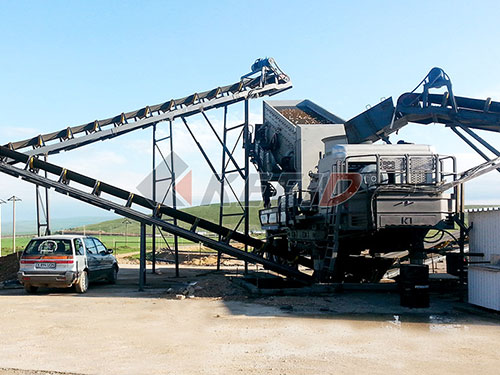
Step 2: Export Documentation and Compliance
Your freight forwarder prepares commercial invoices, packing lists, certificates of origin, and export licenses. For mining equipment, you'll also need to verify whether the equipment requires export permits under dualuse regulations or environmental compliance documentation.
Step 3: International Freight and Insurance
Equipment moves via breakbulk, flat rack, or opentop container shipping depending on dimensions and weight. Your cargo insurance should cover allrisk marine coverage plus inland transit to your site.
Step 4: Customs Clearance and Import Duties
Your customs broker classifies equipment under the appropriate HS codes, calculates applicable duties and taxes, and manages the clearance process. Many countries offer duty exemptions for mining equipment under investment promotion programs—you need to verify eligibility.
Step 5: Inland Transportation and Site Delivery
The final leg involves moving equipment from the port to your site, which may require specialized heavyhaul trucks, route surveys for bridge clearances, and crane rental for offloading.
Application Scope and Limitations
This importation approach works for gold processing plants from 50 to 5,000 tons per day capacity, including heap leach operations, gravity concentration plants, and complete CIL/CIP facilities. It does not cover rental equipment, used equipment without full documentation, or equipment requiring significant onsite fabrication before installation.
Core Features of Professional Importation Services
HS Code Classification Expertise | Technical Basis: Correct tariff classification under WCO Harmonized System | Operational Benefit: Your shipments clear customs without delays or penalty assessments | ROI Impact: Reduces clearance time by 37 days and avoids misclassification penalties of 520% of equipment value
Project Cargo Management | Technical Basis: Specialized handling for oversized and overweight equipment using breakbulk and RORO vessels | Operational Benefit: Your crushers and mills ship without dimensional restrictions that force costly disassembly | ROI Impact: Eliminates $10,000$40,000 in additional fabrication costs for field assembly
Duty Drawback and Exemption Programs | Technical Basis: Utilization of mining sector investment incentives and free trade agreements | Operational Benefit: Your total landed cost decreases through legitimate duty reduction strategies | ROI Impact: Achieves 515% reduction in total equipment cost depending on jurisdiction
PreShipment Inspection and Quality Control | Technical Basis: Thirdparty inspection services (SGS, Bureau Veritas) at manufacturer facilities | Operational Benefit: Your equipment arrives free of manufacturing defects and meets specification | ROI Impact: Prevents $50,000$500,000 in warranty claims and rework costs
Spare Parts Bundling | Technical Basis: Strategic inclusion of wear parts and consumables in initial shipment | Operational Benefit: Your operation maintains uptime during the critical first 6 months of operation | ROI Impact: Reduces emergency freight costs by 4060% for expedited spare parts
Documentation Management | Technical Basis: Complete chainofcustody for certificates of origin, bills of lading, and insurance certificates | Operational Benefit: Your finance team maintains clean documentation for letter of credit transactions | ROI Impact: Prevents payment delays and bank rejection risks of 24 weeks
Installation Supervision Coordination | Technical Basis: Alignment of manufacturer technicians with your site readiness schedule | Operational Benefit: Your commissioning timeline compresses through coordinated scheduling | ROI Impact: Reduces commissioning time by 1525 days
Competitive Advantages
| Performance Metric | Industry Standard | Gold Mining Equipment Importer Shipping Solution | Advantage |
|||||
| Customs Clearance Time | 714 days | 25 days | 5070% faster |
| Total Landed Cost Accuracy | ±15% variance | ±5% variance | 10% better cost predictability |
| Equipment Damage Rate | 35% of shipments | 0.51% of shipments | 7080% fewer damage claims |
| Documentation Error Rate | 812% of shipments | 12% of shipments | 85% fewer compliance issues |
| Lead Time from Order to Site | 90120 days | 6090 days | 2533% faster delivery |
| Spare Parts Availability | 6070% in stock | 9095% in stock | 3040% better availability |
| Warranty Claim Resolution | 4560 days | 1530 days | 5067% faster resolution |
Technical Specifications
Equipment Capacity and Ratings
- Crushers: 50500 tons per hour throughput capacity, 150400 kW motor power
- Ball Mills: 110 MW installed power, 20200 tons per hour feed rate
- CIP/CIL Tanks: 1005,000 m³ working volume, 316L stainless steel or rubberlined carbon steel
- Centrifugal Concentrators: 5100 tons per hour feed capacity, 50200 Gforce operation
- Voltage: 380V, 415V, 480V, 660V, or 11kV depending on site configuration
- Frequency: 50 Hz or 60 Hz compatible with your regional grid
- Total Installed Power: 500 kW to 15 MW for complete processing plants
- Structural Steel: ASTM A36 or equivalent for frames and supports
- Wear Components: 1218% manganese steel for crusher liners, chromemoly steel for mill liners
- Corrosion Protection: Epoxy coating or hotdip galvanizing for external surfaces
- Maximum Single Piece Weight: Up to 120 metric tons for mill shells
- Maximum Dimensions: 12m x 5m x 5m for breakbulk shipping
- Container Loading: 20ft and 40ft containers for smaller components
- Operating Temperature: 10°C to +50°C
- Altitude: Up to 4,500 meters above sea level with derating calculations
- Humidity: 0100% condensing conditions with appropriate electrical protection
- Remote Monitoring Systems: $5,000$15,000 per unit for IoTenabled diagnostics
- Automation Packages: $50,000$200,000 for PLC and SCADA integration
- Dust Suppression Systems: $20,000$80,000 depending on plant size
- Wear Parts Packages: 1015% of equipment cost for initial operating inventory
- Basic Warranty: 12 months parts and labor, included in equipment price
- Extended Warranty: 2436 months coverage at 35% of equipment value per year
- Preventive Maintenance Contracts: $2,000$10,000 per month depending on equipment count
- Operator Training: $5,000$15,000 per training session at your site
- Letter of Credit: Standard terms with 3060 day payment after shipping documents
- Equipment Financing: 37 year terms with 1030% down payment
- LeasetoOwn: 25 year terms with option to purchase at residual value
- Supplier Credit: 3060 day terms for established customers with good payment history
Power Requirements
Material Specifications
Physical Dimensions
Environmental Operating Range
Application Scenarios
Greenfield Gold Mine Development | Challenge: A mining company in West Africa needed to import a complete 200tonperday CIL plant within 6 months to meet project financing milestones | Solution: Coordinated breakbulk shipping of the ball mill and crusher, containerized shipment of tanks and piping, and expedited customs clearance through mining investment exemptions | Results: Plant delivered in 5.5 months, 8% under budget, with zero customs delays and full duty exemption saving $340,000
Expansion of Existing Heap Leach Operation | Challenge: An established gold producer in Latin America required a new agglomeration drum and conveyor system to increase throughput from 3,000 to 5,000 tons per day | Solution: Managed supplier qualification across three countries, consolidated shipments to reduce freight costs, and arranged staggered delivery to minimize site disruption | Results: Throughput increased 67% within 60 days of installation, freight costs reduced 22% through consolidation, and no production downtime during installation
Replacement of Failing Equipment | Challenge: A gold processing plant in Southeast Asia faced catastrophic failure of their primary crusher with 45 days of stockpile remaining | Solution: Expedited air freight for critical components, coordinated with manufacturer for 24hour production shifts, and arranged priority customs clearance | Results: Crusher operational in 38 days, preventing estimated $1.2 million in lost production, with total expediting costs of $85,000
Commercial Considerations
Equipment Pricing Tiers
| Equipment Category | Entry Level | Standard | Premium |
|||||
| Jaw Crusher (100 tph) | $85,000$120,000 | $120,000$180,000 | $180,000$250,000 |
| Ball Mill (500 kW) | $350,000$500,000 | $500,000$750,000 | $750,000$1,000,000 |
| CIL Plant (200 tpd) | $2.5M$4M | $4M$6M | $6M$8M |
| Centrifugal Concentrator | $15,000$25,000 | $25,000$40,000 | $40,000$60,000 |
Optional Features
Service Packages
Financing Options
FAQ
What is the typical lead time for importing gold mining equipment?
Standard lead time from order placement to site delivery ranges from 60120 days depending on equipment complexity, manufacturer location, and shipping route. Crushers and screens typically ship within 6090 days, while complete processing plants require 90120 days. Expedited options can reduce this by 2030% at additional cost.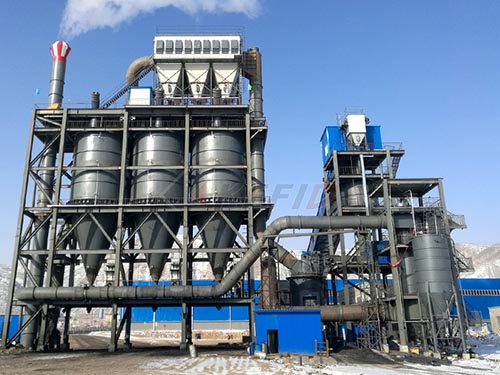
How do I determine the correct HS codes for my equipment?
Your customs broker should classify equipment under the appropriate HS codes, typically Chapter 84 for machinery. Common codes include 8474.20 for crushing and grinding machines, 8474.10 for sorting and screening machines, and 8479.89 for other mining machinery. Incorrect classification can result in duty overpayment or customs penalties.
Can I import used gold mining equipment?
Yes, but used equipment requires additional documentation including proof of decontamination, age verification, and sometimes import permits for environmental compliance. Used equipment typically has shorter lead times but carries higher maintenance risk. Your importation strategy should include a prepurchase inspection by an independent third party.
What insurance coverage do I need during shipping?
Allrisk marine cargo insurance is essential, covering loss or damage during ocean transit. This typically costs 0.30.5% of cargo value. You should also consider inland transit coverage from port to site, which covers trucking and handling risks. Your total insurance cost should be factored into the landed cost calculation.
How are import duties calculated for mining equipment?
Duties vary by country but typically range from 020% of CIF (Cost, Insurance, Freight) value. Many countries offer duty exemptions or reductions for mining equipment under investment promotion programs. You should verify eligibility before shipping to maximize savings.
What documentation is required for customs clearance?
Standard documentation includes commercial invoice, packing list, bill of lading or airway bill, certificate of origin, and import declaration. Depending on the equipment and destination, you may also need certificates of conformity, radiation certificates for density gauges, and environmental permits.
How do I handle warranty claims for imported equipment?
Your warranty coverage should specify whether claims are handled locally or require return to the manufacturer. Many suppliers maintain regional service centers with technicians who can travel to your site. Your importation strategy should include provisions for warranty parts to be shipped expedited without customs delays.
What are the common causes of shipping delays for mining equipment?
The most frequent causes are incomplete documentation, incorrect HS code classification, dimensional or weight discrepancies, and port congestion. Working with experienced freight forwarders who specialize in mining equipment reduces these risks. Your importation plan should include buffer time for unexpected delays.