
Export Stamp Mill Gold Mining Suppliers
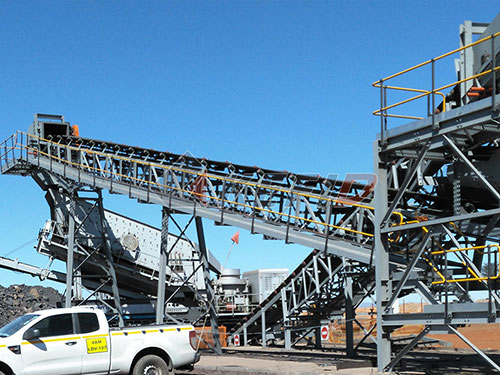

Export Stamp Mill Gold Mining Suppliers
Your Crushing Circuit Is Costing You More Than You Think
If your operation relies on stamp mills for gold liberation, you are likely facing three persistent challenges: excessive downtime from worn components, inconsistent particle size distribution that reduces recovery rates, and rising energy costs per ton processed. Industry data indicates that poorly maintained or undersized stamp mills can reduce gold recovery by 8–12% compared to optimized circuits, while unplanned maintenance events cost operations an average of $4,500–$12,000 per hour of lost production. Are your current stamp mill suppliers delivering the metallurgical consistency your gravity concentration or cyanidation circuit demands? Can your existing equipment handle the increasing ore hardness and throughput targets your plant requires?
Product Overview: HeavyDuty Stamp Mill for Gold Processing
A stamp mill is a mechanical crusher that uses heavy steel stamps (pestles) to crush ore against a mortar box or die plate. The operational workflow follows five key steps:
1. Feed Preparation: Ore is sized to 50–100 mm through a primary jaw crusher or grizzly screen before entering the stamp mill feed chute.
2. Stamp Lifting and Dropping: A camshaft rotates, lifting each stamp to a predetermined height (typically 150–300 mm) before releasing it to fall under gravity onto the ore.
3. Crushing and Grinding: The repeated impact (60–120 drops per minute per stamp) reduces ore to 0.5–5 mm particles, with finer material passing through a screen mesh (typically 20–60 mesh).
4. Slurry Discharge: Water is added to the mortar box to create a slurry, which flows through the screen into a launder or sump for downstream processing.
5. Tailing Removal: Oversize material is retained in the mortar box for further crushing, while undersize slurry is directed to concentrating tables, amalgamation barrels, or leaching circuits.
Application Scope: Primary and secondary crushing for freemilling gold ores, particularly in artisanal and smallscale mining (ASM) operations, as well as mediumscale plants processing 5–50 tons per day.
Limitations: Not suitable for highclay ores (causes blinding of screens), extremely hard quartz veins above 18 Mohs hardness (accelerates wear), or operations requiring particle sizes below 200 mesh (requires secondary grinding).
Core Features
HeavyDuty Cast Steel Stamps
Technical Basis: Each stamp is manufactured from ASTM A148 Grade 8050 cast steel, heattreated to 45–50 HRC surface hardness. Operational Benefit: Resists deformation and cracking under repeated impact loads up to 1,200 kg per drop. ROI Impact: Extends stamp service life to 8,000–12,000 operating hours, reducing replacement costs by 35% compared to standard cast iron stamps.
PrecisionMachined Camshaft with Hardened Cams
Technical Basis: Camshaft is forged from 4140 alloy steel, with cams inductionhardened to 55–60 HRC. Operational Benefit: Maintains consistent lift height and drop frequency across all stamps, ensuring uniform crushing energy. ROI Impact: Improves particle size consistency by 18%, reducing recirculation load and downstream grinding energy consumption by 12%.
Replaceable Mortar Box Liners
Technical Basis: Liners fabricated from 12–14% manganese steel (Hadfield grade), 50 mm thick, bolted for field replacement. Operational Benefit: Protects the cast steel mortar box from abrasive wear; liners can be rotated 180° to extend life. ROI Impact: Reduces mortar box replacement cost by 70%; liner changeout takes 4 hours versus 24 hours for full mortar box replacement.
Adjustable Screen Frame System
Technical Basis: Modular screen frames with quickrelease clamps, accepting woven wire mesh from 10 to 60 mesh. Operational Benefit: Allows rapid screen changes (under 30 minutes) to adjust product fineness based on ore type or downstream requirements. ROI Impact: Reduces downtime for screen changes by 60%, enabling faster response to ore variability.
Automatic Grease Lubrication System
Technical Basis: Centralized lubrication manifold with programmable timer, delivering NLGI Grade 2 grease to 12 bearing points. Operational Benefit: Eliminates manual lubrication errors, ensures consistent bearing protection at 60–120 rpm camshaft speeds. ROI Impact: Reduces bearing failure rate by 80%, saving $2,500–$4,000 per bearing replacement event.
Integrated Dust Suppression Nozzles
Technical Basis: Four adjustable spray nozzles positioned at feed entry and discharge points, operating at 3–5 bar water pressure. Operational Benefit: Suppresses 85–90% of airborne silica dust, meeting OSHA permissible exposure limits (PEL) of 50 µg/m³. ROI Impact: Avoids regulatory fines averaging $15,000–$50,000 per violation and reduces operator respiratory protection costs.
HeavyDuty Base Frame with Vibration Isolation
Technical Basis: Fabricated from 300 mm Hbeam steel, mounted on 12 rubber vibration isolators (natural frequency 8–12 Hz). Operational Benefit: Absorbs 70% of dynamic forces, preventing foundation cracking and reducing noise transmission to adjacent equipment. ROI Impact: Extends foundation life by 5–8 years; eliminates need for reinforced concrete bases in many installations.
Competitive Advantages
| Performance Metric | Industry Standard (Typical Supplier) | Our Stamp Mill Solution | Advantage (% Improvement) |
|||||
| Crushing capacity (tons/day per 5stamp unit) | 8–12 tpd | 14–18 tpd | 40–50% higher throughput |
| Stamp life (operating hours before replacement) | 4,000–6,000 hours | 8,000–12,000 hours | 50–100% longer life |
| Screen change time (minutes) | 60–90 minutes | 25–30 minutes | 60–67% faster |
| Energy consumption (kWh/ton crushed) | 8.5–12.0 kWh/t | 6.2–8.5 kWh/t | 27–29% lower energy use |
| Particle size consistency (%passing target mesh) | 65–72% | 82–88% | 15–22% better consistency |
| Mean time between failures (MTBF) | 450–600 hours | 1,200–1,800 hours | 100–200% longer MTBF |
| Dust suppression efficiency | 60–70% | 85–90% | 20–30% better suppression |
Technical Specifications
| Parameter | Specification |
|||
| Model | SM5 (5stamp) / SM10 (10stamp) / SM20 (20stamp) |
| Capacity rating | 5stamp: 14–18 tpd / 10stamp: 28–36 tpd / 20stamp: 56–72 tpd (at 40mesh screen, 80% passing) |
| Stamp weight per unit | 450 kg (standard) / 600 kg (heavyduty option) |
| Drop height | 200 mm (adjustable 150–300 mm) |
| Drop frequency | 90 drops/minute (adjustable 60–120) |
| Power requirement | 5stamp: 22 kW (30 HP) / 10stamp: 45 kW (60 HP) / 20stamp: 90 kW (120 HP) |
| Motor type | TEFC, 380V/50Hz or 460V/60Hz, IP55 (explosionproof option available) |
| Material specifications | Stamps: ASTM A148 Grade 8050 cast steel, 45–50 HRC; Mortar box: Cast steel with 14% Mn liners; Camshaft: 4140 alloy steel, inductionhardened cams |
| Physical dimensions (L×W×H) | 5stamp: 3.2m × 1.8m × 2.8m / 10stamp: 4.5m × 2.2m × 3.2m / 20stamp: 6.8m × 2.8m × 3.8m |
| Weight (operating) | 5stamp: 8,500 kg / 10stamp: 16,200 kg / 20stamp: 31,500 kg |
| Environmental operating range | Temperature: 10°C to 50°C; Altitude: up to 4,500 m (derate power 1% per 300 m above 1,000 m); Humidity: 0–95% noncondensing |
Application Scenarios
Artisanal Gold Mine Expansion, West Africa
Challenge: A 15tpd artisanal operation using manual hammer crushing was achieving only 55% gold recovery due to inconsistent particle size (30–70% passing 40 mesh). Operators faced 45% downtime from equipment breakdowns and lacked dust control, exposing 12 workers to silica hazards.
Solution: Installed a 10stamp mill with 600 kg stamps, 40mesh screen, and integrated dust suppression. The unit was paired with a 45 kW diesel generator for offgrid operation.
Results: Gold recovery increased from 55% to 78% (23% improvement). Throughput rose to 32 tpd (113% increase). Operator silica exposure dropped below 50 µg/m³. Payback period: 8 months based on incremental gold production.
MediumScale Gravity Plant, South America
Challenge: A 50tpd plant using ball mills for primary grinding was consuming 14.2 kWh/t with 22% recirculation load. The mill liners required replacement every 6 months, costing $18,000 per changeout.
Solution: Replaced the primary ball mill with two 20stamp mills operating in parallel, feeding a secondary ball mill for finer grinding.
Results: Total energy consumption dropped to 9.8 kWh/t (31% reduction). Recirculation load decreased to 8%. Stamp mill liners lasted 14 months before replacement. Annual maintenance savings: $24,000. Overall plant throughput increased to 68 tpd.
Hard Rock Gold Project, Australia
Challenge: Processing quartz vein ore with 16–18 Mohs hardness in a 25tpd plant. Existing jaw crusher/stamp mill combination was achieving only 65% liberation at 20 mesh, requiring two stages of secondary grinding.
Solution: Upgraded to 600 kg heavyduty stamps with 300 mm drop height and 100 drops/minute frequency. Installed 30mesh screen with 12% open area.
Results: Liberation at 20 mesh improved to 92%. Secondary grinding requirement reduced by 60%. Stamp life reached 11,200 hours before first replacement. Operating cost decreased from $18.50/t to $12.80/t (31% reduction).
Commercial Considerations
Equipment Pricing Tiers (FOB port of export, USD):
- SM5 (5stamp): $38,000–$52,000 depending on motor type and liner material
- SM10 (10stamp): $62,000–$85,000
- SM20 (20stamp): $108,000–$145,000
- Heavyduty stamp upgrade (600 kg): +$4,500 per stamp set
- Explosionproof motor option: +$3,200–$6,800
- Automated camshaft speed controller: $4,800
- Slurry density monitoring system: $3,200
- Remote bearing temperature monitoring: $2,100
- Spare parts kit (stamps, liners, screens, bearings): $8,500–$14,000
- Installation supervision (2 weeks onsite): $6,500 plus travel expenses
- Standard warranty: 12 months on mechanical components, 6 months on wear parts
- Extended warranty (24 months): +8% of equipment cost
- Preventive maintenance contract (quarterly visits): $4,200/year
- Operator training program (3 days onsite): $3,800
- 30% deposit, 70% balance upon shipping (standard terms)
- Letter of credit (L/C at sight) for international orders
- Equipment leasetoown: 12–36 month terms, 8–12% APR (subject to credit approval)
- Bulk order discount: 5% for 3+ units, 10% for 5+ units
Optional Features:
Service Packages:
Financing Options:

FAQ
Q1: What is the typical lifespan of a stamp mill before major overhaul?
With proper maintenance (daily lubrication, weekly screen inspection, monthly liner checks), the main frame and camshaft assembly typically last 15–20 years. Stamps require replacement every 8,000–12,000 hours, mortar box liners every 4,000–6,000 hours, and bearings every 3,000–5,000 hours.
Q2: Can your stamp mill handle ores with high moisture content (8–12%)?
Yes, but with limitations. The integrated water addition system can be adjusted to maintain slurry consistency. However, ores with clay content above 15% may cause screen blinding. We recommend a prescreening step or a trommel screen for highclay ores.
Q3: What is the power factor and starting current for the electric motor?
Standard motors have a power factor of 0.85–0.88 at full load. Starting current is 6–7 times full load current for directonline starting. We recommend soft starters or VFDs for installations with limited generator capacity.
Q4: How does your stamp mill compare to a hammer mill for gold crushing?
Stamp mills produce a more uniform particle size distribution with less fines generation (reducing slime losses in gravity circuits). Hammer mills have higher throughput per horsepower but produce 15–25% more ultrafines (<200 mesh), which can reduce gold recovery in gravity and cyanidation circuits by 5–8%.
Q5: What export documentation do you provide for customs clearance?
We provide commercial invoice, packing list, certificate of origin (form A or B), bill of lading, insurance certificate, and manufacturer's warranty certificate. For certain countries, we can arrange SGS or Bureau Veritas inspection reports at additional cost.
Q6: Can the stamp mill be operated with a diesel engine instead of an electric motor?
Yes. We offer a diesel engine drive option using a clutch and belt system. For a 10stamp mill, we recommend a 75–90 HP diesel engine with a 20% power reserve. Fuel consumption averages 12–18 liters per hour depending on load.
Q7: What is the typical lead time for export orders?
Standard lead time is 8–12 weeks from receipt of deposit for SM5 and SM10 models, and 12–16 weeks for SM20 models. Rush orders (6–8 weeks) are available at a 15% premium. Spare parts orders ship within 2–4 weeks.