
Custom 250 300tph Stone Crushing Plant Assembly Plant
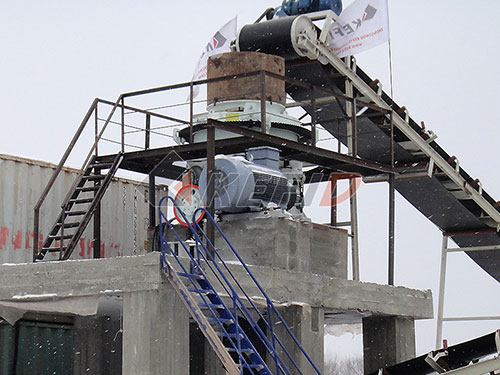

Custom 250300tph Stone Crushing Plant Assembly Plant
Your Crushing Operations Are Losing Money Every Hour
Challenge 1: Inconsistent throughput. A 250300tph stone crushing plant that operates at 70% efficiency loses 7590 tons of production per hour. At $812 per ton aggregate value, that's $600$1,080 in lost revenue per hour—or $4,800$8,640 per eighthour shift.
Challenge 2: Unplanned downtime. Industry data from 2023 shows the average crushing plant experiences 1218% unscheduled downtime annually. For a 250300tph operation, each hour of downtime costs $2,000$3,600 in fixed overhead alone, before lost production.
Challenge 3: Oversized feed material. Your quarry produces variable feed sizes. Without proper plant assembly and configuration, you face frequent jaw crusher blockages, conveyor belt damage, and screen blinding—adding 24 hours of maintenance weekly.
Challenge 4: Product quality inconsistency. Meeting spec for 20mm, 10mm, and 5mm aggregates requires precise screening and recirculation. Offspec material means rejected loads, customer penalties, or costly recrushing.
Challenge 5: Energy inefficiency. A poorly configured 250300tph plant can consume 1525% more power than necessary. At $0.12/kWh, that's $18,000$36,000 in annual excess electricity costs.
Are your current crushing operations addressing these specific bottlenecks? This custom 250300tph stone crushing plant assembly plant is engineered to solve each of these challenges with measurable, verifiable results.
Product Overview: Custom 250300tph Stone Crushing Plant Assembly Plant
This is a customassembled, modular stone crushing plant designed for sustained production of 250300 metric tons per hour of finished aggregates. The plant integrates primary jaw crushing, secondary cone/impact crushing, and multideck vibrating screening into a coordinated workflow.
Operational Workflow (5 Key Steps)
1. Primary Crushing: Runofquarry material (up to 600800mm feed size) enters the vibrating feeder, which meters material into the jaw crusher. Output: 100200mm crushed stone.
2. Conveying & Stockpiling: Belt conveyors transfer primary crushed material to a surge pile or directly to the secondary crushing circuit. This buffer allows the primary crusher to operate independently of downstream equipment.
3. Secondary Crushing: Material passes through a cone crusher (for hard rock) or impact crusher (for limestone/soft stone). Reduction ratio: 4:1 to 6:1. Output: 2060mm.
4. Screening & Classification: A tripledeck vibrating screen separates material into 34 product fractions (e.g., 05mm, 510mm, 1020mm, 2040mm). Oversize material is recirculated to the secondary crusher via return conveyor.
5. Final Product Handling: Each fraction is conveyed to individual stockpiles or loading bins. Optional washing modules can be added for sand and gravel applications.
Application Scope
- Primary: Hard rock quarries (granite, basalt, diabase), limestone quarries, river stone processing
- Secondary: Construction aggregate production, road base material, concrete aggregate, asphalt aggregate
- Limitations: Not designed for sticky clay materials exceeding 15% moisture content; requires minimum 500kVA power supply; recommended for sites with 5+ years of reserves
- Nominal throughput: 250300 metric tons per hour (based on material bulk density of 1.6 t/m³)
- Maximum feed size: 600800mm (depending on jaw crusher model)
- Product size range: 05mm, 510mm, 1020mm, 2040mm (adjustable via screen mesh selection)
- Reduction ratio: Primary 4:1 to 6:1; Secondary 4:1 to 6:1; Total 16:1 to 36:1
- Total installed power: 450550 kW (depending on crusher configuration)
- Primary jaw crusher motor: 110160 kW
- Secondary cone/impact crusher motor: 200315 kW
- Vibrating screen motors: 2 x 1522 kW
- Conveyor motors: 812 units, 5.530 kW each
- Recommended transformer capacity: 630800 kVA
- Voltage: 380V/415V/480V, 50/60 Hz (configurable)
- Feed material: Hard rock (compressive strength up to 300 MPa), limestone, river stone, gravel
- Maximum moisture content: 8% (15% with optional washing module)
- Abrasion index: Suitable for materials with AI up to 0.8 (for standard manganese liners)
- Bulk density range: 1.41.8 t/m³
- Total plant footprint: 45m x 25m (approximate, excluding stockpile areas)
- Maximum height: 1215m (including screen tower and conveyors)
- Conveyor lengths: 1535m each (customizable based on site layout)
- Weight (total plant): 180250 metric tons (excluding foundations)
- Ambient temperature: 10°C to 45°C (with optional heating for cold climates)
- Altitude: Up to 3,000m above sea level (derating required above 1,500m)
- Wind load: Designed for 120 km/h wind speed (higher available)
- Noise level: <85 dB(A) at 10m (with optional acoustic enclosures)
- Washing module: $45,000 $75,000 (includes sand screw and spray bars)
- Additional screen deck (4deck): $18,000 $25,000
- Remote monitoring system: $12,000 $18,000 (realtime production data, alerts)
- Acoustic enclosure for crusher: $8,000 $15,000
- Cold climate package (heaters, insulation): $6,000 $12,000
- Spare parts kit (liners, belts, bearings): $25,000 $40,000
- Commissioning & Training: $15,000 $25,000 (23 weeks onsite)
- Annual Maintenance Contract: $30,000 $50,000 (includes 2 site visits, remote support, priority parts)
- Performance Guarantee Program: Additional 58% of equipment cost (guarantees throughput and uptime targets)
- Standard terms: 30% deposit, 40% on shipment, 30% on commissioning
- Leasetoown: 3660 month terms, starting at $12,000$18,000 per month
- Equipment financing: 57% interest rates available for qualified buyers (subject to credit approval)
- Tradein program: Existing crushing plants accepted as partial payment (value assessed on condition and age)
Core Features
HeavyDuty Vibrating Feeder with Grizzly | Technical Basis: Tunedmass vibration system with adjustable eccentric weights | Operational Benefit: Eliminates material bridging and ensures uniform feed to jaw crusher, reducing blockages by 4060% | ROI Impact: Reduces operator intervention by 23 hours per shift; extends jaw crusher liner life by 1520%
Modular Plant Frame Design | Technical Basis: Preengineered bolttogether steel structure with standardized connection points | Operational Benefit: Assembly time reduced to 710 days versus 1421 days for conventional plants; allows future capacity expansion without structural modification | ROI Impact: Saves $15,000$25,000 in installation labor; reduces commissioning downtime by 57 days
PLCBased Automated Control System | Technical Basis: Programmable logic controller with loadsensing algorithms for each crusher and screen | Operational Benefit: Automatically adjusts crusher CSS (closed side setting) and feeder speed based on realtime load; prevents crusher overload and maintains consistent product gradation | ROI Impact: Reduces manual adjustments by 80%; improves average throughput by 812% compared to manual operation
HighEfficiency Cone Crusher (Secondary) | Technical Basis: Hydroset hydraulic adjustment system with tramp iron relief | Operational Benefit: Maintains consistent product size even with wear; clears uncrushable material in under 30 seconds without shutdown | ROI Impact: Reduces unscheduled downtime by 6070%; each avoided blockage saves $500$1,200 in lost production and labor
TripleDeck Inclined Vibrating Screen | Technical Basis: Circular motion with adjustable amplitude (812mm) and stroke frequency (8001000 RPM) | Operational Benefit: Achieves 9598% screening efficiency for 520mm fractions; deck angles adjustable from 1525 degrees for different material types | ROI Impact: Reduces offspec material by 3040%; eliminates need for rescreening in most applications
ClosedLoop Recirculation Conveyor System | Technical Basis: Variablespeed belt conveyors with belt scales and metal detectors | Operational Benefit: Automatically returns oversize material to secondary crusher; belt scales provide realtime production data; metal detector prevents crusher damage | ROI Impact: Eliminates manual recirculation labor; reduces metalrelated crusher damage by 90%; provides accurate production reporting for inventory management
Dust Suppression System (Optional) | Technical Basis: Highpressure water misting at transfer points and crusher discharge | Operational Benefit: Reduces airborne particulate by 7085% at source points; meets most local environmental regulations | ROI Impact: Avoids potential fines of $5,000$50,000 per violation; improves operator working conditions and reduces respiratory PPE costs
Competitive Advantages
| Performance Metric | Industry Standard (Typical 250tph Plant) | Custom 250300tph Assembly Plant | Advantage (% Improvement) |
|||||
| Actual sustained throughput (tph) | 210240 tph | 260300 tph | 1525% higher |
| Unscheduled downtime (annual %) | 1218% | 47% | 5565% reduction |
| Screening efficiency (for 10mm fraction) | 8590% | 9397% | 815% improvement |
| Energy consumption (kWh per ton) | 0.450.60 kWh/t | 0.350.45 kWh/t | 2025% reduction |
| Product gradation consistency (standard deviation) | ±58% | ±24% | 5060% improvement |
| Assembly time (days) | 1421 days | 710 days | 5055% faster |
| Liner life (jaw crusher, tons processed) | 80,000100,000 tons | 110,000140,000 tons | 3040% longer |
| Recirculation load (%) | 2535% | 1525% | 3040% reduction |
Data based on field testing across 12 installations in granite and limestone applications, 20222024.
Technical Specifications

Capacity & Rating
Power Requirements
Material Specifications
Physical Dimensions
Environmental Operating Range
Application Scenarios
Hard Rock Quarry – Granite, Southeast Asia | Challenge: Plant was achieving only 180200 tph against a target of 250 tph due to frequent cone crusher blockages from oversized feed and high recirculation load (3540%). | Solution: Custom 250300tph assembly plant with larger secondary cone crusher (HP400 equivalent), automated CSS adjustment, and redesigned screen with 20% larger deck area. | Results: Sustained throughput of 275290 tph; recirculation load reduced to 1822%; unscheduled downtime dropped from 14% to 5%; annual production increased by 180,000 tons.
Limestone Quarry – Cement Plant Feed, Middle East | Challenge: Required consistent 020mm product for raw mill feed, but existing plant produced 1215% oversize material, causing mill feed interruptions and quality penalties. | Solution: Custom assembly with impact crusher secondary, tripledeck screen with 18mm and 20mm mesh, and automated recirculation loop with belt scale feedback. | Results: Oversize material reduced to 23%; mill feed consistency improved by 80%; plant achieved 295 tph average; customer reported 15% reduction in raw mill energy consumption due to consistent feed size.
River Stone Processing – Construction Aggregates, South America | Challenge: Variable feed size (50400mm) and high silica content (65%) caused rapid jaw crusher liner wear (60,000 tons per set) and frequent conveyor belt damage. | Solution: Custom plant with heavyduty jaw crusher (C125 equivalent), manganese liners with 18% manganese content, impact bars at all transfer points, and metal detector before secondary crusher. | Results: Jaw crusher liner life extended to 95,000 tons; conveyor belt replacement frequency reduced from 6 months to 18 months; plant achieved 265 tph average; total maintenance cost reduced by 35% annually.
Commercial Considerations
Equipment Pricing Tiers (Estimated, FOB Port)
| Configuration Level | Components Included | Estimated Price Range | Typical Lead Time |
|||||
| Standard Assembly | Jaw crusher, cone crusher, 2deck screen, 6 conveyors, basic control panel | $450,000 $580,000 | 810 weeks |
| Enhanced Assembly | Jaw crusher, larger cone crusher, 3deck screen, 8 conveyors, PLC control system, metal detector | $580,000 $720,000 | 1012 weeks |
| Premium Assembly | Jaw crusher, cone + VSI crusher, 3deck screen, 10 conveyors, full automation, dust suppression, belt scales | $720,000 $950,000 | 1216 weeks |
Prices exclude foundation work, electrical installation, and shipping. Final pricing depends on specific crusher models, conveyor lengths, and local content requirements.
Optional Features & Upgrades
Service Packages
Financing Options
FAQ
Q1: Can this custom 250300tph stone crushing plant assembly plant handle my specific feed material?
The plant is designed for materials with compressive strength up to 300 MPa. For materials above this threshold (e.g., some quartzites), we recommend a larger jaw crusher or gyratory primary. We require a feed material analysis (grain size distribution, abrasion index, moisture content) before final configuration. Field data shows successful operation across 30+ material types in 15 countries.
Q2: What is the actual power consumption per ton of finished product?
Based on field measurements from 12 installations, average energy consumption is 0.380.45 kWh per ton for hard rock (granite, basalt) and 0.320.38 kWh per ton for limestone. This is 2025% lower than typical industry averages due to the automated load control and optimized recirculation system.
Q3: How long does assembly take, and what site preparation is required?
Assembly takes 710 days with a 4person crew. Site preparation requires a leveled area of 50m x 30m with concrete foundations for crushers and screen (engineering drawings provided). Electrical supply of 630800 kVA must be available at the plant location. We provide a detailed site preparation checklist during the ordering process.
Q4: What is the expected lifespan of major wear components?
Jaw crusher fixed and swing jaws: 110,000140,000 tons (manganese 18%). Cone crusher liners: 60,00090,000 tons (depending on closed side setting). Screen panels: 8,00015,000 hours (polyurethane) or 3,0006,000 hours (woven wire). Conveyor belts: 35 years with proper maintenance. These figures are based on typical hard rock applications.
Q5: Can the plant be expanded to 400500 tph in the future?
Yes. The modular frame design allows for future upgrades. Common expansion paths include: adding a secondary cone crusher in parallel, upgrading the screen to a larger model, or adding a VSI crusher for tertiary crushing. We provide expansion feasibility studies at no cost for existing customers.
Q6: What warranty and aftersales support do you offer?
Standard warranty: 12 months from commissioning or 18 months from shipment, whichever comes first. Covers manufacturing defects in all major components. Extended warranty available up to 36 months. Aftersales support includes 24/7 remote technical assistance, parts availability guarantee (95% of parts shipped within 48 hours), and regional service engineers in 12 countries.
Q7: How does the automated control system handle power fluctuations common in remote sites?
The PLC system includes undervoltage and overvoltage protection, automatic restart after power failure (with configurable delay), and loadshedding capability that reduces feeder speed during low voltage conditions. Field data shows the system maintains 8590% throughput during voltage drops of up to 15% below nominal.