
Slag Crusher Plant Manufacturing Design Service

1. PAINPOINT DRIVEN OPENING
Managing slag is a persistent bottleneck with tangible costs. Are you facing these operational challenges?
Unreliable Throughput: Inconsistent feed size and composition cause frequent jams in primary crushing, leading to unplanned downtime that halts downstream processing.
Excessive Abrasion & Maintenance Costs: The highly abrasive nature of slag rapidly wears crusher components, resulting in high spare parts expenditure and laborintensive changeouts every few months.
Inefficient Liberation of Valuable Metals: Incomplete crushing and screening leaves metal trapped within slag aggregates, causing direct revenue loss from unrecovered ferrous and nonferrous materials.
High Operational Complexity: Managing multiple, poorly synchronized units for crushing, screening, and metal separation increases manpower needs and the risk of process failure.
Space & Footprint Constraints: A disjointed layout of individual machines consumes excessive plant area, complicating material flow and future expansion plans.
The core question is: how do you transform this costly byproduct into a consistent, profitable product stream while controlling operational expenses? The answer lies not in a single machine, but in a holistically engineered system.
2. PRODUCT OVERVIEW
A Slag Crusher Plant is a integrated material processing system designed specifically for the rigorous reduction, screening, and metal recovery of metallurgical slag (blast furnace, steel furnace, copper). It transforms large, irregular slag feed into precisely graded aggregates for construction or further processing.
Operational Workflow:
1. Primary Crushing & Scalping: Large slag feed (up to 800mm) is reduced by a heavyduty jaw or impact crusher. An integrated vibrating grizzly removes fine material bypassing the primary crusher.
2. Secondary & Tertiary Crushing: Material is conveyed to cone or impact crushers for further size reduction to achieve the desired cubical aggregate shape.
3. Metal Recovery: Critical stage where liberated metal is extracted via overhead crossbelt magnets or eddy current separators installed on conveyor lines.
4. Sizing & Classification: Final crushed material is classified into commercial grades (e.g., 05mm, 510mm, 1020mm) by multideck vibrating screens.
5. Stockpiling & Dispatch: Graded aggregates are conveyed to designated stockpiles or loading bays for dispatch.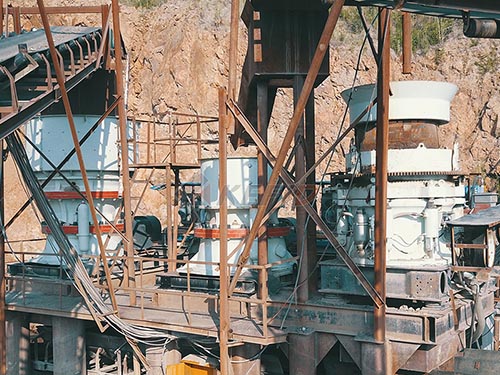
Application Scope: Processing blast furnace slag (BFS), steel slag (LD slag), copper slag, and other nonferrous slags for use as road base, concrete aggregate, rail ballast, or cement raw feed.
Limitations: Not designed for primary rock mining or processing extremely hard igneous rocks. Feed material must be within specified maximum hardness (typically Mohs 78) and initial size as per plant design.
3. CORE FEATURES
HeavyDuty Primary Crusher | Technical Basis: High manganese steel jaws/liners with optimized nip angle | Operational Benefit: Handles large slablike slag pieces without bridging; withstands intermittent tramp metal | ROI Impact: Reduces primary blockage events by an estimated 70%, maximizing upstream furnace operation continuity.

Integrated Metal Recovery System | Technical Basis: Permanent overband magnets on main discharge conveyor + optional eddy current separator | Operational Benefit: Continuous extraction of liberated ferrous and nonferrous metals directly during processing | ROI Impact: Captures an additional 25% of metal value often lost in conventional setups; protects downstream crushers from metal damage.
AbrasionResistant Conveying Circuit | Technical Basis: AR400 steel liners in hoppers, impact beds at loading points, and vulcanized belt splices | Operational Benefit: Dramatically extends wear life of highabrasion zones; reduces belt splice failures | ROI Impact: Lowers annual conveyor maintenance costs by up to 40% compared to standard carbon steel setups.
Centralized PLC Control & Monitoring | Technical Basis: Programmable Logic Controller with HMI touchscreen for full plant sequencing and motor management | Operational Benefit: Enables singleoperator control; provides realtime alerts for jams, overloads, and metal detection | ROI Impact: Cuts operational labor requirements while preventing costly cascading equipment failures.
Modular SkidMounted Design | Technical Basis: Preassembled crusher and screen modules on structural steel frames | Operational Benefit: Significantly reduces civil work and onsite assembly time; eases future relocation or expansion | ROI Impact: Can reduce plant commissioning timeline by up to 30%, accelerating timetorevenue.
Dust Suppression System | Technical Basis: Nozzle arrays at transfer points connected to a pressurized water ring main | Operational Benefit: Controls airborne particulate at source, ensuring compliance with site environmental standards | ROI Impact Mitigates risk of regulatory fines and reduces housekeeping labor.
4. COMPETITIVE ADVANTAGES
| Performance Metric | Industry Standard (Modular Setup) | Our Slag Crusher Plant Solution | Advantage (% Improvement) |
| : | : | : | : |
| Overall Plant Availability (%)| ~8285% (downtime for wear changes/blockages)| >92% (engineered redundancy/access)| +810% |
| Metal Recovery Efficiency (%)| ~8892% (singlestage magnet) |>97% (multistage recovery system)| +59% |
| Liner/Wear Part Lifecycle (Hours)| Jaw Liners: ~8001000 hrs.| Jaw Liners: ~13001500 hrs.| +4050% |
| Specific Power Consumption (kWh/Ton)| Varies widely; often suboptimal flow.| Optimized circuit design reduces recirculation.| Up to 15% |
| Installation & Commissioning Time (Weeks)| 1216 weeks (foundationheavy).| 810 weeks (skidmounted modular).| 30% |
5. TECHNICAL SPECIFICATIONS
Processing Capacity Range: Configurable from 50 TPH to over 300 TPH.
Feed Size Maximum: Up to 800mm slab form.
Final Product Sizes: Adjustable from coarse (40mm) to fine (5mm) aggregates.
Power Requirement: Total connected load from 150 kW to 600 kW depending on configuration; supplied at 415V/50Hz or customized.
Key Material Specifications:
Crusher Liners/Jaws: Manganese Steel Grade III / High Chrome Iron alternatives.
Screen Decks: Hardox / Abrex lined decks with replaceable modular panels.
Chutes & Hoppers: Minimum AR400 steel at wear points.
Structural Frame: Heavyduty ISMB/ISMC sections with vibration isolation mounts.
Typical Plant Footprint: Approximately 40m L x 20m W x 15m H for a standard 150 TPH system.
Environmental Operating Range: Designed for ambient temperatures from 10°C to +45°C; dust suppression maintains compliance in particulatesensitive environments.
6. APPLICATION SCENARIOS
Integrated Steel Plant Slag Processing Yard
Challenge A major steel producer faced severe bottlenecks in its slag yard due to an aging twostage crusher prone to jams from large slabs. Metal recovery was inefficient (95% availability Metal recovery efficiency increased quantified outcome>97%, adding significant recovered tons annually Downtime due to blockages was reduced
Independent Aggregate Producer Processing Imported Slag
Challenge A construction aggregate supplier processing purchased steel slag experienced high operating costs due rapid component wear across multiple vendor machines unsynchronized controls required three operators per shift
Solution A compact skidmounted Slag Crusher Plant was supplied featuring abrasionresistant specification throughout centralized PLC automation allowed single operator control
Results Operational staff reduced quantified outcome>60%, lowering perton labor cost Wear part replacement intervals extended quantified outcome>35%, reducing inventory holding costs The standardized product quality enabled entry into highervalue concrete aggregate markets
7. COMMERCIAL CONSIDERATIONS
Our Slag Crusher Plants are offered in three primary tiers:
1. Standard Configuration Core crushing screening basic magnetic separation ideal for processors focused on producing road base aggregates
2 Enhanced Recovery Configuration Includes multistage magnetic separation plus eddy current separator recommended for slags with high nonferrous content targeting maximum metal revenue
3 Fully Automated HighCapacity Configuration Includes advanced PLC with remote monitoring capabilities automated product diversion dust suppression comprehensive service package
Optional Features Mobile primary crushing module prescreening module additional product stockpile conveyors sound enclosures
Service Packages We offer tiered annual maintenance contracts covering scheduled inspections wear part supply preferential pricing emergency breakdown support Operator training programs are included with every installation
Financing Options We provide flexible commercial structures including outright purchase finance lease agreements through our partners buildoperatetransfer BOT models can be explored for larger projects
8. FAQ
What is the typical lead time from order commissioning?
For standard configurations lead time ranges months depending capacity complexity includes design manufacturing shop testing delivery site erection commissioning
How do you ensure your plant will handle our specific type chemical composition?
Our engineering process requires kg sample your feedstock comprehensive test crush analysis our facility This data directly informs selection liner metallurgy machine parameters ensuring optimal performance
What ongoing technical support do you provide postinstallation?
We provide detailed operation maintenance manuals mandatory onsite training your team first days operation offer firstyear comprehensive warranty parts labor Additionally remote diagnostic support available via our PLC connectivity option
Can we integrate existing equipment like our current screen stack into new plant?
Yes Our designs are inherently flexible can incorporate certain customerfurnished items CFCIs provided they meet our technical specifications interface requirements This can reduce overall project capital expenditure
What are the key factors determining final price?
Primary cost drivers are required hourly tonnage number final product grades level automation depth metal recovery needed Sitespecific requirements like need elevated structures extensive dust control also influence final pricing