
Bespoke Quarry Ballast Crushing Equipment Wholesaler
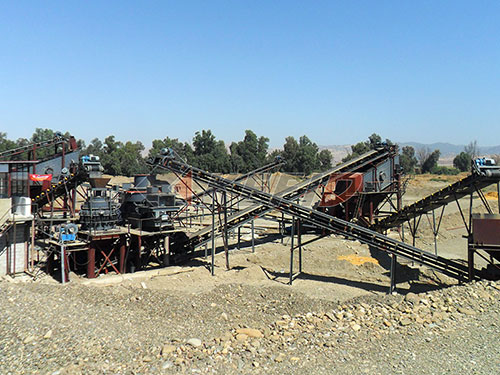

Targeted Solutions for Bespoke Quarry Ballast Crushing Equipment
Are you facing persistent bottlenecks in your aggregate production that directly impact your bottom line? For plant managers and engineering contractors, the challenges in producing specificationgrade quarry ballast are often quantifiable: inconsistent product gradation leading to high reject rates, excessive wear part costs from abrasive igneous or metamorphic rock, and unplanned downtime for adjustments and maintenance. These issues translate to lost revenue, missed delivery schedules, and shrinking profit margins on every ton. How do you increase throughput without sacrificing product quality? Can you reduce operational costs while maintaining reliable, 24/7 availability? Is your current setup flexible enough to meet changing specifications from different rail and construction contracts?
Product Overview: Bespoke Ballast Crushing Systems
Our bespoke quarry ballast crushing equipment refers to customengineered primary, secondary, and tertiary crushing circuits specifically configured for the production of railway ballast and construction aggregate. Unlike standard offtheshelf crushers, these systems are designed from the ground up to process your specific feed material—whether it’s granite, basalt, limestone, or quartzite—into precisely shaped, sized, and clean cubical product.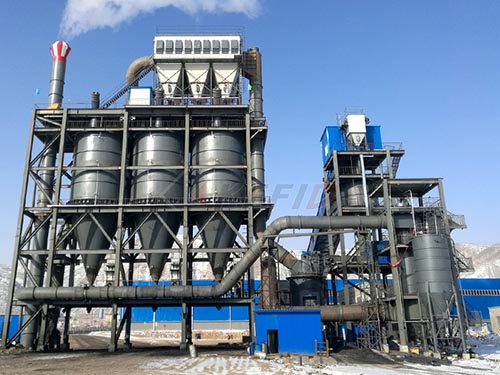
The operational workflow is engineered for maximum efficiency:
1. Primary Scalping & Crushing: Oversize feed is reduced by a rugged jaw or gyratory crusher selected for high reduction ratio and capacity.
2. Secondary Shaping & Sizing: A cone crusher with a specially configured chamber applies interparticle comminution to produce the desired cubicity while controlling fines generation.
3. Tertiary Refinement & Fines Management: A final crushing or shaping stage, often using a vertical shaft impactor (VSI) or highpressure grinding rolls (HPGR), refines particle shape and removes excess fines.
4. Precision Screening & Recirculation: Multideck screens with defined aperture sizes ensure strict adherence to grading specifications (e.g., AREMA 4A, 24), with offspec material automatically recirculated.
Application scope includes dedicated railway ballast production, highspecification road base, and drainage aggregates. Limitations involve feed size constraints based on primary crusher selection and maximum throughput defined by circuit design.
Core Features of Our Bespoke Ballast Crushing Plant
Adaptive Crushing Chamber Design | Technical Basis: Hydroset or hydraulic adjustment systems | Operational Benefit: Realtime adjustment of crusher settings during operation to compensate for feed variation or change product sizing | ROI Impact: Reduces downtime for manual adjustments by up to 70%, increasing annual productive hours.
Intelligent Load & Feed Control | Technical Basis: PLCintegrated variable frequency drives (VFDs) and level sensors | Operational Benefit: Maintains optimal chokefed conditions for cone crushers and prevents feeder surges or empty running | ROI Impact: Improves energy efficiency by 1525% and reduces mechanical stress on drivetrains.
Liner Wear Compensation Technology | Technical Basis: Automated cavity profiling systems (e.g., ASRi) | Operational Benefit: Automatically maintains crusher settings as wear parts degrade, ensuring consistent product gradation throughout liner life | ROI Impact: Extends time between liner changes by up to 30% and maintains premium product yield.
Integrated Fines Washing & DeDusting | Technical Basis: Coarse material washer or air classifier integrated into circuit design | Operational Benefit: Actively removes deleterious fines (75µm / 200 mesh) that compromise ballast drainage and angularity | ROI Impact: Eliminates standalone washing stages for many materials, reducing water usage and dewatering pond requirements.
Modular Structural Platform Design | Technical Basis: Preengineered bolttogether support structures with walkways and access platforms | Operational Benefit: Significantly reduces civil works foundation costs and enables future reconfiguration or relocation of the plant | ROI Impact: Cuts installation time by up to 40% versus traditional welded structures.
Competitive Advantages
| Performance Metric | Industry Standard Solution | Our Bespoke Quarry Ballast Solution | Advantage (% Improvement) |
| : | : | : | : |
| Product Yield (inspec)| 7585% typical yield on abrasive rock| Consistently achieves 9095% yield through circuit optimization| +1015% more saleable product |
| Tons per Wear Part Cost| Varies widely; reactive replacement schedules| Predictive monitoring + optimized metallurgy extends intervals| +2035% improved cost per ton |
| Energy Consumption (kWh/t)| Fixedspeed drives; basic control systems| VFDcontrolled motors with loadbased optimization| 1525% reduction in power draw |
| Gradation Consistency (Cv)| Manual sampling; periodic adjustment leads to drift| Automated feedback loops from belt scales & particle size analyzers| Variance improved by up to 60% |
Technical Specifications
Capacity Range: Configurable from 150 to over 1,200 tonnes per hour.
Power Requirements: Total installed power from 400 kW to 2 MW+, supplied at 6.6kV or 11kV for large installations. Full PLC control system included.
Material Specifications: Engineered for maximum compressive strength feed materials up to 350 MPa. Crusher liners available in various manganese steel grades or composite alloys.
Physical Dimensions: Modular designs tailored to site footprint constraints. Typical primary station footprint of approx. 12m x 6m.
Environmental Operating Range: Designed for ambient temperatures from 20°C to +45°C with optional enclosures, heating packages, or dust suppression/filtration systems.
Application Scenarios
HighAbrasion Granite Quarry (Railway Ballast Supplier) |
Challenge: A national rail supplier needed consistent AREMA 4A spec ballast from extremely abrasive granite but faced liner changes every 3 weeks in secondary cone crushers, causing excessive downtime and cost.
Solution: Implementation of a bespoke quarry ballast crushing circuit featuring a primary jaw crusher followed by two cone crushers with advanced chamber optimization technology and specialized ultrahigh manganese liners.
Results: Liner life extended to an average of 9 weeks. Plant availability increased by approximately18%. The consistent cubicity reduced fines generation by22%, boosting final product yield.
Urban Quarry with Noise & Dust Constraints |
Challenge: A quarry operating near urban expansion limits needed to upgrade its aging fixed plant but faced strict environmental permits regarding noise levels and airborne particulate matter.
Solution: Design of a fully enclosed bespoke ballast crushing plant incorporating sounddampening panels on all transfer points,VSI crushers for lower acoustic profile,and a negativepressure baghouse dust collection system.
Results: External noise levels measured at the site boundary reduced by12 dB(A). Airborne dust emissions maintained below5 mg/m³.Permitting for extended operating hours was secured,increasing asset utilization.
Commercial Considerations
Our bespoke quarry ballast crushing equipment is offered in defined tiers based on capacity and automation level:
Tier I (Standardized Custom): Preconfigured modular designs (150400 tph). Includes core automation.
Tier II (Fully Bespoke): Engineeredtoorder circuits (400800 tph). Includes advanced process control logic.
Tier III (Turnkey MegaPlant): Complete designandbuild solutions (800+ tph). Includes full SCADA integration.
Optional features include remote monitoring telematics packages,surge pile feeders,and automated sample extraction systems.Service packages range from basic scheduled maintenance plans through comprehensive performancebased contracts that guarantee uptime percentage.Financing options include capital purchase,direct leasetoown agreements,and throughputbased rental models where payment aligns directly with production volume.
Frequently Asked Questions
1. How does ‘bespoke’ differ from simply selecting models from an equipment catalog?
Bespoke design involves a full analysis of your feed material’s crushability index(CI),abrasiveness(Ai),and moisture content.The entire circuit flow is then modeled using simulation software before hardware selection.This ensures each component is optimally sizedand matched,rather than being an assemblyof potentially mismatched standard units.
2. What is the typical implementation timeline from order commissioning?
For Tier II solutions,the process typically requires810 months.This includes12 weeksfor detailed engineering,fabricationand factory testing,followedby onsite installationand commissioning which varies basedon site readiness.Critical path items are often longlead motorsand specialized bearings.
3. Can these systems be integrated with our existing primary excavatorsor screening plants?
Yes.A core principleof our bespokedesignis interface compatibility.We engineerfeed hoppers,belt conveyor speeds,and transfer heights tomatchyour existing upstreamand downstream assets.Control system integrationis standardto allow operationfrom your existing control room if required.
4. What kindof operator trainingis provided?
We provide comprehensive trainingacross threelevels:a)Control room operator trainingon the new PLC/SCADA interface,b)Mechanical maintenance trainingfor daily inspectionsand wear part changeout procedures,and c)Supervisory trainingon interpreting performance datafrom thereporting suite.Training occurs both at FAT(Factory Acceptance Test)and during commissioning onsite.
5. How are performance guarantees structured?
Guaranteesare contractually defined around three key metrics:a)Throughput capacity(tonnes per hour overa sustained period),b)Product gradation(percentage within specified sieve bands),and c)Power consumption(kWh per tonne).These are verified duringa formal performance test run after stable operationis achievedusing your site material
6. What arethe ongoing spare parts requirements?
A critical spares listis providedwith quotation.We recommendholding stockof highwear items specificto your material(e.g.,specificliner profiles,crusher mantles,belt scraper blades).For clientswith service agreements,inventory managementcan be includedto reduceyour capital tiedup instock
7. Arethere financing solutionsthat aligncostwith production output?
Yes.We offerflexible commercial modelsincludinga throughputbasedrental agreementwherethe monthly paymentis calculatedona perstonne basisfor material crushed.This model transfersperformance riskto usand directly linksyour equipmentcostto your production revenueimproving cash flow predictabilityduring project rampup