
Custom Crushing And Screening Equipment Bulk Order


Subject: Optimizing Bulk Material Processing: Custom Crushing and Screening Equipment for HighVolume Operations
1. PAINPOINT DRIVEN OPENING
Every hour of unplanned downtime in a hightonnage operation costs between $10,000 and $50,000 in lost production. For plant managers and engineering contractors managing bulk orders, the challenges are consistent: feed material variability causes frequent blockages, standard equipment fails to meet specific gradation requirements, and integrating multiple units from different vendors creates logistical bottlenecks. Does your current setup require excessive recrushing due to inefficient screening? Are you spending more on wear parts replacement than on the equipment itself? These operational drags directly impact your project’s bottom line and delivery schedule. A tailored approach to custom crushing and screening equipment bulk order procurement addresses these inefficiencies by aligning machine design with your specific material characteristics and throughput targets.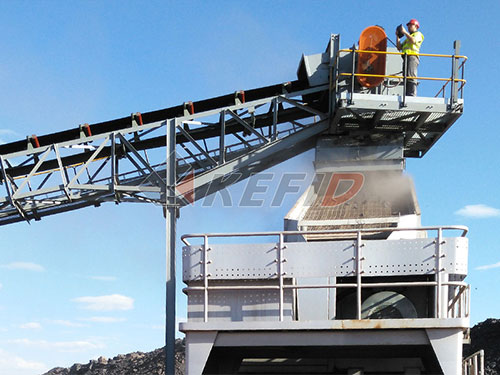
2. PRODUCT OVERVIEW
This offering focuses on custom crushing and screening equipment bulk order solutions—engineered systems designed for highvolume, continuous processing of hard rock, aggregates, or recycled materials. Unlike offtheshelf units, these systems are configured to match your specific feed size, material abrasiveness, and final product specifications.
Operational Workflow:
1. Feed Management: Variablespeed apron feeders or grizzly feeders scalp oversize material and regulate flow into the primary crusher.
2. Primary Crushing: Jaw or impact crushers reduce feed material to a manageable size (typically 612 inches).
3. Secondary/Tertiary Crushing: Cone crushers or vertical shaft impactors (VSI) achieve final product shape and size reduction.
4. MultiStage Screening: Vibrating screens with customdeck configurations separate material into multiple fractions (e.g., 3/8", 3/4", 1.5").
5. Conveying & Stockpiling: Heavyduty belt conveyors transfer material to stockpiles or directly to loadout bins.
Application Scope: Suitable for greenfield projects, plant expansions, or replacement of aging fleets. Limitations: Not recommended for operations requiring less than 150 tons per hour (TPH) due to minimum engineering and fabrication costs.
3. CORE FEATURES
Customized Chamber Geometry | Technical Basis: Crushing chamber profile matched to feed gradation curve | Operational Benefit: Reduces recirculating load by 1520%, preventing chokeups | ROI Impact: Lower energy consumption per ton and reduced wear part consumption
HeavyDuty Frame Construction | Technical Basis: Fabricated from AR400 or AR500 steel plate with finite element analysis (FEA) validation | Operational Benefit: Withstands continuous impact loading without structural fatigue | ROI Impact: Extends equipment lifespan by 3040% in highabrasion applications
Modular Screen Deck Design | Technical Basis: Interchangeable polyurethane or wire mesh panels with quicktensioning systems | Operational Benefit: Enables rapid deck changes for different product specifications within 2 hours | ROI Impact: Reduces changeover downtime by 60% compared to bolted systems
Integrated Automation & Monitoring | Technical Basis: PLCcontrolled system with realtime amp draw, bearing temperature, and vibration sensors | Operational Benefit: Operators can adjust crusher settings remotely to maintain consistent product quality | ROI Impact: Prevents catastrophic failures, reducing unplanned maintenance costs by 25%
Hydraulic Adjustment System | Technical Basis: Hydraulic cylinders for closedside setting (CSS) adjustment without shims | Operational Benefit: Allows onthefly adjustments to compensate for wear or feed changes | ROI Impact: Increases uptime by 810 hours per month versus manual adjustment
HighCapacity Bearings & Seals | Technical Basis: Spherical roller bearings with labyrinth seals and oilbath lubrication | Operational Benefit: Operates reliably in dusty environments with extended lubrication intervals | ROI Impact: Reduces annual lubrication costs by $3,000$5,000 per unit
Customized Conveyor Transfer Points | Technical Basis: Engineered chutes with wear liners and impact beds | Operational Benefit: Minimizes material spillage and belt damage at transfer points | ROI Impact: Reduces cleanup labor costs by 40% and belt replacement frequency by 20%
4. COMPETITIVE ADVANTAGES
| Performance Metric | Industry Standard (OfftheShelf) | Custom Crushing & Screening Bulk Order Solution | Advantage (% Improvement) |
| : | : | : | : |
| Throughput Efficiency | 8590% of rated capacity | 9598% of rated capacity | 810% higher effective throughput |
| Recirculating Load | 2535% | 1520% | 3040% reduction |
| Changeover Time (Screen Decks) | 46 hours | 1.52 hours | 6065% faster |
| Wear Part Life (Abrasive Material) | 1,2001,500 hours | 1,8002,200 hours | 4050% longer lifespan |
| Unplanned Downtime (Annual) | 120150 hours | 6080 hours | 4550% reduction |
| Energy Consumption per Ton | 0.81.2 kWh/ton | 0.60.9 kWh/ton | 2025% lower energy cost |
5. TECHNICAL SPECIFICATIONS
Note: Specifications are customizable based on bulk order requirements.
- Capacity Rating: 150 TPH to 1,200 TPH (dependent on feed material and final product size)
- Power Requirements: 250 kW to 1,500 kW total installed power (480V to 4,160V, 3phase)
- Material Specifications: Feed size up to 36 inches; material hardness up to 450 MPa (UCS); abrasion index up to 0.6
- Physical Dimensions: Primary crusher unit: 40 ft x 12 ft x 15 ft (LxWxH); Screening tower: 50 ft x 15 ft x 20 ft (LxWxH)
- Environmental Operating Range: 20°F to 120°F (29°C to 49°C); designed for outdoor installation with optional climatecontrolled enclosures
- Weight: 80,000 lbs to 350,000 lbs per major component (crusher, screen, conveyor)
- Equipment Pricing Tiers (Bulk Order Discounts):
- Optional Features: Dust suppression systems ($50k$200k), remote monitoring software ($15k/year), wear parts package ($100k$500k), climatecontrolled operator cabin ($80k)
- Service Packages:
- Financing Options: Equipment leasing (3660 months), deferred payment plans (first payment at 6 months), performancebased financing (pay per ton processed)
6. APPLICATION SCENARIOS
Hard Rock Quarry (Granite) | Challenge: Existing plant struggled with high wear costs ($0.45/ton) and frequent cone crusher bowl liner replacements due to abrasive feed. | Solution: Implemented a custom crushing and screening equipment bulk order including a heavyduty jaw crusher with AR500 liners and a tertiary cone with optimized chamber geometry for cubicle product. | Results: Wear costs reduced to $0.28/ton (38% improvement). Liner life extended from 1,400 hours to 2,100 hours. Throughput increased by 12% due to reduced recirculating load.
Construction & Demolition (C&D) Recycling | Challenge: Inconsistent feed composition (concrete, asphalt, rebar) caused frequent blockages in standard impact crushers, resulting in 18% downtime. | Solution: Supplied a custom crushing and screening equipment bulk order featuring a hydraulic impact crusher with adjustable breaker plates and a heavyduty finger screen for rebar removal. | Results: Downtime reduced to 6%. Product quality (gradation consistency) improved by 20%. The system processed 250,000 tons in the first year without major structural failure.
Iron Ore Beneficiation (Secondary Crushing) | Challenge: Required a specific product size (P80 of 12mm) for downstream grinding, but standard cone crushers produced excessive fines. | Solution: Engineered a custom crushing and screening equipment bulk order with a VSI crusher and a tripledeck banana screen with custom aperture sizes. | Results: Achieved P80 of 12.5mm with 15% less fines generation. Grinding mill throughput increased by 8% due to more consistent feed size. Annual energy savings of $120,000.
7. COMMERCIAL CONSIDERATIONS
Standard Package (150300 TPH): $1.2M $2.5M (includes primary crusher, screen, conveyors)
HighCapacity Package (400800 TPH): $3.0M $6.5M (includes secondary/tertiary crushers, multideck screens)
Turnkey System (8001,200 TPH): $7.0M $15.0M (includes all equipment, structural steel, electrical, and controls)
Basic: 12month warranty, remote support, 2 site visits/year
Premium: 24month warranty, onsite technician for commissioning, quarterly inspections, 10% discount on spare parts
8. FAQ
Q: How long does it take to engineer and deliver a custom crushing and screening equipment bulk order?
A: Typical lead time is 1624 weeks from order confirmation, depending on complexity. This includes engineering drawings (46 weeks), fabrication (812 weeks), and assembly/testing (46 weeks). Expedited timelines are available for partial deliveries.
Q: Can the equipment be integrated with my existing plant controls?
A: Yes. Our PLC systems support Modbus, Profibus, and Ethernet/IP protocols. We provide a detailed integration guide and can supply a gateway module for seamless communication with your existing SCADA system.
Q: What is the minimum order quantity for a bulk order?
A: A bulk order is defined as a minimum of three major processing units (e.g., one crusher and two screens) or a total system value exceeding $1.0M. Singleunit purchases are handled through our standard product line.
Q: How do you handle wear parts availability for custom equipment?
A: We maintain a stock of critical wear parts (liners, screens, belts) for all custom configurations for the first 24 months. After that, we provide detailed CAD drawings and sourcing information for local procurement.
Q: What is the typical ROI period for a custom system versus an offtheshelf system?
A: Based on field data, the incremental cost of customization (typically 1015% higher than standard) is recovered within 1218 months through reduced downtime, lower wear costs, and higher throughput. Total ROI for the system is typically 23 years.
Q: Can the equipment be relocated after initial installation?
A: Yes. All major components are designed for modular disassembly and reassembly. We provide a relocation manual and can quote for recommissioning services. However, foundation requirements may need reengineering at the new site.
Q: What warranty covers the structural frame against fatigue failure?
A: The main frame and major structural components carry a 5year warranty against manufacturing defects and fatigue failure under specified operating conditions. Wear parts and consumables are excluded.