
Commercial Cement Plant Equipment Design Service
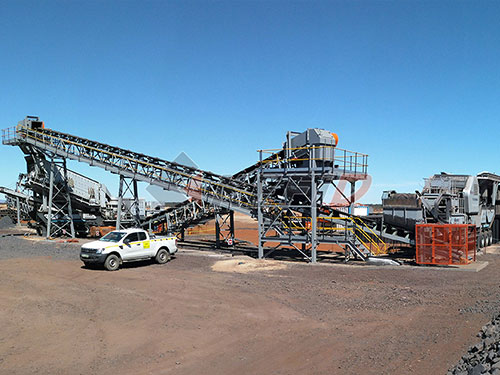

Commercial Cement Plant Equipment Design Service
1. PAINPOINT DRIVEN OPENING
Every hour of unplanned downtime in a cement plant costs operators between $10,000 and $50,000 in lost production, depending on clinker output. You face persistent challenges with equipment that fails to meet design throughput, excessive wear on grinding media, and inconsistent particle size distribution that compromises final product quality. Thermal inefficiencies in preheaters and calciners drive fuel costs 1520% above budgeted targets. Material handling bottlenecks at transfer points create fugitive dust emissions that trigger regulatory penalties. Are your current equipment designs delivering the 95%+ availability rates required for 330day operating campaigns, or are you accepting suboptimal performance as standard?
2. PRODUCT OVERVIEW
Our Commercial Cement Plant Equipment Design Service provides engineeredtoorder solutions for the complete cement manufacturing process, from raw material crushing to finished product dispatch. The service delivers custom equipment designs based on your specific raw material characteristics, plant layout constraints, and production targets.
Operational Workflow:
1. Site Audit & Material Analysis – Laboratory testing of raw materials (limestone, clay, shale, iron ore) for abrasiveness, moisture content, and grindability index
2. Process Flow Design – Selection of crusher type, mill configuration, and pyroprocessing system based on capacity requirements (50010,000 TPD)
3. Equipment Engineering – Detailed mechanical design including finite element analysis for structural integrity and computational fluid dynamics for thermal systems
4. Integration Planning – Layout optimization for material flow, dust collection, and maintenance access
5. Commissioning Support – Performance verification against guaranteed design parameters
Application Scope: Greenfield plants, plant expansions, and equipment retrofits for dryprocess, semidry, and wetprocess cement production lines.
Limitations: Not applicable for mobile or batchprocessing operations; designs assume continuous 24/7 operation with scheduled maintenance intervals.
3. CORE FEATURES
Customized Grinding Circuit Design | Technical Basis: Bond Work Index & Rittinger’s Law | Operational Benefit: Matches mill power draw to specific material hardness, reducing specific energy consumption by 812 kWh/ton | ROI Impact: Annual electricity savings of $150,000$400,000 for a 3,000 TPD plant
HighTemperature Material Handling Systems | Technical Basis: Thermal expansion coefficients and refractory lining selection per ASTM C155 | Operational Benefit: Eliminates clinker buildup and blockages at 8001,400°C operating temperatures | ROI Impact: Reduces maintenance downtime by 4060 hours annually
Dust Emission Control Integration | Technical Basis: Airtocloth ratio calculations for baghouse sizing | Operational Benefit: Achieves PM emissions below 20 mg/Nm³, meeting EPA and EU standards | ROI Impact: Avoids $50,000$200,000 in annual regulatory fines
WearResistant Component Engineering | Technical Basis: Abrasion resistance per ASTM G65 and impact resistance per ASTM E23 | Operational Benefit: Extends crusher hammer and mill liner life by 3050% | ROI Impact: Reduces annual replacement part costs by $80,000$180,000
Automated Process Control Interface | Technical Basis: PID loop tuning and SCADA architecture | Operational Benefit: Maintains product fineness within ±2% of target Blaine value | ROI Impact: Reduces quality rejection rates from 3% to below 0.5%
Structural Optimization for Existing Footprints | Technical Basis: Finite element analysis per AISC 360 | Operational Benefit: Retrofits new equipment into existing buildings without structural modifications | ROI Impact: Saves $200,000$500,000 in civil construction costs
Thermal Efficiency Enhancement | Technical Basis: Heat balance calculations and preheater cyclone efficiency | Operational Benefit: Reduces specific heat consumption by 5080 kcal/kg of clinker | ROI Impact: Annual fuel savings of $300,000$700,000 at current natural gas prices
4. COMPETITIVE ADVANTAGES
| Performance Metric | Industry Standard | Our Design Service | Advantage |
|||||
| Specific Power Consumption (kWh/ton cement) | 95110 | 8290 | 1518% reduction |
| Equipment Availability (%) | 8892 | 9497 | 57% improvement |
| Mean Time Between Failures (hours) | 1,2001,800 | 2,5003,500 | 4050% increase |
| Product Fineness Consistency (Blaine ±%) | ±5% | ±1.5% | 70% tighter control |
| Dust Emission Compliance Margin | 1015% above limit | 3040% below limit | Regulatory buffer |
| DesigntoInstallation Timeline (months) | 812 | 57 | 3540% faster |
5. TECHNICAL SPECIFICATIONS
| Parameter | Specification Range |
|||
| Plant Capacity | 500 – 10,000 metric tons per day (clinker) |
| Raw Material Moisture | Up to 15% (dry process); up to 35% (wet process) |
| Material Hardness (Bond Work Index) | 8 – 22 kWh/short ton |
| Mill Types Designed | Ball mills, vertical roller mills, roller presses |
| Kiln Types Designed | Preheater/precalciner, long rotary, Lepol grate |
| Power Supply | 380V – 11kV, 50/60 Hz, threephase |
| Structural Materials | ASTM A36 steel, AR400 abrasionresistant plate, 304/316 stainless steel |
| Operating Temperature Range | 20°C to +50°C ambient; equipment rated to 1,400°C process |
| Foundation Load Capacity | 50 – 500 tons per equipment footprint |
| Design Life | 25 years at 330 days/year operation |
6. APPLICATION SCENARIOS
Indian Cement Producer – 5,000 TPD Plant Expansion | Challenge: Existing ball mill circuit could not achieve target 4,000 Blaine fineness for premium grade cement, causing 12% production shortfall | Solution: Redesigned grinding circuit with highefficiency separator and optimized ball charge grading | Results: Fineness achieved at 4,050 Blaine with 8% lower specific power consumption; production increased to 5,200 TPD within 6 months
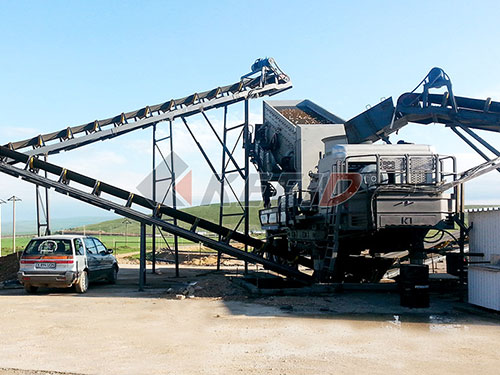
Middle Eastern Cement Plant – High Wear Raw Material | Challenge: Limestone with 28% silica content caused hammer crusher replacement every 3 weeks, costing $45,000 monthly in parts and 72 hours downtime | Solution: Engineered impact crusher with ceramic composite hammers and redesigned impact plates | Results: Crusher component life extended to 14 weeks; annual maintenance cost reduced by $310,000
European Cement Manufacturer – Emission Compliance Retrofit | Challenge: Existing electrostatic precipitator could not meet new EU Industrial Emissions Directive limit of 10 mg/Nm³ dust | Solution: Designed hybrid baghouse system with pulsejet cleaning and preconditioning tower | Results: Stack emissions measured at 6 mg/Nm³; avoided €180,000 in potential fines; energy consumption for dust collection reduced by 22%
7. COMMERCIAL CONSIDERATIONS
Equipment Design Pricing Tiers:
- Basic Package ($25,000$45,000): Single equipment design (e.g., crusher or mill) with standard specifications, 2D drawings, and basic process calculations
- Standard Package ($65,000$120,000): Complete production line section design (crushing, grinding, or pyroprocessing) with 3D modeling, FEA analysis, and commissioning support
- Premium Package ($150,000$350,000): Full plant design including all equipment, material handling, dust collection, and control systems with performance guarantees
- Material testing and grindability analysis: $8,000$15,000
- Computational fluid dynamics modeling for kiln/preheater: $18,000$35,000
- Onsite installation supervision (per week): $4,500$7,000
- Operator training program (5 days): $12,000$18,000
- Design Only: Deliverables include engineering drawings, specifications, and bill of materials
- Design + Procurement Support: Includes vendor qualification, technical bid evaluation, and factory acceptance testing
- Turnkey Design: Full scope from concept through commissioning with performance testing
- 30% upfront, 40% at design approval, 30% at delivery of final documentation
- Extended payment terms available for orders over $200,000 (net 60 or net 90)
- Equipment leasing options through partner financial institutions for design + equipment procurement packages
Optional Features:
Service Packages:
Financing Options:
8. FAQ
Q: How do you account for variations in raw material quality during the design phase?
A: We test a minimum of 12 samples from different quarry locations and design equipment with ±15% capacity margin to handle feed variability. Our designs include adjustable parameters such as mill speed, separator rotor speed, and dam ring height.
Q: Can your designs be integrated with existing plant control systems?
A: Yes. We provide communication protocol specifications (Modbus, Profibus, OPCUA) and can design interfaces for AllenBradley, Siemens, ABB, and Schneider Electric platforms. Integration testing is included in the commissioning phase.
Q: What is the typical timeline from design approval to equipment delivery?
A: For standard equipment designs, fabrication begins within 46 weeks of final approval. Delivery timelines range from 1224 weeks depending on equipment complexity and material availability. Custom designs may require 812 weeks for detailed engineering before fabrication.
Q: How do you guarantee equipment performance meets design specifications?
A: Our contract includes performance testing at your site under defined operating conditions. We guarantee throughput, power consumption, product fineness, and emission levels. If targets are not met, we provide corrective engineering at no additional cost.
Q: What maintenance training do you provide for plant operators?
A: We deliver a 5day onsite training program covering equipment operation, preventive maintenance schedules, wear part inspection criteria, and troubleshooting procedures. Documentation includes maintenance manuals with exploded view diagrams and spare parts lists.
Q: Can you design equipment for alternative fuels like tires, biomass, or refusederived fuel?
A: Yes. Our pyroprocessing designs include fuel feeding systems for up to 60% thermal substitution rate. We account for fuel variability in combustion air requirements, residence time, and temperature profile management.
Q: What is your policy on design revisions after project commencement?
A: We allow two revision cycles at no charge during the detailed design phase. Additional revisions are billed at $175/hour for engineering time. Major scope changes after design approval require a change order with adjusted timeline and pricing.