
China Slag Crusher Plant Wholesaler
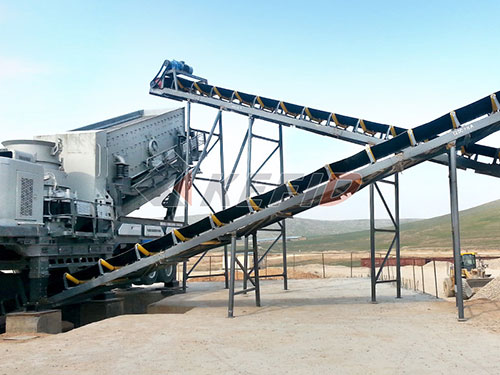

Slag Crusher Plant: Reduce Operating Costs and Increase Recovery Rates
Operational Challenges Your Slag Processing Line Faces Daily

Slag processing operations across steel mills, ferroalloy plants, and metal recovery facilities share a common set of costly problems:
- High wearpart consumption: Jaw plates, blow bars, and liners on generalpurpose crushers often fail within 400–600 operating hours when processing abrasive slag containing metallic inclusions, driving maintenance costs up by 30–45% compared to standard aggregate crushing.
- Inconsistent product sizing: Mixed output from singlestage crushing forces your downstream magnetic separation and screening circuits to run at reduced efficiency, often losing 8–15% of recoverable ferrous and nonferrous metals to the wrong size fraction.
- Unplanned downtime: Each unplanned crusher stoppage on a slag line costs an estimated $2,800–$7,500 per hour in lost production, depending on plant capacity and metal prices.
- Dust and environmental compliance: Slag crushing generates fine particulate that can exceed local PM10 limits, exposing your operation to fines and shutdown risk.
- Poor ROI on metal recovery: When liberation size is not properly matched to the crusher configuration, downstream recovery rates drop, and you leave money in the slag pile.
- Entrylevel (30–80 TPH): $85,000–$180,000 — singlestage jaw plant with basic magnetic separation
- Midrange (80–200 TPH): $220,000–$450,000 — twostage crushing with full metal recovery circuit
- Highcapacity (200–500 TPH): $500,000–$1,200,000 — threestage plant with automation, dust control, and multiple separation stages
- Eddy current separators for nonferrous recovery
- Baghouse dust collection systems
- Remote monitoring and telemetry packages
- Mobile trackmounted configurations
- Custom liner metallurgy for specific slag chemistry
- Standard: 12month warranty, spare parts catalog, commissioning support
- Extended: 36month warranty, quarterly inspections, guaranteed spare parts availability
- Fullservice: Onsite operator training, preventive maintenance scheduling, performance guarantees
If your current slag crusher plant is consuming too many wear parts, producing inconsistent output, or failing to liberate valuable metals efficiently, the problem is usually the equipment configuration — not your operators.
Product Overview: What a Slag Crusher Plant Does
A slag crusher plant is an integrated crushing and screening system designed specifically for processing metallurgical slag — including steel slag, blast furnace slag, ferrochrome slag, copper slag, and incinerator bottom ash — to recover embedded metals and produce specificationgrade aggregate.
Typical operational workflow:
1. Feeding: Vibrating grizzly feeder scalps oversized material and fines before primary crushing.
2. Primary crushing: Jaw crusher or impact crusher reduces slag lumps from up to 800 mm down to 80–150 mm.
3. Secondary/tertiary crushing: Cone or vertical shaft impact (VSI) crusher further reduces material to 0–40 mm, liberating metal from the slag matrix.
4. Magnetic separation: Overband magnets and drum separators extract ferrous metal at multiple stages.
5. Screening and stockpiling: Multideck vibrating screens classify aggregate into saleable fractions (0–5 mm, 5–10 mm, 10–20 mm, 20–40 mm).
Application scope: Steel mills, ferroalloy smelters, EAF slag processing, stainless steel slag recovery, municipal wastetoenergy bottom ash, and nonferrous dross processing.
Limitations: Slag crusher plants are not designed for wet, sticky material above 8% moisture without predrying, nor for radioactive or chemically hazardous slag without specialized containment.
Core Features
1. AbrasionResistant Crushing Chamber | Technical Basis: Highchromium alloy (Cr26) and manganese steel (Mn18Cr2) liners with optimized nip angle geometry | Operational Benefit: Extended liner life under abrasive slag conditions | ROI Impact: Reduces wearpart cost per ton by 22–35% compared to standard Mn13 liners
2. MultiStage Metal Liberation Circuit | Technical Basis: Staged reduction ratios (4:1 primary, 3:1 secondary) with interstage magnetic separation | Operational Benefit: Higher metal recovery at each size fraction | ROI Impact: Field data shows 6–12% improvement in total ferrous recovery value
3. Adjustable ClosedSide Setting (CSS) | Technical Basis: Hydraulic wedge adjustment on jaw and cone crushers | Operational Benefit: Operators can change product size in under 10 minutes without shims | ROI Impact: Reduces changeover downtime by 70% versus manual shim adjustment
4. Dust Suppression and Containment System | Technical Basis: Integrated water spray nozzles at transfer points plus optional baghouse filtration | Operational Benefit: Meets PM10 emission limits in most jurisdictions | ROI Impact: Avoids potential compliance fines and production stoppages
5. Overband and Drum Magnetic Separators | Technical Basis: Rareearth neodymium magnets with adjustable belt speed and gap | Operational Benefit: Captures ferrous particles down to 5 mm | ROI Impact: Increases scrap metal revenue by $3–$8 per ton of slag processed
6. Modular Chassis and Skid Design | Technical Basis: Bolted structural steel frame with vibration isolation mounts | Operational Benefit: Relocatable within the yard; simplified foundation requirements | ROI Impact: Cuts civil works cost by 40–60% versus fixedplant installation
7. PLCBased Automation and Monitoring | Technical Basis: Siemens or Schneider PLC with HMI, vibration and temperature sensors on critical bearings | Operational Benefit: Early warning of bearing failure and belt misalignment | ROI Impact: Prevents catastrophic failures that average $18,000–$45,000 per incident
Competitive Advantages
| Performance Metric | Industry Standard | Slag Crusher Plant Solution | Advantage (% Improvement) |
|||||
| Wearpart life (hours) | 400–600 | 650–900 | +35–50% |
| Ferrous recovery rate | 82–86% | 90–94% | +8–10% |
| Product size consistency (CV) | 18–22% | 10–14% | +35–45% |
| Downtime per 1,000 hours | 45–60 hours | 22–30 hours | 50% |
| Energy consumption (kWh/ton) | 3.8–4.5 | 3.0–3.6 | 18–22% |
| Dust emission (mg/m³) | 30–50 | 15–25 | 50% |
Technical Specifications
| Parameter | Specification |
|||
| Capacity | 30–500 TPH (depending on configuration) |
| Max feed size | 800 mm (primary jaw) |
| Product size range | 0–40 mm (adjustable) |
| Primary crusher power | 55–250 kW |
| Secondary crusher power | 90–315 kW |
| Total installed power | 200–1,200 kW |
| Voltage | 380V/50Hz, 440V/60Hz, or custom |
| Feed moisture limit | ≤8% |
| Operating temperature range | 20°C to +50°C |
| Noise level | ≤85 dB(A) at 1 m |
| Dust emission | ≤20 mg/m³ with baghouse |
| Foundation | Concrete or steel skid |
| Control system | PLC with HMI, remote monitoring optional |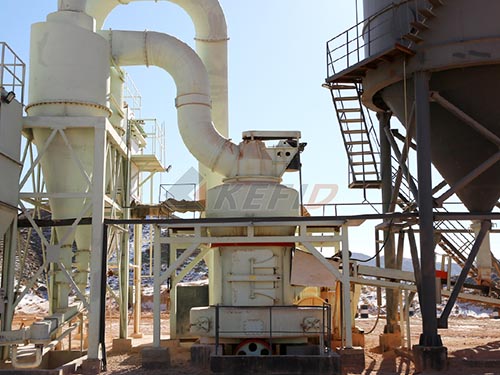
Application Scenarios
Steel Mill EAF Slag Processing | Challenge: 120 TPH of EAF slag with 15% metallic content, existing plant recovering only 80% ferrous, wear parts lasting 450 hours | Solution: Twostage jaw + cone slag crusher plant with interstage magnetic separation and Cr26 liners | Results: Ferrous recovery increased to 92%, wearpart life extended to 780 hours, annual scrap revenue increased by $420,000
Ferrochrome Slag Recovery | Challenge: Dense, abrasive slag causing frequent cone crusher liner failures and inconsistent liberation size | Solution: Jaw + VSI configuration with hydraulic CSS adjustment and rareearth drum separators | Results: Metal recovery improved from 84% to 93%, liner change interval increased from 3 weeks to 7 weeks, downtime reduced by 48%
Municipal Bottom Ash Processing | Challenge: Mixed bottom ash with 6% moisture causing screen blinding and low throughput | Solution: Slag crusher plant with heated deck screens, overband magnet, and eddy current separator for nonferrous | Results: Throughput increased from 45 TPH to 72 TPH, aluminum recovery added $180,000 annual revenue, screen cleaning downtime reduced by 60%
Commercial Considerations
Equipment pricing tiers:
Optional features:
Service packages:
Financing options: Equipment leasing, renttoown, and export credit financing available for qualified buyers. Typical ROI payback period for a midrange slag crusher plant is 14–22 months based on metal recovery alone.
FAQ
Q: What slag types can this plant process?
A: Steel slag, blast furnace slag, ferrochrome slag, copper slag, incinerator bottom ash, and most metallurgical slags with compressive strength below 350 MPa. We do not recommend it for radioactive or chemically hazardous slag without specialized containment.
Q: How does the slag crusher plant handle metal jams?
A: The plant includes tramp metal release systems on the jaw and cone crushers, plus reversing capability on the feeder. This allows operators to clear jams without manual entry into the crushing chamber.
Q: What is the typical lead time for delivery and installation?
A: Standard configurations ship in 8–12 weeks. Installation and commissioning typically take 3–6 weeks depending on site conditions and plant capacity.
Q: Can the plant be integrated into my existing slag processing line?
A: Yes. We design the plant to match your existing feed system, discharge conveyors, and electrical infrastructure. Retrofit engineering is included in the quotation.
Q: What maintenance is required daily and weekly?
A: Daily: visual inspection of belts, guards, and magnetic separators. Weekly: lubrication of bearings, check liner wear, verify CSS settings. Monthly: vibration analysis and electrical inspection. Full preventive maintenance schedule provided.
Q: What is the warranty and spare parts policy?
A: Standard warranty is 12 months from commissioning or 18 months from shipment, whichever comes first. Critical spare parts — liners, bearings, belts — are stocked for 48hour dispatch.
Q: How do I determine the right capacity for my operation?
A: Provide your feed rate (TPH), max feed size, slag type, moisture content, and target product sizes. Our engineers will recommend the optimal configuration and provide a performance guarantee based on those parameters.