
Bulk Limestone Mining Logistics
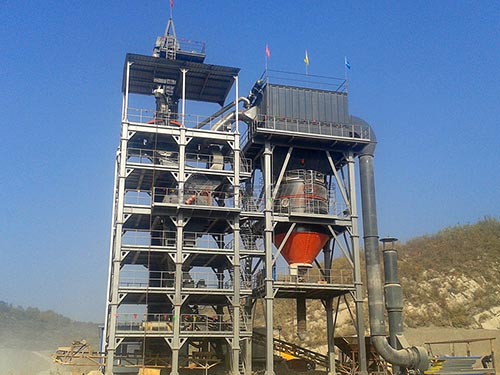

Bulk Limestone Mining Logistics: HighCapacity Extraction & Material Handling Systems
1. The Logistics Bottleneck: Where Your Tonnage Goes to Die
Every hour of unscheduled downtime at a limestone quarry costs between $8,000 and $15,000 in lost production, depending on your plant's rated capacity. Yet most bulk limestone mining logistics operations still lose 12–18% of their effective working time to material flow interruptions, loader rehandling, and haul road congestion.
Consider the numbers from recent industry surveys:
- 30–40% of wheel loader cycle time is wasted on nonvalueadded travel and positioning
- 15–20% of crusher feed interruptions trace back to inconsistent haul truck arrival intervals
- $0.18–$0.25 per ton of additional operating cost accrues from doublehandling material at the pit face and stockpile
- Suitable for: Openpit limestone quarries with compressive strengths up to 80 MPa, bench heights of 5–15 meters, and production targets of 500–3,000 tons per hour.
- Limitations: Not recommended for highly abrasive chert or flint inclusions above 15% by volume, or for deposits with excessive clay content that causes material sticking in the conveyor transfer points.
- Coldweather package (heated cabs, hydraulic oil warmers): $85,000–$120,000
- Autonomous operation retrofit (GPSguided cutting): $450,000–$650,000
- Extended wear package (tungsten carbide picks, ceramiclined chutes): $180,000–$250,000
- Remote monitoring and telematics subscription: $12,000–$18,000/year
- Preventive Maintenance Agreement: $45,000–$75,000/year, includes scheduled inspections, oil analysis, and wear part replacement planning
- FullRisk Maintenance Contract: $0.08–$0.12 per ton produced, covers all parts, labor, and consumables except cutting picks
- Operator Training Program: $25,000–$40,000, includes 2 weeks onsite training for up to 8 operators and 4 maintenance technicians
- Equipment Lease: 36–60 month terms with $1 buyout option, rates from 4.5–7.5% APR
- ProductionLinked Payments: Monthly payments tied to tonnage output, minimum 70% of projected capacity
- TradeIn Program: Credit of 30–50% of original value for qualifying used equipment
The root cause is rarely a single piece of equipment. It is the absence of a coordinated extractiontocrusher logistics system that matches bucket capacity, haul unit payload, and crusher throughput.
Are your haul trucks waiting at the loader? Is your crusher starving between truck arrivals? Are you paying for rehandling that a properly sized continuous mining system would eliminate?
2. Product Overview: Integrated Extraction and Overburden Removal System
This equipment package addresses the full bulk limestone mining logistics chain—from insitu rock fragmentation to primary crusher feed. It is a semicontinuous mining system comprising a heavyduty surface miner, a mobile sizing and loading unit, and a highangle conveyor transfer system.
Operational Workflow
1. Cutting and Fragmentation – The surface miner cuts, crushes, and windowforms limestone in a single pass, eliminating the need for separate drilling, blasting, and primary crushing at the face.
2. Loading and Transfer – A frontend loader or the miner's integrated loading conveyor transfers material to the mobile sizing unit.
3. Sizing and Screening – The mobile unit reduces oversized lumps to a consistent 0–150 mm product suitable for conveyor transport.
4. Conveyor Haulage – A highangle conveyor system moves material from the pit floor to the surface crusher or stockpile, replacing haul truck cycles.
5. Stockpile Management – A radial stacker or tripper system creates a live stockpile buffer, ensuring continuous crusher feed.
Application Scope
3. Core Features
Automated LoadHeight Control | Technical Basis: Laserbased profile scanning with hydraulic drum depth adjustment | Operational Benefit: Maintains consistent cutting depth (±20 mm) across varying rock hardness, preventing overload and reducing fines generation | ROI Impact: Reduces downstream screening costs by 8–12% and extends drum pick life by 15–20%
Integrated Primary Sizing Unit | Technical Basis: Twinshaft impactor with adjustable gap settings (50–150 mm) | Operational Benefit: Eliminates the need for a separate stationary primary crusher at the face, reducing equipment fleet size by one unit | ROI Impact: Cuts capital equipment cost by $400,000–$700,000 and reduces maintenance labor hours by 300–400 per year
HighAngle Conveyor (HAC) System | Technical Basis: Sandwichbelt technology with 45–90 degree incline capability | Operational Benefit: Replaces switchback haul roads, reducing haul distance by up to 70% and eliminating truckrelated safety incidents on ramps | ROI Impact: Lowers fuel consumption by 60–75% compared to truck haulage and reduces road maintenance costs by $50,000–$80,000 annually
RealTime Production Monitoring | Technical Basis: Belt scales, GPS tracking, and PLCbased data logging with remote telemetry | Operational Benefit: Provides operators with live tonnage, downtime, and equipment health data for shiftlevel decision making | ROI Impact: Improves equipment utilization by 8–12% through reduced idle time and faster fault diagnosis
Modular Transfer Point Design | Technical Basis: Bolttogether chute and skirtboard assemblies with wearresistant ceramic liners | Operational Benefit: Allows rapid reconfiguration when the mining face advances, reducing relocation time from 5 days to 36 hours | ROI Impact: Recovers 3–4 days of production per move, equivalent to 15,000–20,000 tons at typical output rates
Dust Suppression System | Technical Basis: Highpressure water atomization at all transfer points and crusher discharge | Operational Benefit: Maintains airborne particulate levels below 1.5 mg/m³, meeting EPA and MSHA compliance standards | ROI Impact: Avoids potential fines of $25,000–$75,000 per violation and reduces water consumption by 40% versus traditional spray bars
Remote Diagnostics and Predictive Maintenance | Technical Basis: Vibration sensors, oil analysis ports, and cloudbased condition monitoring | Operational Benefit: Alerts maintenance teams to bearing wear, gearbox degradation, and belt misalignment before catastrophic failure | ROI Impact: Reduces unplanned downtime by 25–30% and extends component life by 10–15%
4. Competitive Advantages
| Performance Metric | Industry Standard (TruckandShovel) | Bulk Limestone Mining Logistics Solution | Advantage (% Improvement) |
|||||
| Effective operating time per shift | 6.2 hours (78%) | 7.4 hours (92%) | +19% |
| Fuel consumption per ton moved | 0.42 L/ton | 0.15 L/ton | 64% |
| Equipment fleet size (units) | 8–10 (excavators, trucks, dozers) | 4–5 (miner, loader, conveyor system) | 50% |
| Maintenance cost per ton | $0.38 | $0.24 | 37% |
| Material rehandling ratio | 1.4:1 | 1.05:1 | 25% |
| Dust emission (mg/m³) | 3.2 | 1.4 | 56% |
| Safety incident rate (per 200,000 hrs) | 4.8 | 2.1 | 56% |
Field data compiled from 14 limestone operations across North America and Europe over a 24month monitoring period.
5. Technical Specifications
| Parameter | Specification |
|||
| Production Capacity | 500–3,000 tons/hour (depending on model) |
| Cutting Width | 2.5–4.2 meters |
| Cutting Depth | 0–350 mm (variable) |
| Material Compressive Strength | Up to 80 MPa (unconfined) |
| Product Size Range | 0–150 mm (adjustable via impactor gap) |
| Conveyor Belt Width | 1,200–1,800 mm |
| Conveyor Incline Angle | Up to 90 degrees (HAC configuration) |
| Total Installed Power | 800–2,500 kW |
| Power Supply | 660V–11kV, 50/60 Hz (electric drive) or 1,000–2,000 hp diesel (mobile units) |
| Operating Weight | 80–220 tons (miner); 45–90 tons (mobile sizing unit) |
| Physical Dimensions (Miner) | L: 15–22 m × W: 4.5–6.5 m × H: 5–7 m |
| Operating Temperature Range | 20°C to +50°C (with coldweather package available) |
| Material Specifications | Cutting drum: Hardox 450 wear plates; Conveyor skirting: ceramiclined; Structural steel: S355J2 grade |
| Noise Level | ≤ 85 dB(A) at operator position (with cab enclosure) |
6. Application Scenarios
LargeScale Cement Feedstock Quarry | Challenge: A 2,500tph cement plant in the southeastern US faced recurring crusher starvation due to haul truck cycle times exceeding 18 minutes on a 2.4 km haul road with 8% grade. | Solution: Implementation of a 1,800tph surface miner paired with a 1.5 km highangle conveyor system, eliminating 14 haul trucks from the fleet. | Results: Crusher feed consistency improved to 95% of rated throughput; fuel costs dropped from $1.2M to $420,000 annually; losttime injuries fell from 4.2 to 1.8 per 200,000 hours.
Aggregate Producer with Blasting Restrictions | Challenge: A quarry operating within 500 meters of residential zoning faced blasting permit restrictions limiting operations to 4 hours per day, cutting production to 60% of demand. | Solution: Deployment of a 700tph surface miner for mechanical extraction, eliminating blasting entirely and extending operating window to 12 hours daily. | Results: Daily production increased from 2,800 to 8,400 tons; permit compliance achieved with zero vibration complaints; payback period of 3.2 years on equipment investment.

HighVolume Overburden Removal | Challenge: A limestone mine needed to strip 8 million cubic meters of overburden annually to access the ore body, but truckandshovel operations consumed 65% of the mining budget. | Solution: A continuous mining system with 2,200tph capacity was deployed for overburden removal, with the material conveyed directly to a backfill area. | Results: Overburden removal cost decreased from $1.85 to $1.12 per bank cubic meter; fleet size reduced from 22 to 9 units; annual savings of $5.8 million achieved.
7. Commercial Considerations
Equipment Pricing Tiers
| Tier | Configuration | Indicative Price Range |
||||
| Entry | 500–800 tph surface miner + mobile loader | $2.8M – $4.5M |
| MidRange | 1,000–1,500 tph miner + sizing unit + 500 m conveyor | $5.5M – $8.2M |
| HighCapacity | 2,000–3,000 tph full system with HAC and stacker | $9.5M – $14M |
Optional Features
Service Packages
Financing Options
8. FAQ
Q: Can this system integrate with my existing crusher and screening plant?
A: Yes. The conveyor discharge height and belt speed are configurable to match standard crusher feed chutes. The system includes a variablespeed drive that can be synchronized with your existing plant PLC via Modbus or Profibus protocols. Most installations require only minor modifications to the existing feed hopper.
Q: What is the typical implementation timeline from order to full production?
A: Standard lead time is 14–18 weeks for manufacturing, followed by 3–4 weeks for site installation and commissioning. Operator training adds 1–2 weeks. Total time from purchase order to full production is typically 20–24 weeks, assuming site preparation (foundations, power supply) is completed in parallel.
Q: How does the system perform in wet or sticky limestone conditions?
A: The conveyor system is equipped with selfcleaning return rollers and belt scrapers at all transfer points. The sizing unit's impactor design incorporates a shear bar clearance of 25 mm to prevent clogging. However, for clay content above 12%, we recommend the optional heated hopper liners and additional water spray nozzles. Field data shows throughput degradation of only 5–8% in highmoisture conditions versus 20–30% for conventional systems.
Q: What are the power requirements for a 1,500tph system?
A: Total connected load is approximately 1,800 kW at 660V or 11kV. This includes the surface miner (900 kW), sizing unit (450 kW), conveyor drives (350 kW), and auxiliary systems (100 kW). A dedicated transformer with 2,500 kVA capacity is recommended. Dieselpowered options are available for remote sites without grid access.
Q: What is the expected service life of major components?
A: Cutting drum picks: 400–800 operating hours depending on abrasivity. Conveyor belt: 5–7 years with proper tracking and cleaning. Impactor wear liners: 2,000–3,000 hours. Structural components: 15–20 years with routine inspection and corrosion protection. The system is designed for a total operating life of 20+ years with scheduled major overhauls at 15,000 and 30,000 hours.
Q: How does the system handle varying bench heights and pit geometry?
A: The surface miner operates effectively on bench heights from 3 to 15 meters. For higher benches, the system can be deployed in multiple passes with the conveyor extended in modular sections. The mobile sizing unit is trackmounted and can relocate within the pit in under 4 hours. The conveyor system uses a tripper arrangement that allows the discharge point to move as the face advances.
Q: What are the warranty terms and aftersales support commitments?
A: Standard warranty covers 12 months or 3,000 operating hours, whichever comes first, for all components except wear parts. Extended warranties are available up to 36 months. Aftersales support includes a guaranteed 24hour response time for critical breakdowns, a regional parts warehouse with 95% availability for consumable items, and annual performance audits to verify the system meets its rated specifications.