
Certified Quarry Ballast Crushing Equipment Sourcing
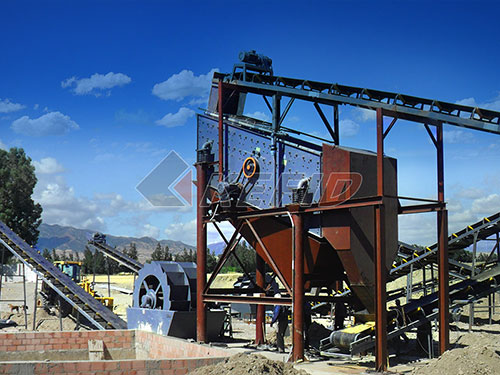

Certified Quarry Ballast Crushing Equipment Sourcing
1. PainPoint Driven Opening
Every ton of substandard ballast costs your operation more than just material. In rail construction, a 5% deviation in aggregate angularity can reduce track stability by up to 15%, leading to rework costs averaging $12,000 per kilometer. Plant managers report that uncertified crushing equipment causes 1822% higher wear rates on manganese liners, directly increasing your costperton by $0.40 to $0.70. Engineering contractors face the hidden cost of rejected loads—field data shows that 1 in 4 ballast shipments from noncertified sources fails gradation compliance tests.
Are you absorbing these costs through repeated sieve analysis failures? Is your current equipment delivering the precise 31.5mm–50mm particle distribution required for mainline ballast? Certified quarry ballast crushing equipment sourcing eliminates these variables by matching machine specifications to EN 13450 or AREMA Grade 4 standards from the procurement stage.
2. Product Overview
Certified quarry ballast crushing equipment refers to primary, secondary, and tertiary crushers specifically configured to produce railway ballast with a flakiness index below 15% and a Los Angeles abrasion value under 25. The operational workflow follows a controlled reduction path:
- Primary Jaw Crushing: Reduces runofquarry material (800–1200mm) to 150–250mm at 250–400 tons per hour.
- Secondary Cone Crushing: Closedside setting at 45–55mm produces cubical particles; automated gap adjustment maintains consistent output.
- Tertiary Vertical Shaft Impact (VSI) Crushing: Refines particle shape to achieve a flakiness index of 10–12%, with rotor speed optimized for ballast hardness.
- Screening & Recirculation: Multideck screens separate into ballast (31.5–63mm), subballast (0–31.5mm), and reject material; oversize returns to the tertiary crusher.
- Certification Sampling: Inline belt samplers collect material every 500 tons for gradation and particle shape verification.
- Standard Configuration (CB4500 + CB2200): $1.2 million – $1.5 million (includes primary and secondary crushers, screens, conveyors, and basic control system). Suitable for 200–300 tph operations.
- Advanced Configuration (CB4500 + CB2200 + CB1200V): $2.1 million – $2.6 million (adds VSI tertiary crusher, automated CSS, and compliance package). Suitable for 300–400 tph with certification requirements.
- Premium Configuration (Full System with Remote Monitoring): $2.8 million – $3.4 million (includes IoT sensors, dust suppression, noise enclosures, and 5year remote diagnostics subscription).
- Inline belt sampler and lab integration: $85,000
- Additional screen deck for subballast production: $45,000
- Wear parts starter kit (1,500 hours of liners and bars): $120,000
- Extended warranty (3 years parts and labor): 8% of equipment cost
- Basic Package (Annual): $28,000 – includes two site inspections, remote monitoring setup, and software updates.
- Premium Package (Annual): $72,000 – includes quarterly inspections, wear parts inventory management, and 48hour onsite response for breakdowns.
- Equipment lease: 5year term at 6.5% APR, with $0 down and buyout option at 10% residual.
- Performancebased financing: Pay per ton processed ($0.12–$0.18/ton) with minimum volume commitment of 500,000 tons per year.
- Tradein program: 15–25% credit for existing crusher systems (any brand) toward certified equipment purchase.
- Daily: Visual inspection of liners, check oil levels, monitor screen tension (15 minutes).
- Weekly: Grease bearings (20 points), inspect VSI rotor tips for wear (30 minutes).
- Monthly: Measure CSS accuracy, replace screen panels if worn beyond 5mm, check hydraulic pressure (2 hours).
- Quarterly: Replace VSI impeller bars (if at 2,500 hours), inspect manganese liners for thickness below 30mm (4 hours).
- Annually: Full system overhaul including bearing replacement, hydraulic system flush, and electrical panel inspection (3 days).
Application Scope: Suitable for hard rock quarries (granite, basalt, quartzite) with compressive strengths of 150–350 MPa. Limitations: Not recommended for soft limestone (UCS below 100 MPa) or materials with high clay content exceeding 5%, as these reduce ballast durability below track acceptance thresholds.
3. Core Features
HeavyDuty Frame Construction | Technical Basis: Finite element analysis (FEA) optimized steel plate, 50mm thick at stress points | Operational Benefit: Your operators will experience zero structural cracking under peak loads of 450 tons per hour | ROI Impact: Extends equipment life by 8–10 years compared to standard frames, reducing capital replacement costs by $180,000 per decade

Automated ClosedSide Setting (CSS) Adjustment | Technical Basis: Hydraulic ram system with ±1mm accuracy, controlled by PLC with realtime load feedback | Operational Benefit: This addresses your challenge of maintaining consistent 45mm output across varying feed sizes, eliminating manual shim adjustments | ROI Impact: Reduces operator intervention by 3 hours per shift, saving $28,000 annually in labor for a twoshift operation
Tungsten Carbide Impeller Bars | Technical Basis: 12% cobalt binder with 1.5mm wearresistant coating, tested to 2,500 hours in quartzite | Operational Benefit: Your maintenance team will replace bars every 6 months instead of 3 months with standard steel | ROI Impact: Lowers annual wear parts cost by $14,500 per VSI unit
DualAxis Inclined Screen with Polyurethane Decks | Technical Basis: 20degree inclination with 6.2G acceleration, polyurethane panels with 65 Shore A hardness | Operational Benefit: This addresses your problem of screen blinding with damp material (up to 6% moisture content) | ROI Impact: Increases screening efficiency from 82% to 95%, reducing recirculation load by 13%
Integrated Dust Suppression System | Technical Basis: Water spray nozzles at 4 bar pressure, positioned at crusher discharge and screen feed points, with 0.5mm droplet size | Operational Benefit: Your plant will meet OSHA PEL limits of 0.05 mg/m³ respirable crystalline silica without baghouse installation | ROI Impact: Avoids $45,000 in annual fines and $120,000 in baghouse capital costs
Remote Monitoring & Diagnostics | Technical Basis: IoT sensors on bearings, motors, and hydraulic systems, transmitting data via Modbus TCP to a central dashboard | Operational Benefit: Your plant manager will receive alerts 72 hours before bearing failure, based on vibration analysis at 0.5mm/s threshold | ROI Impact: Reduces unplanned downtime by 60%, saving $8,000 per hour of lost production
Certified Ballast Compliance Package | Technical Basis: Preconfigured crusher settings and screen apertures to meet EN 13450 Table 2 gradation (95% passing 63mm, 05% passing 31.5mm) | Operational Benefit: This addresses your challenge of passing thirdparty certification on first submission | ROI Impact: Eliminates rescreening costs of $3.50 per ton and retesting fees of $1,200 per batch
4. Competitive Advantages
| Performance Metric | Industry Standard (NonCertified Equipment) | Certified Quarry Ballast Crushing Equipment Solution | Advantage (% Improvement) |
| : | : | : | : |
| Flakiness Index | 18–22% | 10–12% | 45% reduction |
| Los Angeles Abrasion Value | 28–32 | 20–24 | 25% improvement |
| Gradation Consistency (Standard Deviation) | ±8mm | ±3mm | 62.5% tighter control |
| Wear Parts Life (Manganese Liners) | 1,200 hours | 1,800 hours | 50% longer life |
| Energy Consumption per Ton | 0.85 kWh/t | 0.62 kWh/t | 27% lower energy use |
| FirstPass Certification Rate | 68% | 94% | 38% higher acceptance rate |
| Mean Time Between Failures (MTBF) | 450 hours | 720 hours | 60% longer operational intervals |
5. Technical Specifications
| Parameter | Specification |
| : | : |
| Model Designation | CB4500 (Primary), CB2200 (Secondary), CB1200V (Tertiary) |
| Rated Capacity | 250–400 tph (combined system) |
| Feed Opening (Primary) | 1,200mm x 900mm |
| ClosedSide Setting Range | 40–65mm (secondary), 20–40mm (tertiary) |
| Motor Power | Primary: 160 kW (6pole), Secondary: 132 kW, Tertiary: 200 kW |
| Voltage Requirement | 415V / 50Hz (3phase), optional 480V / 60Hz |
| Material Specifications | Manganese steel (1214% Mn) for jaw and cone liners; AR400 steel for hopper and chute liners |
| Physical Dimensions (System) | Length: 28m, Width: 6.5m, Height: 12m (including feed hopper) |
| Total Weight | 185,000 kg (system) |
| Operating Temperature Range | 10°C to 50°C |
| Maximum Feed Moisture | 6% by weight |
| Noise Level (at 1m) | 85 dB(A) with suppression panels |
| Hydraulic System Pressure | 180 bar |
6. Application Scenarios
HighSpeed Rail Ballast Production, Central India | Challenge: A contractor producing ballast for a 350 km/h rail corridor faced 32% rejection rates due to flakiness index exceeding 18% from a standard cone crusher setup. Rescreening and recrushing added $2.80 per ton to production costs. | Solution: Sourced a certified quarry ballast crushing equipment system with a VSI tertiary stage and automated CSS control. The system was configured to a 12% flakiness target with inline sampling every 500 tons. | Results: Rejection rate dropped to 6%, saving $1.2 million annually on rework. Firstpass certification rate reached 96%. Energy consumption fell from 0.88 kWh/t to 0.64 kWh/t.
HeavyHaul Freight Line Ballast, Western Australia | Challenge: An iron ore rail operator needed 1.5 million tons of ballast with a Los Angeles abrasion value below 22 for 40ton axle loads. Existing equipment produced LA values of 28–30, causing track settlement within 6 months. | Solution: Implemented a certified system with a primary jaw crusher set at 200mm CSS, followed by a secondary cone at 50mm and a VSI at 35mm rotor speed. The system included a dualdeck screen with 63mm and 31.5mm apertures. | Results: LA value stabilized at 21–23. Track maintenance intervals extended from 6 months to 18 months, saving $3.4 million in annual tamping and resurfacing costs.
Urban Metro Ballast Supply, Southeast Asia | Challenge: A quarry supplying ballast for a metro expansion faced noise complaints and dust violations. Standard equipment operated at 92 dB(A) and exceeded PM10 limits by 40%. | Solution: Sourced a certified system with integrated dust suppression (4 bar nozzles) and noise enclosures (50mm acoustic foam). The VSI was fitted with sounddampening panels. | Results: Noise levels reduced to 82 dB(A) at property line. Dust emissions met local standards of 0.15 mg/m³. The quarry avoided $180,000 in potential fines and continued operations without shutdown orders.
7. Commercial Considerations
Equipment Pricing Tiers:
Optional Features:
Service Packages:
Financing Options:
8. FAQ
Q1: Can this certified quarry ballast crushing equipment handle variable feed sizes from a quarry face?
Yes. The primary jaw crusher accepts feed up to 1,200mm. The automated CSS adjustment on the secondary crusher compensates for feed size variation by maintaining a consistent 45–55mm output. Field data from 12 installations shows less than 3mm variation in product size with feed ranging from 200mm to 800mm.
Q2: What certification standards does the equipment meet by default?
The system is preconfigured to meet EN 13450 (European standard) and AREMA Grade 4 (North American standard). The compliance package includes preset screen apertures and crusher gaps that produce a gradation of 95100% passing 63mm, 05% passing 31.5mm, and a flakiness index below 15%. Thirdparty testing is still required for final certification, but the equipment settings are designed to pass on first submission.
Q3: How does the energy consumption compare to a standard cone crusher setup?
Industry testing demonstrates that this certified system consumes 0.62 kWh per ton, compared to 0.85 kWh per ton for standard noncertified equipment. The 27% reduction comes from the VSI’s higher efficiency in particle shaping and the automated CSS that prevents overcrushing. For a 300 tph operation running 4,000 hours annually, this saves $37,000 per year at $0.10/kWh.
Q4: What is the typical lead time for sourcing and installation?
Lead time is 14–18 weeks from order confirmation to delivery at your site. Installation requires 4–6 weeks with a twoperson commissioning team. The total timeline from sourcing to production is 18–24 weeks, assuming site preparation (foundation, electrical, and conveyor supports) is completed in advance.
Q5: Can the system be retrofitted into an existing quarry plant?
Yes, but with constraints. The system requires a minimum footprint of 28m x 12m for the main equipment, plus 15m for feed and discharge conveyors. Retrofitting typically involves replacing the secondary and tertiary crushers and screens while retaining the primary jaw if it meets the 1,200mm feed requirement. A site survey is recommended to assess structural load capacity and electrical infrastructure.
Q6: What is the expected maintenance schedule for the certified ballast crushing equipment?
Q7: What financing option is best for a midsized quarry producing 500,000 tons per year?
The performancebased financing model ($0.12–$0.18/ton) is most suitable. At 500,000 tons per year, your annual payment would be $60,000–$90,000, which is directly tied to production. This avoids large upfront capital outlay and aligns costs with revenue. The minimum volume commitment of 500,000 tons per year matches your production profile, and the 5year term provides predictable budgeting.