
Bespoke Limestone Mining R&D
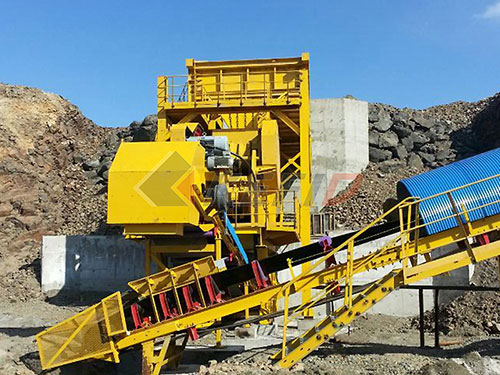

1. PAINPOINT DRIVEN OPENING
Managing a limestone quarry or processing plant presents distinct challenges that directly impact your bottom line. Are you contending with inconsistent feed material causing crusher jams and unplanned downtime? Are your primary extraction methods generating excessive fines, reducing the yield of valuable, sized product? Do you face escalating costs from high wear rates on equipment processing abrasive limestone, coupled with energyintensive crushing stages? These operational inefficiencies translate into lost production hours, increased maintenance budgets, and compromised product quality. The central question for plant managers is this: how can you implement a primary reduction strategy that enhances overall flow, maximizes yield of spec material, and controls longterm operating costs?
2. PRODUCT OVERVIEW
The solution is a bespoke primary jaw crusher engineered specifically for highabrasion limestone mining applications. This heavyduty machine is designed as the first critical stage in your size reduction circuit, transforming runofquarry limestone into a consistent, manageable feed for downstream processing.
Operational Workflow:
1. Feed Intake: Dump trucks or loaders deposit large (up to 1200mm) runofquarry limestone blocks directly into the vibrating grizzly feeder (VGF).
2. PreScreening & ByPass: The VGF separates subfeed size material and fines, routing them to a bypass conveyor to reduce unnecessary wear in the crushing chamber.
3. Primary Reduction: Oversize material enters the deep crushing chamber where a robust, oscillating jaw exerts immense compressive force against a fixed jaw, breaking the stone along its natural cleavage lines.
4. Discharge & Conveyance: Crushed material is discharged at a preset closedside setting (CSS) onto the main product conveyor for transport to secondary screening or crushing.
Application Scope & Limitations:
Scope: Ideal for highvolume primary crushing of abrasive materials like limestone, dolomite, and marl in quarry and mining operations. Suited for both stationary plants and semimobile setups.
Limitations: Not designed for very hard igneous rock (e.g., granite, basalt) without specific alloy considerations. Requires adequate foundation and feed system support. Maximum feed size is determined by model selection.
3. CORE FEATURES
HeavyDuty Cartridge Frame | Technical Basis: Modular, stressrelieved steel fabrication | Operational Benefit: Eliminates fatigue cracking common in welded frames under cyclical loading; allows for easier transport and installation | ROI Impact: Extended structural life reduces risk of catastrophic frame failure and associated monthslong downtime.
QuarryGrade Jaw Dies | Technical Basis: Manganese steel alloy with optimized tooth profile geometry | Operational Benefit: Increased wear life in highly abrasive limestone applications; profile maintains crushing efficiency throughout wear cycle | ROI Impact: Reduces changeout frequency by 3040%, lowering parts inventory cost and labor hours.
Hydrostatic Drive System | Technical Basis: Direct hydraulic drive for the jaw’s eccentric shaft | Operational Benefit: Provides reversible operation to clear blockages and allows variable speed control to match feed conditions; high torque at startup | ROI Impact: Minimizes stallrelated downtime; potential energy savings through optimized cycle control versus constantspeed Vbelt drives.
Automatic Gap Adjustment (AGA) | Technical Basis: Hydraulic shim adjustment system controlled from PLC or remote station | Operational Benefit: Allows operators to adjust CSS safely in minutes without manual shim handling, maintaining precise product gradation | ROI Impact: Increases plant uptime by over 95% during CSS changes compared to manual methods; ensures consistent product quality.
Integrated Dust Suppression Manifold | Technical Basis: Internal spray bar system plumbed into crusher frame | Operational Benefit: Delivers targeted moisture at feed point to suppress dust generation at source without saturating product | ROI Impact: Improves site environmental compliance and operator health; reduces standalone water usage by focusing application.
4. COMPETITIVE ADVANTAGES
| Performance Metric | Industry Standard Jaw Crusher | Bespoke Limestone Jaw Crusher Solution | Advantage (% improvement) |
| : | : | : | : |
| Wear Life of Jaw Dies (Abrasive Limestone) | 120,000 150,000 tonnes | 190,000 220,000 tonnes | +40% to +50% |
| Time for CSS Adjustment & Chamber Clearance| 48 hours (manual) | < 1 hour (hydrostatic reverse & AGA) | Up to 85% faster |
| Overall Mechanical Availability (Target) | 9294% | 9698% (with recommended service plan) | +4 percentage points |
| Fines Generation (<10mm) in Primary Crush| 1822% of total output| 1417% of total output| Reduction of 2025% in excess fines |
5. TECHNICAL SPECIFICATIONS
Model Range Capacity: 500 1,800 tonnes per hour (dependent on feed gradation and material density ~1.6 t/m³).
Feed Opening: From 1000mm x 650mm up to 1500mm x 1200mm.
Power Requirements: Main crusher drive from 90 kW to 250 kW; total installed plant power including VGF and conveyors varies by configuration.
Material Specifications: Highstrength fabricated steel frame; Quenched & Tempered alloy steel eccentric shaft; Manganese steel wear parts standard.
Physical Dimensions (Typical Large Model): Approx. Length: 7m, Width: 3.5m, Height: 4m (excluding feeder & discharge conveyor).
Environmental Operating Range: Designed for ambient temperatures from 20°C to +45°C; electrical components rated to IP65 for dust and water protection.
6. APPLICATION SCENARIOS
Aggregate Producer – High Fines Challenge
Challenge: A major aggregate producer was losing marketable product due to an excessive generation of fines (<6mm) at the primary crush stage from their friable limestone deposit.
Solution: Implementation of a bespoke limestone jaw crusher with a specially designed “W”profile jaw die and optimized nip angle to promote interparticle crushing and reduce overgrinding.
Results: Field data showed a reduction of sub10mm material by 22%. This increased the yield of coarse aggregate fractions by approximately 15%, directly boosting saleable product volume without increasing quarry output.
Cement Plant Raw Material Extraction
Challenge: A cement plant’s existing primary crusher suffered frequent unplanned stoppages due to tramp metal incidents and required weekly maintenance checks on drive belts and bearings, impacting kiln feed consistency.
Solution: Installation of a bespoke limestone jaw crusher with a hydrostatic drive system (eliminating belts/pulleys) and an automated metal ejection/release function.
Results: Mechanical availability increased from ~91% to over 96%. The elimination of belt maintenance saved an estimated 150 labor hours annually. Consistent feed size improved raw mill throughput stability.
7. COMMERCIAL CONSIDERATIONS
Our bespoke limestone jaw crushers are offered in three primary tiers:
1. Base Configuration Tier: Includes core crusher with standard jaw dies, Vbelt drive (optional hydrostatic), manual CSS adjustment.
2.
3.Performance Tier (Most Common): Includes hydrostatic drive system Automatic Gap Adjustment standard manganese alloy options integrated lubrication automation
4.Premium Plant Integration Tier: Full skidmounted module including feeder discharge conveyor walkways ladders prewired PLC control panel
Optional features include ceramiclined wear zones advanced dust sealing packages remote monitoring telematics hardware
Service packages range from basic scheduled maintenance inspections up comprehensive performance contracts covering all wear parts financing options include capital purchase operating lease models paypertonnage agreements structured align equipment cost production output
8.FAQ
Q What if my limestone has high clay or moisture content?
A Our bespoke designs can include specific chamber geometry modifications nonclogging discharge features prevent packing buildup ensuring reliable operation sticky materials
Q How does this integrate with my existing secondary cone crusher or impactor?
A Our engineering team will review your current flow sheet recommend optimal CSS settings ensure your new primary unit delivers ideal feed gradation maximize efficiency downstream equipment
Q What is typical delivery lead time?
A For standard models lead times range weeks months depending complexity Custom configurations require detailed engineering consultation provide accurate timeline
Q Are performance guarantees offered?
A Yes guaranteed minimum throughput capacity wear part life based your specific analyzed sample These formalized contract alongside agreed operating parameters
Q What training provided our operations maintenance staff?
A Comprehensive onsite training covers safe operation routine maintenance troubleshooting procedures Documentation includes detailed parts manuals schematics