
Slag Crusher Plant Producers Prices


1. PAINPOINT DRIVEN OPENING
Managing slag is a persistent bottleneck with tangible costs. Are you facing these operational challenges?
Unreliable Throughput: Inconsistent feed size and hardness cause frequent jams in primary crushers, halting your entire processing line for hours.
Excessive Wear & Maintenance Costs: The abrasive nature of slag rapidly degrades standard crushing components, leading to unscheduled downtime and a high costperton for replacement parts like liners and hammers.
Inefficient Liberation of Metallics: Incomplete crushing leaves valuable ferrous metals trapped within slag aggregates, resulting in direct revenue loss from unrecovered material.
High Operational Labor Costs: Manual clearing, constant monitoring, and reactive maintenance demand significant labor hours that could be allocated elsewhere.
Dust and Noise Compliance Issues: Uncontrolled crushing operations generate excessive particulate matter and noise, creating environmental compliance risks and workplace hazards.
The core question for plant managers is: how do you transform this problematic byproduct into a consistent, profitable product stream while controlling operational expenses? The answer lies in a purposeengineered slag crusher plant.
2. PRODUCT OVERVIEW
A modern slag crusher plant is a turnkey processing system designed specifically for the size reduction and liberation of metallics from steel slag, blast furnace slag, and other industrial byproducts. It is not merely a collection of standard crushers but an integrated circuit engineered for abrasion resistance, tramp metal protection, and material flow management.
Operational Workflow:
1. Primary Receiving & PreScreening: Slag feedstock is fed via loader or conveyor into a robust vibrating grizzly feeder. This initial stage removes fine material (030mm) to bypass unnecessary crushing, enhancing overall efficiency.
2. Primary Size Reduction: Oversize material enters a heavyduty primary crusher—typically a jaw or impact type with special alloy liners—to break down large slabs and chunks into manageable pieces (approx. 150mm).
3. Magnetic Separation (First Pass): A suspended overhead magnetic separator extracts liberated ferrous metal immediately after primary crushing, protecting downstream equipment.
4. Secondary & Tertiary Crushing: Material proceeds through secondary (cone or impact) and possibly tertiary crushers to achieve the final specified aggregate size (e.g., 020mm or 040mm).
5. Final Screening & Metal Recovery: Crushed material is classified by vibrating screens into commercial fractions. A second magnetic drum separator ensures maximum metallic recovery from the final product before stockpiling.
Application Scope & Limitations:
Scope: Ideal for integrated steel plants, standalone slag processing yards, construction aggregate producers utilizing slag, and metal recovery specialists.
Limitations: Not designed for primary ore processing or extremely hard rock (e.g., granite). Feed size is typically limited by the primary crusher opening (commonly up to 8001000mm). Performance is contingent on proper feed control to prevent overloading.
3. CORE FEATURES
HeavyDuty Grizzly Feeder | Technical Basis: Highstrength manganese steel bars with variable pitch | Operational Benefit: Scalps fines efficiently while absorbing direct impact from large slag pieces, protecting the primary crusher from shock loads | ROI Impact: Reduces wear on primary crusher by up to 25% and increases total circuit throughput by managing feed distribution
HydroPneumatic Tramp Iron Protection | Technical Basis: Automatic release system on impact crushers using hydraulic cylinders and accumulators | Operational Benefit: Allows uncrushable tramp metal (e.g., bucket teeth, large digger parts) to pass through without causing catastrophic failure or shearpin breaks | ROI Impact: Minimizes unplanned downtime; field data shows a reduction in trampmetalrelated stoppages by over 90%
MultiStage Magnetic Separation Circuit | Technical Basis: Strategic placement of suspended plate magnets and selfcleaning drum magnets at key transfer points | Operational Benefit: Maximizes recovery of saleable scrap metal while removing damaging ferrous content before secondary/tertiary stages | ROI Impact: Direct revenue generation from recovered metallics; protects downstream machinery from abrasive wear caused by metalonmetal grinding
AbrasionResistant Chamber Design | Technical Basis: Liner plates made from AR400/500 steel or chromium carbide overlay in highwear zones | Operational Benefit: Extends operational life of wear parts in direct contact with abrasive slag material | ROI Impact: Increases mean time between replacements (MTBR), lowering costperton for consumables

Centralized PLCBased Control System | Technical Basis: Programmable Logic Controller with touchscreen HMI for monitoring motor loads, conveyor statuses, and bin levels | Operational Benefit: Enables singleoperator control of the entire plant; provides diagnostic alerts for predictive maintenance | ROI Impact: Reduces labor requirements; prevents costly cascading failures through automated interlocks
Enclosed Conveying & Dust Suppression System | Technical Basis: Dusttight conveyor covers paired with strategically placed spray nozzles or bag filters | Operational Benefit: Contains airborne particulate at transfer points, maintaining compliance with workplace air quality standards | ROI Impact: Avoids regulatory fines and reduces cleanup costs; improves site safety
4. COMPETITIVE ADVANTAGES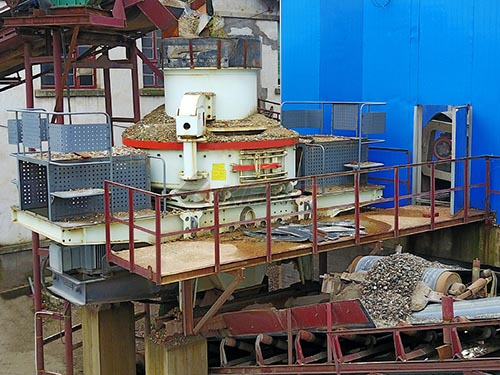
| Performance Metric | Industry Standard Solution | Our Slag Crusher Plant Solution | Advantage (% Improvement) |
| : | : | : | : |
| Wear Part Life (Primary Chamber) | Standard Manganese Steel Liners (~40k tons)| AR500 Steel / Composite Liners| +6080% life extension |
| Metallic Recovery Rate| Singlestage magnet after crushing (~85% recovery)| Twostage magnetic separation circuit| +1012% total recovery |
| Unplanned Downtime (Annual)| ~15% due to tramp metal/jamming| <5% with protection systems & robust design| 66% reduction |
| Power Consumption per Ton| Fixedspeed drives across all motors| Variable Frequency Drives (VFDs) on feeders & conveyors| 1520% energy savings |
| Setup / Reconfiguration Time| Modular but requiring welding/bolting (~2 weeks)| Pinandbolt quickdisconnect modules (~35 days)| 50% time reduction |
5. TECHNICAL SPECIFICATIONS
Capacity Range: Configurable from 50 TPH to over 300 TPH of processed slag.
Power Requirements: Total installed power typically ranges from 250 kW to 800 kW depending on plant configuration; requires stable 415V/50Hz or customized voltage/frequency supply.
Material Specifications: Primary structural components are S355JR grade steel; highwear components utilize Hardox®/AR plate; conveyor belts are minimum EP400/3 with abrasionresistant covers.
Physical Dimensions (Example 150 TPH Plant): Approximate footprint of 45m (L) x 22m (W); height varies up to 15m at feed hopper. Designed with roadtransportable modules.
Environmental Operating Range: Designed for ambient temperatures from 20°C to +45°C; dust emission levels can be configured to meet local standards (<10 mg/Nm³ with filtration).
6. APPLICATION SCENARIOS
Integrated Steel Plant Slag Yard Challenge
Challenge: A major steel producer faced inconsistent throughput due to frequent jaw crusher blockages from oversized slag chunks and unremoved tramp metal. Downtime exceeded 10 hours weekly.
Solution: Implementation of a turnkey slag crusher plant featuring an extradeep primary jaw crusher with hydropneumatic toggle relief system and an upstream heavyduty apron feeder for prehomogenization.
Results: Throughput stabilized at a consistent 180 TPH. Blockage incidents reduced by over 95%. Annual metallic recovery increased by an estimated $150k USD in additional scrap revenue.
Construction Aggregate Producer
Challenge: An aggregate supplier adding EAF slag to its product mix needed to produce precisely graded aggregates but found standard cone crushers wore out within weeks due to abrasiveness.
Solution: A specialized circuit using a primary impactor with interchangeable alloy blow bars followed by a cone crusher lined with chromium carbide wear components dedicated solely to slag processing.
Results: Achieved consistent production of certified 20mm and 10mm aggregate products. Wear part life on the cone increased from three weeks to over four months under equivalent tonnage.
7. COMMERCIAL CONSIDERATIONS
Slag crusher plants are capital investments priced according to capacity, robustness level, and automation.
Pricing Tiers:
Base Configuration ($350k $600k): Includes primary jaw/impactor, basic grizzly feeder, single magnet separator, simple control panel suitable for <100 TPH operations.
Standard Configuration ($600k $1.2M): Most common tier featuring twostage crushing/screening circuits with full magnetic separation logic PLC controls dust suppression systems suitable for most commercial applications up to ~200 TPH
HighCapacity/Custom Configuration ($1M+): Fully automated plants >250 TPH advanced dust collection baghouses sophisticated process monitoring remote diagnostics capabilities
Optional Features: Vibrating pan feeders vs apron feeders automated greasing systems fire suppression systems onboard power generation packages extended wear part warranties
Service Packages range from annual inspection contracts comprehensive maintenance agreements including scheduled parts replacement operator training programs Commercial financing options including equipment leasing longterm rentalto own agreements are available subject approval
FAQ Section
Q1 Is your equipment compatible with our existing conveyors stackers?
Our engineering team can conduct site audit design interface points ensure compatibility We provide transition chutes support structures integrate new plant into your current layout minimizing disruption installation time
Q2 What typical output gradations can achieved?
Final product sizing determined screen configuration post tertiary stage Most plants configured produce range products including coarse base material drainage aggregates finer fractions road sub base Typical specifications include mm mm mm mm single sized aggregates
Q3 How long does installation commissioning take?
For modular turnkey plant typical timeline weeks following site preparation foundation work This includes mechanical erection electrical connection dry testing wet commissioning operator training period supervised production run
Q4 What ongoing maintenance requirements should we expect?
Daily visual inspections lubrication weekly checks belt alignment tension Monthly inspections wear component thickness measurements Predictive maintenance based vibration analysis motor current monitoring recommended Detailed schedule provided operation manual
Q5 Do you offer performance guarantees?
Yes we provide guaranteed minimum throughput capacity based agreed feed specification guaranteed maximum power consumption per ton processed Guarantees backed contractual performance test conducted after commissioning under stable operating conditions