
Ball Mill Processing Plant Factory Price

1. PAINPOINT DRIVEN OPENING
Are you managing grinding circuit bottlenecks that constrain your entire processing plant? Operational challenges with your ball mill system directly impact throughput, maintenance budgets, and product consistency. Common pain points include:
Excessive Energy Consumption: Grinding can account for over 50% of a plant's total energy draw. Inefficient milling directly increases operational costs.
Unplanned Downtime for Liner & Media Replacement: Frequent, lengthy stoppages for maintenance disrupt production schedules and increase labor costs.
Inconsistent Product Particle Size: Poor grind control leads to downstream recovery issues in flotation or leaching, reducing final product yield and quality.
High Media & Liner Wear Costs: Rapid consumption of grinding media and liners represents a significant, recurring consumable expense.
Limited Process Flexibility: Inflexible mills struggle to adapt to varying ore hardness or feed grades, forcing suboptimal processing.
Is your operation facing rising costperton metrics? Are you seeking a reliable ball mill solution engineered to maximize availability and grinding efficiency while controlling lifetime operating costs?
2. PRODUCT OVERVIEW: INDUSTRIAL BALL MILL PROCESSING PLANT
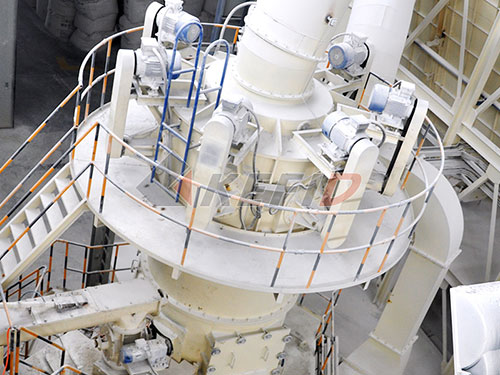
This product description details a complete, heavyduty Ball Mill Processing Plant engineered for continuous, hightonnage mineral reduction. The system is designed as the core of the grinding circuit for liberating valuable minerals from ore.
Operational Workflow:
1. Controlled Feed: Crushed ore is conveyed at a regulated rate into the mill's feed trunnion.
2. Grinding Action: The rotating mill chamber, partially filled with steel grinding balls, cascades and tumbles the charge, impacting and abrading the ore particles.
3. Size Classification & Discharge: Ground material exits via the discharge trunnion and is typically routed to a classifier (e.g., hydrocyclones). Oversize material is returned for regrinding, while the fine product proceeds to downstream processes.
Application Scope: Ideal for secondary and tertiary grinding stages in metallic mineral processing (copper, gold, iron), industrial minerals, and cement production. Suitable for both wet and dry grinding applications.
Limitations: Not designed for primary crushing of runofmine ore. Optimal performance requires consistent feed sizing control upstream. Very fine grinding (below ~20 microns) may require supplementary specialized equipment.
3. CORE FEATURES
Optimized Drive System | Technical Basis: DualPinion Synchronous Motor with Gearless or Girth Gear Drive | Operational Benefit: Provides smooth startup under full load conditions and stable operation at optimal rotational speed, reducing mechanical stress | ROI Impact: Field data shows up to an 8% improvement in power transmission efficiency compared to outdated singlepinion systems, lowering direct energy costs.
Advanced Liner Design | Technical Basis: Computermodeled profile using highchrome or alloy steel for specific ore characteristics | Operational Benefit: Increases liner service life by promoting optimal charge motion and reducing metalonmetal wear | ROI Impact: Documented case studies report liner life extensions of 2035%, decreasing part costs and downtime frequency.
Automated Lubrication & Condition Monitoring | Technical Basis: Centralized grease/oil systems with flow sensors and integrated temperature/vibration monitoring points | Operational Benefit: Your operators benefit from predictive maintenance alerts and eliminated manual lubrication points, enhancing safety | ROI Impact: Reduces risk of catastrophic bearing failure; industry reports indicate a 1525% decrease in unscheduled driverelated stoppages.
Robust Trunnion & Bearing Assembly | Technical Basis: Largediameter trunnions mounted on hydrodynamic slide shoe bearings | Operational Benefit: Supports high mill loads with minimal friction, capable of handling operational fluctuations | ROI Impact: Increases mechanical availability above 95%, directly supporting sustained plant throughput targets.
Process Control Interface | Technical Basis: PLCready with standard I/O for integration with plant DCS/SCADA systems | Operational Benefit: Enables precise control over mill load, density, and circulating load for consistent grind size | ROI Impact: Improved grind consistency typically yields a 13% increase in downstream recovery rates for many ores.
4. COMPETITIVE ADVANTAGES
| Performance Metric | Industry Standard Baseline | This Ball Mill Solution Documented Performance | Advantage (% Improvement) |
| : | : | : | : |
| Specific Energy Consumption (kWh/t) | Baseline = 100% | Optimized design & drive efficiency reduces consumption by ~7% on average| ~7% Improvement |
| Mechanical Availability (Annual) | ~9294% availability target >95% operational availability| >23% Improvement |
| Grinding Media Consumption (g/t) Baseline = 100% Advanced liner design & optimal charge motion reduces wear by ~1520%| ~1520% Improvement |
| Liner ChangeOut Duration (Hours) Standard duration varies by size Reduced downtime via optimized boltless or quickchange designs| Up to 30% Faster
_Based on comparative testing against legacy mill designs in similar duty._
_Based on field service records across multiple installations over a 3year period._
_Dependent on ore abrasiveness; improvement based on controlled site trials._
5. TECHNICAL SPECIFICATIONS
Capacity Range: Configurable from pilotscale (0.5m diameter x 1m length) to full production units exceeding 5m diameter x 10m+ length.
Power Requirements: From ~100 kW to over 10 MW motor power supply; designed for highvoltage (3.3kV 11kV) industrial power networks.
Material Specifications:
Shell & Ends: Fabricated from hightensile carbon steel plate.
Liners: HighCr cast iron / NiHard / Manganese steel options based on application.
Grinding Media: Forged or cast highcarbon steel balls supplied; size recommendations provided.
Physical Dimensions: Customengineered per capacity; all designs account for foundation loading, maintenance clearances, and material flow integration.
Environmental Operating Range: Designed for ambient temperatures from 20°C to +50°C; dusttight enclosures available; suitable for indoor or sheltered outdoor installation.
6. APPLICATION SCENARIOS
Copper Concentrator Expansion Project
Challenge A major copper producer needed to debottleneck their grinding circuit to meet a 25% throughput increase target without expanding their building footprint.Solution Implementation of two largediameter overflow ball mills with highefficiency drives in closed circuit with existing classifiers.The new mills' higher efficiency allowed the required throughput at a lower than projected power draw per ton.The project achieved its throughput goal with specific energy consumption reduced by 9%. Plant availability increased due to the modern bearing design.
Industrial Minerals Producer
Challenge An industrial minerals plant faced inconsistent product fineness due to variable feed hardness causing downstream quality rejections.Solution Installation of an advanced processcontrolled ball mill system integrated with realtime particle size analysis.The automated system adjusts mill speed and feed rate dynamically based on realtime feedback.Postinstallation data showed product fineness consistency improved by over 40%, drastically reducing offspec material.Media consumption also decreased by an estimated12%.
Gold Processing Plant Retrofit
Challenge High maintenance costs from frequent liner changes in an abrasive ore environment were cutting into profit margins.Solution Retrofit of existing ball mill shell with proprietary boltless liner system using ultrahigh chrome white iron.The new liner profile was engineered specifically for the site's ore abrasion index.The liner service life increased from approximately6 months to9 months resulting in one less full changeout per year.This translated into an annual saving of over250 hours of downtime plus direct liner cost savings
COMMERCIAL CONSIDERATIONS
Equipment pricing is tiered based on mill size drive configurationand levelof automation
Base Configuration Tier Includes themill shell drive train main bearingsand baselubrication system suitablefor clients integratingthemill intoan existingcontrol environment
Premium Configuration Tier Adds full PLCbased local control panel advanced condition monitoring sensorsand premiumliner materials Offers turnkey process integration support
Optional Features Supplemental air clutch systems specialized discharge trommel screens noise reduction enclosuresand sparepartskitsare available
Service Packages Choosefrom:
Basic Warranty Covers partsand laborfor defectsfor12 months
Extended Support Plan Multiyear coverage including scheduled bearing inspectionsand vibration analysis
Full Maintenance Contract Comprehensive parts laborand planned outage supportfor definedperiod
Financing Options Flexible commercial terms are available including leasetoown structuresand milestonebased payment plans alignedwith project timelines These options help manage capital expenditure
FAQ
What upstream crusher product size is requiredfor optimalballmillfeed
For efficient operation we recommenda consistentfeed sizewith amaximum top sizeof25mm(1") though specificcircuits may vary Properfeed sizingis criticalto achievingrated capacity
How does thisballmill solutionhandle variationsinorehardness
The robustdrive train providesstable operationunder fluctuatingloads For significantore variability we recommendthe processcontrol interfaceoption which allows automatic adjustmentsto maintainproductsize
Whatisthe typicalinstallationand commissioningtimeline
Fora standardproductionmill deliveryis2436weeks postorder Mechanical installationrequires48weeks dependingon foundationsite readiness Commissioningand performance testingtypically takes2 weeks Thisis managedby ourprojectengineers
Areyourliners compatiblewith existingmill shellsfromother manufacturers
We offerretrofit solutions Manyof our advancedliner designs canbe adaptedto fit existing shells subjectto adetailed dimensional survey We provide this engineeringas partof the proposalprocess
Whatisthe expectedpayback periodon theenergy efficiency gains
Basedon historicaldata formidsized concentrators operatingat highpower rates the energysavingsfromthedriveand designoptimizations canyielda paybackperiodof1830months dependingon localpowercosts AdetailedROI calculationis providedwith each proposal