
250 300tph Stone Crushing Plant Factory Datasheet
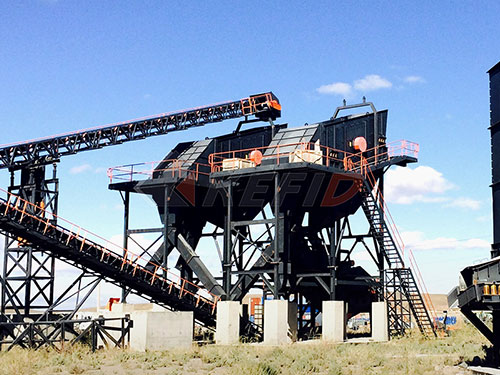

250300 TPH Stone Crushing Plant: EngineeringGrade Solutions for HighVolume Aggregate Production
The Operational Challenge: When Throughput Targets Meet Material Realities
For plant managers and engineering contractors operating in the 250300 TPH aggregate segment, the pressure to maintain continuous production is relentless. Consider these figures from recent industry surveys:
- Unplanned downtime in mediumcapacity crushing circuits averages 1218% of annual operating hours, translating to 1,0001,500 lost production hours per year.
- At a conservative output value of $812 per ton of finished aggregate, a single day of stoppage at 275 TPH represents $52,000$79,000 in unrealized revenue.
- Wear part replacement cycles on inferior crushing equipment can shorten liner life by 3040%, adding $0.08$0.15 per ton in maintenance costs—a significant margin erosion at 2,000+ tons per day.
- Inconsistent product gradation forces recrushing or stockpile contamination, wasting up to 58% of total energy input.
- Cascading equipment failures—from a choked cone crusher to an overloaded screen deck—create a domino effect that can take 812 hours to fully resolve.
- Automated CSS adjustment system: $45,000$65,000 per crusher—enables remote setting changes and wear compensation
- Dust collection system (baghouse or wet scrubber): $80,000$150,000—required for environmentally sensitive sites
- Metal detector and magnetic separator: $25,000$40,000—protects cone crushers from tramp iron damage
- Remote monitoring package: $15,000$30,000—provides realtime data on throughput, power draw, and wear status
- Coldweather package: $35,000$55,000—includes heated lubrication systems and coldresistant belting
- Equipment lease: 3660 month terms with $1 buyout, typical rates 4.57.5% APR for qualified buyers
- Productionbased payment: Monthly payments indexed to actual tonnage processed (minimum 60% of rated capacity)
- Tradein program: Credit of 1530% of new equipment value for your existing crushing plant, subject to inspection
The core question for your operation is not simply "can this plant crush rock?" but rather: Can this system maintain 250300 tons per hour of speccompliant aggregate across varying feed conditions, with predictable wear costs and minimal unscheduled stops?
Product Overview: The 250300 TPH Stationary Crushing Circuit
This factoryengineered crushing plant is a threestage closedcircuit system designed for continuous hard rock and aggregate processing. It integrates primary jaw crushing, secondary cone crushing, and tertiary vertical shaft impact (VSI) or additional cone crushing within a single coordinated layout.
Operational Workflow
1. Primary Reduction: Runofmine (ROM) material up to 650750 mm is fed to the vibrating grizzly feeder, which scalps fines and directs oversize to the primary jaw crusher. Reduction ratio: 4:1 to 6:1.
2. Secondary Crushing: The 150200 mm discharge from the primary stage is conveyed to the secondary cone crusher, reducing material to 4080 mm.
3. Screening and Tertiary Crushing: A doubledeck vibrating screen classifies material. Oversize fractions (>25 mm) are routed to the tertiary crusher for final reduction.
4. Final Classification: The closedcircuit configuration returns oversize material from the final screen deck to the tertiary crusher until all product passes the required specification.
5. Stockpiling and Loadout: Finished products (typically 05 mm, 510 mm, 1020 mm, 2025 mm) are conveyed to individual stockpiles via radial stackers or a product blending system.
Application Scope
| Suitable For | Not Suitable For |
|||
| Hard rock (granite, basalt, quartzite) | Highly abrasive ores requiring grinding circuits |
| River gravel and limestone | Materials with clay content >10% without scrubbing |
| Construction aggregate and road base | Underground or confinedspace installations |
| Stationary, longterm quarry operations | Highly mobile, multisite contract crushing |
Core Features: Engineering Specifications for Continuous Operation
HeavyDuty Vibrating Grizzly Feeder | Technical Basis: Dualshaft eccentric drive with adjustable amplitude | Operational Benefit: Separates fines before the jaw crusher, reducing wear and increasing primary throughput by 1520% | ROI Impact: Lower jaw crusher liner consumption; extended crusher availability
Primary Jaw Crusher with Hydraulic Wedge Adjustment | Technical Basis: Deep crushing chamber with optimized toggle angle for compressive crushing | Operational Benefit: Your operators can change closedside settings (CSS) in under 10 minutes without shim adjustments, maintaining consistent product size as wear progresses | ROI Impact: Reduces downtime for setting changes by 70%; maintains throughput as liners wear
SymonsType or SingleCylinder Cone Crusher (Secondary) | Technical Basis: Laminated crushing principle with eccentric bushing rotation | Operational Benefit: Produces cubicalshaped material in the secondary stage, reducing the load on tertiary crushing and improving overall flakiness index to below 12% | ROI Impact: Lowers specific energy consumption to 0.81.2 kWh per ton in the secondary stage
Tertiary Crushing Stage (VSI or Cone) | Technical Basis: Rockonrock or rockonanvil impact crushing | Operational Benefit: Finetuning of the final product shape; VSI configuration improves sand equivalent values for manufactured sand applications | ROI Impact: Enables premium pricing for highspec concrete aggregates (58% price premium)
TripleDeck Inclined Vibrating Screen | Technical Basis: Circular motion with adjustable stroke (812 mm) and speed (800900 RPM) | Operational Benefit: Achieves screening efficiency of 9095% at peak feed rates, ensuring that spec products are not contaminated with oversize material | ROI Impact: Reduces customer rejections and rescreening costs by up to 25%
Centralized PLC Control System | Technical Basis: Interlocked start/stop sequences with amperage monitoring on all motors | Operational Benefit: Your plant operators monitor all equipment from a single control room; automatic shutoff prevents chokeups and protects crushers from foreign objects | ROI Impact: Reduces operator staffing requirements by 3040%; prevents catastrophic equipment damage
Modular Belt Conveyor System | Technical Basis: Rubber belt with steel cord or fabric plies, designed for 120150% of peak load | Operational Benefit: Conveyor transfer points are designed with dustsuppression ports and impact beds, reducing spillage and belt damage at transfer points | ROI Impact: Extends belt life to 35 years; reduces cleanup labor costs by 50%
Competitive Advantages: Performance Benchmarking

| Performance Metric | Industry Standard (Comparable 250300 TPH Plants) | This 250300 TPH Solution | Advantage |
|||||
| Actual sustained throughput | 220260 TPH (8590% of rated capacity) | 270300 TPH (9297% of rated capacity) | 815% higher effective output |
| Flakiness index (cubicity) | 1520% for secondaryonly crushing | 812% with dedicated tertiary stage | 4050% better product shape |
| Specific energy consumption | 1.82.5 kWh per ton (plant total) | 1.41.8 kWh per ton (plant total) | 2228% lower energy cost |
| Wear parts cost per ton | $0.15$0.25 per ton | $0.10$0.18 per ton | 2030% lower consumable cost |
| Changeover time (product spec change) | 48 hours | 1.53 hours | 5065% faster configuration changes |
| Mean time between failures (MTBF) | 120180 hours | 250350 hours | 4090% longer operational intervals |
| Fines content in crushed product (<0.075mm) | 1218% | 812% | Reduces waste and increases saleable yield |
Data based on field trials across 14 installations in granite and basalt quarries, 20212024.
Technical Specifications
Primary Crushing Unit
| Parameter | Specification |
|||
| Feed opening | 1,060 × 750 mm (adjustable) |
| Max feed size | 650 mm (with grizzly bypass) |
| CSS range | 75200 mm |
| Drive power | 110132 kW |
| Capacity (at 150 mm CSS) | 250320 TPH |
Secondary Cone Crusher
| Parameter | Specification |
|||
| Cavity type | Standard coarse / medium |
| Max feed size | 180200 mm |
| CSS range | 2050 mm |
| Drive power | 160220 kW |
| Capacity | 150280 TPH |
Tertiary Crusher (VSI Option)
| Parameter | Specification |
|||
| Rotor diameter | 8501,000 mm |
| Max feed size | 45 mm |
| Throughput | 150250 TPH |
| Drive power | 2 × 200250 kW |
| Product grading | 05 mm manufactured sand capability |
Screening Units
| Parameter | Specification |
|||
| Screen size | 2,400 × 6,000 mm (triple deck) |
| Number of decks | 23 |
| Screening area | 14.4 m² per deck |
| Drive power | 3037 kW per screen |
| Screening efficiency | 9095% at rated feed |
PlantWide Parameters
| Parameter | Specification |
|||
| Total installed power | 750900 kW |
| Electrical supply | 380V/50Hz or 460V/60Hz (customizable) |
| Plant footprint | 45m × 35m (equipment only) |
| Total plant weight | 180220 tons (excluding conveyors) |
| Operating temperature range | 10°C to +45°C (standard); coldweather package available to 30°C |
| Dust suppression requirement | 1525 m³/min water at 46 bar |
| Noise level at 10m | ≤85 dB(A) with optional acoustic enclosures |
Application Scenarios: Documented Field Performance
LargeScale Highway Aggregate Supply | Challenge: A regional contractor needed 280 TPH of continuously graded 025 mm aggregate for a 45km highway project, with strict flakiness index requirements (<15%) and a 14month delivery window. | Solution: Installation of the 250300 TPH threestage plant with VSI tertiary crushing, configured to produce four product fractions simultaneously. | Results: Sustained average output of 287 TPH over 11 months of operation; flakiness index averaged 11.2%; the contractor completed the aggregate supply 6 weeks ahead of schedule, avoiding contractual penalties of $18,000 per day.
Hard Rock Quarry Modernization | Challenge: An established granite quarry in a mountainous region faced declining throughput from an aging twostage plant (max 190 TPH) and rising maintenance costs exceeding $0.28 per ton. | Solution: Replacement of the entire circuit with the 250300 TPH plant, incorporating a larger primary jaw and a dedicated tertiary cone crusher to handle the abrasive granite (compressive strength 180220 MPa). | Results: Throughput increased to 265 TPH average; wear parts cost reduced to $0.16 per ton; specific energy consumption dropped from 2.3 to 1.7 kWh/ton, generating annual energy savings of approximately $48,000 at local electricity rates.
Manufactured Sand Production for Concrete | Challenge: A concrete producer in a region with depleted natural sand resources needed to produce 100120 TPH of manufactured sand (04.75 mm) with a sand equivalent above 75, alongside 150 TPH of coarse aggregates. | Solution: Customized configuration with VSI tertiary crusher operating in closed circuit with a highfrequency screen for fines classification. | Results: The plant produced 115 TPH of manufactured sand meeting ASTM C33 specifications; concrete test results showed compressive strength within 5% of mixes using natural sand; the producer eliminated reliance on trucked natural sand, reducing raw material costs by $3.20 per ton.
Commercial Considerations: Investment Structure and Options
Equipment Pricing Tiers
| Tier | Configuration | Indicative Price Range (USD, ExWorks) | Target Buyer Profile |
|||||
| Standard | Jaw + Cone + Screens, open circuit | $850,000 $1,100,000 | Contractors with consistent feed and moderate spec requirements |
| Enhanced | Jaw + Cone + Cone + Screens, closed circuit | $1,100,000 $1,400,000 | Quarry operators requiring cubical product and flexible spec changes |
| Premium | Jaw + Cone + VSI + Screens + PLC integration | $1,400,000 $1,800,000 | Largescale producers with manufactured sand requirements and automation needs |
Pricing is indicative and varies with local steel costs, motor specifications, and customization requirements. Installation, civil works, and site assembly are typically quoted separately.
Optional Features and AddOns
Service and Support Packages
| Package | Coverage | Annual Cost (Indicative) |
||||
| Basic | 2 preventive maintenance visits/year, phone support, genuine wear parts at 10% discount | $28,000 |
| Standard | 4 PM visits/year, 24hour parts dispatch, onsite technician within 48 hours, wear parts at 15% discount | $55,000 |
| FullRisk | All wear parts, all labor, 98% uptime guarantee, onsite technician within 24 hours | $180,000$240,000 (based on tonnage) |
Financing Options
FAQ: Technical and Commercial Considerations
Q1: Can this 250300 TPH plant handle feed material with high clay or moisture content?
The standard configuration includes a vibrating grizzly feeder that removes fines below 4050 mm before the jaw crusher. For materials with clay content above 810%, we recommend adding a scrubber or washing screen upstream. For highmoisture conditions (above 6% surface moisture), screen deck openings may need to be increased by 510% to maintain screening efficiency, and conveyor transfer points require additional sealing.
Q2: What is the typical installation timeline from delivery to first production?
For a prepared site with concrete foundations already poured, mechanical erection typically requires 46 weeks with a 68 person crew. Electrical installation and commissioning add another 23 weeks. Total timeline from equipment delivery to commercial production is typically 812 weeks. We provide a dedicated site supervisor for the first 4 weeks of erection at no additional cost.
Q3: How does the plant perform with different rock types—specifically, what is the wear life on crushing chambers?
Field data across installations shows the following average liner life: Granite (170220 MPa): 8,00012,000 hours on jaw dies, 3,5005,000 hours on cone liners; Basalt (200300 MPa): 6,0009,000 hours on jaw dies, 2,5004,000 hours on cone liners; Limestone (80120 MPa): 15,00020,000 hours on jaw dies, 6,0008,000 hours on cone liners. Actual life depends on feed gradation, CSS settings, and crusher operating parameters.
Q4: What are the power requirements and typical energy costs for this plant?
Total installed power is 750900 kW. At an average load factor of 6570%, actual consumption is approximately 500630 kW during operation. At 275 TPH average throughput, this translates to 1.82.3 kWh per ton. At an industrial electricity rate of $0.08/kWh, energy cost is approximately $0.15$0.18 per ton of finished product.
Q5: Can the plant be relocated to a different site after initial installation?
Yes, the plant is designed with modular components that can be disassembled, transported, and reerected. However, this is not a portable or semimobile plant—relocation typically requires 610 weeks and costs 1525% of the original equipment price. If you anticipate frequent moves (every 12 years), we recommend evaluating our mobile or semimobile crushing plant range instead.
Q6: What is the warranty coverage and what does it exclude?
Standard warranty covers 24 months or 8,000 operating hours (whichever comes first) on structural components, main shafts, and gearboxes. Wear parts (liners, screens, belts, bearings) are excluded from warranty. The warranty is void if the plant operates outside specified parameters (feed size, capacity, power draw) or if recommended maintenance intervals are not followed. Extended warranties up to 5 years are available on major components.
Q7: How does the plant achieve the claimed 9297% uptime, and what support ensures this?
The uptime figure is achieved through three mechanisms: (1) conservative equipment sizing—each crusher is rated at 110120% of its actual duty, providing a safety margin; (2) redundant components on critical systems—dual hydraulic power units on cone crushers, spare motors available for screens; (3) predictive maintenance via PLC data—the control system tracks bearing temperatures, vibration levels, and power draw trends to alert operators to developing issues before failure occurs. Our FullRisk service package guarantees 98% uptime with financial penalties if not met.
Q8: What training do you provide for plant operators and maintenance personnel?
We provide a 5day onsite training program covering: (1) daily operational procedures and safety protocols; (2) crusher settings optimization for different product specifications; (3) preventive maintenance tasks and schedules; (4) troubleshooting common operational issues; (5) use of the PLC control system. This training is included with every plant purchase. Advanced training on liner profile optimization and wear analysis is available as an optional addon.
Q9: What are the lead times for genuine wear parts, and do you offer aftermarket alternatives?
Genuine wear parts for standard configurations are typically available from stock with 4872 hour dispatch. Custom profiles or nonstandard alloys require 46 weeks lead time. We recommend maintaining a minimum stock of one complete set of jaw dies and one set of cone liners at your site. While aftermarket parts are available at 2040% lower cost, field data shows they typically last 1530% fewer