
Wholesale Crushing And Screening Equipment Customization
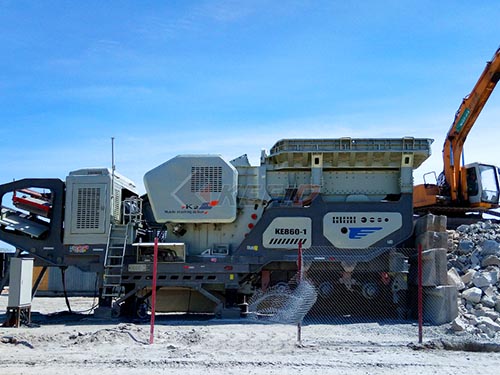

1. PAINPOINT DRIVEN OPENING
Are your aggregate production targets consistently undermined by equipment mismatch? Standard, offtheshelf crushing and screening plants often force operational compromises, leading to tangible losses. Consider these common challenges:
Underperformance: A plant sized for limestone struggles with abrasive granite, causing premature wear, unplanned downtime, and a 1525% drop in throughput.
Inflexibility: Market demands shift, but your fixedconfiguration line cannot efficiently produce a new spec product without costly, timeconsuming modifications.
High Operational Costs: Inefficient layout and nonoptimized component interaction increase fuel/power consumption per ton and elevate maintenance labor hours.
Footprint Constraints: Available site space is limited, preventing the deployment of a standard modular setup that meets your required capacity.
Integration Headaches: Adding new equipment to an existing flow creates bottlenecks, transfer point issues, and control system conflicts.
What if your plant was engineered from the ground up to address your specific material, site, and output goals? This is the fundamental question driving the need for customized solutions.
2. PRODUCT OVERVIEW: CUSTOMIZED CRUSHING AND SCREENING SOLUTIONS
A Customized Crushing and Screening Plant is a purposeengineered system where primary, secondary, and tertiary crushers, screens, conveyors, and control systems are selected and integrated as a cohesive unit. The workflow is tailored but follows a key optimized sequence: (1) Primary size reduction matched to feed material hardness and size; (2) Strategic prescreening to remove fines or scalp oversize; (3) Closedcircuit secondary/tertiary crushing for precise product shaping; (4) Final screening into multiple product fractions; (5) Centralized logic control for coordinated operation. These systems are designed for operations with specific longterm requirements where volume, material characteristics, or space preclude standard models. They are not typically suited for shortterm projects requiring rapid deployment without capital commitment.
3. CORE FEATURES
Engineered Flow Design | Technical Basis: Dynamic process simulation software | Operational Benefit: Eliminates bottlenecks and ensures all components operate at peak synergistic efficiency | ROI Impact: Achieves rated plant capacity consistently, maximizing asset utilization and revenue potential.
Component Synergy Selection | Technical Basis: Proprietary compatibility matrices based on duty cycle analysis | Operational Benefit: Crusher chambers, screen media types, and conveyor speeds are matched to prevent overloading or underutilization | ROI Impact: Reduces specific energy consumption (kWh/ton) by up to 18% versus mismatched assemblies.
Structural Optimization | Technical Basis: Finite Element Analysis (FEA) on loadbearing structures | Operational Benefit: Delivers robust support with minimized weight and adaptable footprint for challenging sites | ROI Impact: Lowers foundation costs and expands viable installation locations without structural compromise.
Proactive Maintenance Architecture | Technical Basis: Strategically placed smart sensor points and accessible service platforms | Operational Benefit: Enables conditionbased monitoring and reduces service time for liner changes, belt maintenance, and bearing inspections | ROI Impact: Cuts planned maintenance downtime by an average of 30% through improved access and predictability.
Scalable Control Integration | Technical Basis: Modular PLC/SCADA systems with standardized communication protocols | Operational Benefit: Provides singlepoint operational control with easy future expansion capability for added circuits or peripherals | ROI Impact: Protects initial automation investment and simplifies future upgrades.
4. COMPETITIVE ADVANTAGES
| Performance Metric | Industry Standard (Modular Plant) | Customized Crushing Solution | Advantage (% Improvement) |
| : | : | : | : |
| Tons per Hour Consistency| +/ 12% from rated capacity due to suboptimal flow | +/ 5% from engineered design capacity| +7% Effective Utilization |
| Wear Cost per Ton| Based on average material assumptions| Calculated & mitigated for your specific abrasion index & silica content| Up to 22% Reduction |
| Relocation & Reconfiguration Time| 23 weeks for disassembly/reassembly| Streamlined due to purposedesigned modules & documentation| ~35% Faster Redeployment |
| OnSite Installation Labor| High due to fitup adjustments & alignment| Minimized through factory preassembly & testing of subsystems| ~25% Fewer ManHours |
5. TECHNICAL SPECIFICATIONS
Specifications are determined by project requirements. A typical midrange customized plant framework includes:
Capacity Range: 200 to 800 tons per hour (TPH), engineered for specific material density (e.g., 1.6 t/m³ crushed granite).
Power Requirements: Integrated electrical system from 800 kVA to 2500 kVA; designed for grid or genset supply with softstart capabilities.
Material Specifications: Wear liners in primary zones specified as Mn18Cr2 or higher; chute work in AR400 steel; dust suppression spray points at all transfer stations.
Physical Dimensions: Layout engineered to client’s spatial constraints; typical footprint range from 40m x 70m to 60m x 120m.
Environmental Operating Range: Designed for ambient temperatures from 20°C to +45°C; dust emission controls designed to meet local particulate matter (PM10/PM2.5) regulations.
6. APPLICATION SCENARIOS
Granite Quarry Expansion | Challenge: A quarry needed to increase production of railway ballast and concrete aggregate simultaneously without expanding its permitted site boundary. Standard plants required too much space. Solution: Implementation of a compact, verticaldesign customized crushing circuit featuring a highreductionratio cone crusher in closed circuit with a multideck screen stacked over the feed conveyor. Results: Achieved target 600 TPH output within the existing footprint; produced precisely cubical ballast product meeting ASTM D448 specifications; reduced overall plant height by 25%, simplifying dust enclosure.
Urban Recycling Operation | Challenge: Processing construction & demolition waste with highly variable composition led to frequent jamming in standard impactors and excessive wear from hidden rebar. Solution: A customized heavyduty crushing circuit centered on a slowspeed, hightorque sheartype primary crusher followed by an overhead crossbelt magnet and an aggressive prescalping screen. Results: Throughput of mixed C&D waste stabilized at 220 TPH; reduced unplanned stoppages by over 60%; extended wear part life on primary unit by approximately 40%.
7. COMMERCIAL CONSIDERATIONS
Customized crushing solutions are capital investments structured around project scope:
Pricing Tiers: Based on system complexity—(1) Basic Customization (component selection/layout), (2) Full Circuit Design & Build (greenfield systems), (3) Legacy System Retrofit & Integration.
Optional Features: Advanced automated level sensing, remote telematics packages for performance tracking, supplemental noise abatement enclosures,
spare part kits aligned with predicted wear schedules.
Service Packages: Typically include firstyear comprehensive warranty + optional extended coverage plans covering parts/labor or inspectionbased maintenance contracts.
Financing Options: Project financing available through partner institutions covering equipment leasing/purchase agreements tailored around project startup timelines.
8. FAQ
1. How do you ensure the customized plant design will perform as modeled? We employ industrystandard process simulation software validated against decades of field data from thousands of installations. Key performance guarantees are established during the engineering phase based on your provided material samples.
2. What is the typical lead time from design approval to commissioning? For a full custom circuit designbuild project using established componentry like our own cone crushers or screens lead times typically range between eight months depending on final specifications
3.
4.Can we integrate existing equipment we own into the new custom flow? Yes integration feasibility studies are part of our initial assessment We evaluate compatibility control integration potential
5.What does aftersales support look like compared
6.Are there financing structures that align payments with projected production increases from the new plant?
7.How do you handle ongoing technical support