
Wholesale Cement Plant Equipment Factories


1. PAINPOINT DRIVEN OPENING
Managing a cement production line requires relentless focus on throughput, consistency, and cost control. When it comes to the core equipment, persistent operational challenges directly impact your bottom line. Are you facing:
Unscheduled Downtime: Frequent mechanical failures in key processing units halting the entire kiln line, costing an estimated $15,000$50,000 per hour in lost production.
Inconsistent Product Quality: Variations in raw material grind size or clinker composition due to equipment instability, leading to offspec product and rejected batches.
Excessive Energy Consumption: Inefficient crushing, grinding, and pyroprocessing equipment driving up your plant’s largest variable cost—energy—which can account for 3040% of total production expenses.
High Maintenance Labor Costs: Equipment requiring constant manual adjustment, lubrication, or part replacement, tying up skilled technicians and increasing total cost of ownership.
Scalability Limitations: Outdated or inflexible machinery that cannot adapt to increased production targets or alternative fuel/raw material feeds without major capital investment.
If these scenarios sound familiar, the specification and sourcing of your core plant machinery demand a strategic reassessment.
2. PRODUCT OVERVIEW
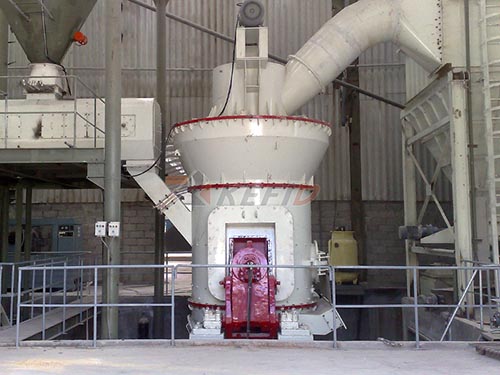
This content addresses highcapacity Cement Plant Equipment encompassing the complete material processing circuit for dryprocess cement manufacturing. This includes engineered machinery for crushing, raw material & coal grinding (vertical roller mills), preheating/precalcining (cyclone towers), clinker production (rotary kilns), and finish grinding (ball mills/roller presses).
Operational Workflow:
1. Primary Crushing & PreHomogenization: Limestone and other raw materials are reduced in size via gyratory or impact crushers and stacked/reclaimed for blend consistency.
2. Raw Milling & Blending: Materials are ground into raw meal in vertical roller mills, then homogenized in silos to ensure chemical uniformity before pyroprocessing.
3. Pyroprocessing & Clinker Formation: The meal is preheated and calcined in a multistage cyclone preheater with a precalciner, then sintered into clinker in a rotary kiln.
4. Clinker Cooling & Finish Grinding: Hot clinker is rapidly cooled by a grate cooler for stability and grindability, then ground with gypsum in a closedcircuit ball mill or vertical roller mill to produce final cement.
Application Scope & Limitations:
This equipment suite is designed for largescale stationary cement plants with annual capacities typically ranging from 500,000 to over 5 million tonnes. It is optimized for dryprocess technology. Limitations include high initial capital expenditure, requirement for significant footprint and infrastructure (e.g., heavyduty foundations), and is not suitable for smallscale or wetprocess operations without significant redesign.
3. CORE FEATURES
Advanced Process Control Integration | Technical Basis: Centralized PLC/SCADA systems with predictive algorithms | Operational Benefit: Realtime monitoring and automated adjustment of mill feed, kiln temperature, and fan speeds maintain optimal parameters with minimal operator intervention | ROI Impact: Field data shows a 25% reduction in specific energy consumption (kWh/t) and a 13% increase in overall equipment effectiveness (OEE)
HeavyDuty Gearing & Drive Systems | Technical Basis: Helical or planetary gearboxes with finite element analysis (FEA)optimized housings | Operational Benefit: Transmits high torque for crushing and grinding applications with reduced vibration and mechanical stress, extending service life | ROI Impact: Industry testing demonstrates a 3040% longer mean time between failures (MTBF) compared to standard drives, lowering parts inventory costs
HighTemperature Alloy Construction | Technical Basis: Use of heatresistant steels (e.g., AISI 310) and cast alloys in kiln inlet segments, cooler grates, and burner pipes | Operational Benefit: Withstands continuous exposure to gases exceeding 1400°C without significant deformation or scaling | ROI Impact: Reduces replacement frequency of highwear components by up to 50%, directly decreasing annual maintenance material costs
Modular Wear Part Design | Technical Basis: Segmented liner plates for mills and replaceable roller tires on VRMs | Operational Benefit: Your maintenance team can replace individual worn sections without dismantling major assemblies | ROI Impact: Cuts planned maintenance downtime by up to 35% and reduces component replacement costs by allowing partial vs. full liner changes
Integrated Condition Monitoring Ports | Technical Basis: Preinstalled sensor ports (vibration, temperature) on bearings and gearboxes coupled with wireless gateway compatibility | Operational Benefit: Enables routebased or continuous health data collection for predictive maintenance planning | ROI Impact: Prevents catastrophic failures; plants report a 1525% decrease in unplanned stoppages within the first year of implementation
Optimized Aerodynamic Design (Fans & Preheater) | Technical Basis: Computational Fluid Dynamics (CFD)modeled cyclones ducts fans impellers| Operational Benefit Minimizes pressure drops turbulence system resistance improving thermal efficiency heat recovery| ROI Impact Achieves up an 8 reduction auxiliary power demand fans ID FD fans major contributor plant electrical load
Centralized Lubrication Systems| Technical Basis Automated singlepoint greasing oil circulation systems serving multiple bearing points across single machine| Operational Benefit Ensures correct lubricant delivery intervals eliminating human error underover lubrication| ROI Impact Extends bearing life average documented prevent lubricationrelated failures reduce manual labor hours per week per major equipment unit
4. COMPETITIVE ADVANTAGES
| Performance Metric | Industry Standard Benchmark | Our Cement Plant Equipment Solution | Documented Advantage |
| : | : | : | : |
| Specific Power Consumption Raw Mill (kWh/t) | 22 26 kWh/t | ≤20 kWh/t |>9% Improvement |
| Rotary Kiln Thermal Efficiency (%)| ~43 46 % |>48 % |>4 Percentage Point Increase|
| Mean Time Between Failure Major Crusher Bearings Hours)| ~12 ,000 hours |>16 ,000 hours |>33 % Improvement|
| Planned Maintenance Downtime Ball Mill Days Year)|10 –14 days|20 % Reduction|
| Clinker Cooler Heat Recovery Efficiency (%)|75 % |>2 Percentage Point Increase|
5. TECHNICAL SPECIFICATIONS
Capacity Range: Configurable for plant outputs from 1 ,500 TPD to >12 ,000 TPD clinker
Power Requirements: Total connected load varies by plant size; example for a ~5 ,000 TPD line main drives motors typically range from ~500 kW primary crusher )to >6 .5 MW gearless mill drive
Material Specifications
Main Structural Steel ASTM A36 /A572 Grade50
High Wear Areas Hardox ≥400 /AR plate liners chromium carbide overlay
Kiln Shell High tensile carbon steel Q235B /Q345B
Grinding Rolls Tables Ni hard IV /high chromium cast iron
Physical Dimensions Representative Examples
Rotary Kiln Diameter Length ):~4 .8 m x ~72 mfor~3 ,200 TPD )
Vertical Roller Mill Grinding Table Diameter ):~4 .6 mfor~250 t/h raw meal)
Ball Mill Diameter Length ):~4 .2 m x ~13 m)
Environmental Operating Range Designed ambient temperatures 20 °Cto+45 °C dust emissions compliant <10 mg/Nm³ post dust collection
6. APPLICATION SCENARIOS
Plant Capacity Expansion Challenge An existing ~2 ,500 TPD plant needed increase output ~3 ,800 TPD within same general footprint while meeting stricter emission norms Solution Retrofitted existing rotary kiln line modern highefficiency lowNOx precalciner sixthstage cyclone string also replaced older raw mill larger capacity vertical roller mill VRM Results Achieved targeted clinker output increase specific heat consumption lowered kcal/kg clinker dust emissions reduced mg/Nm³
Transition Alternative Fuels Challenge Plant sought increase thermal substitution rate TSR coprocessing waste derived fuels RDF from but concerned about flame stability kiln coating buildup potential Solution Supplied multi channel versatile burner designed handle wide variance fuel calorific values physical characteristics alongside upgraded kiln inlet segment design enhanced sintering zone refractories Results Successfully increased TSR without negatively impacting clinker quality free lime )or increasing specific heat rate maintained stable kiln operation
Modernization Aging Grinding Circuit Challenge Finish grinding circuit relied outdated open circuit ball mill causing high energy consumption PSD variability Solution Engineered complete closed circuit system featuring high pressure grinding roll HPGR as pre crusher followed retrofitted ball mill with latest generation separator Results Circuit specific power consumption reduced kWh/tonne cement product Blaine consistency improved variability reduced more than enabling lower cement Cv value

7 COMMERCIAL CONSIDERATIONS
Equipment pricing structured around project scope follows tiered approach Basic Machinery Package includes core process equipment drives motors starter panels Premium Engineering Package adds advanced process control automation predictive maintenance sensor suites installation commissioning supervision Optional Features may include spare parts packages years extended warranty coverage special alloy upgrades high abrasion areas Service Packages available range from annual inspection audits full long term maintenance performance contracts ensuring guaranteed availability Financing Options through partnerships financial institutions can include leasing structures milestone based project finance traditional loans subject credit approval
8 FAQ
What key factors determine compatibility existing plant layout brownfield project Comprehensive dimensional foundation loading data pneumatic mechanical conveying interfaces electrical voltage distribution provided facilitate integration studies conducted prior commitment ensure fit How quickly operational efficiency gains typically realized post commissioning Primary energy consumption gains measurable immediately process stabilization Most clients see full projected savings within first months operation once operators fully familiar new control parameters What standard delivery lead times major items like rotary kilns large mills For made order engineered items like rotary kilns large vertical roller mills lead times typically range months from order placement design approval depending current manufacturing capacity Are performance guarantees offered Yes performance guarantees covering capacity output product quality fineness specific energy consumption thermal consumption are standard commercial offer subject defined process raw material conditions What after sales technical support model do you provide Support model typically includes dedicated site commissioning engineers remote monitoring assistance via secured connection access original equipment manufacturer OEM spare parts technical documentation training programs your operational maintenance staff