
White Label Stone Crusher Machine Trading Company

1. PAINPOINT DRIVEN OPENING
Are unpredictable maintenance cycles and unplanned downtime crippling your aggregate production schedule? Do you face inconsistent final product gradation, leading to rejected loads and revenue loss? Is the high operational cost of frequent wear part replacement and excessive energy consumption eroding your profit margins? Managing a crushing operation requires balancing throughput, product quality, and cost control. How can you achieve reliable, highvolume output with lower costperton and minimal operational complexity? The solution lies in selecting a robust, intelligently engineered primary crushing machine.
2. PRODUCT OVERVIEW: WHITE LABEL PRIMARY JAW CRUSHER
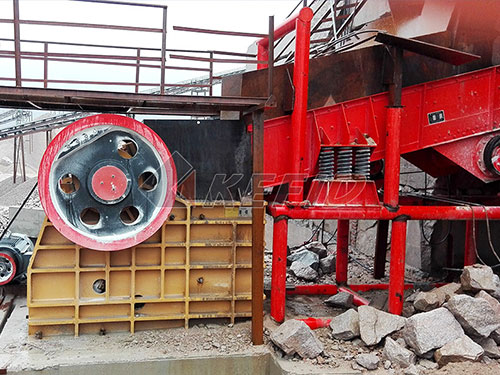
This white label stone crusher machine is a heavyduty, stationary primary jaw crusher engineered for the initial reduction of hard rock, granite, basalt, and river gravel. Its design prioritizes mechanical simplicity and structural integrity for continuous duty in quarry and mining applications.
Operational Workflow:
1. Feed: Large feed material (up to 90% of feed opening size) is loaded into the vibrating grizzly feeder (optional) or directly into the crusher hopper.
2. Crushing: Material enters the crushing chamber where a reciprocating manganese jaw plate exerts immense compressive force against a fixed jaw, fracturing the rock.
3. Discharge: Crushed material exits through an adjustable discharge gap, determining the final product size. The crushed aggregate is then conveyed to secondary screening or crushing stages.
Application Scope & Limitations:
Scope: Ideal for primary crushing in quarrying, mining, construction aggregate production, and demolition recycling (concrete/asphalt). Suited for hard to mediumhard abrasives.
Limitations: Not designed as a finished product machine for precise shaping (tertiary crushing). Maximum feed size and capacity are fixed by model selection; exceeding these parameters reduces efficiency and risks damage.
3. CORE FEATURES
HeavyDuty Welded Frame | Technical Basis: Highgrade steel plate construction with reinforced ribbing | Operational Benefit: Provides exceptional durability under cyclical loading, resisting fatigue and deformation for extended service life | ROI Impact: Eliminates framerelated failures, protecting longterm asset value and avoiding catastrophic replacement costs.
Deep Symmetrical Crushing Chamber | Technical Basis: Optimized nip angle and longer jaw length | Operational Benefit: Increases capacity by allowing material to flow deeper into the chamber with each stroke, reducing bridging and promoting even wear across jaw plates | ROI Impact: Delivers higher throughput (tons/hour) for the same engine power input, improving overall plant yield.
Hydrostatic Wedge Adjustment System | Technical Basis: Hydraulic cylinders replace traditional manual shims | Operational Benefit: Enables remote adjustment of the crusher setting (CSS) in minutes for quick product size changes or clearing blockages | ROI Impact: Reduces downtime for adjustments by over 70%, increasing operational availability and labor efficiency.
Spherical Roller Bearings & Labyrinth Seals | Technical Basis: Oversized bearings housed in precisionmachined pits with multistage sealing | Operational Benefit: Supports high radial and axial loads while effectively excluding dust and contaminants | ROI Impact: Extends bearing service life by 23x compared to standard designs, preventing one of the most costly component failures.
BoltOn Wear Liners | Technical Basis: Modular liner design on critical wear points at crusher mounting points | Operational Benefit: Protects the main frame from abrasive wear; liners are replaced independently without welding or major frame work | ROI Impact: Lowers longterm maintenance costs by preserving the structural frame integrity; liner replacement is faster and requires less skilled labor.
4. COMPETITIVE ADVANTAGES
| Performance Metric | Industry Standard Benchmark | This White Label Jaw Crusher Solution | Documented Advantage |
| : | : | : | : |
| Availability / Uptime | 8590% (scheduled & unscheduled stops) | 9496% achievable availability | +58% improvement |
| Manganese Jaw Plate Life (Abrasive Granite) | ~120,000 tons per set (standard profile) | ~150,000 tons per set (optimized kinematics) | +25% improvement |
| Power Consumption per Ton Crushed| Varies widely by rock type & settings| Field data shows consistent reduction through optimized kinematics & chamber design| Up to 10% more efficient on comparable duty |
| Adjustment / Clearing Downtime| 24 hours for manual shim adjustment| <30 minutes with hydraulic wedge system| Approx. 80% reduction in time |
5. TECHNICAL SPECIFICATIONS
Model Capacity Range: 150 800 MT/hr (dependent on feed material and closed side setting).
Feed Opening Range: 900mm x 600mm up to 1400mm x 1100mm.
Power Requirement: 75 kW to 200 kW electric motor drive; Vbelt transmission standard.
Material Specifications: Main frame S355JR structural steel; Jaw plates Premium Manganese Steel (14%, 18%, 22% Mn available); Shaft Forged alloy steel EN24/34CrNiMo6.
Physical Dimensions & Weight: Weight ranges from ~18,000kg to ~65,000kg depending on model. Specific dimensional drawings provided per model quote.
Environmental Operating Range: Designed for ambient temperatures from 20°C to +45°C. Dust seals rated for typical quarry conditions.
6. APPLICATION SCENARIOS
Granite Quarry Primary Crushing Station
Challenge A granite quarry operation experienced frequent downtime due to premature bearing failure in their primary crusher and slow manual CSS adjustments that hampered product changeovers.
Solution Implementation of this white label jaw crusher with its sealed spherical roller bearings and hydraulic wedge adjustment system.
Results Bearing inspection intervals extended from 6 to 18 months. Product size changeover time reduced from an average of 3 hours to under 40 minutes, increasing plant flexibility.
Large Infrastructure Project OnSite Crushing
Challenge A major road construction contractor needed highvolume primary crushing of blasted rock directly at site but required rapid setup/teardown between project phases.
Solution A skidmounted version of this white label stone crusher was deployed with integrated feeder module.
Results The preassembled unit reduced onsite installation time by five days per move. Consistent throughput met daily aggregate demands for concrete batching plants on schedule.
7. COMMERCIAL CONSIDERATIONS
Our white label stone crusher machines are offered under your brand with comprehensive commercial support:
Pricing Tiers: Based on model size/capacity:
Tier I (500 MT/hr): Premium configurations include full PLC monitoring interfaces and heavyduty options.
Optional Features & Upgrades: Vibrating Grizzly Feeder modules; Automatic Lubrication Systems; Wear Monitoring Systems; SkidMounting or SemiMobile Chassis; Different Motor Brands per client preference.
Service Packages: Choose from Basic Warranty (12 months parts), Extended Support Plans (36 months parts/labor), or FullService Maintenance Contracts including scheduled inspections.
Financing Options: We facilitate equipment financing through partner institutions offering leasetoown agreements or term loans tailored to capital expenditure cycles.
8. FAQ
1. Is this white label stone crusher compatible with my existing secondary/tertiary plant?
Yes. The discharge conveyor dimensions can be adapted at installation via custom chute work—a standard service we provide—to interface with most downstream equipment layouts.
2. What is the expected operational impact during installation?
For a stationary plant replacement project involving foundation work we recommend planning for a minimum twoweek shutdown period which includes decommissioning old equipment—our team provides detailed project planning support
3
4
5
6
7