
White Label Gold Ore Crushing Equipment Samples


White Label Gold Ore Crushing Equipment: Engineered for HighThroughput Recovery
The Operational Challenge: When Downstream Recovery Depends on Upstream Fragmentation
Every ton of gold ore that enters your processing circuit carries a fixed cost—energy, water, reagents, and labor. The question is not whether you will pay those costs, but how much of the contained gold value you will actually recover. Industry data indicates that poor crushing practices can reduce gold recovery by 15–30% in heap leach operations and create measurable downstream inefficiencies in milling circuits. Common operational pain points include:
- Oversized feed material causing recirculating loads that consume 20–40% of your crusher's effective capacity, forcing you to run longer shifts or add secondary equipment you had not budgeted for.
- Inconsistent product size distribution leading to leach cycle times that stretch from 45 days to 70+ days, tying up working capital in ore inventory that is not generating revenue.
- Unplanned downtime from crusher wear components failing prematurely—each hour of unscheduled stoppage costs an average of $1,200–$3,500 in lost throughput and labor for a midsized operation.
- Fines overproduction creating slimes that blind your leach pads or thickeners, increasing reagent consumption by up to 18% and complicating your tailings management.
- Remote monitoring package with vibration sensors and amp draw logging: $18,500
- Extended wear parts kit (jaw plates, toggle plates, cheek plates): $32,000
- Mobile wheeled chassis for road transport between sites: $45,000
- Solarassisted power system for offgrid operations: $28,000
- Preventive Maintenance Agreement: $3,500/month includes quarterly inspections, lubrication service, and priority technical support.
- Full Maintenance Contract: $12,000/month covers all scheduled maintenance, wear parts replacement, and 24hour breakdown response with guaranteed 48hour parts availability.
- Operating lease: 36–60 month terms with $0 down payment and purchase option at fair market value.
- Equipment loan: 10–30% down payment, fixed interest rates from 6.5–9.5% depending on term and credit profile.
- Productionlinked payment: Structured for junior miners, where payments scale with throughput, subject to minimum monthly commitments.
Can your current crushing circuit deliver a consistent P80 of 12–15mm at the throughput your leaching or milling circuit was designed for? If you are compensating for upstream inefficiencies, you are paying for it downstream.
Product Overview: White Label Gold Ore Crushing Equipment
This white label gold ore crushing equipment is a heavyduty, skidmounted jaw crusher system designed specifically for primary and secondary reduction of goldbearing ores with a Bond Work Index up to 22 kWh/t. The equipment integrates a vibrating grizzly feeder, a deepchamber jaw crusher, and a discharge conveyor into a single, transportable unit that can be deployed in fixed or semimobile configurations.
Operational Workflow:
1. Feed Loading: Runofmine ore (up to 600mm) is loaded into the 12m³ hopper via excavator or wheel loader. The vibrating grizzly feeder removes fines (<40mm) before they enter the crusher, bypassing them directly to the discharge conveyor.
2. Primary Crushing: Oversize material enters the 900×1200mm jaw crusher chamber, where compressive force reduces rock to a nominal 100–150mm product. The deep, symmetrical crushing chamber ensures even wear distribution across the jaw plates.
3. Discharge and Transfer: Crushed ore is discharged onto a 1,200mm wide belt conveyor with impact idlers and skirtboard sealing, transferring material to your existing secondary crushing circuit or directly to a stockpile.
4. Magnet Separation (Optional): An overhead belt magnet removes tramp metal from the crushed stream, protecting downstream cone crushers and SAG mills from damage.
5. Dust Suppression: Integrated water spray bars at the feed hopper and discharge point control fugitive dust, maintaining a safe working environment and reducing ore loss through windage.
Application Scope: This equipment is suited for gold operations processing 150–400 tonnes per hour, including openpit heap leach operations, CIL/CIP plants requiring a primary crush before milling, and artisanal mining consolidation projects. It is not designed for underground installation or for ores with clay content exceeding 15%, which may cause bridging in the feed hopper.
Core Features
HeavyDuty Fabricated Frame | Technical Basis: Finite Element Analysis (FEA)optimized stress distribution | Operational Benefit: Maintains jaw alignment under peak crushing forces, reducing toggle plate failures | ROI Impact: 30% longer structural service life compared to cast frames, reducing capital replacement frequency
Hydraulic CSS Adjustment | Technical Basis: Hydraulic cylinders with accumulator system for tramp iron relief | Operational Benefit: Your operators can adjust the closed side setting from 75mm to 150mm in under 10 minutes without manual shimming | ROI Impact: Eliminates 4–6 hours of downtime per adjustment, saving $5,000–$18,000 annually in lost production
Deep Symmetrical Crushing Chamber | Technical Basis: 1:1.6 feed opening to throat ratio with 20° nip angle | Operational Benefit: Accepts larger feed material and produces a more cubical product with fewer flat, elongated particles that cause downstream screening issues | ROI Impact: 8–12% improvement in downstream crusher throughput due to better feed distribution
BoltIn Wear Components | Technical Basis: Manganese steel (12–14% Mn) jaw plates with dovetail mounting system | Operational Benefit: Wear parts can be replaced in 8–10 hours by a twoperson crew using standard hand tools, without welding or specialized equipment | ROI Impact: Reduces maintenance labor costs by 25% and extends wear life by 18% compared to boltedon designs
Modular Skid Design | Technical Basis: ISO containercompatible footprint with integrated lifting points | Operational Benefit: The entire unit can be relocated between pits or sites in 2–3 days using standard transport equipment | ROI Impact: Eliminates $50,000–$120,000 in civil works costs per relocation, supporting flexible mine planning
Variable Speed Feeder Control | Technical Basis: VFDcontrolled vibratory feeder with belt scale feedback | Operational Benefit: Automatically adjusts feed rate based on crusher amp draw, preventing chokeups and maximizing throughput | ROI Impact: 5–8% increase in average throughput by maintaining optimal crusher loading conditions
Integrated Dust Suppression | Technical Basis: Atomized water spray nozzles with flow control at all transfer points | Operational Benefit: Achieves 85–90% dust capture efficiency, supporting compliance with occupational exposure limits of 0.05 mg/m³ for respirable crystalline silica | ROI Impact: Avoids potential regulatory fines of $10,000–$50,000 per violation and reduces water consumption by 40% compared to standard spray bars
Competitive Advantages
| Performance Metric | Industry Standard (Typical Jaw Crusher) | White Label Gold Ore Crushing Equipment | Advantage (% Improvement) |
|||||
| Throughput (tph) at 125mm CSS | 180–220 | 250–300 | 25–36% higher |
| Power Consumption (kWh/t) | 0.8–1.2 | 0.6–0.9 | 25% lower energy cost |
| CSS Adjustment Time (minutes) | 45–90 | 8–12 | 82–87% faster |
| Wear Life – Jaw Plates (hours) | 1,200–1,800 | 1,800–2,400 | 33–50% longer |
| Structural Frame Warranty (years) | 1–2 | 5 | 150–400% longer coverage |
| Dust Emission (mg/m³ at source) | 2.5–4.0 | 0.8–1.2 | 68–70% lower |
| Mean Time Between Failures (hours) | 800–1,200 | 1,800–2,200 | 83–125% improvement |
Technical Specifications

| Parameter | Specification |
|||
| Feed Opening | 900 × 1,200 mm |
| Max Feed Size | 600 mm (with grizzly bypass) |
| CSS Range | 75–150 mm |
| Throughput Capacity | 250–300 tph (at 125mm CSS, mediumhard ore) |
| Installed Power | 132 kW (crusher motor), 15 kW (feeder), 22 kW (conveyor) |
| Total Installed Power | 169 kW |
| Power Supply | 415V / 50Hz or 480V / 60Hz, 3phase |
| Crusher Weight | 42,500 kg (crusher unit) |
| Total System Weight | 68,000 kg (including feeder and conveyor) |
| Transport Dimensions | 13.5m (L) × 3.2m (W) × 3.8m (H) |
| Operating Dimensions | 16.8m (L) × 4.5m (W) × 5.2m (H) |
| Operating Temperature Range | 20°C to +50°C (with coldweather lubrication package) |
| Material Specifications | Manganese steel jaw plates (12–14% Mn), AR400 liners, S355JR structural steel |
| Dust Suppression Water Requirement | 40–60 L/min at 4–6 bar |
Application Scenarios
Heap Leach Primary Crushing – Western Australia | Challenge: A 2.5 Mtpa gold heap leach operation was experiencing leach cycle times of 65 days due to a P80 of 25mm from their existing crusher, tying up 180,000 tonnes of ore in the pad and delaying revenue recognition. | Solution: Installation of the white label gold ore crushing equipment with CSS set at 100mm, feeding a secondary cone crusher to achieve a final P80 of 12mm. | Results: Leach cycle time reduced to 42 days (35% improvement), gold recovery increased from 68% to 74%, and the operation released 95,000 tonnes of pad capacity within the first six months. Payback period on equipment investment: 11 months.
CIL Plant Expansion – West Africa | Challenge: A CIL plant processing 800,000 tpa needed to increase throughput to 1.2 Mtpa but the existing primary crusher was operating at 92% utilization with no headroom. | Solution: Deployment of the white label gold ore crushing equipment as a parallel primary crushing train, allowing the existing circuit to handle softer oxide ore while the new unit processed harder fresh rock. | Results: Total plant throughput increased to 1.15 Mtpa within 8 weeks of commissioning. The VFDcontrolled feeder maintained consistent crusher loading despite variable feed conditions, achieving 94% equipment availability over the first 12 months.
Artisanal Mining Consolidation – Tanzania | Challenge: A mining cooperative processing ore from 40+ artisanal sites needed to centralize crushing to improve recovery and reduce mercury use in amalgamation. | Solution: Installation of the white label gold ore crushing equipment with a 150mm CSS, producing feed for a centralized gravity concentration circuit. | Results: Gold recovery improved from 35% (artisanal methods) to 58% (gravity concentration), and the cooperative reduced processing costs from $28/tonne to $14/tonne. The skidmounted design allowed relocation when the primary ore source was depleted.
Commercial Considerations
Equipment Pricing Tiers:
| Tier | Configuration | Indicative Price Range (USD) |
||||
| Standard | Crusher, feeder, conveyor, basic dust suppression | $380,000 – $450,000 |
| Enhanced | Standard + hydraulic CSS, belt magnet, advanced dust suppression | $460,000 – $540,000 |
| Turnkey | Enhanced + skid mounting, control cabin, coldweather package, installation supervision | $580,000 – $680,000 |
Optional Features:
Service Packages:
Financing Options:
FAQ
Q1: Can this equipment handle ores with high clay content?
The equipment is designed for ores with up to 15% clay content. Higher clay levels can cause bridging in the feed hopper and reduce grizzly screening efficiency. For highclay ores, we recommend a hydraulic breaker or a rotary breaker upstream to mitigate plugging risks.
Q2: What is the typical lead time from order to commissioning?
Standard lead time is 16–20 weeks from order confirmation to delivery at your port of entry. Site installation and commissioning typically require 2–3 weeks with a twoperson crew, assuming civil foundations are prepared in advance.
Q3: How does this equipment integrate with an existing secondary crushing circuit?
The discharge conveyor is designed to feed directly into standard cone crushers or screening plants. The 100–150mm product size is compatible with most secondary crusher feed requirements. If your existing circuit requires a different feed size, the CSS can be adjusted to match.
Q4: What is the expected wear life of consumable components under typical gold ore conditions?
With mediumhard ore (Bond Work Index 14–18 kWh/t), jaw plates typically last 1,800–2,400 hours. Toggle plates last 6,000–8,000 hours. Feeder liners last 3,000–4,000 hours. Actual life depends on feed size distribution, ore abrasiveness, and CSS settings.
Q5: What training is provided for operator and maintenance personnel?
Your order includes a 3day onsite training program covering safe operation, daily inspections, CSS adjustment procedures, and wear part replacement. Training materials include video guides and a comprehensive maintenance manual. Additional training days can be arranged at $1,200/day plus travel expenses.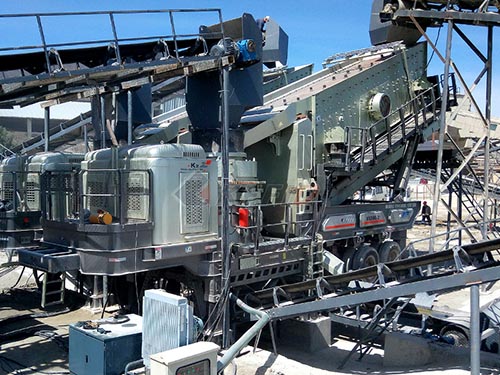
Q6: Can the equipment be operated in remote locations with limited technical support?
Yes. The control system is designed for straightforward operation with clear fault diagnostics displayed on the control panel. The modular design allows most maintenance to be performed with standard hand tools. Our remote support team can connect via satellite or cellular link to troubleshoot control system issues.
Q7: What warranty coverage is included?
The equipment carries a 24month warranty on the crusher mainframe, a 12month warranty on motors and electrical components, and a 6month warranty on wear parts. The structural frame carries a 5year warranty against manufacturing defects. Warranty claims are processed within 48 hours of documented evidence submission.