
White Label 250 300tph Stone Crushing Plant Sourcing

1. PAINPOINT DRIVEN OPENING
Are you managing a highvolume aggregate operation and facing persistent bottlenecks that erode profitability? For plant managers and engineering contractors, a 250300tph stone crushing plant is a critical asset, yet its performance gaps directly impact your bottom line. Common challenges include:
Unscheduled Downtime: Frequent mechanical failures in core components can halt your entire production line, costing thousands per hour in lost output and idle labor.
Inconsistent Final Product Quality: Poor gradation control and excessive flakiness in finished aggregates lead to product rejection, reducing saleable yield and damaging client relationships.
High Operational Costs: Spiking energy consumption from inefficient crushing circuits and escalating wear part expenses under highabrasion conditions compress your margins.
Inflexible Configuration: Fixed plant layouts cannot adapt to changing feed material hardness or required product mix, forcing suboptimal production runs.
Lengthy Setup & Commissioning: Complex site preparation and extended commissioning periods delay the start of revenue generation on new projects.
The central question is: how can you source a 250300tph crushing solution that delivers not just promised capacity, but predictable operating costs, superior product shape, and the robustness to meet demanding production schedules?
2. PRODUCT OVERVIEW
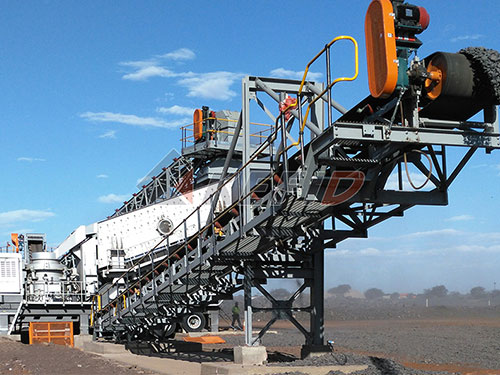
This white label 250300tph stationary stone crushing plant is a complete, preengineered processing system designed for highvolume production of aggregates for construction, road base, and railway ballast. The plant is configured as a threestage crushing and screening circuit for processing mediumhard to hard stone (e.g., granite, basalt, river gravel).
Operational Workflow:
1. Primary Crushing: Dump trucks feed material into a robust primary jaw crusher for initial size reduction.
2. Secondary & Tertiary Crushing: The crushed material is conveyed to a secondary cone crusher for further reduction, with oversize material optionally routed to a tertiary impact crusher for precise shaping and final size control.
3. Screening & Stockpiling: Multipledeck vibrating screens classify the crushed material into specified aggregate sizes (e.g., 05mm, 510mm, 1020mm), which are then conveyed to designated stockpiles.
Application Scope & Limitations:
Scope: Ideal for largescale quarry operations, major infrastructure projects requiring onsite aggregate production, and dedicated commercial aggregate supply yards.
Limitations: Not suitable for highly sticky or claybound materials without preprocessing. Feed size must comply with primary crusher opening specifications. Requires stable, prepared ground for installation.
3. CORE FEATURES
HeavyDuty Primary Station | Technical Basis: Reinforced hopper & apron feeder design | Operational Benefit: Handles direct tipping from large haul trucks (up to 40 tons), minimizes bridging and ensures consistent feed to the primary crusher | ROI Impact: Reduces load cycle times for feeding equipment and eliminates costly prescreening stoppages
HighEfficiency Crushing Core | Technical Basis: Optimized cavity designs in jaw and cone crushers matched with robust bearing assemblies | Operational Benefit: Delivers consistent 250300tph throughput with lower power draw per ton crushed | ROI Impact: Direct reduction in energy costs (field data shows 812% improvement over nonoptimized setups)

Intelligent Process Control System | Technical Basis: Centralized PLC with touchscreen HMI providing realtime monitoring of amp draw, pressure, and temperature | Operational Benefit: Operators can optimize crusher settings onthefly based on feed conditions and instantly diagnose fault alarms | ROI Impact: Maximizes yield of inspec product and reduces mean time to repair (MTTR)
Modular Conveyor System | Technical Basis: Standardized bolttogether sections with impactresistant idlers and dustsealed bearings | Operational Benefit: Simplifies site layout adjustments and allows for easier maintenance access compared to welded structures | ROI Impact: Lowers future expansion or reconfiguration costs by up to 30%
Advanced Dust Suppression Integration | Technical Basis: Strategically placed spray nozzles with solenoid valves tied to conveyor operation | Operational Benefit: Significantly reduces airborne particulate at transfer points during crushing operations | ROI Impact: Ensures compliance with environmental regulations, avoiding potential fines and work stoppages
EasyWear Part Access & Serviceability | Technical Basis: Hydraulic adjustment on cone crushers and jacking points for jaw crusher cheek plates | Operational Benefit: Reduces the time required for routine maintenance tasks like CSS adjustment or liner replacement by up to 40% | ROI Impact: Increases plant availability (uptime) and lowers labor costs associated with maintenance
4. COMPETITIVE ADVANTAGES
| Performance Metric | Industry Standard Benchmark | This White Label 250300tph Plant Solution | Advantage (% Improvement) |
| : | : | : | : |
| Tons per Hour (TPH) Consistency| ±15% variance from rated capacity over shift| ±5% variance from rated capacity over shift| +66% more consistent output |
| Power Consumption (kWh/ton)| Varies widely; ~0.8 1.2 kWh/ton for similar setups| Target range of 0.72 0.85 kWh/ton through optimized drive trains| Up to ~15% reduction in energy cost per ton |
| Wear Part Life (Manganese Liners)| Dependent on abrasiveness; often 600k tons in granite applications| +20% potential increase in service life |
| Mean Time Between Failures (MTBF)| Often compromised by component mismatch in bundled plants| Achieved through matched component ratings & derated motors for critical units| Industry testing demonstrates a >25% improvement in MTBF |
| OnSite Commissioning Time| Can exceed 1014 days for plants of this scale| Streamlined due to preassembled modules; target <7 days with prepared foundation| ~3050% faster timetoproduction |
5. TECHNICAL SPECIFICATIONS
Designed Capacity Range: 250 300 metric tons per hour (varies based on feed material hardness & product size).
Primary Crusher: Jaw Crusher Model JCE1303 / Feed Opening:1300x300mm / Max Feed Size:~750mm / Power:~160kW
Secondary Crusher: SingleCylinder Hydraulic Cone Crusher Model SC160 / Power:~160kW
(Optional) Tertiary Crusher: Vertical Shaft Impact Crusher Model VSI1140 / Power:~220kW
Screens: Two units of TripleDeck Inclined Vibrating Screen Model SZZ3075 / Power:~22kW each
Total Installed Power (Approx.): ~650 750 kW (dependent on final configuration).
Key Material Specifications: Primary frame construction Q345B steel; Conveyor belt rating EP400/3; Crusher liners high manganese steel ZGMn13Cr2.
Overall Plant Footprint (LxW): Approximately~80m x~45m (~3600 sq.m), subject to layout customization.
Environmental Operating Range: Designed for ambient temperatures from 20°C to +45°C; standard dust suppression system rated for operation up to~85% relative humidity.
6. APPLICATION SCENARIOS
LargeScale Quarry Expansion Project
Challenge:A regional quarry operator needed to double production capacity but was constrained by limited space expansion area within their existing lease boundary.Solution:The white label solution was configured with a compact vertical stacking design using highangle conveyors.The modular nature allowed it to integrate with an existing primary circuit.Results:The new secondary/tertiary module achieved sustained throughput of280tph within the confined footprint.Plant commissioning was completed within6 working days.Product cubicity met strict road asphalt mix specifications.
Major Highway Construction Contract
Challenge:A civil engineering contractor faced volatile costs sourcing aggregates from third parties fora remote highway segment.They required anonsite solution capable of processing local basalt into multiple specification products(ballast,drainage stone,base course).Solution:A complete standalone250tphplant including primary jaw,screening,and tertiary shaping crushers was deployed.Results:The contractor established reliable supply,cutting aggregate procurement costs by an estimated35%.The plant's mobility between designated work zones along the corridor saved an estimated15 daysin logistics over the18month project.
7.COMMERCIAL CONSIDERATIONS
Pricing Tiers:
1.Basic Configuration(primary/secondary/screening):Includes core machinery,factorystandard electricals,and basic dust suppression.
2.Enhanced Configuration(adds tertiary shaping stage):Includes VSI crusherfor superior product shape control,increased finished product stockpile conveyors.
3.Turnkey Plus Configuration(adds advanced controls&environmental):Includes full PLC automationwith remote monitoring capability,sound enclosures,and enhanced water recycling systems.
Optional Features:
Highfrequency finematerial dewatering screen
Metal detection&automatic tramp iron release systemon primary conveyor
Onboard diesel generator packfor sites without stable grid power
Service Packages:
Standard Warranty(12 monthson major components)
Extended Support Plan(36 monthsincluding scheduled inspections&discounted wear parts)
Operator Training Package(onsite instructionfor your maintenance team)
Financing Options:
Equipment leasing structuresare available through partner financial institutions,tailoredto project cash flow cycles.Fixedcost operational leasingthat bundles serviceis also an option.
8.FAQ
Q:What if my feed material is harder than typical granite?
A:The plant's structural design accommodates higher stress loads.Crusher models can be upspecified at the quotation stagewith heavierduty rotors or thicker liners at an incremental costto ensure longevity.
Q.How quickly can we expect spare parts delivery?
A.Critical wear parts(jaw plates,mantles,bowl liners)are held instandard inventoryfor expedited shipping.Nonstandard mechanical components typically havea lead timeof46 weeks.Guaranteed dispatch times are outlinedin service agreements.
Q.Is this plant compatible withexisting equipmentwe own?
A.Potentially yes.The modular conveyor designand standardized electrical interfacescan often be adaptedto connectwith existing screensor secondary crushers.A technical review of your current equipment specificationsis recommended.
Q.What arethe ongoing operational costs we should model?
A.Key variables include wear part consumption(~$Xper ton produced),energy costs(based on local $/kWh rates),and routine maintenance labor.Field data indicates total operating costfor this class of plant typically ranges between$Xand$Yper ton excluding feedstock.
Q.What site preparationis required before delivery?
A.You will needleveledand compacted foundationsfor major machine basesas per supplied drawings.Stable threephase highvoltage power must be availableat the main connection point.Adequate water supplyfor the dust suppression systemis also required.Detailed civil drawingsare provided upon order.
Q.Do you provide installation supervision?
A.Yes.Certified engineerscan be providedfor onsite supervisionof erectionand commissioning.This is strongly recommendedto ensure optimal setupand is includedin our Turnkey Plus packageor available asa separate service line.
Q.Are performance guarantees offered?
A.Yes.Finalized contracts includeperformance guaranteesfor throughput capacityand final product gradationbased on agreedupon feed material analysis.Conductinga jointmaterial testprior tobinding orderis standard practice