
Quá trình nghiền trong nhà máy nghiền loại hàm
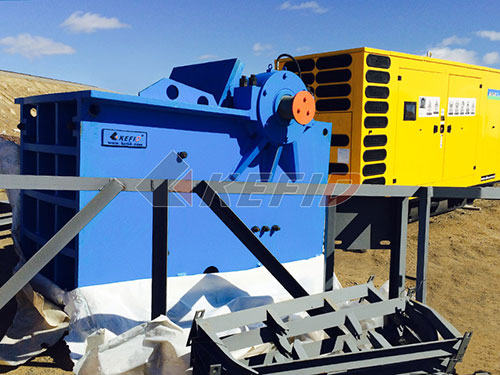

The Process of Crushing in a Jaw Type Crusher Plant: A Detailed Look
The jaw crusher stands as the cornerstone of primary crushing in countless aggregate and mining operations worldwide. Its robust design and relatively simple operating principle make it exceptionally reliable for reducing large, hard rocks into manageable sizes for further processing. Understanding the precise process of crushing within this vital machine is key to optimizing plant performance and efficiency.
1. The Heart of the Machine: The Crushing Chamber
The core action occurs within the crushing chamber, formed by two vertical jaws:
Hàm cố định (khuôn cố định): Rigidly mounted to the crusher frame, providing a stable surface against which rock is crushed.
Hàm xoay (Movable Die): Mounted on an eccentric shaft, this jaw moves in a highly predictable elliptical path relative to the fixed jaw. This motion is driven by a motor connected via belts or direct drive to the eccentric shaft.
2. Chu trình nghiền: Step-by-Step
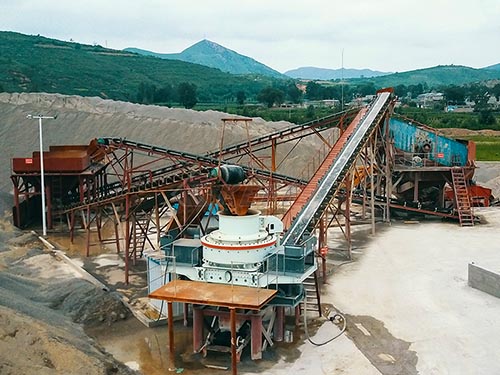
The crushing process unfolds continuously as material feeds into the top of the chamber:
Sân khấu 1: Lượng tiêu thụ & Nén ban đầu
Large rocks (cho ăn) enter the top of the crushing chamber through a vibrating grizzly feeder or directly from a loader bucket.
As the swing jaw moves towards the fixed jaw (nét kết thúc), it exerts compressive force on any rock trapped between the two jaw plates (chết).
This initial compression initiates cracking and breaking of larger pieces.
Sân khấu 2: Giảm lũy tiến & Tiêu hao
The compressive force intensifies as the swing jaw continues its closing stroke. Rock particles are squeezed between the converging jaws.
Đồng thời, smaller particles trapped lower in the chamber experience further crushing and grinding action due to attrition – particles rubbing against each other and against the jaw surfaces.
The geometry of the chamber (wider at the top, narrower at the bottom) ensures that rock fragments are progressively reduced in size as they move downwards under gravity and by being pushed by incoming feed.
Sân khấu 3: Phóng điện
As the swing jaw moves away from the fixed jaw (nét mở đầu), space opens up at the bottom of the chamber.
Crushed material that has been reduced to a size smaller than the gap at this lowest point – known as the Closed Side Setting (CSS) – falls freely out of the