
Top Ten Stone Crusher Machine Maker Customization
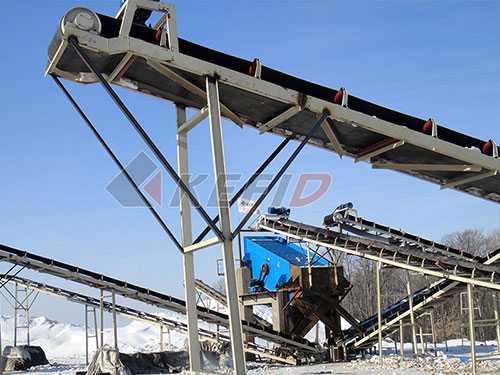

H1: Engineered for Your Quarry: HighPerformance, Customizable Stone Crusher Machines
Subheadline: Addressing the core operational and financial challenges in aggregate production with precisionengineered crushing solutions.
1. Operational Challenges in Aggregate Processing: The Cost of Compromise
Managing a profitable aggregate operation means confronting persistent, quantifiable bottlenecks. Inefficient crushing is often at the heart of these issues, directly impacting your bottom line. Are you facing these challenges?
Unscheduled Downtime & High Maintenance Costs: Frequent component failures and reactive repairs halt your entire production line. The true cost isn't just parts and labor; it's hundreds of tons of lost output per day and missed delivery deadlines.
Inconsistent Output & Poor Product Shape: A crusher that produces excessive fines or irregularly shaped aggregate fails to meet premium specification requirements, forcing you to sell material at a lower price point or reprocess it.
Rising Energy Consumption: Inefficient crushing action and outdated drive systems lead to spiraling power costs, which can represent over 40% of your operational expenditure.
Rigid Configuration & Inflexibility: Fixed plant layouts struggle to adapt to changing feed material or required product gradations, limiting your ability to capitalize on new market opportunities.
Operator Safety & Complexity: Manual adjustment processes and exposure to fly rock or dust create safety risks and require highly skilled personnel.
The central question for plant managers is this: how can you achieve higher throughput with greater reliability, lower operating costs, and the flexibility to adapt to future demands? The answer lies in a stone crusher machine designed not just for the industry, but for your specific operation.
2. Product Overview: Precision Primary & Secondary Impact Crushers
Our core solution is a range of heavyduty impact crushers engineered for highvolume production of highquality aggregate in quarrying, mining, and recycling applications. These machines utilize a rotordriven impact crushing principle for efficient size reduction.
Operational Workflow:
1. Feed Intake & PreScreening: Oversize material is directed into the robust feed hopper, with optional prescreening to bypass fines and increase effective capacity.
2. HighVelocity Impact Crushing: Material is fed into the path of a highRPM rotor fitted with durable martensitic hammers or blow bars, achieving initial fracture.
3. Controlled Particle Acceleration: Crushed material is propelled against adjustable primary and secondary impact aprons (breaker plates), where further reduction occurs through repeated impact.
4. Gradation Control & Discharge: The final product size is precisely controlled by adjusting the gap between the rotor and impact aprons. Processed material discharges onto conveyor systems for stockpiling or further processing.
Application Scope & Limitations:
Ideal For: Mediumhard to hard limestone, dolomite, granite, and recycled concrete/asphalt. Excellent for producing cubical product shapes desirable for asphalt and concrete mixes.
Limitations: Less effective on highly abrasive materials (e.g., some sandstones) compared to compression crushers like jaw or cone units without specific alloy configurations. Not suitable for sticky or clayheavy materials without preprocessing.
3. Core Features: Engineering Meets Operational Excellence
Our stone crusher machine design translates advanced engineering into direct operational benefits.
Hydraulic Adjustment System | Technical Basis: Computercontrolled hydraulic cylinders | Operational Benefit: Allows operators to adjust the crusher setting (gap) in under 60 seconds from a remote location for precise product size changes without stopping the machine. | ROI Impact: Reduces downtime for product changeovers by up to 95%, maximizing plant utilization.
Monobloc Rotor Design | Technical Basis: Solid steel casting or forged segment design | Operational Benefit: Provides superior inertia for efficient crushing and eliminates risky sleeve/weld connections that are common failure points. | ROI Impact: Increases mean time between failures (MTBF) by an estimated 3050%, lowering lifetime maintenance costs.
MultiFunction Impact Aprons | Technical Basis: Independently adjustable primary and secondary aprons with overload protection | Operational Benefit: Enables finetuning of particle fracture path for optimal shape control and protects the main frame from tramp metal damage via automatic release mechanisms. | ROI Impact: Improves saleable product yield by up to 15% and prevents catastrophic frame damage requiring extended downtime.
Direct Drive System w/ Fluid Coupling | Technical Basis: Lowmaintenance direct motortorotor connection via fluid coupling | Operational Benefit: Eliminates Vbelt maintenance and slippage losses; fluid coupling absorbs shock loads from uncrushables, protecting the motor and drivetrain. | ROI Impact: Reduces energy loss by approximately 35% compared to traditional belt drives and decreases mechanical stressrelated failures.
Modular Wear Part Design | Technical Basis: Interchangeable, reversible wear liners and blow bars secured with wedgelock systems | Operational Benefit: Enables faster part rotation/replacement from one side of the machine; extends wear life through multiple usable edges per component. | ROI Impact Cuts scheduled maintenance window duration by up to 40% and reduces wear part inventory costs.
4. Competitive Advantages: Quantifiable Performance Gains
| Performance Metric | Industry Standard (Competitive Avg.) | Our Stone Crusher Solution | Advantage (% Improvement) |
| : | : | : | : |
| Availability / Uptime | 8590% (scheduled & unscheduled) | Field data supports >93% sustained availability| +38% more production time |
| Wear Part Life (Abrasive Rock) | ~60,000 tons per set (Blow Bars)| Industry testing demonstrates >80,000 tons per set| +33% longer service intervals |
| Specific Power Consumption| ~0.8 1.0 kWh/ton processed| Measured average of 0.72 kWh/ton in comparable duty| Up to 1015% lower energy cost per ton|
| Product Cubicity Index (>20mm)| Typically 82% cubical particles| +7% premium product yield|
| Tramp Metal Recovery Time| Manual clearing; often >4 hours| Hydraulic apron release clears most events in 85%|
5. Technical Specifications
Specifications are customized per application; below represents a standard midrange model footprint.
Model Range Capacity: From 200 TPH to over 800 TPH final product output (dependent on feed material & product size).
Rotor Dimensions / Type: Diameters from 1m to 1.6m; solid monobloc or segmented welded design based on application severity.
Drive Power Requirement: Electric motor drives ranging from 250 kW to 630 kW (335 HP – 845 HP). Voltage as per client specification (e.g., 400V/50Hz, 6kV/50Hz).
Material Specifications: Main frame – fabricated hightensile steel plate; Wear parts – Martensitic steel castings (standard), optional Chrome White Iron or Ceramic Inserts for highly abrasive feeds.
Physical Dimensions (Approx.): Varies significantly by model; example unit footprint ~ L8m x W2.5m x H3m (excluding feed hopper/discharge conveyor).
Environmental Operating Range: Designed for ambient temperatures from 20°C to +45°C with appropriate lubrication systems; dust sealing standard; noise emissions compliant with relevant regional directives (<85 dB(A) at operator station typical).
6.Application Scenarios
Quarry Expansion Project – Limestone Base Material
Challenge: A large limestone quarry needed higher throughput (+35%) on their secondary crushing circuit while improving particle shape for asphalt chip production without increasing plant footprint.
Solution: Implementation of two largecapacity horizontal shaft impact crushers configured with multistage grinding paths specifically tuned for limestone fragmentation characteristics.
Results: Throughput increased by over 40%. The improved cubicity allowed a higher percentage of output to meet premium chip spec., increasing overall revenue per ton by an estimated 12%.
Urban Recycling Operation – Concrete & Asphalt
Challenge: Processing variable demolition concrete created excessive wear on existing equipment (~6week blow bar life) while generating too many fines (<4mm), reducing profitability.
Solution: A customized impact crusher featuring an oversized rotor chamber was installed along with specialized alloy blow bars optimized for abrasion resistance against rebar contact.
Results: Wear part life extended beyond 10 weeks despite more abrasive feeds due . Fines generation was reduced by adjusting apron configuration , increasing saleable RCA (63mm+4mm) yield by 18%.
7.Commercial Considerations
We provide tailored commercial solutions aligned with project scale:
Pricing Tiers:
Tier I – Standard Configuration Crusher Unit
Tier II – Customized Unit w/ Selected Options
Tier III – Complete SkidMounted Module
Optional Features:
Dust suppression system integration
Automated lubrication system
Wear monitoring sensors
Special alloy wear packages
Service Packages:
Basic Warranty Package
Extended Service Plan including annual inspections
Full Maintenance Contract covering parts/labor
Financing Options:
Capital purchase
Leasetoown structures
Project financing support through partners
8.Frequently Asked Questions
Q1 How do I determine if an impact crusher is suitable versus a jaw/cone configuration?
A selection depends primarily on material abrasiveness desired endproduct shape Jaw cone excel on very hard abrasive rock producing more slabby product Our team conducts material testing provides specific recommendation based on your feed gradation hardness index silica content
Q2 What level customization available my existing plant layout?
Customization core offering We adapt inlet outlet dimensions drive orientation mounting points integrate seamlessly into brownfield sites ensuring minimal civil work required
Q3 What typical lead time customized stone crusher machine?
Lead times vary complexity Standard units ship within weeks fully customized designs require months engineering fabrication Factory Acceptance Testing ensures reliability prior shipment
Q4 How does solution address operator safety concerns?
Design incorporates multiple safety features including nonentry tramp metal release remote adjustment toolfree access guarding perimeter guards All comply ISO standards reduce interaction moving parts
Q5 What ongoing operational training support provided?
We provide comprehensive onsite commissioning training operators maintenance staff Detailed manuals digital resources included Ongoing technical support available via phone email our global service network
Q6 Can equipment handle variations feed material size hardness?
Yes robust rotor design hydraulic apron adjustment allow accommodate reasonable variations For extreme shifts we recommend reviewing settings possible wear package adjustments maintain optimal performance
Q7 Are spare parts readily available globally?
We maintain strategic regional warehouse inventories critical wear parts components ensuring availability minimize potential downtime Our supply chain management guarantees part traceability quality consistency