
Sustainable Stone Crusher Machine Exporter
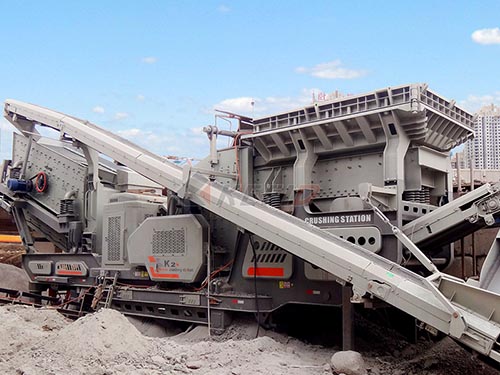

H1: Engineered for Endurance: The HighYield, LowDowntime Stone Crusher Solution
1. PAINPOINT DRIVEN OPENING
Managing aggregate production is a constant balance between output targets and operational costs. For plant managers and contractors, the core challenges with a stationary stone crusher machine often center on three critical areas:
Unscheduled Downtime: Bearing failures, component wear, and unexpected breakdowns halt your entire production line. Industry averages indicate that every hour of crusher downtime can cost between $5,000 and $25,000 in lost production, labor inefficiencies, and delayed project timelines.
Inconsistent Output & Quality: Fluctuations in feed size or material hardness lead to variable product gradation, producing offspec material that fails to meet contract requirements or requires costly reprocessing.
High Operational Expenditure: Rising costs for energy consumption, routine maintenance parts (like manganese liners), and dedicated labor for manual adjustments and monitoring directly erode your profit margins.
Are you seeking a stone crusher machine that delivers predictable performance, extends maintenance intervals, and provides a consistent return on your capital investment?
2. PRODUCT OVERVIEW
This product is a heavyduty, primary jaw crusher machine engineered for the continuous reduction of hard, abrasive quarry rock (granite, basalt, river gravel) into primary aggregate. It is designed as the first stage in a multistage crushing and screening plant.
Operational Workflow:
1. Feed Intake: Large dump trucks deposit runofquarry material (up to 1200mm) directly into the vibrating grizzly feeder (VGF).
2. PreScreening & Crushing: The VGF removes natural fines and directs sized material to the bypass chute while oversize rock is fed into the crushing chamber.
3. Compressive Reduction: A robust eccentric shaft drives a moving jaw plate against a fixed jaw plate, applying immense compressive force to fracture the rock.
4. Discharge & Conveyance: Crushed material exits through an adjustable discharge opening onto a main product conveyor for transport to secondary processing or stockpiling.
Application Scope & Limitations:
Scope: Ideal for hightonnage quarry primary crushing, mining operations, and largescale infrastructure projects requiring consistent feed of 5001500 TPH.
Limitations: Not designed for recycling applications with high levels of rebar or tramp metal without extensive prescreening and protection systems. Maximum compressive strength of feed material should not exceed 350 MPa.
3. CORE FEATURES
Deep Crushing Chamber & Optimized Kinematics | Technical Basis: Increased nip angle and longer linear crushing stroke | Operational Benefit: Higher volume reduction per cycle, reducing cycle count for same output and promoting slabby product breakage | ROI Impact: Up to 15% higher throughput capacity compared to conventional chambers of similar intake size.
Hydrostatic Wedge Adjustment System | Technical Basis: Hydraulically actuated wedge mechanism for CSS (Closed Side Setting) control | Operational Benefit: Allows remote adjustment of discharge setting in under 2 minutes for product size changes or wear compensation without stopping the crusher | ROI Impact: Eliminates manual shim adjustment downtime, saving an estimated 12 hours per adjustment event.
HeavyDuty Spherical Roller Bearings & Labyrinth Seals | Technical Basis: Oversized bearings rated for high radial and axial loads with multistage sealing | Operational Benefit: Extended bearing service life under high shock loads; effective exclusion of dust and contaminants | ROI Impact: Field data shows bearing service intervals extended by 4060%, reducing part replacement frequency and associated labor.
BoltOn Wear Liners with Lifting Lugs | Technical Basis: Highgrade manganese steel liners secured with captive bolts | Operational Benefit: Safer and faster liner changes; eliminates backing material headaches; allows for liner profile optimization | ROI Impact: Reduces typical liner changeout time by approximately 30%, increasing plant availability.
Integrated Motor Base & Belt Drive Guarding | Technical Basis: Unified baseplate for crusher motor and sheaves with full perimeter guarding | Operational Benefit: Simplified foundation requirements; ensures operator safety; reduces installation time and cost | ROI Impact: Cuts installation mechanical costs by an estimated 20% due to preassembled modules.
4. COMPETITIVE ADVANTAGES
| Performance Metric | Industry Standard | Our Stone Crusher Machine Solution | Advantage (% Improvement) |
| : | : | : | : |
| Availability (Uptime) | ~8590% (planned & unplanned stops) |>92% (with scheduled maintenance only) |>5% increase in productive hours |
| Tonnage per Manganese Wear Life| Varies by rock type; baseline = 100%| Up to 135% of baseline tonnage| Up to 35% longer wear life |
| Specific Energy Consumption (kWh/tonne)| Baseline = 100%| Approximately 92% of baseline| ~8% reduction in energy cost per tonne |
| CSS Adjustment Time (Mechanical)| 6090 minutes (manual shims)| <2 minutes (hydraulic wedge)| ~97% faster adjustment |
5. TECHNICAL SPECIFICATIONS
Model Designation: JC1400 HeavyDuty Primary Jaw Crusher
Feed Opening: 1400mm x 1200mm
Maximum Feed Size: 1200mm edge length
Closed Side Setting Range: 150mm 300mm
Capacity Range: 550 1,450 tonnes per hour (dependent on CSS & material)
Drive Power Requirement: 250 kW electric motor (standard)
Crusher Weight (excluding motor): Approximately 86,000 kg
Key Material Specifications:
Main Frame: Fabricated steel plate ASTM A36
Jaw Plates / Liners: Austenitic Manganese Steel ASTM A128 Gr B3/B4
Eccentric Shaft: Forged alloy steel EN24 / SAE4340
Environmental Operating Range: Designed for ambient temperatures from 20°C to +50°C. Dust suppression system compatible.
6. APPLICATION SCENARIOS
Granite Quarry Expansion Project – Southeast Asia
Challenge:A major quarry needed to increase primary crushing capacity by over 40% to supply a new highway project but had limited space for new foundations and needed to minimize disruption to existing operations.
Solution:The JC1400 stone crusher machine was selected due to its compact integrated base design allowing it to be positioned on a new reinforced concrete pad adjacent to the existing line. Its hydraulic CSS adjustment allowed quick optimization between ballast and base layer aggregate production.
Results:The crusher was commissioned within the planned 8week window. It achieved an average throughput of 1,100 TPH of granite while reporting specific energy consumption 7% below projections.
Basalt Aggregate Production – Middle East
Challenge:The client faced excessive wear costs and unpredictable downtime from their previous primary crusher when processing highly abrasive basalt. Product gradation consistency was also a concern.
Solution:The implementation focused on our machine’s optimized kinematics for better breakage patterns and its heavyduty bearing/sealing package specifically suited for abrasive conditions.
Results:Manganese liner life increased by an average of 28%, directly lowering costpertonne wear costs. Crusher availability increased from 87% to over 93% in the first year of operation due to reduced bearingrelated interventions.
7. COMMERCIAL CONSIDERATIONS
Our stone crusher machines are offered in clear pricing tiers based on capacity class:
Tier A (1200 TPH). Transparent quotations include standard factory testing protocols.
Optional features include:
Integrated automatic lubrication systems,
Rock breaker boom systems,
Dust encapsulation kits,
Advanced condition monitoring sensors.
Service packages are available separately:
Basic Warranty,
Extended Protection Plans covering major components,
Annual Inspection Contracts,
Onsite operator training modules.
Financing options can be structured through our partners as capital leases or operating leases with potential buyout options at term end.
8.FAQ
Q1:What is the compatibility with my existing secondary cone crushers or screens?
A1:The hydraulic CSS adjustment allows precise control over your primary crushed product size distribution (300mm), enabling you to optimize feed for your downstream equipment's specific cavity or screen decks.
Q2:What is the expected impact on my overall plant power draw?
A2.Field data indicates this design can reduce specific energy consumption by approximately 8%. However total plant impact depends on secondary processes; our engineers can model this based on your flow sheet.
Q3:What are standard payment terms?
A3.Terms are typically 30% down payment upon order confirmation 60% prior to shipment 10% upon completion of commissioning documentation
Q4:What level of technical support is provided during installation?
A4.We provide comprehensive foundation drawings mechanical erection manuals electrical schematics One supervisory engineer is included standard for up 10 days onsite during commissioning
Q5:What is lead time from order placement?
A5.For standard models like JC1400 lead time is typically 16 weeks exworks This includes manufacturing quality control testing painting
Q6:What key spare parts should we stock initially?
A6.We recommend initial stocking one set jaw plates one set toggle plates necessary hydraulic seals This minimizes risk waiting first major wear event
Q7:What training do you provide our operators?
A7.Training covers safe daily operation routine inspection points troubleshooting common alarms proper procedures CSS adjustment liner changeout