
Sustainable Slag Crusher Plant Supply Chain


1. PAINPOINT DRIVEN OPENING
Managing slag is a critical but costly bottleneck in metal production and recycling. Inefficient processing directly impacts your bottom line through equipment wear, excessive downtime, and lost revenue from unrecovered material. Are you facing these persistent challenges?
High Abrasion Costs: Slag’s abrasive nature rapidly degrades standard crusher components, leading to frequent liner changes, excessive spare part inventories, and unscheduled maintenance stops that halt your entire processing line.
Unpredictable Feed & Downtime: Fluctuations in slag feed size, hardness, and moisture content cause chokeups, hammer rotor lockups, and premature bearing failures. This unpredictability makes production scheduling difficult and increases operational risk.
Inefficient Size Reduction & Contamination: Inconsistent final product sizing—with too many fines or oversized chunks—compromises the value of your slag aggregate for downstream sales or internal recycling. Poor crushing can also lead to metal contamination in the finished product.
High Operational & Energy Costs: Crushers not engineered for this specific duty cycle often operate at suboptimal efficiency, drawing more power per ton processed and requiring higher labor input for monitoring and clearing.
The central question for plant managers is this: how can you achieve consistent, highvolume slag reduction with lower costperton and greater system reliability?
2. PRODUCT OVERVIEW
The sustainable slag crusher plant is a heavyduty, integrated processing system engineered specifically for the continuous reduction of metallurgical slag (blast furnace, steel furnace, copper). It transforms large, irregular slag feed into a precisely graded aggregate for cement additive, road base material, or ballast.
Operational Workflow:
1. Primary Receiving & PreScreening: Dumped or conveyed slag is initially grizzlyscreened to bypass subsize material and remove oversize tramp metal.
2. Core Size Reduction: Prescreened feed enters the primary slag crusher—typically a robust impact crusher or jaw crusher configuration—where it is fractured against hardened surfaces.
3. Metal Recovery (Optional): Crushed material passes over an inline magnetic separator to extract remaining ferrous metal fragments, adding a revenue stream and purifying the aggregate.
4. Secondary Crushing & Final Sizing: Material may be routed to a secondary cone or impact crusher for further refinement before being classified by a vibrating screen.
5. Stockpiling & Dispatch: Correctly sized aggregate is conveyed to stockpiles; oversize material is recirculated back into the circuit.
Application Scope: Designed for integrated steel plants, nonferrous smelters, standalone slag processing yards, and largescale demolition recycling operations handling slagladen material.
Limitations: Not suitable for primary rock mining of virgin ore. Maximum feed size and throughput are determined by plant configuration; extremely highmoisture content without adequate feed management may require preprocessing.
3. CORE FEATURES
HeavyDuty Rotor & Impact System | Technical Basis: Highinertia rotor with oversized bearings and monoblock cast martensitic hammers/blow bars | Operational Benefit: Sustains high crushing force against abrasive slag with minimal vibration; allows fullbreakage of large slabs | ROI Impact: Up to 30% longer service intervals on wear parts reduces spare part costs and labor hours.
Hydraulic Adjustment & Clearing | Technical Basis: Integrated hydraulic cylinders for gap setting adjustment and unblocking functions | Operational Benefit: Operators can finetune product size ondemand and clear chamber blockages remotely in minutes without manual intervention | ROI Impact: Eliminates hours of downtime per blockage event; maintains consistent product spec without stopping.
AbrasionResistant Liner Package | Technical Basis: Composite liner system using varying grades of chromium carbide overlay steel in highwear zones | Operational Benefit: Provides staged wear protection tailored to impact angles within the crushing chamber | ROI Impact: Documented increase of 4060% in liner life compared to standard manganese steel in slag applications.
Intelligent Drive & Control System | Technical Basis: Direct drive coupling with PLCcontrolled softstart and load monitoring sensors | Operational Benefit: Reduces mechanical stress during startup; automated amp monitoring can adjust feed rate to prevent overloads | ROI Impact: Protects motor from surge damage; optimizes energy consumption per ton crushed.
Enclosed Design with Dust Suppression Ports | Technical Basis: Sealed housing with strategically placed spray nozzles compatible with dry fog or mist systems | Operational Benefit: Significantly contains dust at point of generation, improving site air quality and operator safety | ROI Impact: Lowers compliance risk; reduces housekeeping costs and water usage compared to area spraying.
Modular Base Frame & Access Design | Technical Basis: Preassembled substructure with walkin/service platforms around all major components | Operational Benefit: Simplifies foundation requirements and enables safer, faster maintenance access for inspection and component changeout | ROI Impact: Reduces installation time by an estimated 25%; lowers longterm maintenance labor costs.
4. COMPETITIVE ADVANTAGES
| Performance Metric | Industry Standard (Typical Jaw/Cone) | Sustainable Slag Crusher Plant Solution | Advantage (% Improvement) |
|||||
| Wear Part Life (Primary) | 6090 days in severe slag duty | 120150 days under comparable conditions | +60% to +100% |
| Tons Crushed per kWh | Variable; sensitive to feed fluctuations | Consistent optimized draw due to load control| +15% average energy efficiency |
| Mean Time Between Failure (Mechanical) | ~400 operating hours | Field data supports >750 operating hours | +88% reliability increase |
| Total Downtime for Liner Change 1624 hours 812 hours with designed access 50% downtime |
| Final Product Consistency (% within spec) 8590% 9598% guaranteed +8% yield improvement |
5. TECHNICAL SPECIFICATIONS
Capacity Range: Configurable from 50 TPH to over 600 TPH for integrated hotslag handling systems.
Power Requirements: Primary crusher motor from 110 kW up to 500 kW+; total plant connected load dependent on conveyors and auxiliaries.
Feed Size Maximum: Accepts slab feed up to 1500mm x 2000mm (subject to model).
Final Product Size Range: Adjustable from 40mm down to 10mm based on screen configuration.
Key Material Specifications:
Rotor/Bearings: Forged alloy steel rotor; spherical roller bearings with automated lubrication.
Wear Parts: Martensitic steel hammers/blow bars; AR400/AR500 liners.
Frame Construction: Heavyduty rolled steel plate with vibration dampening mounts.
Physical Dimensions (Example MidRange Plant): ~25m (L) x 8m (W) x 7m (H). Modular design allows adaptation.
Environmental Operating Range: Designed for ambient temperatures from 20°C to +45°C; dust sealing effective up to IP65 standards.
6. APPLICATION SCENARIOS
Integrated Steel Plant Slag Yard Challenge:
A major steel producer faced constant downtime from clogging in their existing crusher when processing variable blast furnace slag. Metal “tramp” packages caused significant damage during processing.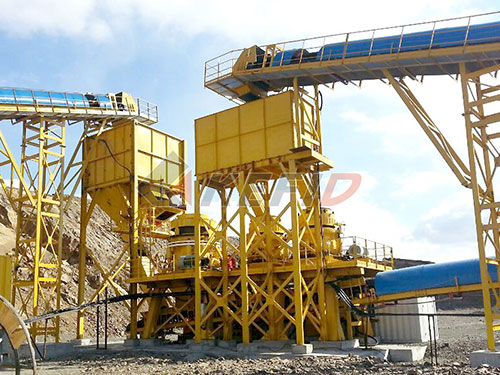
Solution:
Implementation of a turnkey sustainable slag crusher plant featuring an impact crusher with hydraulic clearing cylinders followed by a highstrength overhead magnetic separator.
Results:
Blockages were cleared in under 10 minutes versus several hours previously. The magnetic system recovered an additional 23% ferrous metal by weight from the stream. Overall plant availability increased by an estimated 22%, achieving target throughput consistently.
Copper Smelter Aggregate Production Challenge:
A smelter needed to process granulated copper slag into a fine aggregate for sale but struggled with excessive fines generation (<3mm) using their cone crushers, reducing product value.
Solution:
A tailored twostage sustainable slag crushing circuit using primary jaw crushing followed by specialized secondary grinding via a vertical shaft impactor configured for shaping rather than pure fracturing.
Results:
Production of the premium 10mm+3mm aggregate fraction increased by over 35%. Fines generation was reduced below target thresholds significantly increasing overall revenue per ton processed while meeting strict chemical composition specifications
7 COMMERCIAL CONSIDERATIONS
Sustainable Slag Crusher Plants are offered as modular solutions scalable across three primary tiers:
1. Standard Duty Unit
2 HighCapacity Integrated Plant
3 Custom Hot Slag Handling System
Pricing reflects engineering scope capacity level automation integration
Optional features that affect capital cost include advanced metal detection systems automated greasing systems premium ceramic composite wear liners remote monitoring telematics packages
Service packages are structured as follows:
Bronze Package
Silver Comprehensive Support Agreement
Gold Full Performance Contract
Financing options are available including equipment leasing capital expenditure loans payforperformance models where payments are partially tied verified throughput availability metrics
8 FAQ
Q What existing infrastructure is required integrate this plant?
A The plant requires stable prepared foundation adequate electrical supply connection points incoming feed conveyor discharge conveyor system Basic civil engineering drawings provided facilitate integration
Q How does this solution handle wet sticky slag?
A While designed optimal performance moderately dry material several configurations available These include cascade feed systems reduce packing optional shaft heaters prevent moisture buildup critical areas Specific recommendations require analysis your feedstock
Q What typical installation commissioning timeline?
A For modular midrange plant typical timeline weeks site preparation weeks mechanical erection weeks electrical instrumentation connection weeks commissioning operator training Timeline varies based site conditions complexity
Q Are wear parts readily available interchangeable other brands?
A Wear parts engineered specific geometry metallurgy ensure designed performance longevity While not interchangeable generic brands our global distributor network maintains regional stock critical components guarantee ≤48hr shipment most locations
Q Can automation system interface existing SCADA?
A Yes The PLC control system standard Modbus TCP/IP OPC UA protocols allowing seamless data exchange most modern industrial control systems provide analog digital I/O hardwired connection required