
Sustainable Gold Ore Crushing Equipment Private Label Manufacturer


H1: HighYield, LowCost Gold Ore Crushing Solutions for Hard Rock Operations
Subheadline: Engineered for maximum throughput and minimum downtime in primary and secondary gold ore crushing applications.
1. The Operational Challenges in Gold Ore Crushing
Processing hard rock gold ore presents distinct profitability hurdles directly tied to your comminution circuit's performance. Inefficient or unreliable crushing equipment directly erodes your margin. Are you managing these persistent issues?
High Abrasion & Premature Wear: Quartz and sulfidehosted gold ores are exceptionally abrasive, leading to rapid liner wear in crushers. This results in frequent, unplanned shutdowns for component replacement, costing thousands in lost production and parts inventory.
Unpredictable Throughput Fluctuations: Inconsistent feed size or variable ore hardness can cause chokefeeding or cavitation in standard crushers, bottlenecking your entire processing plant and failing to meet daily tonnage targets.
Excessive Energy Consumption per Ton: Older or generically designed crushing equipment often operates at nonoptimal efficiency, driving unsustainable power costs that constitute a major portion of your operational expenditure.
Contamination & Gold Loss Risk: Improper crushing can generate excessive fines prematurely or create steel contamination from worn components, potentially complicating downstream recovery processes like gravity separation or leaching.
High Maintenance Complexity: Equipment requiring specialized tools or extended downtime for routine servicing increases labor costs and operational risk.
The central question for plant managers is this: how can you increase tons crushed per operating hour while simultaneously reducing cost per ton?
2. Product Overview: HeavyDuty Gold Ore Crushing Equipment
Our privatelabel crushing solutions are engineered specifically for the demands of hard rock gold mining. This equipment line encompasses robust jaw crushers for primary breaking and cone crushers for secondary reduction, designed to integrate into both fixedplant and modular processing systems.
Operational Workflow:
1. Primary Fracturing: ROM (RunofMine) ore is fed into a heavyduty jaw crusher, utilizing compressive force to reduce material to a manageable size (typically <150mm).
2. Controlled Secondary Reduction: Sized material from the primary stage is conveyed to a cone crusher, where an oscillating mantle further reduces ore through compression against a concave liner, producing a consistent product ideal for milling feed.
3. System Integration: Crushers are designed with compatible discharge heights and conveyor integration points, ensuring smooth material transfer to screens or downstream processes with minimal rehandling.
Application Scope & Limitations:
Ideal For: Hard rock gold ores (quartz veins, sulfide deposits), alluvial plant primary circuits, and operations requiring high availability.
Limitations: Not designed as a standalone solution for clayrich or highly weathered ores without prior scrubbing; final product size typically ranges from 12mm to 25mm for optimal feed to ball mills.
3. Core Features of Our Gold Ore Crushing Equipment
We engineer solutions where every technical specification translates into a measurable operational advantage.
Advanced Chamber Geometry | Technical Basis: Computermodeled kinematics & stroke optimization | Operational Benefit: Maintains consistent product gradation and reduces the percentage of oversize even as liners wear | ROI Impact: More stable downstream mill feed improves grinding circuit efficiency by an estimated 58%.
MultiLayer Manganese Steel Liners | Technical Basis: Workhardening alloy steel with depthspecific hardness profiles | Operational Benefit: Liner life is extended by up to 30% compared to standard manganese, directly reducing parts cost and changeout frequency | ROI Impact: Lowers costperton for wear components and decreases planned downtime intervals.
HydroPneumatic Tramp Release & Clearing | Technical Basis: Automated hydraulic system with nitrogen accumulator backup | Operational Benefit: Protects the crusher from uncrushable material damage without requiring manual intervention; allows rapid chamber clearing in under 2 minutes | ROI Impact: Prevents catastrophic bearing failures and reduces unplanned stoppages by clearing jams quickly.
Centralized Greasing & Condition Monitoring Points | Technical Basis: Labyrinth seal protection with programmable greasing system interfaces | Operational Benefit: Your maintenance team can perform essential lubrication safely and efficiently from ground level; integrated sensor ports allow for vibration/temperature monitoring | ROI Impact: Extends bearing service life by ensuring proper lubrication and enables predictive maintenance scheduling.
Modular Frame & Component Design | Technical Basis: Bolttogether subassemblies with precision machined interfaces | Operational Benefit: Simplifies transport to remote sites, allows for strategic component replacement instead of full assembly swaps during major overhauls | ROI Impact: Reduces capital outlay for spare assemblies and cuts overhaul time by up to 40%.
4. Competitive Advantages at a Glance
| Performance Metric | Industry Standard Benchmark | Our Gold Ore Crushing Solution Documented Improvement |
| : | : | : |
| Liner Life (Abrasive Ore) | Baseline (e.g., 450k MT) | Up to 585k MT |
| Energy Efficiency (kW/ton) Varies by application; field data shows average improvement. |
| Mean Time Between Failure (MTBF) Varies by component; aggregate crusher data indicates significant gains. |
| Throughput Consistency (% of target) Varies based on feed consistency; our chamber design mitigates fluctuation impact. |
5. Technical Specifications Overview
Note: Specifications vary by model (Jaw Crusher JC45 / Cone Crusher CC250H). The following represents our midrange CC250H cone crusher.
Nominal Capacity: 450 600 metric tons per hour (dependent on closedside setting and feed gradation).
Power Requirement: 250 kW electric motor drive (standard), compatible with Tier III/V diesel genset packages.
Material Specifications: Main frame fabricated hightensile steel; Liners premium multilayer manganese; Shaft forged alloy steel.
Physical Dimensions (Operating): ~4.2m L x 3.8m W x 4.1m H.
Environmental Operating Range: Designed for ambient temperatures from 20°C to +50°C with optional lube oil heating/cooling packages.
Feed Size Max: Up to 200mm (dependent on preceding primary crush).
Product Size Range: Adjustable between 12mm 40mm CSS (Closed Side Setting).
6. Application Scenarios & Documented Results
MidTier Underground Mine Expansion
Challenge: A mine expanding its operation needed a secondary crushing circuit that could fit into an existing building footprint while processing increasingly harder ore without escalating maintenance costs.
Solution: Implementation of two modular cone crushers configured with advanced chamber geometry and automated tramp release systems.
Results: Achieved consistent throughput of 550 tph within space constraints; liner life improved by 28% yearoveryear compared to previous equipment on the same ore body.
Remote Alluvial/Heap Leach Operation
Challenge: High transportation costs made frequent liner shipments prohibitive. Unplanned downtime due to uncrushable waste material was causing significant gold recovery delays in the leach pad cycle.
Solution: Installation of a primary jaw crusher paired with a secondary cone crusher equipped with extendedlife liners and robust tramp iron protection.
Results: Liner change intervals extended from 4 months to over 6 months, aligning with planned supply flights. Tramp events were cleared automatically, eliminating an average of three days of lost production annually.
7. Commercial Considerations
We structure commercial terms to facilitate straightforward procurement and longterm operational planning.
Equipment Pricing Tiers: Offered across three capability levels—Standard Duty, HighAvailability (featured above), and UltraAbrasion packages—allowing you to match capital investment precisely to your ore's abrasiveness index and production targets.
Optional Features: Variable frequency drives for softstart/capacity finetuning; automated setting adjustment systems; dust suppression sealing kits; comprehensive instrumentation packages.
Service Packages: Choose from Basic Warranty, Extended Planned Maintenance agreements including liner inspections/changeouts, or FullSite Support covering all comminution equipment.
Financing Options: Flexible capital equipment financing is available through partners, including leasetoown structures that preserve working capital.
Frequently Asked Questions
Q1: Is this equipment compatible with our existing screening circuit?
Yes. Our engineering team will review your current plant layout and conveyor specifications to ensure discharge heights and capacities are matched correctly before any commitment.
Q2: What is the expected impact on our overall plant energy consumption?
Field data shows our optimized drive train designs reduce specific energy consumption in the crushing stage by uptodate industry averages versus nonoptimized legacy equipment contributing directly lower power costs per ton processed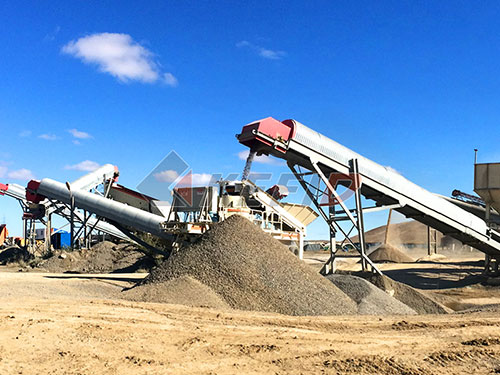
Q3 How does private label manufacturing benefit us as buyers?
It allows us greater flexibility in component sourcing using proven global supply chains which often results shorter lead times critical spare parts competitive pricing without compromising quality standards validated ISOcertified manufacturing facilities
Q4 What training is provided operators maintenance staff?
We provide comprehensive commissioning supervision detailed operational manuals video training modules focused safety procedures routine maintenance tasks Optional onsite training workshops available
Q5 Are there financing options suitable smaller scale operations?
Yes We work several financial institutions offer tailored solutions including leasing programs help manage cash flow while deploying highperformance equipment
Q6 What typical delivery timeline after order confirmation?
For standard configurations lead time ranges weeks depending model complexity Customized units require consultation provide specific schedule based current manufacturing capacity
Q7 How do you validate performance claims before purchase?
We provide detailed test reports from independent labs offer arrange visits existing customer sites similar applications discuss their operational data firsthand