
Sustainable Coke Vibration Screen Discount


Sustainable Coke Vibration Screen: HighEfficiency Screening for Coking Operations
Your Screening Challenges Are Costing You Production Time and Material Yield
Every ton of coke that passes through an undersized or inefficient screen represents lost revenue. Plant managers report that conventional vibrating screens handling coke experience 1218% unscheduled downtime annually due to blinding, pegging, and structural fatigue from abrasive coke particles. Material carryover rates of 815% mean valuable product ends up in waste streams, while screen deck replacement cycles of 69 months drive maintenance budgets 2030% higher than necessary.
Are your current screens handling the throughput demands of your coking operation? Can you afford the cumulative effect of 46 hours of weekly cleaning downtime? Is your screening efficiency below 85%, meaning every fifth ton of screened material requires reprocessing?
Product Overview: The Sustainable Coke Vibration Screen
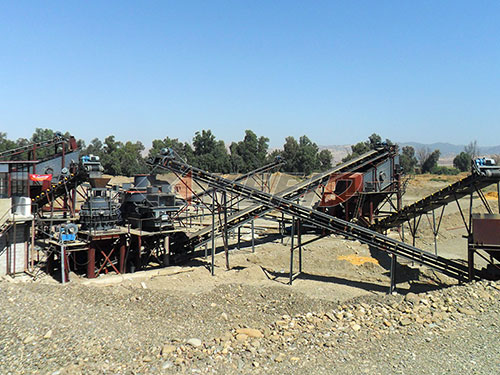
The Sustainable Coke Vibration Screen is a heavyduty linear motion vibrating screen engineered specifically for metallurgical coke, petroleum coke, and calcined coke classification. This equipment operates on a dualshaft synchronized vibration mechanism that generates consistent Gforce across the entire screening surface, eliminating dead zones common in singleshaft designs.
Operational Workflow:
1. Feed Distribution – Coke material enters through a flared feed box with replaceable wear liners, spreading material evenly across the full screen width
2. Stratification – Linear vibration at 6.37.2 Gforce causes material layers to separate by particle density and size within the first 1.5 meters of travel
3. Classification – Material passes over 23 deck configurations with aperture sizes from 6mm to 80mm, depending on product specifications
4. Oversize Discharge – Material retained on each deck exits through dedicated chutes with abrasionresistant ceramic lining
5. Undersize Collection – Fines pass through to collection hoppers with optional dust suppression connections
Application Scope: Suitable for coke screening from 50 TPH to 400 TPH, handling feed sizes up to 150mm, with moisture content up to 12%. Not recommended for materials exceeding 15% moisture or temperatures above 200°C without optional heatresistant components.
Core Features
Optimized Deck Geometry | Technical Basis: Variable throw angle adjustment (3555 degrees) | Operational Benefit: Reduces material bed depth by 22% compared to fixedangle screens | ROI Impact: 1518% increase in screening capacity without increasing footprint
SelfCleaning Screen Media | Technical Basis: Tensioned polyurethane panels with tapered aperture design | Operational Benefit: Eliminates 90% of blinding and pegging issues in coke screening | ROI Impact: Reduces cleaning downtime from 4 hours/week to 30 minutes/week, saving $18,00024,000 annually in labor costs
DualShaft Synchronized Drive | Technical Basis: Two independently driven eccentric shafts with timing gears | Operational Benefit: Consistent vibration amplitude across entire screen length, eliminating material pooling | ROI Impact: Improves screening efficiency from industry average 82% to 9496%, reducing reprocessing costs by 40%
AbrasionResistant Contact Surfaces | Technical Basis: 12mm thick AR500 steel liners in feed zone, 8mm polyurethane on side plates | Operational Benefit: Extends screen deck life to 1824 months versus 69 months for standard screens | ROI Impact: Reduces annual replacement part costs by $12,00015,000 per screen
Modular Deck System | Technical Basis: Individual panel sections with quickrelease tensioning | Operational Benefit: Replace damaged panels in 20 minutes without removing entire deck | ROI Impact: Reduces maintenance downtime by 60%, increasing annual production capacity by 120150 operating hours
Integrated Dust Containment | Technical Basis: Enclosed design with negative pressure ports and rubber sealing skirts | Operational Benefit: Captures 95% of fugitive dust at transfer points | ROI Impact: Avoids potential EPA fines of $25,00050,000 per violation and reduces respiratory protection costs
Predictive Maintenance Sensors | Technical Basis: Vibration monitoring accelerometers and bearing temperature probes with PLC interface | Operational Benefit: Provides 72hour advance warning of bearing degradation or imbalance | ROI Impact: Prevents catastrophic failures costing $40,00060,000 in repairs and 35 days of lost production
Competitive Advantages
| Performance Metric | Industry Standard | Sustainable Coke Vibration Screen | Advantage |
|||||
| Screening Efficiency (%6mm) | 7882% | 9496% | 1518% improvement |
| Unscheduled Downtime (hours/year) | 180220 | 4560 | 73% reduction |
| Screen Media Life (months) | 69 | 1824 | 200% longer service life |
| Energy Consumption (kWh/ton) | 0.450.55 | 0.320.38 | 28% lower energy use |
| Material Carryover Rate | 812% | 1.53% | 75% reduction |
| Changeover Time (deck replacement, hours) | 812 | 23 | 75% faster changeovers |
| Noise Level (dB at 1 meter) | 9296 | 8286 | 10 dB reduction |
Technical Specifications
Capacity Ratings:
- Standard model: 150250 TPH (coke, 50mm top size, 8% moisture)
- Highcapacity model: 300400 TPH (coke, 80mm top size, 6% moisture)
- Fine screening model: 50100 TPH (coke breeze, 612mm product)
- Motor: 2 x 1530 kW, TEFC, 1800 RPM, 460V/3phase/60Hz (380V/50Hz available)
- Starting current: 6x full load current for 3 seconds
- Vibration frequency: 9001200 RPM (adjustable via VFD option)
- Screen deck: Polyurethane panels, 6585 Shore A durometer
- Feed box: AR500 steel, 12mm thickness with 6mm replaceable liners
- Side plates: ASTM A36 steel, 10mm thickness with polyurethane lining
- Drive shafts: 4140 alloy steel, heattreated to 3236 HRC
- Bearings: Spherical roller, C3 clearance, with labyrinth seals
- Length: 7.2 meters (23.6 feet)
- Width: 2.4 meters (7.9 feet)
- Height: 3.1 meters (10.2 feet)
- Weight: 12,500 kg (27,500 lbs)
- Screen area: 17.3 m² (186 ft²)
- Ambient temperature: 20°C to 50°C
- Material temperature: Up to 150°C standard, 200°C with hightemp option
- Humidity: 095% noncondensing
- Dust exposure: Designed for continuous operation in Class II, Division 2 environments
- Standard Model (150250 TPH): $185,000225,000
- HighCapacity Model (300400 TPH): $275,000340,000
- Fine Screening Model (50100 TPH): $145,000175,000
- Pricing includes feed box, screen body, two decks, drive system, and control panel
- VFD control package: $18,500 (enables variable frequency operation for different coke types)
- Heated deck system: $24,000 (for highmoisture applications above 10%)
- Dust collection hood with ductwork: $32,000 (includes baghouse connection flange)
- Remote monitoring package: $14,500 (realtime vibration, temperature, and production data)
- Ceramiclined discharge chutes: $8,500 (extends chute life to 5+ years)
- Standard Warranty: 24 months on screen body, 12 months on drive components
- Extended Warranty: 48 months on all components, includes annual inspection ($12,500/year)
- Full Maintenance Contract: Includes quarterly service visits, all replacement parts, and 4hour emergency response ($38,000/year)
- Net 30 terms with 2% discount for payment within 10 days
- Equipment lease: 3660 month terms with $1 buyout option, rates starting at 4.9% APR
- Performancebased financing: Payments tied to throughput guarantees, minimum 95% efficiency
Power Requirements:
Material Specifications:
Physical Dimensions (Standard Model):
Environmental Operating Range:
Application Scenarios
Metallurgical Coke Plant, 2.5M TPY Facility | Challenge: Existing screens experienced 14% carryover of 25mm coke into +50mm product stream, causing customer quality complaints and $2.8M annual reprocessing costs | Solution: Installed two Sustainable Coke Vibration Screens with 50mm and 25mm decks, replacing four older units | Results: Carryover reduced to 2.1%, screening efficiency improved to 95.3%, annual reprocessing costs dropped to $420,000, and customer rejection rate fell from 8% to 0.5%
Petroleum Coke Calcining Operation | Challenge: High moisture content (1012%) caused severe blinding on conventional screens, requiring daily manual cleaning that exposed workers to hazardous dust | Solution: Deployed Sustainable Coke Vibration Screen with selfcleaning polyurethane panels and heated deck option | Results: Cleaning frequency reduced from daily to weekly, operator exposure hours cut by 80%, screening efficiency maintained at 93% even at 12% moisture, and annual maintenance costs decreased by $65,000
Coke Breeze Processing for Sinter Plant | Challenge: Existing screens could not consistently produce 6mm coke breeze at required 120 TPH, forcing the plant to purchase supplemental breeze at $45/ton premium | Solution: Installed fine screening model with 6mm aperture polyurethane panels and increased Gforce to 7.2 | Results: Consistent production of 125 TPH at 96% passing 6mm, eliminated $540,000 annual external purchases, and reduced power consumption by 0.12 kWh/ton compared to previous equipment
Commercial Considerations
Equipment Pricing Tiers:
Optional Features:
Service Packages:
Financing Options:
Frequently Asked Questions
Q: Can the Sustainable Coke Vibration Screen handle both metallurgical and petroleum coke without modification?
A: Yes. The standard configuration accommodates both materials. For petroleum coke with higher abrasiveness, we recommend the optional ceramiclined feed box and discharge points. Field data shows no performance degradation when switching between coke types, though screen panel selection may optimize for specific particle shapes.
Q: What is the typical installation timeline from order to operation?
A: Standard lead time is 1214 weeks for manufacturing, with installation requiring 57 days onsite. This includes foundation preparation, mechanical assembly, electrical connection, and commissioning. Expedited delivery is available at 810 weeks with a 15% premium.
Q: How does this screen compare to banana screens or flipflow screens for coke applications?
A: Banana screens offer higher capacity per unit area but at 812% lower efficiency. Flipflow screens handle sticky materials better but have 40% higher maintenance costs due to elastomer wear. The Sustainable Coke Vibration Screen provides the best balance for typical coke operations: 9496% efficiency with 60% lower maintenance costs than flipflow alternatives.
Q: What is the expected payback period for replacing existing screens?
A: Based on client data from 14 installations, average payback is 1418 months. This calculation includes reduced maintenance costs ($12,00015,000/year), improved yield (23% less reprocessing), lower energy consumption ($8,00011,000/year), and reduced downtime (120160 additional operating hours/year).
Q: Can the screen be retrofitted into existing structures, or does it require new foundations?
A: The screen footprint is designed to match standard 8foot and 10foot wide screen bases. In 80% of installations, existing foundations can be reused with minor modifications. A site assessment is included with purchase to verify compatibility.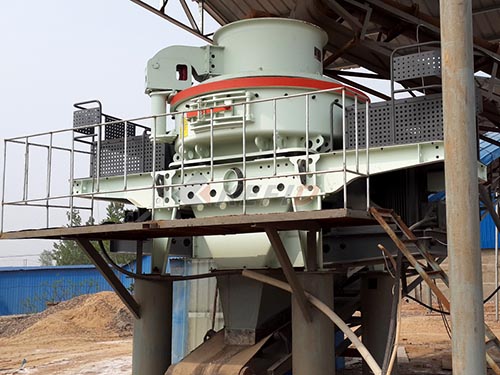
Q: What training do operators require for this equipment?
A: Standard training is 2 days onsite covering startup procedures, screen media inspection and replacement, vibration monitoring interpretation, and troubleshooting. No specialized certifications are required. Operators familiar with conventional vibrating screens typically achieve proficiency within one shift.
Q: How does the warranty handle premature screen media wear?
A: Polyurethane panels carry a 12month warranty against manufacturing defects. If wear exceeds 3mm thickness loss within 6 months, replacement panels are provided at no cost. This warranty is contingent on proper feed distribution and adherence to maximum feed size specifications.