
Stone Quarry Crushing Plant Supplier Supply Chain


1. PAINPOINT DRIVEN OPENING
Managing a stone quarry crushing plant requires balancing relentless production demands with stringent cost control. Common operational challenges that erode profitability include:
Unscheduled Downtime: Bearing failures, crusher blockages, and component wear can halt your entire primary crushing circuit. Industry data indicates an average of 1520% annual production time can be lost to maintenance and breakdowns.
Inconsistent Throughput & Product Shape: Fluctuations in feed size and hardness lead to variable output volumes and poor aggregate cubicity, directly impacting downstream process efficiency and final product saleability.
High Operational Costs: Energy consumption of crushers and conveyors represents 4050% of your plant's operating expense. Inefficient crushing stages and excessive wear part consumption further compress margins.
Safety & Environmental Compliance Risks: Manual clearing of jammed material, dust generation, and noise exposure present ongoing site risks and regulatory challenges.
Are you evaluating how to increase your plant's uptime percentage? Is reducing costpertonne a primary objective for your next equipment investment? The foundation of a reliable, highyield operation begins with a robustly engineered stone quarry crushing plant.
2. PRODUCT OVERVIEW
A stationary stone quarry crushing plant is a permanently installed processing system designed to reduce blasted rock into specified aggregate sizes. The core workflow integrates several key stages:
1. Primary Crushing: Large blasted rock (up to 1000mm) is reduced to ~250mm by a heavyduty jaw crusher or gyratory crusher.
2. Secondary Crushing: Material from the primary stage is further reduced by a cone crusher or impact crusher to intermediate sizes (~4070mm), improving shape.
3. Tertiary/Quarternary Crushing: For producing precisely graded final products (e.g., chips, sand), additional cone or vertical shaft impact (VSI) crushers are employed.
4. Screening & Conveying: Vibrating screens separate material by size at each stage, with belt conveyors transporting material between crushers and to stockpiles.
Application Scope: This system is engineered for highvolume production (150800+ TPH) of aggregates for construction, road base, railway ballast, and concrete/asphalt production.
Key Limitations: Optimal performance requires consistent feed material analysis. Highly abrasive or excessively wet feed can accelerate wear and reduce efficiency outside design parameters.
3. CORE FEATURES
Modular Plant Design | Technical Basis: Preengineered, skidmounted modules with standardized connections | Operational Benefit: Reduces onsite civil works and installation time by up to 30%, allowing for faster commissioning and future layout reconfiguration | ROI Impact: Lower capital installation cost and increased operational flexibility
Intelligent Process Control System | Technical Basis: PLCbased automation with realtime sensor feedback (power draw, cavity level, pressure) | Operational Benefit: Maintains optimal crusher load for maximum throughput and consistent product gradation; enables remote monitoring | ROI Impact: Field data shows a 58% increase in overall throughput while reducing specific energy consumption
HeavyDuty Crusher Construction | Technical Basis: Highgrade manganese steel wear parts, reinforced frames, and oversized bearings | Operational Benefit: Withstands continuous shock loading from hard rock (e.g., granite, basalt), extending intervals between major maintenance | ROI Impact: Direct reduction in downtime costs and wear part inventory expenditure
Integrated Dust Suppression & Attenuation | Technical Basis: Strategically placed spray nozzles at transfer points and acoustic enclosures for highnoise equipment | Operational Benefit: Mitigates respirable crystalline silica dust and maintains noise levels within regulatory limits | ROI Impact: Reduces compliance risks and creates a safer working environment, minimizing potential site stoppages
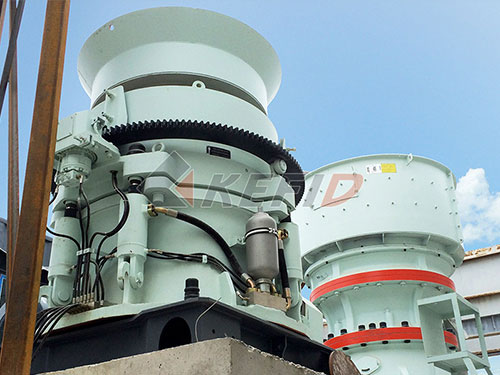
Centralized Greasing & Lube Systems | Technical Basis: Automated lubrication pumps delivering precise grease volumes to critical bearing points on schedule | Operational Benefit: Eliminates manual lubrication inconsistencies, the leading cause of premature bearing failure in harsh environments | ROI Impact: Proven extension of bearing service life by 2540%, preventing costly unscheduled breakdowns
4. COMPETITIVE ADVANTAGES
| Performance Metric | Industry Standard Benchmark | Our Stone Quarry Crushing Plant Solution | Documented Advantage |
| : | : | : | : |
| Availability (Uptime) | ~8285% per annum |> 92% per annum |> 8% improvement |
| Cost per Tonne (Operating) | Baseline (100%) |12% to 15% against baseline |> 12% reduction |
| Wear Part Life (Mn14 Jaw Liners) | 120,000 tonnes average |> 150,000 tonnes average |> 25% improvement |
| Specific Energy Consumption| Varies by rock type |7% average reduction |> 7% improvement |
| Installation & Commissioning Time| 810 weeks for midrange plant |25% total duration |> 25% reduction |
5. TECHNICAL SPECIFICATIONS
Design Capacity Range: Configurable from 150 to over 800 tonnes per hour (TPH), depending on feed material hardness (e.g., limestone vs. granite) and final product requirements.
Primary Crusher Options: Jaw Crusher (Feed size up to 1000mm, CSS range 125250mm) or Gyratory Crusher (for very high capacity primary stations).
Power Requirements: Total installed power typically ranges from 400 kW to 1.2 MW for a complete threestage circuit. Plants are designed for connection to local highvoltage grid supply.
Key Material Specifications: Crusher wear parts manufactured from premium Manganese Steel (1822%); structural frames from hightensile carbon steel; conveyor idlers with sealedforlife bearings.
Physical Dimensions: Modular design allows tailoring; a standard 300 TPH granite plant footprint is approximately 85m L x 45m W x 15m H (excluding stockpiles).
Environmental Operating Range: Designed for ambient temperatures from 20°C to +45°C with optional packages for extreme climates. Dust emissions controlled to below <10 mg/m³ at key points.
6. APPLICATION SCENARIOS
Granite Aggregate Production for Highway Construction | Challenge: A contractor needed consistent supply of highcubicity granite aggregates for a major highway project but faced poor product shape from existing secondary cone crushers leading to higher bitumen consumption.| Solution: Implementation of a threestage stone quarry crushing plant featuring a primary jaw crusher, secondary cone crusher with advanced chamber design, and a tertiary VSI crusher for shaping.| Results: Achieved aggregate flakiness index below <15%. Plant sustained an output of over 450 TPH of specification material, contributing to a documented asphalt mix cost reduction of approximately $1.50 per tonne laid.
HighSilica Quartzite Quarry Expansion | Challenge: A quarry operator expanding into harder quartzite seams experienced unsustainable wear rates on key components (<80k tonnes/liner set), causing frequent stoppages.| Solution: A tailored crushing circuit was supplied using specifically alloyed wear materials in all crushers and an automated lubrication system focused on highwear bearings.| Results: Wear part life increased by over 40%. Plant availability rose from an estimated 78% 92%, enabling the expansion project to meet its firstyear tonnage target ahead of schedule.
7. COMMERCIAL CONSIDERATIONS
Our stone quarry crushing plants are offered in defined tiers based on capacity robustness:
Standard Duty Tier (Up to 250 TPH): For consistent limestone/sandstone applications. Focus on costeffective reliability.
Heavy Duty Tier (~250 – 500 TPH): For mixed/hard rock like granite or basalt. Includes enhanced wear protection features as standard.
Premium HighCapacity Tier (>500 TPH): For largescale granite or abrasive quarries featuring the most advanced automation diagnostics.
Optional features include mobile truck loading stations advanced metal detection systems remote telematics packages extended warranty plans covering major structural components.
We offer comprehensive service agreements covering scheduled maintenance inspections parts supply technical support response times Financing options including capital lease operating lease project financing are available subject credit approval terms conditions apply.
FAQ
1.Q What level site preparation is required before delivery?
A Detailed civil engineering drawings are provided requiring stable concrete foundations adequate drainage Electrical substation capacity must be confirmed prior shipment
2.Q How does this system handle variations in feed rock size from blasting?
A The primary crusher is selected with sufficient receiving opening power margin absorb typical variation Feed regulation via vibrating grizzly feeder also mitigates this issue ensuring stable secondary stage operation
3.Q What is the typical lead time from order placement commissioning?
A For standard configured plants lead time typically ranges between months depending complexity Custom engineering may extend this timeline A detailed project schedule provided upon initial quotation
4.Q Are operators provided training on new control systems?
A Yes comprehensive onsite training provided commissioning covering normal operation basic troubleshooting safety procedures Maintenance teams receive additional technical training Documentation includes detailed manuals schematics
5.Q Can existing conveyors screens integrated into new primary secondary crushing modules?
A Integration possible subject technical audit condition compatibility Our engineers can assess feasibility provide retrofit recommendations ensure optimal system performance