
Stone Quarry Crushing Plant Supplier Customization


1. PAINPOINT DRIVEN OPENING
Are escalating operational costs and unpredictable downtime eroding your stone quarry’s profitability? Common crushing plant challenges include:
High Downtime for Maintenance: Frequent liner changes and component wear in abrasive environments can halt production for days each month, costing thousands in lost revenue per hour.
Inconsistent Final Product Gradation: Fluctuations in feed material or crusher performance lead to offspec aggregate, resulting in product rejection, recrushing costs, and dissatisfied customers.
Excessive Energy Consumption: Older or inefficient crushing circuits can make energy one of your highest variable costs, with poor power utilization directly impacting your bottom line.
Rigid Plant Layout Limitations: Fixed crushing plants struggle to adapt to depleting reserves or new site plans, forcing expensive infrastructure overhauls or suboptimal haulage distances.
What if your crushing plant could be precisely engineered to mitigate these risks? A solution exists not in standard machinery, but in a fully customized stone quarry crushing plant designed around your rock, your site, and your financial targets.
2. PRODUCT OVERVIEW
A Customized Stone Quarry Crushing Plant is a purposeengineered, fixed or semimobile processing system designed from the ground up to optimize the reduction of blasted quarry rock into specified aggregate sizes. Unlike offtheshelf setups, every subsystem is selected and integrated based on a detailed analysis of your feed material and production goals.
Operational Workflow:
1. Primary Feeding & Scalping: Dumped feed is regulated by an apron feeder and passed over a heavyduty scalper to remove inherent fines and bypassable material, increasing primary crusher efficiency.
2. MultiStage Size Reduction: Material undergoes progressive reduction through a configured circuit (e.g., jaw crusher → cone crusher → impact crusher) with interstage screening for optimal efficiency and particle shape.
3. Precise Classification & Stockpiling: Final sizing screens accurately separate product fractions (e.g., ¾” chip, ½” aggregate, manufactured sand), which are conveyed to dedicated stockpiles.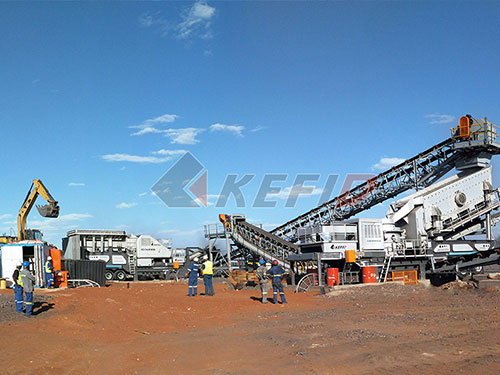
Application Scope: Ideal for medium to largescale quarry operations producing construction aggregates (granite, limestone, basalt, trap rock). Suitable for both greenfield sites and legacy site upgrades.
Key Limitations: Full customization requires upfront engineering investment and longer lead times than modular kits. Maximum economic benefit is realized for operations with consistent geology planning multiyear production.
3. CORE FEATURES
Engineered Flow Circuit | Technical Basis: Dynamic Flow Simulation Software | Operational Benefit: Eliminates bottlenecks and ensures balanced load across all crushers and screens | ROI Impact: Achieves rated plant capacity consistently, maximizing asset utilization and throughput revenue.
Adaptive Crushing Chamber Automation | Technical Basis: Hydroset or similar hydraulic adjustment systems with PLC control | Operational Benefit: Allows operators to adjust CSS remotely for different products or compensate for wear without stopping the crusher | ROI Impact: Reduces downtime for adjustments by up to 70% and maintains tighter product gradation control.
AbrasionResistant Material Specification | Technical Basis: Selection of martensitic steel castings, ceramic liners, and hardened alloy components based on petrographic analysis | Operational Benefit: Extends wear life of liners, blow bars, and conveyor components in highly abrasive conditions | ROI Impact: Lowers costperton for wear parts by 2540% and reduces maintenance frequency.
Centralized Dust Suppression & Containment | Technical Basis: Integrated baghouse filters and strategically placed spray nozzles tied to conveyor load sensors | Operational Benefit: Creates a safer working environment compliant with air quality regulations | ROI Impact: Minimizes risk of regulatory fines and reduces cleanup labor while protecting downstream machinery from abrasive dust.
Intelligent Power Management System | Technical Basis: VFD (Variable Frequency Drive) controls on major motors coupled with smart loadsensing technology | Operational Benefit: Matches motor power draw to actual load demand, particularly on conveyors and screens | ROI Impact: Field data shows reductions in overall plant energy consumption of 1525%.
Modular Structural Design | Technical Basis: Bolttogether support structures fabricated with precise tolerances | Operational Benefit: Enables faster field erection with less heavy lifting equipment required; allows for future reconfiguration or relocation | ROI Impact: Cuts installation time by up to 30%, reducing timetorevenue.
4. COMPETITIVE ADVANTAGES
| Performance Metric | Industry Standard (Fixed Design) | Customized Stone Quarry Crushing Plant Solution | Advantage (% Improvement) |
| : | : | : | : |
| Availability (Uptime)| 8590% | 9295%+ | +58% |
| Tons per KWh| Baseline (Varies by rock)| Optimized circuit & drives reduce specific energy consumption.| +1525% |
| Wear Cost per Ton| Reactive replacement schedules.| Predictive planning with extendedlife components.| 2540% |
| Product Yield on Spec| Reliant on operator skill; can fluctuate.| Automated controls ensure consistent output gradation.| +1015% consistency |
| Reconfiguration Time| Major structural changes require weeks/months.| Modular design allows strategic component swaps in days.| 6070% downtime |
5. TECHNICAL SPECIFICATIONS
Capacity Range: Configurable from 200 to over 1,500 tons per hour (TPH), depending on feed size hardness (Wi) and target product mix.
Power Requirements: Total connected load typically ranges from 500 kW to 2.5 MW. Plants are designed for connection to local grid mediumvoltage supply (e.g., 11kV or 13.8kV).
Material Specifications: Primary structure fabricated from hightensile S355 steel; Wear surfaces utilize AR400 steel plate; Crusher liners available in Mn14Cr2 to Mn22Cr2 manganese steel or proprietary composite alloys.
Physical Dimensions: Sitespecific design. A typical 500 TPH granite plant footprint may approximate 80m (L) x 35m (W) x 25m (H).
Environmental Operating Range: Designed for ambient temperatures from 20°C to +45°C. Dust suppression systems maintain operability in lowprecipitation environments. Electrical components rated per local environmental standards.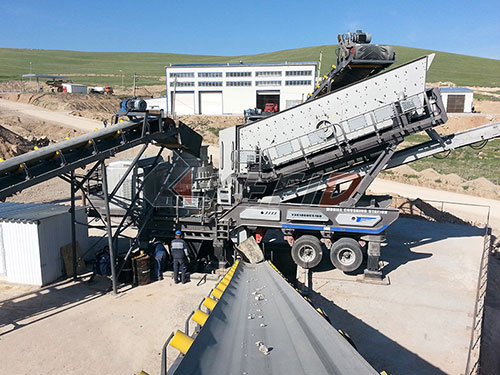
6. APPLICATION SCENARIOS
Granite Aggregate Producer – Southeast Asia
Challenge: A quarry faced severe liner wear in secondary crushing due to highly abrasive granite, causing unplanned stoppages every 10 days. Their existing circuit also produced excessive quarry dust (3mm material) they could not sell.
Solution: Implementation of a customized stone quarry crushing plant featuring a cone crusher with advanced chamber geometry for better particleonparticle crushing and an integrated Vertical Shaft Impactor (VSI) circuit to convert excess fines into highvalue manufactured sand.
Results: Liner life extended by over 60%. The new VSI section created a saleable sand product that increased overall plant revenue by an estimated $120k annually while solving a waste stockpile issue.
Limestone & Sandstone Quarry – North America
Challenge: An expanding operation needed higher capacity but had limited space for plant expansion due to zoning permits. They also required rapid switching between different product grades for concrete vs. road base applications.
Solution: A semimobile customized primary jaw crushing station was installed closer to a new pit face (reducing haul truck cycle time), feeding via overland conveyor to a significantly upgraded screening tower at the existing secondary site.
Results: Truck fuel consumption dropped by an estimated $45k per year due shorter hauls.The new screening tower’s automated diverter gates allow product changeover in under minutes instead of hours,increasing scheduling flexibility
7. COMMERCIAL CONSIDERATIONS
Our customized stone quarry crushing plants are priced based on scope complexity:
Tier I – Process Reengineering & Control Upgrades ($250k – $750k): Optimizes existing assets with new automation logic,screens,and conveyors.
Optional Features: Advanced particle size monitoring cameras
Service Package: Annual optimization audit
Financing: Equipment leasing available
Tier II – Key Component Modernization ($1M – $3M): Replaces primary/secondary/tertiary crushers within existing structural footprint
Optional Features: Onsite operator training simulators
Service Package: Multiyear wear parts contract with guaranteed inventory holding
Financing: Project finance solutions
Tier III – Greenfield Turnkey Plant ($3M+): Complete design,supply,fabrication,and commissioning of full fixed/semimobile solution
Optional Features: Full plant SCADA system remote monitoring
Service Package: Comprehensive multiyear warranty plus scheduled maintenance program staffed by dedicated technicians
Financing: Joint venture/BOOT models available
We provide detailed CAPEX vs OPEX models showing projected payback periods based on your specific operational data
FAQ
1.Q How do you ensure the customized stone quarry crushing plant design will work with our specific geology?
A Our process begins with an exhaustive site audit including review of drill logs blasting patterns petrographic analysis We conduct labscale crushability tests Bond Work Index determination This data feeds into proprietary simulation software that models the entire circuit performance before any fabrication begins
2.Q What is the typical implementation timeline from design approval commissioning?
A For Tier III greenfield projects typical timeline is months months This includes weeks detailed engineering weeks fabrication shipping weeks site erection commissioning Timelines are confirmed during project scoping phase
3.Q How does customization impact longterm maintenance spare parts availability?
A We deliberately select industrystandard crusher brands bearings gearboxes alongside our custom fabrications This ensures critical mechanical spares remain readily available worldwide Our custom wear parts are stocked under longterm supply agreements guaranteeing availability
4.Q Can the plant be expanded reconfigured future production increases?
A Yes modular structural design core principle Our layouts explicitly account potential future expansion points e g adding parallel secondary line upgrading screen decks Conveyor capacities often sized % above initial requirement accommodate growth without complete replacement
5.Q What training provided our operational maintenance teams?
A We provide comprehensive structured training program covering normal operation troubleshooting safety procedures preventive maintenance schedules Training conducted both our facility during commissioning includes detailed manuals digital access instructional videos Optional annual refresher courses available