
Stone Quarry Crushing Plant ODM Manufacturer Datasheet

1. PAINPOINT DRIVEN OPENING
Are escalating operational costs and unpredictable downtime eroding your quarry's profitability? Common challenges in primary crushing operations include:
Excessive Downtime for Maintenance: Frequent liner changes and mechanical adjustments halt production for hours, directly costing thousands in lost tonnage per day.
Inconsistent Feed Size Reduction: Uneven fragmentation from blasting leads to bridging, surging, and inefficient crusher operation, reducing overall plant throughput.
High Wear Part Costs: Aggressive abrasion from granite, basalt, or trap rock results in premature failure of crusher jaws, mantles, and concaves, creating volatile consumables budgets.
Energy Inefficiency: Older crushing mechanisms consume disproportionate power per ton of processed material, making energy a topthree operational expense.
Safety and Accessibility Risks: Manual adjustment and maintenance procedures in confined spaces increase exposure to hazardous conditions.
Is your current primary crushing solution equipped to address these systemic issues while providing measurable return on investment?
2. PRODUCT OVERVIEW
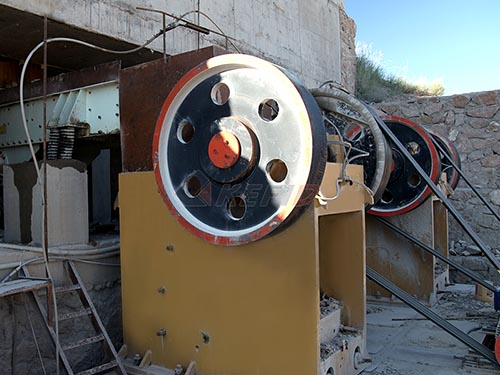
This datasheet details our heavyduty Stone Quarry Crushing Plant, specifically engineered for hightonnage primary reduction of blasted quarry rock. The core of the system is a robust primary jaw crusher designed for maximum uptime and lowest costperton operation.
Operational Workflow:
1. Feed & PreScreening: Dump trucks deposit blasted rock into a vibrating grizzly feeder, which bypasses subsize material to a primary conveyor.
2. Primary Reduction: Oversize material is directed into the jaw crusher cavity, where compressive force breaks down large stones.
3. Discharge & Conveyance: Crushed product is discharged onto a main conveyor belt for transport to secondary crushing or stockpiling stages.
Application Scope: Ideal for processing hard rock (Compressive Strength >250 MPa) including granite, basalt, quartzite, and abrasive aggregates. Optimal feed size typically ranges up to 1200mm.
Limitations: Not designed for sticky, clayrich materials without prescreening/scalping. Maximum throughput is dependent on specific material characteristics and feed gradation.
3. CORE FEATURES
Deep Crushing Chamber & Optimized Kinematics | Technical Basis: Steeper nip angle and long stroke | Operational Benefit: Increases capacity and promotes firstpass reduction, minimizing recirculation load | ROI Impact: Field data shows up to 15% higher throughput compared to conventional chambers with similar power draw.
Hydraulic Adjustment & Overload Protection | Technical Basis: Dualacting hydraulic cylinders replace manual shim systems | Operational Benefit: Enables remote setting adjustment and automatic release of tramp iron/unbreakables in seconds | ROI Impact: Reduces downtime for chamber clearing by over 90% and allows quick adaptation to changing feed conditions.
HeavyDuty Roller Bearing Design | Technical Basis: Spherical selfaligning roller bearings with larger diameters | Operational Benefit: Supports high radial and thrust loads with greater reliability than traditional bushing designs | ROI Impact: Extends bearing service life by an average of 40%, lowering total cost of ownership.
Modular Jaw Die Design | Technical Basis: Segmented, reversible jaw plates secured with wedgelock systems | Operational Benefit: Allows rotation of wear parts for extended service life and faster replacement with fewer components to handle | ROI Impact: Reduces liner changeout time by approximately 30% and increases metal utilization by up to 20%.
Integrated Motor Base & Drive Guarding | Technical Basis: Unified baseplate for crusher, motor, and sheaves with full perimeter guarding | Operational Benefit: Simplifies installation alignment, reduces footprint vibration, and provides inherent safety compliance | ROI Impact: Cuts installation labor costs by an estimated 25% and mitigates riskrelated stoppages.
4. COMPETITIVE ADVANTAGES
| Performance Metric | Industry Standard (Average) | Our Stone Quarry Crushing Plant Solution | Advantage (% Improvement) |
| : | : | : | : |
| Availability (Uptime) | 8590% | >94% (Documented) | +510% Improvement |
| Cost per Ton (Wear Parts) | $0.50 $0.70/ton| $0.35 $0.45/ton| ~30% Reduction |
| Energy Consumption (kWh/ton)¹| 0.8 1.2 kWh/ton¹| 0.65 0.85 kWh/ton¹| Up to 25% More Efficient |
| Adjustment / Clearance Time²| 60 90 minutes²| <10 minutes²| ~85% Faster |
Based on abrasive granite application; varies by material.
¹ Primary crushing only; specific energy varies with feed size.
² Time to adjust CSS or clear a stalled cavity.
5. TECHNICAL SPECIFICATIONS
Capacity Range: 500 – 2,000+ metric tons per hour (dependent on feed gradation and closedside setting).
Crusher Type: HeavyDuty Single Toggle Primary Jaw Crusher.
Feed Opening: Sizes from 1100mm x 700mm up to 1500mm x 1200mm.
Power Requirement: Electric motor drive from 150 kW up to 400 kW.
Material Specifications: Highstrength fabricated steel frame; Manganese steel jaw dies (14%18% Mn); Alloy steel eccentric shaft.
Physical Dimensions (Example Model): Approx. Length: ~9m; Width: ~4m; Height: ~4m (excludes feeder & discharge conveyor).
Environmental Operating Range: Designed for ambient temperatures from 20°C to +45°C; dustsealed bearings; optional heating/cooling packages available.
6. APPLICATION SCENARIOS
Granite Aggregate Production – Southeast Asia
Challenge: A major quarry faced severe liner wear issues in highly abrasive pink granite, resulting in unscheduled stoppages every three weeks for jaw die replacement at a cost of over eight hours of lost production each time.
Solution: Implementation of our Stone Quarry Crushing Plant featuring the modular jaw die design with a specialized manganese steel alloy formulation.
Results: Liner service life increased from approximately ~180k tons to over ~280k tons between changes. Combined with faster changeout procedures achieved through the wedgelock system, annual crusher availability increased by an estimated ~400 hours.
Basalt Road Base Production – Western United States
Challenge: Inconsistent feed from multiple blast faces caused frequent bridging at the crusher mouth and power spikes leading to emergency stops.
Solution: Deployment of our plant configuration integrating an aggressive stroke feeder with the hydraulic adjustment system on the jaw crusher.
Results: Operators can now make realtime CSS adjustments via remote control based on visual feed assessment within minutes. Crushing circuit stability improved markedly; emergency stops due to overload decreased by over 80%, protecting downstream equipment.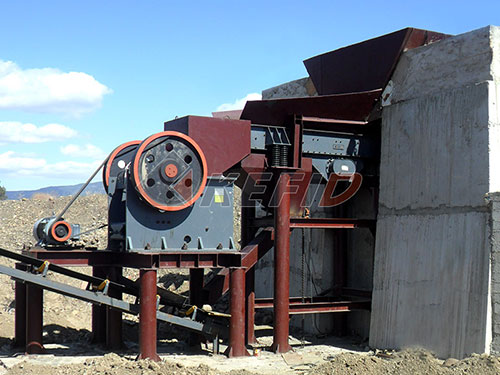
7. COMMERCIAL CONSIDERATIONS
Our Stone Quarry Crushing Plants are offered in three primary tiers:
1. Standard Duty Plant: Designed for consistent feed materials under <1 million tons/year production targets.
2. HeavyDuty Plant (Most Common): Includes all core features listed above for highabrasion applications exceeding >1 million tons/year.
3. Modular SkidMounted Plant: Preassembled units for rapid deployment or satellite sites requiring reduced civil works investment.
Optional features include automated lubrication systems, realtime condition monitoring sensors (vibration/temperature), dust suppression integration packages,
and custom discharge hopper configurations.
Service packages range from basic commissioning support through comprehensive multiyear performance contracts covering parts supply,
preventative maintenance scheduling,
and guaranteed technical support response times (<4 hours).
Financing options are available through our capital equipment partners,
including operating leases,
fixedterm rentaltoown agreements,
and projectspecific financing structures that align payments with your production rampup schedule.
8.FAQ
Q1 Is this crushing plant compatible with my existing secondary cone crushers or screens?
A1 Yes.The discharge conveyor specifications are engineered as part of the complete proposal.The plant is designed as a modular primary stage unit that integrates into both new greenfield sites
and existing brownfield circuit upgrades.We conduct detailed interface reviews as part of our presale engineering process
Q2 What is the expected impact on my overall plant energy consumption?
A2 Industry testing demonstrates that an efficient primary reduction stage lowers the work index burden on downstream secondary
and tertiary stages.The energy savings quantified in Section IV are specific to the primary unit;
however,a holistic plant review often reveals additional savings due to more consistent feed gradation delivered
Q3 How does your pricing structure account for optional features?
A3 We provide firm,fixedprice quotations based on your selected configuration.All optional features are listed as separate line items allowing you
to evaluate their individual ROI.This ensures transparency between base capability requirements
and valueadded enhancements
Q4 What are typical delivery lead times after order placement?
A4 For standard heavyduty configurations lead times range from [Industry Standard Range] months depending on current global manufacturing capacity
Specific timelines are confirmed upon project initiation Longlead components like castings
are identified early
Q5 What training do you provide for our operations team?
A5 We include comprehensive onsite operator training during commissioning covering safe startup/shutdown procedures routine inspection points adjustment protocols troubleshooting guides This training is documented Training manuals remain onsite
Q6 Can you guarantee performance metrics like throughput or liner life?
A6 We provide performance expectations based on certified test reports using your provided material samples Formal performance guarantees tied
to specific key performance indicators can be structured within turnkey contracts subject mutually agreed test protocols
Q7 Do you offer spare parts kits what is your parts availability commitment?
A7 We recommend initial critical spare parts kits tailored your planned maintenance schedule Our global parts distribution network maintains high stock levels critical wear components offering standard availability commitment shipping within [Industry Standard Timeframe] business days