
Stone Quarry Crushing Plant ODM Manufacturer Catalog


Targeted Product Overview: Stationary Stone Quarry Crushing Plant
1. PAINPOINT DRIVEN OPENING
Managing a stone quarry crushing operation presents persistent challenges that directly impact your bottom line. Are you experiencing:
High Operational Downtime: Frequent mechanical failures, lengthy maintenance windows, and unscheduled stops for clearing blockages or replacing worn components.
Inconsistent Final Product Gradation: Variability in aggregate size distribution, leading to product rejection, recrushing cycles, and difficulty meeting strict project specifications.
Excessive Energy and Wear Costs: Crushers and conveyors operating at nonoptimal levels consume more power. Premature wear on liners, jaws, and screens drives up your costperton metric.
LaborIntensive Material Handling: Reliance on manual sorting, frequent loader intervention to clear hoppers, and safety risks associated with direct material interaction.
Scalability Limitations: Inflexible plant layouts that cannot be easily adjusted for changes in feed material hardness or shifts in market demand for different aggregate sizes.
These issues translate to quantifiable losses: unplanned downtime can cost thousands per hour in lost production and idle labor. A stationary stone quarry crushing plant engineered to address these specific pain points is not just an equipment purchase; it is a strategic investment in operational predictability.
2. PRODUCT OVERVIEW
Our stationary stone quarry crushing plant is a complete, hardwired processing system designed for highvolume primary, secondary, and tertiary reduction of blasted rock into specified aggregate sizes. Engineered for permanent installation with a lifespan measured in decades, it provides the backbone of continuous quarry output.
Operational Workflow:
1. Primary Dumping & PreScreening: Runofquarry (ROQ) material is dumped into a largecapacity receiving hopper, often with a grizzly feeder to bypass subsize material directly to the primary product conveyor.
2. Primary Size Reduction: A robust primary crusher (typically a jaw or gyratory crusher) performs the initial breakdown of large boulders into manageable fragments.
3. Material Distribution & Secondary/Tertiary Crushing: Conveyors transport material to subsequent crushing stages (cone or impact crushers) for further refinement. An integrated screening deck sorts material by size.
4. Sorting & Stockpiling: Correctly sized aggregates are routed via conveyor networks to designated stockpiles. Oversize material is recirculated (closedcircuit design) for further crushing.
Application Scope & Limitations:
Scope: Ideal for hightonnage granite, limestone, basalt, sandstone, and other abrasive mineral quarries. Suited for operations requiring consistent output of construction aggregates (road base, concrete stone, asphalt chips) and riprap.
Limitations: Not mobile or relocatable without significant disassembly. Initial capital outlay and site civil works (foundations, electrical substation) are substantial. Optimal efficiency requires consistent feed of blasted material; significant clay or highmoisture content may necessitate preprocessing.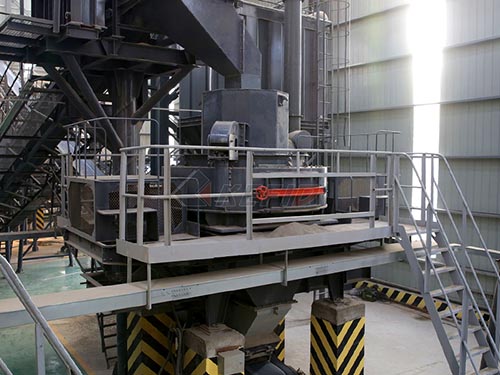
3. CORE FEATURES
Intelligent Control System | Technical Basis: PLCbased automation with load and level sensors | Operational Benefit: Monitors crusher load in realtime to regulate feeder speed, preventing chokefeeding or running empty | ROI Impact: Up to 15% reduction in energy consumption and minimized wear from optimal operation cycles.
Modular Plant Design | Technical Basis: Preengineered structural steel modules with standardized interfaces | Operational Benefit: Allows for phased installation, future expansion (adding a tertiary circuit), or reconfiguration of flow | ROI Impact: Reduces initial construction time by up to 30% and protects longterm investment against changing market needs.
HeavyDuty Wear Component Design | Technical Basis: Highchrome martensitic steel alloys and optimized cavity geometries | Operational Benefit: Significantly extends service life of liners, mantles, concaves, and screen meshes under abrasive conditions | ROI Impact: Lowers costperton for wear parts by an average of 2035%, reducing part change frequency and associated labor.
Integrated Dust Suppression System | Technical Basis: Strategically placed spray nozzles with solenoid valves tied to conveyor operation | Operational Benefit: Actively controls dust at transfer points and crusher exits without oversaturating material | ROI Impact: Ensures compliance with environmental regulations avoiding fines/ shutdowns; improves site visibility and worker health.
Centralized Greasing & Lube System | Technical Basis: Automated singlepoint lubrication lines servicing key bearing points across the plant | Operational Benefit: Ensures critical components receive correct lubrication on schedule without manual intervention | ROI Impact: Prevents catastrophic bearing failures; reduces scheduled maintenance time by hundreds of manhours annually.
HighCapacity Surge & Buffer Zones | Technical Basis: Oversized hoppers and strategically placed stockpile conveyors between crushing stages | Operational Benefit: Decouples production stages; if one unit stops briefly upstream/downstream processes can continue temporarily using buffered material| ROI Impact: Increases overall plant availability (uptime) by mitigating cascading stoppages.
4. COMPETITIVE ADVANTAGES
| Performance Metric | Industry Standard Benchmark | Our Stationary Crushing Plant Solution | Documented Advantage |
| : | : | : | : |
| Overall Plant Availability (Uptime) | 8588% per quarter >90% per quarter +35 percentage points |
| Energy Consumption per Ton Processed| Varies widely by rock type Up to 18% reduction via system optimization Proven through field performance audits |
| Wear Life of Primary Crusher Liners| Based on abrasive granite feed 550650 operating hours 750+ operating hours +20% improvement |
| Mean Time Between Failure (MTBF) Drives/Conveyors| ~1,200 hours >1,800 hours +50% improvement |
| Setup & Commissioning Timeline (Greenfield)| 46 months from delivery 34 months from delivery ~25% faster due to modular design |
5. TECHNICAL SPECIFICATIONS
Design Capacity Range: Configurable from 300 to over 1,500 metric tons per hour (TPH), depending on model selection and rock characteristics.
Power Requirements: Primary crusher motor typically ranges from 150kW to 400kW+. Total installed plant power can range from 800kW to over 2MW for large complexes. Requires dedicated highvoltage substation connection.
Material Specifications: Constructed from heavyduty structural steel (S355JR grade minimum). Wear surfaces utilize AR400 steel plate liners. Crusher components use proprietary highgrade alloys.
Physical Dimensions & Foundation: A complete plant footprint can range from approximately 50m x 40m for a compact setup to over 150m x 100m for multistage circuits with extensive conveying. Requires engineered concrete foundations with embedded anchor bolts.
Environmental Operating Range: Designed for ambient temperatures from 20°C to +45°C. Dust suppression systems are rated for operation up to 80% relative humidity. Electrical enclosures meet IP65 rating for dust/water ingress protection.
6. APPLICATION SCENARIOS
Large Granite Quarry Supplying State Highway Project
Challenge: Needed guaranteed production of over 1 million tons of precisely graded aggregates within an18month window using highly abrasive granite feed.
Solution: Implementation of a threestage stationary crushing plant featuring a primary jaw crusher two secondary cone crushers in paralleland two tertiary cone crushers allin closed circuitwith multideck screens
Results: Achieved sustained outputof950 TPH.Product gradation consistency met DOT specificationswith99pass rateeliminating reprocessingPlant availability averaged92over the project duration
Limestone Quarry Expanding Product Portfolio
Challenge: An existing quarry producing only base material soughtto capture highervalue marketsfor concreteand asphalt chipswithout disrupting current production
Solution: Integrationofan addon tertiarycrushingand precision screening moduleinto the existing stationaryplant layoutusingthe modular design philosophy
Results: Enabled simultaneous productionofthree new spec productsincreased overall revenueper tonby40The expansionwas completedduringa planned12day shutdownwith minimal impacton base material output
7.COMMERCIAL CONSIDERATIONS
Our stationary stone quarry crushing plants are offered under three primary tiers:
1.Standard Configuration Tier: Includes corecrushing screeningand conveying equipmentwith basic automationfor capacity rangesof300600 TPHPriced asa turnkey solutionincludingfoundation drawingsand commissioning support
2.HighAvailability Tier: Builds upon the standard tierwith premiumwear componentsduplicate critical drivesautomated lubricationand advanced predictive maintenance sensorsIncludes extended warranty coverage
3.CustomEngineered Tier: Forcapacities exceeding800 TPHor complexmaterial characteristicsInvolvesfull CFDanalysisofmaterial flowcustom structural engineeringand fully integratedplantwide process control systems(SCADA)
Optional features includeonboard weighing systemsmetal detectionradial stacker conveyorsfor stockpilingandsound attenuation enclosures
Service packagesare availablefrom basic technical supportto comprehensive annual maintenance contractsincluding parts kitsand scheduledinspectionsby factorytrained engineersFinancing optionsincludingoperational leasecapital leaseand project financingcan be structuredover termsalignedwith your cash flow projections
8.FAQ
Q:What factors determine whether we needa twostageor threestagecrushing circuit?
A:The decisionis based primarilyon your required final product sizesfeed size(F80)and the reduction ratio neededA threestagecircuitis necessaryfor producinga wide rangeof productsincludingfine aggregatesor whenhigh cubicityis requiredField datashowsmostgranitequarriesrequirethree stageswhile some limestoneoperationscan operateefficientlywith two
QHow does this system integratewith our existingprimary blastingand loading operations?
A:The stationaryplant designstarts atthe receiving hopperWe conducta full analysisofyour haul truck fleetto dimensionthe hopperfor efficient dumpingThe control systemcan be interfacedwith your weighbridgefor total production trackingIntegrationis standardpractice
QWhat isthe typical implementationtimelinefrom orderto full operation?
AFora Standard Tierplantlead timeis typically68 monthsfrom order approvalThis includesengineeringmanufacturingshippingand onsite erectionCommissioningand operator trainingrequirean additional24 weeksdependingon complexitySite preparation(foundationsutilities)must proceedin parallel
QAre spare parts readily availablegiven our remote location?
AWe maintaina global networkof certified parts depotsCritical wear part profilesare stockedbasedonyour specific rock analysisFurthermoreour maintenance contractscan include strategic onsite parts inventoryto minimizeany potentialdowntime
QCan this plantbe automatedto runwith minimal operator intervention?
AYeswhile initial feedingmay requireloader operationthe entirecrushingscreeningand conveying processcan be automatedfroma central control roomThe systemmanages feeder ratescrusher settingsconveyor sequencingbasedon preset parametersrequiringonly monitoring