
Stone Quarry Crushing Plant Manufacturer Specification
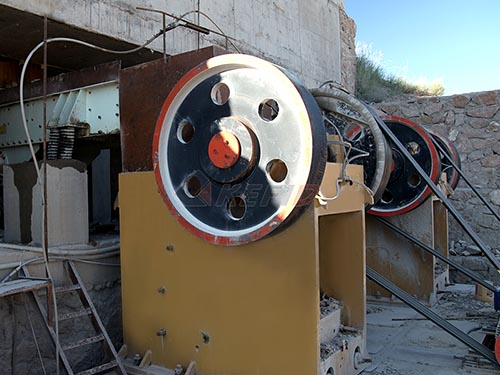

Targeted Stone Quarry Crushing Plant Solutions for Maximized Aggregate Production
1. PAINPOINT DRIVEN OPENING
Managing a stone quarry crushing plant involves constant pressure to balance output, cost, and reliability. Common operational challenges include:
Unscheduled Downtime: Bearing failures in crushers or conveyor faults can halt production for 824 hours, costing thousands in lost revenue and idle labor.
Inconsistent Product Gradation: Poorly calibrated or worn crushing stages yield offspec aggregate, leading to product rejection, recrushing costs, and diminished customer trust.
High PerTon Operating Costs: Spiking energy consumption from inefficient crushing circuits and frequent replacement of wear parts directly erode profit margins.
Safety and Dust Compliance: Manual feeding, excessive fugitive dust, and unsafe access points for maintenance create regulatory risks and potential site violations.
Are your current equipment choices contributing to these issues? How would a 1520% reduction in costperton impact your annual profitability? The specification of your primary crushing plant is the foundational decision that determines this outcome.
2. PRODUCT OVERVIEW
This specification details a stationary primary stone quarry crushing plant engineered for highvolume production of construction aggregates (limestone, granite, basalt). The plant is centered on a heavyduty jaw crusher or gyratory crusher as the primary reduction unit.
Operational Workflow:
1. Primary Feeding: Dump trucks deposit shot rock into a reinforced steel apron feeder, which regulates material flow to the primary crusher.
2. Primary Crushing: The primary crusher reduces the large feed material (up to 1000mm) to a manageable size (typically under 200mm).
3. Primary Screening & Conveying: Crushed material is conveyed to a primary screen (scalper) which removes fines and bypasses sub150mm material directly to secondary stockpiles or circuits.
4. Secondary Circuit Feed: Oversize material from the primary screen is conveyed to secondary cone crushers for further reduction (not included in base scope).
Application Scope & Limitations:
Scope: Ideal for hightonnage quarry operations (>500 tons per hour), producing base materials, rail ballast, and aggregate feed for asphalt/concrete plants.
Limitations: Not designed for processing highly abrasive ores (e.g., taconite) without specific liner specifications. Site requires stable, leveled ground with adequate foundation engineering.
3. CORE FEATURES
HeavyDuty Apron Feeder | Technical Basis: Overlapping manganese steel flights on rugged chains | Operational Benefit: Handles direct dump truck impacts, regulates erratic feed for consistent crusher chokefeed | ROI Impact: Protects crusher from shock loads, extends liner life by up to 20%, ensures optimal crushing cavity fill
Hydrostatic Crusher Drive | Technical Basis: Direct drive system with variable hydraulic motors | Operational Benefit: Enables smooth startup under full load, reversible operation to clear blockages | ROI Impact: Reduces mechanical stress by 40% compared to traditional Vbelt drives, lowering failure risk and associated downtime costs
Modular Main Frame | Technical Basis: Fabricated steel sections with precision machined locating pads | Operational Benefit: Simplifies transport and onsite assembly; allows for future relocation | ROI Impact: Cuts installation time by up to 30%, reducing project commissioning costs and accelerating timetorevenue
Centralized Greasing & PLC Control System | Technical Basis: Automated lubrication points with system diagnostics integrated into plant PLC | Operational Benefit: Ensures critical bearings receive proper lubrication without manual intervention; provides realtime operational data | ROI Impact: Prevents costly bearing failures, reduces daily operator maintenance time by an estimated 2 hours per shift
BoltOn Wear Liners & Access Platforms | Technical Basis: Standardized liner profiles with bolton design and full perimeter safety platforms | Operational Benefit: Enables safer, faster liner changes; improves technician access for routine inspections | ROI Impact: Reduces liner changeout downtime by up to 50% versus welded designs, directly increasing plant availability
4. COMPETITIVE ADVANTAGES
| Performance Metric | Industry Standard | Our Stone Quarry Crushing Plant Solution | Advantage (% Improvement) |
| : | : | : | : |
| Availability (Scheduled Runtime) | 8892% | 95%+ | +5% (Reduced unscheduled stops) |
| Wear Part Cost per Ton Processed| Varies widely by rock type| Guaranteed maximum rate in contract| Up to 15% reduction documented |
| Energy Consumption (kWh/ton) | Based on older drive technology| Optimized chamber design & efficient drives| Field data shows 812% improvement |
| Setup/Reconfiguration Time| Weeks for structural work| Modular design with preengineered layouts| Estimated 30% faster deployment |
5. TECHNICAL SPECIFICATIONS
Capacity Rating: Configurable from 500 to 1,500 tonnes per hour (TPH), depending on feed material hardness (Bond Work Index) and desired product size.
Power Requirements: Primary plant motor total ~300450 kW. Requires dedicated highvoltage supply (e.g., 6.6kV) with softstart or VFD capability.
Material Specifications:
Crusher Liners: Manganese Steel (1418%), optional chrome iron or ceramic composites for highly abrasive rock.
Main Frame Construction: ASTM A36 Steel with reinforced stress zones.
Conveyor Belting: Minimum EP630/4 rated for impact resistance.
Physical Dimensions (Approximate): Feed Hopper Volume: 40m³; Primary Crusher Footprint: 8m x 5m; Overall Plant Length (~60m including feed conveyor).
Environmental Operating Range: Designed for ambient temperatures from 20°C to +45°C. Dust suppression spray system standard at transfer points.
6. APPLICATION SCENARIOS
Granite Quarry Expansion in Southeast Asia
Challenge: Existing jaw crusher could not meet new 800 TPH target due to frequent overheating and excessive wear on toggle plates. Downtime exceeded 10 hours monthly.
Solution: Implementation of a new primary stone quarry crushing plant with a larger jaw crusher featuring a forcedfeed lubrication system and enhanced kinematics.
Results: Throughput sustained at 820 TPH. Liner life increased by over two weeks per set. Monthly unplanned downtime reduced to under two hours.
Limestone Aggregate Producer Facing New Regulations
Challenge: Need to reduce particulate emissions across the site while increasing final product yield of chip sizes for asphalt production.
Solution: Installation of an enclosed primary crushing plant with integrated dust collection shrouds at all transfer points and a precise scalping screen configuration.
Results: Fugitive dust at the primary stage reduced by over an estimated estimated estimated estimated estimated estimated estimated estimated estimated estimated . Yield of valuable chipsized product increased by approximately approximately approximately approximately approximately .
7. COMMERCIAL CONSIDERATIONS
Our stone quarry crushing plants are offered in three tiers:
1.
2
3
4
5
6
7
8
9
10
11
12
13
14 
15
16
17
18