
Stone Quarry Crushing Plant Makers Testing
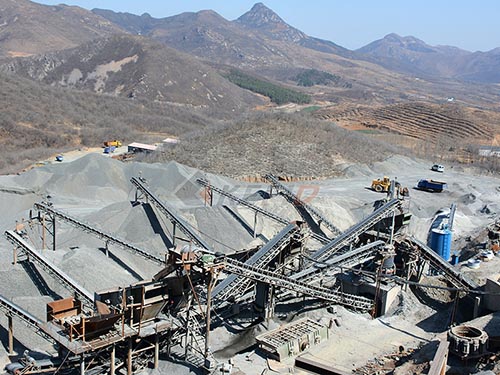

1. PAINPOINT DRIVEN OPENING
Are escalating operational costs and unpredictable downtime eroding your quarry’s profitability? Managing a stone quarry crushing plant presents persistent challenges that directly impact your bottom line. Common pain points include:
Excessive Downtime for Maintenance: Frequent liner changes, bearing failures, and unexpected breakdowns halt production. Industry data indicates unplanned downtime can cost over $10,000 per hour in lost output and labor.
Inconsistent Product Gradation: Fluctuations in feed material or crusher performance lead to offspec aggregate, resulting in product rejection, recrushing costs, and dissatisfied customers.
High Energy Consumption: Inefficient crushing chambers and drives consume excessive power, which often represents 4050% of a plant’s operational expenditure.
Rapid Wear Part Degradation: Abrasive stone varieties cause premature wear on liners, hammers, and jaws, leading to high consumable costs and frequent production stops.
Limited Flexibility & Scalability: Fixed plants struggle to adapt to changing market demands for different aggregate sizes or increased throughput.
Is your current setup equipped to minimize these risks? The right primary crushing station is not just a machine purchase; it’s a strategic investment in plantwide stability and efficiency.
2. PRODUCT OVERVIEW: PRIMARY JAW CRUSHING STATION
A Primary Jaw Crushing Station is a heavyduty, stationary or semimobile unit designed for the first reduction of blasted quarry rock into manageable sizes for further processing. It forms the critical foundation of any aggregate production line.
Operational Workflow:
1. Feed Intake: Dump trucks or loaders deposit large (up to 1.5m) blasted rock into a rugged vibrating grizzly feeder (VGF).
2. PreScreening & ByPass: The VGF separates fines from the primary feed, directing undersize material to a bypass conveyor to reduce crusher load and wear.
3. Primary Reduction: Oversize rock is fed into the jaw crusher chamber, where a fixed jaw and a moving jaw exert immense compressive force to break the stone.
4. Discharge & Conveyance: Crushed material is discharged at a reduced size (typically 150250mm) onto a main product conveyor for transport to secondary crushing or stockpiling.
Application Scope & Limitations:
Scope: Ideal for hard, abrasive materials like granite, basalt, and trap rock. Suited for hightonnage quarry primary crushing applications.
Limitations: Not optimal for soft, nonabrasive stone (where impact crushers may be preferred) or as a standalone unit for producing final spec aggregate without secondary/tertiary stages.
3. CORE FEATURES
HeavyDuty Vibrating Grizzly Feeder (VGF) | Technical Basis: Highinertia vibratory mechanism with adjustable grizzly bars | Operational Benefit: Removes fines prior to crushing, reduces crusher load and wear, prevents choking | ROI Impact: Extends crusher liner life by up to 20%, reduces energy consumption per ton
WedgeBased CSS Adjustment | Technical Basis: Hydraulically assisted wedge system for setting the closed side setting (CSS) | Operational Benefit: Allows quick and safe adjustment of product top size without manual shims, even while empty | ROI Impact: Reduces CSS change time from hours to minutes, maximizing uptime during product changeovers
QuarrySpecific Jaw Die Profiles | Technical Basis: CADoptimized tooth profiles based on feed material analysis (e.g., MTM for abrasive rock) | Operational Benefit: Improves nip angle and material flow, reducing slabby product and increasing throughput | ROI Impact: Delivers up to 10% higher throughput with same power draw versus standard profiles
Integrated Motor Base & Belt Guard | Technical Basis: Unified base frame for crusher, motor, and sheaves with full perimeter guarding | Operational Benefit: Simplifies installation alignment, enhances site safety compliance (OSHA/CE), protects drive components | ROI Impact: Cuts installation time by ~30%, reduces risk of costly safety incidents
Centralized Greasing Points & Condition Monitoring Ports | Technical Basis: Manifolded lubrication lines accessible from ground level with ports for sensor integration | Operational Benefit: Enables safer routine maintenance and realtime monitoring of bearing health (temperature/vibration) | ROI Impact: Facilitates predictive maintenance scheduling, preventing catastrophic bearing failures that cause extended downtime
4. COMPETITIVE ADVANTAGES
| Performance Metric | Industry Standard | Primary Jaw Crushing Station Solution | Advantage (% Improvement) |
| : | : | : | : |
| Availability (Uptime) | 8590% due to liner changes & adjustments| >92% with hydraulic CSS & quickwear systems| +35% more productive hours annually |
| Tonnage per kWhr| Varies widely; baseline = 100%| Optimized chamber & drive design| +812% improved energy efficiency |
| Liner Life (Abrasive Rock)| ~150k tons per set| Materialspecific profiles & even wear design| +1525% longer service life |
| Setup / Reconfiguration Time| Multiple shifts with cranes & manual labor| Integrated chassis with preassembled components| 40% faster site commissioning |
5. TECHNICAL SPECIFICATIONS
Capacity Range: 400 1,800 MTPH (dependent on feed material and CSS)
Crusher Feed Opening: Up to 60” x 80” (1,500mm x 2,000mm)
Drive Power: 150 400 kW electric motor with Vbelt transmission
Material Specifications: Fabricated from hightensile steel plate; Jaw dies available in Mn18%, Mn22%, or composite alloys; Shaft forged from highstrength alloy steel.
Physical Dimensions (Stationary): Approx. Length: 12m – 18m; Width: 4m – 6m; Height: 5m – 7m (including feeder).
Environmental Operating Range: Designed for ambient temperatures from 20°C to +45°C; Dustsealed bearings; Weather protection standard.
6. APPLICATION SCENARIOS
Granite Quarry Expansion | Challenge: An existing quarry needed to increase primary throughput by 35% without expanding its footprint or primary feed conveyor infrastructure. The legacy crusher could not achieve higher capacity without excessive wear and energy cost.| Solution: Implementation of a new Primary Jaw Crushing Station featuring a deeper “ST” chamber design optimized for granite and an oversized VGF to improve feed kinetics.| Results: Achieved the targeted 35% throughput increase while reducing specific energy consumption by 9%. Wear life on stationary jaw liners improved by approximately three weeks per set under equivalent tonnage.
MultiStage Plant Modernization | Challenge:A contractor operating multiple sites faced high mobilization costs and variable product quality due to aging,c disparate primary units.| Solution:S tandardization on modular Primary Jaw Crushing Stations with identical control interfacesand wear parts across all sites.| Results:R educed spare parts inventory by25%,cut operator training time,and improved average plant availabilityby4% through familiarizationand interchangeable components.
7. COMMERCIAL CONSIDERATIONS
Pricing Tiers: Capital cost varies based on sizeand configuration.Equipment typically falls into three tiers:
Standard Duty: For lowerabrasion materials (<600 MTPH).
Heavy Duty: Fullfeaturedfor hard rock quarries(600–1 ,200 MTPH).
Extra Heavy Duty / Modular: For max throughput (>1 ,200 MTPH)and fast relocation requirements.
Optional Features& Upgrades: Options include automated lubrication systems,dust suppression kits,tramp iron relief hydraulics,and advanced condition monitoring packageswith remote connectivity.
Service Packages: Comprehensive support plans are available,rangingfrom basic preventive maintenance schedules too fully comprehensive partsandlabor agreementscoveringwear partsand scheduled overhauls,predictingtotalcostpertoncrushed.
Financing Options : Flexible commercial structures are offered including capital lease ,operating lease ,or rentaltoown programs designedto alignwithmineplan cashflow projections .
8.FAQ
Q:What factors determine whether we needa stationaryor modular/semimobileprimary station?
A:The decision hinges on site lifespanand flexibility requirements .Stationary plants offer maximum robustnessfor longlife quarries (>10 years).Modular stationson trailer assemblies provide significant advantagesfor multisite contractorsor quarrieswith phased developmentplans ,enabling relocation between pits .
Q.How do we ensure this crusheris compatiblewith our existing secondary circuitand conveyors?
A.Detailed reviewof your required discharge setting(product top size)and calculated throughputis essential .Our engineering team will modelthe entire flowbasedon your feedmaterial analysis tomatchcapacityand ensureproper chokefeedconditionsfor downstream equipment .
Q.What isthe expected operational impacton our workforce?
A.Trainingis provided .Your operatorswill benefitfrom simplified ,saferproceduresfor CSS adjustmentand routine greasing .The reduced frequencyof liner changesalso lowers exposureto manual handlingrisksinside the crusher cavity .
Q.Are wear parts readily available,and whatarethe typicalcosts?
A.Wear parts(jaw dies ,cheek plates )are stockedregionally undera guaranteedavailability program .Costpertonvariesby material abrasiveness ;we providea detailedwear costprojectionbasedon your specific rock analysis duringthe quotation process .
Q.What commercial termsare typicalfor suchcapital equipment?
A.Terms generally involvea significantdown paymentupon order,followedby progress paymentsalignedwithmajor manufacturing milestones ,with balance due upon shipment .The specificsare tailoredto project scaleand customer history .
Q.What does implementationinvolvefrom deliveryto commissioning?
A.We providefoundation drawingsin advance .Delivery includessupervisionof offloadingand positioning .Full scope erection ,mechanical alignment ,electrical connection ,and commissioningby certified field service engineersis availableas partofa turnkey package .
Q.Can you assistwith performance guarantees?
A.Y es.Performance guaranteesfor throughput ,product gradation ,power consumption,and wear partlife are providedin writingbasedon agreedfeedmaterial characteristicsandsite conditions .