
Stone Quarry Crushing Plant Fabricator Moq

1. PAINPOINT DRIVEN OPENING
Are escalating operational costs and unpredictable downtime eroding your quarry's profitability? For plant managers and engineering contractors, the crushing plant is the linchpin of production, yet it is often the source of persistent challenges. Common operational hurdles include:
Excessive Downtime for Maintenance: Frequent liner changes, bearing failures, and unexpected breakdowns halt production, costing thousands per hour in lost output and labor.
Inconsistent Product Gradation: Fluctuations in final aggregate size lead to product rejection, reduced premium pricing, and wasted raw material.
High Energy Consumption: Inefficient crushing chambers and drives result in unsustainable power costs, directly impacting your costperton metric.
Rapid Wear Part Degradation: Abrasive stone varieties cause premature wear on crusher components, leading to high spare parts inventories and frequent replacement cycles.
Inflexible Plant Configuration: Fixed layouts struggle to adapt to changing feed material or market demand for different aggregate specifications.
Is your current setup a constant source of reactive maintenance and cost overruns? The solution lies not just in a machine, but in a correctly specified and robustly fabricated stone quarry crushing plant.
2. PRODUCT OVERVIEW
A stone quarry crushing plant is a permanent or semipermanent processing system engineered to reduce blasted rock into specified aggregate sizes. As a fabricator, we design, engineer, and construct these integrated systems tailored to your geological feedstock and production targets.
Operational Workflow:
1. Primary Reduction: Dumpfed blasted rock is reduced by a primary crusher (e.g., jaw crusher) to a manageable size for conveying.
2. Secondary & Tertiary Crushing: Material is further processed through cone or impact crushers to achieve intermediate sizes and final product shaping.
3. Sizing & Sorting: Vibrating screens separate crushed material into precise product streams (e.g., ¾” chip, ½” aggregate).
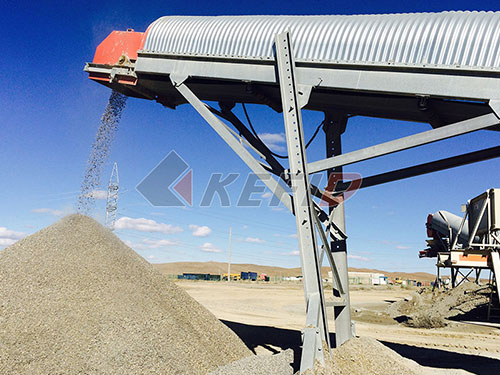
4. Material Handling: A network of conveyors, feeders, and transfer points moves material efficiently between stages.
5. Stockpiling & Loadout: Finished aggregates are conveyed to segregated stockpiles for inventory or direct loadout.
Application Scope & Limitations:
This equipment is designed for highvolume stationary processing of abrasive materials (granite, basalt, limestone). It is not suitable for smallscale portable operations or nonmineral materials without significant configuration review.
3. CORE FEATURES
Our fabrication approach focuses on engineered durability and operational efficiency.
Modular Skid Design | Technical Basis: Preassembled structural steel skids with integrated walkways and ladders | Operational Benefit: Reduces field installation time by up to 40%, ensures precise factory alignment of components | ROI Impact: Lower labor costs for installation/relocation; faster commissioning generates revenue sooner
HeavyDuty Chute & Liner Fabrication | Technical Basis: Computermodeled wear patterns with AR400/500 steel liners at critical impact zones | Operational Benefit: Minimizes material plugging and wearthrough; extends service intervals by 23x | ROI Impact: Reduces unplanned downtime for chute repair; lowers longterm liner inventory costs
Centralized Greasing & Lube Systems | Technical Basis: Manifolded automatic lubrication lines routed to all major bearing points | Operational Benefit: Ensures consistent component lubrication under all conditions; improves bearing life | ROI Impact: Prevents catastrophic bearing failures; reduces manual labor for daily maintenance
Structural Dynamics Engineering | Technical Basis: Finite Element Analysis (FEA) on primary support structures under full load and vibration | Operational Benefit: Eliminates resonant fatigue cracking; ensures longterm structural integrity | ROI Impact: Avoids costly midlife structural reinforcements or emergency repairs
Optimized Conveyor Transfer Geometry | Technical Basis: CFD analysis of material trajectory to minimize impact angle at transfer points | Operational Benefit: Dramatically reduces belt wear and dust generation at loading zones | ROI Impact: Extends conveyor belt life; lowers dust suppression costs and associated fines
4. COMPETITIVE ADVANTAGES
| Performance Metric | Industry Standard Fabrication | Our Stone Quarry Crushing Plant Fabrication | Advantage (% Improvement) |
| : | : | : | : |
| OnSite Installation Time | 812 weeks (field welding/assembly) | 46 weeks (modular boltup) | ~50% reduction |
| Mean Time Between Failure (Critical Transfers) | ~6 months due to wear/plugging| ~18 months with optimized liners & geometry| ~200% increase |
| Energy Consumption per Ton Crushed| Baseline (100%)| Estimated 8590% via optimized drive/motor sizing & reduced system friction| 1015% improvement |
| Fabrication Tolerances (Alignment) | +/ 1/4" typical field fitup| +/ 1/8" achieved in controlled factory setting| 50% greater precision |
5. TECHNICAL SPECIFICATIONS
Capacity Range: Configurable from 200 to over 1,500 tons per hour (TPH).
Power Requirements: Plantwide demand from 500kW to 2500kW+, supplied via dedicated HV substation or multiple MV connections. All MCCs included.
Material Specifications: Primary structure A36 carbon steel; Wear surfaces AR400/500 steel; Liners Manganese steel or composite alloys as specified.
Physical Dimensions: Fully modularized; maximum skid dimensions for transport are typically 12ft(W) x 60ft(L) x14ft(H).
Environmental Operating Range: Designed for ambient temperatures from 20°C to +45°C (4°F to 113°F). Dusttrenched electrical enclosures (IP65 standard).
6. APPLICATION SCENARIOS
Granite Quarry Expansion Project
Challenge: An existing operation needed to double throughput but had limited space for plant expansion and needed to maintain production during phased construction.
Solution: We fabricated a new tertiary crushing and screening tower on a single large skid alongside the existing plant. New conveyors were preassembled in sections.
Results: The new module was installed over a scheduled 10day shutdown. Throughput increased by 95% with minimal disruption to ongoing production.
Limestone Aggregate Producer
Challenge: High silica content was causing severe abrasion in transfer chutes and screen decks, leading to weekly maintenance stops and inconsistent product screening efficiency.
Solution: We replaced standard chutes with computermodeled designs featuring ceramiclined impact zones and adjustable cascade lips. Polyurethane screen decks were customfitted.
Results: Wear life increased from approximately one week per inspection cycle upto five weeks . Product consistency improved due to maintained screening accuracy.
7. COMMERCIAL CONSIDERATIONS
Our fabrication services are structured around your project scope:
Pricing Tiers:
Tier I – Component Fabrication / Retrofits
Tier II – Complete Process Section Skids
Tier III – Turnkey Plant Design & Fabrication
Optional features include advanced dust suppression system integration, automated sampling systems, full PLC control panel fabrication,
and telemetryready sensor packages.
Service packages extend beyond installation support:
Foundation drawing packages certified by a Professional Engineer .
Multiyear scheduled inspection programs .
Onsite welding teams for final tieins .
Financing options can be discussed through our partners , including equipment leasing structures that treat the fabricated plant as capital asset .
FAQ
Q1 Are your fabricated plants compatible with our existing crushers screens?
A Yes we design interface modules specifically for this purpose . We require detailed OEM drawings connection points load data ensure seamless integration .
Q2 What typical lead time from design approval fabrication completion?
A For standard configuration lead times range between months depending complexity current shop workload . Critical path items like custom gearboxes may affect this schedule .
Q3 How does modular design impact future relocation site?
A Modular plants are inherently easier relocate . Each major skid can be disconnected transported reassembled new location significantly reducing cost time compared dismantling traditional welded structure .
Q4 Do you provide performance guarantees throughput product gradation?
A Yes based agreed upon feed material characteristics final plant design we provide guaranteed performance ranges capacity power consumption key product fractions .
Q5 What level detail required initial quotation?
A To provide meaningful budgetary quote we need target annual tonnage feed material analysis blast fragmentation size desired product specifications available footprint .
Q6 Who responsible structural engineering foundations?
A We provide complete foundation general arrangement drawings anchor bolt details stamped Professional Engineer client’s local geotechnical contractor responsible sitespecific soil analysis final pour .
Q7 Can you manage entire project including civil works electrical installation?
A As primary fabricator we typically partner with qualified regional contractors civil electrical work can provide single point coordination project management fee ensure all disciplines align schedule .