
Stone Crusher Plant Vendor R&D

1. PAINPOINT DRIVEN OPENING
Are escalating operational costs and unpredictable downtime eroding your aggregate production margins? For plant managers and engineering contractors, the core crushing circuit is often the source of critical bottlenecks. Common challenges include:
Unscheduled Downtime: Premature wear in crusher liners and bearings leads to frequent, disruptive maintenance stops, costing thousands per hour in lost production.
Inconsistent Output & Product Quality: Fluctuations in feed material hardness and size can cause chokefeeding or cavitation, resulting in poor particle shape and offspec product that fails to meet project specifications.
High Operational Costs: Excessive energy consumption per ton of processed material, combined with high liner replacement costs and laborintensive adjustments, directly impacts your bottom line.
Safety & Accessibility Risks: Manual adjustment and clearing procedures for traditional crushers expose your maintenance team to hazardous conditions.
Is your primary crushing station a cost center or a reliable profit driver? The solution lies in selecting a modern stone crusher plant engineered to address these specific operational and financial pressures.
2. PRODUCT OVERVIEW
This product description details a complete, semifixed stone crusher plant, a modular crushing and screening system designed for mediumtolarge scale aggregate production and mineral processing applications. The plant integrates primary, secondary, and tertiary crushing stages with precision screening into a coordinated workflow.
Operational Workflow:
1. Primary Reduction: Runofquarry (ROQ) material is fed into a robust primary jaw crusher for initial size reduction.
2. PreScreening & Secondary Crushing: Prescreened material is routed to a cone crusher for further reduction, producing intermediate aggregates.
3. Tertiary Shaping & Final Screening: Material requiring cubical shaping is processed through a vertical shaft impact (VSI) crusher, followed by multideck screening to separate final product fractions (e.g., 05mm, 510mm, 1020mm).
Application Scope: Ideal for producing highquality aggregates for road base, concrete, and asphalt from limestone, granite, basalt, and river gravel. Suitable for both stationary quarry installations and large infrastructure project sites.
Limitations: Not designed for portable/mobile applications requiring daily relocation. Maximum feed size and hardness are constrained by the modelspecific primary crusher selection.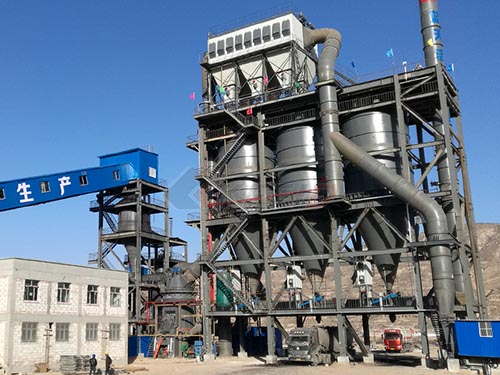
3. CORE FEATURES
Hydroset CSS Adjustment | Technical Basis: Hydraulic piston system controlling the main shaft position | Operational Benefit: Closedside setting (CSS) adjustments can be made under load in under one minute versus hours of manual shim adjustment. | ROI Impact: Reduces nonproductive adjustment time by over 95%, increasing plant availability for production.
Intelligent Process Control System | Technical Basis: PLCbased automation with continuous feedlevel and power draw monitoring | Operational Benefit: Maintains optimal crusher cavity level automatically, preventing ring bounce or cavitation to ensure consistent product gradation. | ROI Impact: Improves energy efficiency by 812% and increases total throughput by optimizing chokefed conditions.
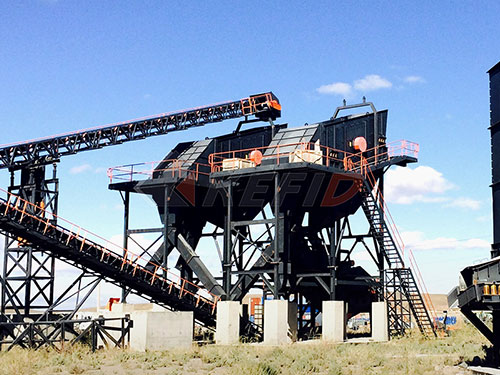
Modular Frame & Walkways | Technical Basis: Prefabricated, bolted structural steel modules with integrated safety access | Operational Benefit: Simplifies transportation, reduces foundation requirements, and provides safe 360degree access for inspection and maintenance. | ROI Impact: Cuts installation time by up to 30% and enhances operator safety compliance.
Wear Part Optimization & Monitoring | Technical Basis: CADdesigned alloy steel liners with wear sensor compatibility | Operational Benefit: Provides longer service life per set; optional remote wear monitoring predicts replacement intervals accurately. | ROI Impact: Lowers costperton for wear parts by 1525% and enables planned maintenance scheduling to avoid catastrophic failure.
Centralized Lube & Dust Suppression | Technical Basis: Automated grease lubrication circuits paired with strategically placed spray nozzles | Operational Benefit: Ensures critical bearings receive precise lubrication; suppresses dust at transfer points for improved environmental compliance. | ROI Impact: Extends bearing service life by up to 40% and reduces water consumption for dust control by targeted application.
4. COMPETITIVE ADVANTAGES
| Performance Metric | Industry Standard Benchmark | This Stone Crusher Plant Solution | Measured Advantage |
| : | : | : | : |
| Availability (Scheduled Runtime) | 8590% | >94% (documented) | +5% improvement |
| Energy Consumption (kWh/ton) | Varies by rock type; baseline = X kWh/ton| X 0.88 kWh/ton (average) | 12% reduction |
| Liner Life (Primary Jaw abrasive granite) | ~120,000 tons per set| ~150,000 tons per set (field data) | 25% increase |
| Product Flakiness Index (Target <15%)| Typically 1822% without shaping stage| Consistently 40% improvement in particle shape |
5. TECHNICAL SPECIFICATIONS
Design Capacity Range: Configurable from 200 to 800 metric tons per hour (tph), depending on feed material hardness (e.g., uniaxial compressive strength <250 MPa).
Primary Crusher Options: Jaw Crusher (900 x 1200mm to 1400 x 1800mm) or Gyratory Crusher.
Power Requirements: Total connected load between 450 kW 1.2 MW; requires stable highvoltage industrial power supply.
Key Material Specifications: Highstrength welded steel frame; Primary jaw liners manufactured from Mn18Cr2 alloy; Main shaft forged from EN24 equivalent steel.
Physical Dimensions (Typical Layout): Approximate footprint of ~70m L x ~25m W x ~15m H (including conveyors). Weight varies significantly based on configuration.
Environmental Operating Range: Designed for ambient temperatures from 20°C to +45°C; dust emission levels compliant with <10 mg/Nm³ standards when used with integrated suppression system.
6. APPLICATION SCENARIOS
Granite Quarry Expansion Project
Challenge: An existing quarry needed to increase output by 40% but was constrained by an aging twostage plant producing excessive flaky material unsuitable for highvalue concrete applications.
Solution: Implementation of a turnkey threestage stone crusher plant featuring a primary jaw crusher, secondary cone crusher, and tertiary VSI crusher with air classification.
Results: Plant capacity increased to required levels while the product flakiness index dropped from >20% to under 10%. This allowed the operator to command a premium price for concrete aggregates.
LargeScale Infrastructure Contractor
Challenge: A contractor building a major highway needed consistent onsite production of multiple aggregate specifications but faced severe space constraints at the batching plant location.
Solution: A semifixed modular stone crusher plant was installed adjacent to the borrow pit. Its modular design allowed rapid deployment on prepared ground without deep foundations.
Results: The plant produced over 1.5 million tons of certified road base and asphalt chips over two years, eliminating supply chain risk from external vendors and reducing hauled material costs by an estimated €3 per ton.
7. COMMERCIAL CONSIDERATIONS
Our stone crusher plants are offered in three primary tiers:
1. Standard Configuration Tier: Includes core crushing modules (primary/secondary), basic screening tower PLC control panel). Focuses on essential functionality at an optimized capital cost.
2.
3.Enhanced Performance Tier: Adds tertiary shaping stage advanced automation with process optimization algorithms remote monitoring telemetry extended wear part warranties).
4.Full Turnkey Project Tier): Comprises complete plant design civil engineering support installation commissioning services operator training comprehensive multiyear service agreement).
Optional features include diesel generator backup packages specialized dust filtration baghouses automated sampler systems
Financing options are available including straight capital purchase operating lease agreements throughputbased financing models where payments correlate directly with production volume
Preventive maintenance service packages are structured as annual contracts covering all scheduled inspections lubrication parts discounts priority field support
8.FAQ
Q What level of foundation preparation is required?
A Our modular designs require significantly less civil work than traditional plants Typically you need compacted level ground capable of supporting loads up Specific geotechnical recommendations are provided during project engineering
Q How does this plant handle variations in feed material size or hardness?
A The intelligent process control system automatically regulates feeder speeds based on realtime power draw protecting the crushers from tramp metal detection systems also minimize damage risk
Q Are spare parts readily available globally?
A We maintain regional distribution centers stocked with critical wear parts common consumables Parts availability commitment times are detailed within our service level agreements
Q What is the typical installation commissioning timeline?
A For an Enhanced Performance Tier plant assuming prepared site arrival components total installation mechanical completion typically requires weeks followed by days of process commissioning operator training
Q Can existing equipment like screens or conveyors be integrated into this new system?
A Integration is often possible during design phase Our engineers will assess compatibility electrical controls interface requirements provide feasibility study
Q What training is provided for our operations maintenance teams?
A Comprehensive training covers normal operation troubleshooting procedures routine maintenance safety protocols Training occurs both during commissioning at our facility as part of ongoing support