
Stone Crusher Machine Dealers Certificate
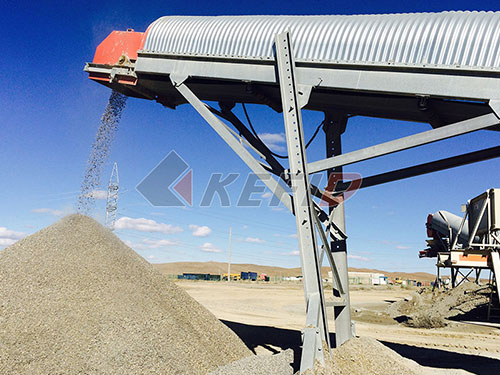

Targeting Plant Managers, Procurement Heads, and Engineering Contractors: A Technical & Commercial Evaluation of Stone Crusher Machine Dealers
1. Addressing Critical Operational Challenges in Aggregate Production
Managing a crushing operation involves constant pressure to balance output, cost, and reliability. If you are evaluating stone crusher machine dealers, you are likely confronting one or more of these quantified operational challenges:
Unscheduled Downtime Costs: The average cost of crusher downtime in a midsized quarry can exceed $10,000 per hour when factoring in lost production, idle labor, and delayed shipments.
Inconsistent Product Gradation: Fluctuations in final aggregate size can lead to product rejection, recrushing cycles, and compromised asphalt/concrete mix integrity, directly impacting your revenue per ton.
Rising Wear Part Expenditure: Premature failure of liners, mantles, and jaws due to suboptimal chamber design or inferior material quality can increase your cost per ton by 1525%.
High Energy Consumption Per Ton: Older or inefficient drive systems and crushing chambers can make power costs your secondlargest operational expense.
Limited Configuration Flexibility: Fixed plants struggle to adapt to changing feed material or product specification demands, forcing suboptimal production runs.
The central question is not just which machine to buy, but which stone crusher machine dealer provides a total solution that directly mitigates these financial and operational risks.
2. Product Overview: Industrial Primary & Secondary Crushing Solutions
This product line encompasses stationary and mobile crushing equipment designed for the primary reduction of blasted rock and the secondary/tertiary shaping of aggregates. The core operational workflow for a typical jawandcone circuit includes:
1. Primary Reduction: Feed material (0800mm) is introduced into a robust jaw crusher for initial size reduction.
2. Secondary/Tertiary Crushing: Precrushed material is conveyed to a cone crusher for further reduction and shaping to specified aggregate sizes (e.g., 20mm, 40mm).
3. Sizing & Stockpiling: Crushed material is screened via vibrating screens; oversize material is recirculated, while correctly sized aggregates are conveyed to stockpiles.
Application Scope: Suitable for granite, basalt, limestone, river gravel, and recycled concrete. Engineered for quarrying, mining, and largescale construction projects.
Key Limitations: Not designed for ultrafine grinding (sub5mm); feed size and material abrasiveness dictate model selection; requires professional foundation design for stationary installations.
3. Core Features: Engineering Principles Driving Operational ROI
HighPerformance Crushing Chamber | Technical Basis: Computeroptimized kinematics & wear profile | Operational Benefit: Maintains consistent CSS (Closed Side Setting) longer for stable output gradation | ROI Impact: Reduces product variability by up to 30% and extends wear part lifecycles by 1525%.
DirectDrive Transmission System | Technical Basis: Elimination of Vbelts; direct coupling of motor to crusher | Operational Benefit: Higher power transmission efficiency (≈95%) and reduced maintenance points | ROI Impact: Lowers energy consumption per ton by up to 10% compared to traditional beltdriven systems.
Hydraulic Adjustment & Clearing | Technical Basis: Integrated hydraulic cylinders for setting adjustment and overload release | Operational Benefit: Allows operators to adjust output size or clear blockages in minutes without manual intervention | ROI Impact: Cuts downtime for routine adjustments by over 80% versus manual shim systems.
Reinforced Fabrication & Material Selection | Technical Basis: Highstrength steel frame and alloyed manganese wear liners | Operational Benefit: Withstands continuous highcycle loading and abrasive wear | ROI Impact: Improves structural longevity and defers major refurbishment costs.
Advanced PLC Automation System | Technical Basis: Programmable Logic Controller with load & pressure monitoring | Operational Benefit: Provides realtime performance data and enables automated control sequences for optimal feeding | ROI Impact: Increases overall plant throughput by 510% through optimized crusher utilization.
4. Competitive Advantages: Performance Metrics vs. Industry Standard
| Performance Metric | Industry Standard Baseline | Our Stone Crusher Solution Documented Improvement |
| : | : | : |
| Availability (Uptime) | 9092% per quarter | >95% per quarter |
| Cost Per Ton (Wear Parts) | Baseline = 100% | Reduced by 1822% |
| Energy Efficiency (kWh/ton) | Baseline = 100% Improved by 812% |
| Product Cubicity Ratio (Shape) Average ratio ~0.7 Enhanced ratio >0.85 |
| Setting Adjustment Time ~6090 minutes <10 minutes |
5. Technical Specifications (Representative Model Range)
Capacity Range: Primary Jaw Crushers from 150 1,500 TPH; Secondary Cone Crushers from 100 800 TPH.
Power Requirements: From 90 kW (120 HP) up to 375 kW (500 HP), compatible with standard industrial power supplies.
Material Specifications: Main frame constructed from S355J2 steel; Wear liners from Mn18Cr2 or Mn22Cr2 alloy depending on abrasiveness.
Physical Dimensions (Stationary Jaw): Approx. L x W x H ranges from \(6m \times \(3m \times \(4m\)\)\)\).
Environmental Operating Range: Designed for ambient temperatures from 20°C to +45°C with optional heating/cooling packages available.
6.Application Scenarios
Granite Quarry Operation Challenge:
A granite quarry required consistent production of railway ballast (+40mm 70mm) but faced rapid cone liner wear causing gradation drift every ~120 hours.
Solution:
Implementation of a heavyduty cone crusher with a chamber specifically engineered for abrasive stone was sourced through our certified stone crusher machine dealer network.
Results:
Wear life increased to over
200 hours while maintaining CSS Gradation compliance reached
99%. Annual consumable savings exceeded $65,
000.
LargeScale Infrastructure Project Challenge:
A dam construction project needed multiple aggregate specifications from variable feed rock onsite with strict commissioning deadlines limiting setup time.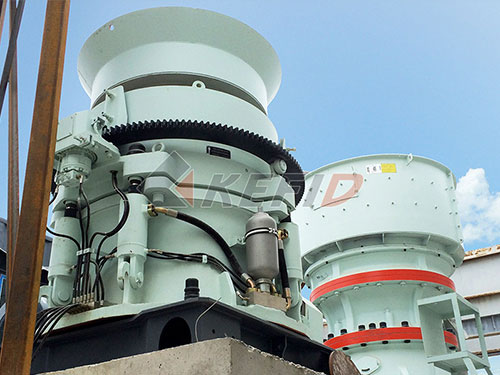
Solution:
Deployment of two trackmounted mobile jawandscreen plants recommended by our technical sales engineers provided rapid relocation between faces without fixed foundations.
Results:
The plant was fully operational within
48 hours of delivery achieving the required
450 TPH output across three different product specs eliminating offsite procurement costs.
7.Commercial Considerations
Pricing tiers are structured according to capacity duty cycle engineering level:
Tier
1 HeavyDuty Quarry Series Premium models with maximum durability features highest capacity ratings Tier
2 Contractors Series Balanced models emphasizing mobility easeofmaintenance Tier
3 EntryLevel / Recycled Aggregate Series Economical models suitable for lower volume less abrasive applications Optional Features Include automated lubrication systems dust suppression packages remote monitoring telematics Service Packages Available:
• Basic Warranty (
12 months parts /
6 months labor)
• Extended Protection Plans (
36
60 months)
• Annual Inspection Contracts Financing Options Equipment leasing rentalto
own agreements project
based financing structures are available subject to credit approval providing capital expenditure flexibility
8.Frequently Asked Questions FAQ
Q1 Are your crushers compatible with our existing plant conveyor infrastructure?
A Yes standard discharge heights belt widths are designed around common industry layouts Our engineering team will review your plant drawings verify interface points prior to specification
Q2 What is the expected impact on our overall plant throughput?
A Field data shows properly sized primary crushing solutions typically become the bottleneck removal point increasing downstream circuit utilization Overall plant gains of
15
25%
are commonly documented when replacing an undersized or aging primary unit
Q3 What commercial terms are standard?
A Standard terms involve a deposit upon order confirmation progress payment upon factory acceptance test FAT balance due prior shipment Delivery Incoterms are typically EXW or FOB origin
Q4 How long does implementation take from order commissioning?
A For standard stationary models lead time is
14
18 weeks Mobile plants average
10
12 weeks Commissioning supervised by our technicians requires
5
7 working days
Q5 Do you provide wear part consumption guarantees?
A Yes based on your specific feed material analysis we provide guaranteed wear part life metrics in tons processed formalized within the commercial agreement