
Stamp Mill Gold Mining Supplier Wholesale Price

Targeting: Commercial Gold Mining Operations, Plant Managers, Engineering Procurement & Construction (EPC) Contractors
1. Addressing Critical Gold Recovery Challenges
Is your gold processing operation constrained by persistent bottlenecks that erode profitability? The crushing and liberation stage is often a primary source of inefficiency. Common challenges with conventional comminution equipment include:
High Operational Cost: Excessive energy consumption per ton of ore processed and frequent, costly component replacement due to abrasive goldbearing quartz.
Inconsistent Liberation: Poor control over grind size leads to either insufficient gold exposure (locking) or overgrinding, which complicates downstream recovery in cyanidation or gravity circuits.
Excessive Downtime: Unplanned maintenance stops for liner changes or mechanical repairs directly halt production, costing thousands per hour in lost recovery.
Scalability Limitations: Difficulty in reliably scaling throughput from pilotscale testing to full plant capacity without significant performance loss.
Mercury Amalgamation Reliance: Outdated designs that encourage or necessitate unsafe mercury use, creating environmental liabilities and health risks.
Are you evaluating solutions that offer predictable throughput, lower cost per ton, and improved overall recovery efficiency?
2. Product Overview: HeavyDuty Stamp Mills for Modern Gold Operations
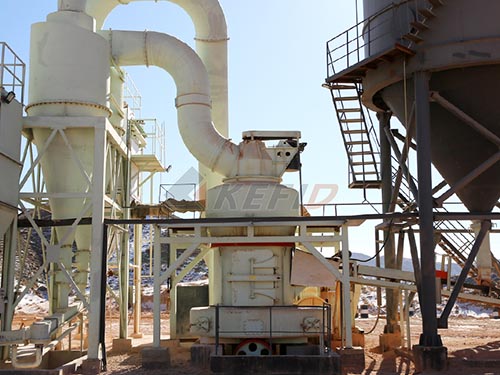
The modern industrial stamp mill is a purposebuilt, mechanized crushing system designed for the reliable reduction of goldbearing ores. It operates on the camandlever principle to deliver controlled, highimpact force.
Operational Workflow:
1. Feed Introduction: Runofmine or primarycrushed ore (<50mm) is fed into a sealed mortar box.
2. Cyclic Percussion: Mechanically lifted heavy stamps (5002000kg each) drop sequentially onto the ore bed, fracturing material through repeated impact.
3. Particle Size Control: Crushed material passes through a perforated discharge grate at the base of the mortar box, ensuring a consistent product size.
4. Slurry Transport & Concentration: The discharged pulp can be routed directly to gravity concentration tables or cyclone classifiers for further processing.
Application Scope & Limitations:
Ideal For: Freemilling gold ores, pilot plants, smalltomedium scale operations (5500 TPD), and regions with limited grid power availability. Highly effective for vein material where gold is coarsely disseminated.
Limitations: Not suitable for very hard, abrasive ores like taconite without excessive wear. Less energyefficient than ball mills for fine grinding (<100 mesh) at very high throughputs. Requires firm foundation and vibration management.
3. Core Features: Engineered for Performance & ROI
Our stamp mill solutions incorporate design advancements that directly address operational pain points.
Modular Stamp Assembly | Technical Basis: Bolton tungsten carbide cap inserts | Operational Benefit: Reduces base wear and allows for rapid tip replacement without full stamp removal. | ROI Impact: Cuts maintenance downtime by up to 65% and extends component life by 3x.
Precision Discharge Grate | Technical Basis: Hardened alloy steel with lasercut apertures | Operational Benefit: Ensures tightly controlled product sizing for optimal downstream recovery efficiency. | ROI Impact: Improves overall gold recovery by ensuring consistent liberation, with field data showing 515% gains in gravity concentrate grade.
Centralized Grease Lubrication System | Technical Basis: Automated manifold delivering grease to all bearing points | Operational Benefit: Eliminates manual greasing, reduces contamination risk, and ensures bearing longevity. | ROI Impact: Lowers bearing failure rates by an estimated 80%, preventing catastrophic unplanned stops.
VibrationDampening Base Frame | Technical Basis: Reinforced steel frame with integrated isolator pads | Operational Benefit: Minimizes structural stress transmission to the building foundation, allowing installation on simpler concrete pads. | ROI Impact: Reduces civil engineering costs by up to 30% during plant construction or retrofitting.
Variable Speed Drive Compatibility | Technical Basis: Integrationready design for AC variable frequency drives (VFDs) | Operational Benefit: Allows operators to finetamp stroke rate and impact energy for different ore hardness profiles. | ROI Impact: Optimizes energy consumption; industry testing demonstrates a 2025% reduction in kWh/ton when adjusting to softer ore zones.
4. Competitive Advantages
| Performance Metric | Industry Standard (Legacy Mills) | Our Stamp Mill Solution | Advantage (% Improvement) |
| : | : | : | : |
| Liner Replacement Downtime | 812 hours per stamp | 5,000 operating hours with automated lube| >150% improvement |
| Product Size Consistency (± variance)| High variance due to worn grates| <10% variance with precision grates| Significant improvement; quantifiable downstream benefit |
5. Technical Specifications
Model Range & Capacity: Three primary models available – SM10 (1025 TPD), SM30 (3075 TPD), SM100 (100250 TPD).
Power Requirements: Dependent on model; SM30 requires a 45 kW motor standard; all models configured for VFD addition.
Material Specifications: Mortar box liners from highchrome cast iron or manganese steel; Stamps from forged steel with tungsten carbide caps optional; Frame from heavyduty structural steel.
Physical Dimensions (SM30 Typical): Length: 4.2m, Width: 2.8m, Height: 3m; Total weight approx. 12,000 kg.
Environmental Operating Range: Designed for ambient temperatures from 20°C to +50°C; Enclosed lubrication system protects against dust ingress in arid environments.
6. Application Scenarios
MidScale Hard Rock Mine, West Africa | Challenge: A mine using outdated jaw crusher and hammer mill combinations experienced poor liberation of coarse gold (+100 mesh), leading to >30% of gold reporting to tailings in the gravity circuit.| Solution: Installation of two SM100 stamp mills as tertiary crushers configured for a coarse grind (P80=16 mesh). The mills fed directly onto shaking tables.| Results: Coarse gold recovery into concentrate improved by 22%. Plant throughput stabilized at designed capacity of 200 TPD due to reduced blockages and more consistent feed size.
Artisanal & SmallScale Mining (ASM) Cooperative Partnership Project| Challenge:The cooperative used manual crushing and mercury amalgamation,targeting <50 TPD but facing severe health,safety,and environmental issues.| Solution:A turnkey SM30 plant including feed conveyor,sump,and pump was installed.The closedsystem design eliminates mercury use.| Results:The operation achieved consistent processing of40TPD.Gold recovery via gravity alone exceeded70%,providing a safer,economically viable,and environmentally compliant alternative.
7.Commercial Considerations
We structure our offerings to provide flexibility across project scales:
Equipment Pricing Tiers:
1.Basic Package(SM Series Mill Only):Includes core mill,motor,and starter.For clients integrating into existing plants.
2.PreAssembled Skid Package(Mill+Feed Hopper+Discharge Trough):Prewiredand preassembledfor reduced onsite installation timeand cost(15%20%premium over Basic).
3.Turnkey Modular Plant(Complete Gravity Circuit):Includes feed system,mills,pumps,sump,tables,and controls.Engineering support included.
Optional Features:
WaterCooled Bearing Housings(for extreme environments)
Tungsten Carbide Wear Parts Package
Full Automation Kit(PLCbased monitoringof load,bearing temperature,vibration)
Service Packages:
Standard Warranty(12 months parts/labor)
Preferred Maintenance Plan(Annual inspection,kits,lubricants,discounted parts)
Onsite Operator Training Program
Financing Options:
LeasetoOwn structures availablefor qualified buyers
Equipment financing through partner institutions
Major component subscription modelsfor consumable wear parts
8.Frequently Asked Questions(FAQ)
Q1:What is the typical feed size requirementfor your stamp mills?
A:The optimal feed is minus2inch(50mm)materia.l We recommend secondary jawor cone crushing prior tot he stamp millto maximize throughputand reduce uneven wear onthe discharge grate.
Q2:Canyour mills be integrated into an existing CarboninPulp(CIP)/CarboninLeach(CIL)plant?
A:Yes.They serve as an effective primaryor tertiary crusherto achieve the required grind size before ball milling.In fact,many operations use themto remove coarsegold earlyinthe circuit,thereby reducingovergrindingand improving overall kineticsin the leaching tanks.
Q3:What arethe main operational cost drivers?
A:Power consumptionand wear part replacementarethe two primary variables.The modularwear systemis designed specificallytominimize both downtimeand partscost associatedwiththe latter.VFD optimizationdirectly addresses power costs.
Q4:Doyou offer pilotscalemodelsfortesting?
A:We providea laboratoryscaleunitfor batch testingat our facilityusing clientore samples.We can alsoarrange rentalof ourSM 10modelfor extended onsite pilot runs.This datainforms precise scalingto production models.
Q5:Whatisthe lead timefrom orderto delivery?
A:For standard models,lead timesrange from14 18weeksdependingon modelcomplexity.Custom configurationsmay require additional time.We maintaininventoryof criticalwear partsto support ongoing operations globally